
We need to have a conversation about immigration. Now both my maternal and paternal side of the family were immigrants. They were proud of being here and becoming citizens and learning English. Both sides of this controversy are adamant about how they feel. I think it is important to discuss this concept. The question about legal and illegal immigration is a hot button for many Americans and for people from other countries.
America is not the only country dealing with this question. These conflicts have happened not only here but in the European Union. In the spring of 2011, Tunisians fled the revolution in their country and landed in Ventimiglia in southern Italy. Italians resented the refugees sleeping in train stations and the streets, and Italy and France argued about which country should absorb these people. In Denmark violence has occurred between Danes and Palestinian and Somali youth. They were fighting about conflicting views of integration. At the present moment in history, economic and social/cultural problems with immigration have outstripped the government polices and citizens’ abilities to handle them.
Population growth and the changes in the racial and ethnic composition of countries are reflected in the population statistics for the United States and the European Union. According to the 2010 census, in the United States with its population of 313,074,000, approximately 38 million , or 12 per cent of the population, are foreign-born; another 11 percent are native-born as of 2009. Out of every five people, one is either a first-or second-generation U.S. citizen. In 2010, 34 percent of this group of legal immigrations came from China, India, Philippines, Ethiopia, Mexico and El Salvador. In the European Union with a population of 502.52 million, the total number of non-nationals (or illegals) was 32.5 million persons representing 6.5 of the EU population.
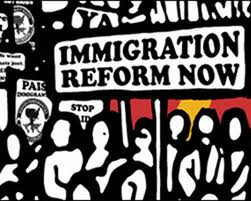
In the United States, the effort to control this volume of immigration through legislation and physical restraint has a problematic history. The McCarran-Walter Act of 1952 repealed the 1924 Immigration Act and ended the ban on Asian immigrants, but it established a quota system by which immigrants were limited by national origin, race, and ancestry. Then in 1965, the Immigration and Nationality Act Amendments ended a first-come, first-served system, and gave preference to uniting families and establishing numerical restrictions according to the Eastern and Western Hemispheres. In 1986, the Immigration Reform and Control Act attempted to fix the problem of the large number of illegal immigrants by granting permanent resident status to those who had lived and worked in the United States since 1982; but it failed to establish a workable system for managing further illegal immigration. The number of immigrants now living in the United States is somewhere around 11.2 million and approximately 80 percent are Latin American.
So this is a global problem and it is a significant one here in America. We constantly come up against the problems created by having huge numbers of illegals. I feel that we can’t deny their children an education or medical care, but these are very expensive and we have native born children who aren’t getting a good education or the medical care that they need. There is controversy over the Food Stamps and Medicare they often need. There are only so many funds available. So as concerned Americans, we have to think about not just the fact that people are here illegally, but our moral and ethical duty to fellow human beings and children of God. This is where the discussion hits triggers in people. So let’s start talking about this issue and I invite input from all over the world.

Let’s talk about where we all stand and what is as fair to everyone as is possible. There has to be an intelligent answer that will serve the needs of all of the people who want or need to start over in another country for financial or political reasons.

 idealisticrebel
I’m all for creating a path for undocumented people to become legal so they can pay taxes, vote, contribute to our society and, if need be, receive assistance. Just like people who are gay or lesbian, this group of people will not simply go away because another group of people wants them to. When you get right down to the nitty-gritty — we are all immigrants except for Native Peoples.
I agree Jackie. Your perspective is a very good one. And of course speaks to our treatment of native peoples. We stole their land and put them on reservations. Did you know if they move off the reservation
I think your comment was cut off. I can guess: If they leave the reservation they cannot return? I have a friend who is a Winnebago in Wisconsin. She gives talks around the world and was recently escorted to and from Russia where she spoke on Native Peoples, their culture and customs. I met her in training on culture, leadership, etc. The more you learn about whites and how greedy, selfish and dishonest they are, you don’t really want to be one. I have a great respect for all races and cultures. By the way, this friend that I speak of, she was instrumental in my interview and acceptance for training. I’ve read tons of books since living two years in Germany in 1973-75.
That is great Jackie. You are really working to make the world a better place! Good for you. Hugs, Barbara
When they move off the reservation they can never return to live? Hugs, Barbara
I just noticed your continue. 🙂
Hugs back, Barbara!
Jack
There should be an answer somewhere. I don’t have any. I agree with Jackie if they’re here they need to pay taxes.
Yes, that is true. But is it morally right to tax aliens? This conversation is good.
If they live here and work. They get all the services our taxes pay for.
I totally agree but how do we find them and teach them English and find jobs for them with our economy in the shape it is in. hugs, Barbara
Sure they should pay.
Ah, yes, but how do we go about accomplishing that? This conversation is going really good. Hugs, Barbara
I too am of immigrant stock – in Australia – my family (grandfather) immigrated in 1882! Then went back, then the next generation immigrated fleeing communism etc in late 1950’s… in Australia too everybody is immigrant bar the indigenous – but immigration was a different kettle of fish way back as countries had programs to attract workers etc – the latest phenomenon in the past twenty or so year is entirely different: we have illegal immigrants, boat people and lots fleeing from war-torn countries etc – a big problem and also creates resentment in receiving country as illegals or those coming in illegally create a feeling of attacks – we have no choice no control over it and we have no choice or control as to the spending of our tax dollar on illegals while our homeless, our needy, our children, our old scrape poorly. So yes – the issue must be discussed openly and programs devised to help everyone. Another thing I don’t like is the new wave of immigration on mass from war torn-countries in past decades has also meant that assimilation is poor and that is a shame because one should assimilate into the new country and still can love that culture which left behind in personal or private ways rather than create ghetos and turn our suburbs into foreign lands…
You are right. It is a burden for governments. But I can’t imagine what it would be like to have to flee in the night with practically nothing and have to start over. It is very hard and with the disintegration of the Middle East so many people are refugees.
Yes, but I take a particular “offense” at queue jumpers (boat people, illegal border crossers etc) when we have refugee camps where thousands wait in humility, patience and respect for others in same situation – to be distributed via proper channels. I agree help must be given, it is awful to have to flee your home.
Well, as I see it every country has an illegal population. We, the people are going to have to find ways to take care of them and integrate them into our cultures. It is a huge job. But I do think there are things we can expect from them. For instance, they should learn the language of their host countries. I also think it is not too much to ask for them to obey the laws of the host country and to integrate themselves into the culture at least somewhat. Hugs, Barbara
I totally agree Barbara XX
Immigration is definitely a double-edged sword. First, you have those immigrants that came here legally and followed the lengthy process to become U.S. citizens. In this manner it is much easier to assimilate them into our society because we can control the number, etc. However, when they come here illegally they become shadow-people and can’t be assimilated properly. That’s when they begin to have an impact on our society because we end up with many sub-cultures of people that aren’t getting educated, aren’t learning our language, and using services that citizens pay for through taxes. That being said, I agree we need to do something because most of the illegal aliens that are here are fleeing from something bad (poverty, unemployment, health, war, etc.). There are a lot of illegals actually working and paying taxes (maybe to somebody else’s SS#, but still paying taxes) so they are not a total drain. I believe we need to do something for those that have been here a long time, have raised their families here, and worked at jobs that most Americans won’t do. I don’t know the solution, but it should include some path to citizenship with more stringent requirements than if they had come legally.
I agree with you. I also think if illegals come here and have children. We should not tear mothers and children apart. No deporting the mom. I think they should have to earn being citizens. They need to learn English and nor have to work in sweat shop. They should have to get social security numbers. We have to remember with compassion what their prior situations were like. I think if an non-citizen commits a felony they should be deported. Thanks for participating in the discussion. Hugs, Barbara
Immigration has so many different aspects. Yes, we need a path. We also need to find ways to not divide families. We need some way to fix the broken systems we have in place today. We, all of us need to be respectful of the idea of immigration as a set of laws though, forgetting there are reasons for them and many have spent many years waiting their turn to enter legally. There needs to be a balanced, equitable approach that treats everyone fairly.
Then to the other side of this equation, that is the work visa or H1B side. This one is doing great harm to many in the workforce and is never talked about. There are many walking through the doors on these Visa’s every year who are then extended again and again. These Visa’s were intended to fill the ‘scarce’ resource requirement in our own resource pool, this is not the case though. Most of these Visa’s go to high-tech companies and are used to bring in workers at lower rates / wages than their American counterparts. This leaves American workers without full time positions, without benefits, without security. This scam has been on-going for more than a decade and continues with the agreement of Congress despite an outcry from those of us in the industries affected.
While millions of temporary ‘immigrants’ join the US workforce every year, millions of Americans are forced into the temporary workforce. Begging for crumbs, told by those working on H1B Visa’s they must lower their expectations to compete.
You have a good point and what you say is true. The ideal is being fair to everyone. Hugs, Barbara