what I pledge alliance to


What I Pledge Allegiance To

I returned home after 20 years away, and it helped me finally come to terms with our nation’s most fraught symbol.
Story by Kiese Laymon
Illustration by Jesse Harp


What I Pledge Allegiance To

What I Pledge Allegiance To

I pledge allegiance to the Flag of the United States of America …
There’s a raggedy American flag hanging outside my house. I know I should take it down, but I’m afraid. For the past 15 years, I lived in various apartments in upstate New York. After accepting a new job at the University of Mississippi this summer, I moved into a university-owned house down the road from William Faulkner’s home, Rowan Oak, in Oxford. Nothing about the new house or neighborhood surprised me more than the American and old Magnolia flags hanging in front of neighboring colonials, ranches, and bungalows.
I was born and raised in Jackson, just three hours south of Oxford, but I’d never seen a Magnolia flag before. The flag, which was the state’s official banner from 1861 to 1865, has one white star in a square of blue in the left corner and one strip of red on the right. There is no prominent confederate battle emblem in the corner like there is in our current state flag, which was adopted in 1894. There is simply a magnolia tree floating like a nappy green afro in the middle of white space.
On my first day in the neighborhood, all the green afro flags made me think my white neighbors were what my family called “them good white folk.” Before I found out the Magnolia flag was actually Mississippi’s flag of secession, I imagined these particular good white folk as courageous Mississippians wholly prepared to confront the layered traditions of white power and black suffering that were violently stitched into our nation, our state, and today’s prevailing Mississippi flag.
For me, the American flag is no better. Actually, it’s far worse. It reminds me of what we black folk have survived and witnessed at the hands of white folk hiding behind the American flag for centuries. Unlike the other flags in the neighborhood, the one flying outside my house might be the dustiest, most worn out American flag I’ve seen in my life: the blue bleeds purple; the red fades pink; and the white wants desperately to be the color of bad banana pudding. There are two long rips on the top, and a more significant rip across the bottom bar. The flag rarely blows in the wind. Depending on the breeze, it leans slowly left or right, but mostly it just slumps, looking neither prideful nor ashamed.
I asked my Mama what it would mean morally for an unapologetically ungrateful black boy like me to let the flag fly. She told me it would mean bodily harm to take the flag down. But I swore against her wishes, promising to remove it the next weekend.
When the time came, I walked out on the porch, eyed the flag, smelled it, looked out at the neighborhood, but was ultimately too afraid to go through with it. Instead, I sat my big black ass on the porch, sipped sweet tea that wasn’t quite sweet enough, and watched white folk watch me watch them watch their property value plummet.
I waved, said “Hey there” and “Alright now” like all petty Mississippians with good home training should. Sitting next to that flag in my new neighborhood, and hiding behind my Mason jar of tea and my college-issued MacBook, I felt like a wannabe Mississippi radical, a bougie black sell-out, and a weak-kneed American wanderer hunting for a manageable fight to win outside. Inside, I was confused about where I’d been, where I was now, and who I could choose to be tomorrow. I was absolutely in need of someone to call my cowardice courage. I wondered if I’d chosen the wrong job, the wrong neighborhood, the wrong house, and the wrong state.
White American cowardice created black intergenerational poverty. Black intergenerational poverty, among other things, was why I accepted a job and a subsidized home in Oxford, and not one in Jackson. The job in Oxford allowed me to take care of Grandmama the way she deserved to be taken care of. I am technically home, but I never associated home with this part of Mississippi, this many white people, or with America. Up north, in New York, I became a black American. I came home to the Magnolia state, so I could be a black Mississippian again.

… and to the Republic for which it stands …
When I moved to upstate New York more than a decade ago, the aunt of one of my Lebanese American friends helped me find an apartment. It was in the city of Poughkeepsie, a place I had to go because none of the places close to Vassar College, where I worked, would rent to me.
I moved into a one-bedroom apartment a few weeks before September 11, 2001.
On September 12, I watched my Pakistani neighbors plaster their Corollas with “I Love the U.S.A.” bumper stickers and dress their newborn in a red, white, and blue outfit I’d seen at Marshalls. I didn’t understand.
Three days later, on September 15, I decided to take the Metro North down to New York City to volunteer at Ground Zero. On the way to the train, I watched white folk in broad daylight grip their purses and bags, like they always did when big black boys like me walked by.
The Poughkeepsie station was packed with slack-faced soldiers holding M-16s who stood next to ignorant-looking German Shepherds. When I got on the train, a dark-skinned South Asian family was seated in front of me. The entire family wore clothing in variations of red, white, and blue. The father placed a suitcase above their seat; on it a sticker proclaimed, “Proud to be an American.” Now I understood.
“If they reach in that bag, I know something,” a young black man wearing green wristbands said to his friend.
“What you know?” I asked.
“I know they better not try to blow up this train,” he said, loud enough so everyone in our car could hear. “That’s what I know.”
A white man whose chest hair looked like it was soaked in curl activator nodded affirmatively across the aisle from us and gave the young brother a thumbs up. “U.S.A., right?” the white man asked.
“You already know,” he shot back. “U.S.A.”
I rolled my eyes. “These white folk got you tripping,” I whispered for the family in front of me to hear, and then added more loudly, for everyone. “These people ain’t trying to blow up no train.”

For the entire hour to Grand Central Terminal, the family in front of me sat still and erect, rarely tilting their heads to speak to each other. Every time the child, who looked like he was 6 or 7, tried to move, his parents held him in place. I kept thinking of my own Mama’s directive to be excellent, disciplined, elegant, emotionally contained, clean, and perfect in the face of American white supremacy. “I gotta pee,” the boy whispered to his mother, but she wouldn’t let go of his arm.
We were hungry for black American wins regardless of how tiny those wins were, mostly because we knew that white Americans had no idea how to justly win or gently lose.
When the train pulled into Grand Central, I smelled New York City: a mix of Porta-Potty stink, Axe bodyspray, and still, dank air. The father grabbed their suitcase from the bin and the boy stood next to his parents. The mother placed her body and the suitcase in front of the child, shielding our eyes from his piss-darkened red shorts.
“Thank you,” the mother said as she walked by me.
“You’re welcome,” I said. “Y’all have a good day.”
I wondered if this heroic American feeling I had was what “good white folk” felt when we thanked them for not being as patronizing, cowardly anti-black and, ironically, American as they could.
In New York, like Mississippi, and like every place I’d ever been in the United States, American men choosing a different kind of cowardice were generally treated like heroes. As I journeyed deeper into New York City that day, I saw and heard white and black American men in a Lower East Side bodega filled with mini American flags talk about harming “the Moozlums who blew up our city” and speculate about where they would attack next. We should know better, I thought, even if I had no idea who “we” were and where “better” actually lived.
Thirty minutes later, I stood dizzy in a cathedral near Ground Zero, passing out bottled water, sandwiches, and blankets to tired firefighters still looking for survivors. I wondered what the firefighters felt when they went home, away from this spectacular American adoration we hoisted on them. How did they deal with the sadness of loss when they were alone? I had no idea what the people of this essentially American city just experienced. And, for the first time since I left home six years earlier, when I was 20 years old, I knew that Mama and Grandmama were safer back in Jackson than I was up north. Their safety had nothing to do with airplanes torpedoing skyscrapers filled with people just doing their jobs. Mama and Grandmama were safer because they were home, in another deeply Southern black country, and they knew exactly where they were in the world.
I’d been forced, since I left Mississippi, to accept that I didn’t understand much about New York, Americans, or home. Moving up north muddied my conveniently clear, deeply black Mississippi perceptions of America. The black Mississippians I knew had tons of home training and never said one bruising word about Muslim folk. But we had oh-so-many things to say about the ways of white Americans and how the United States persecuted us. We praised a lot of people, places, and things draped in the American flag, particularly during events like the Olympics, but those people, places, and things were always black, and almost always deeply Southern. We were hungry for black American wins regardless of how tiny those wins were, mostly because we knew that white Americans had no idea how to justly win or gently lose.
That day in Lower Manhattan, inside the cathedral, there was so much generosity and patience in the face of absolute fear and loss. Before leaving, we held little American flags, gripped coarse American hands, and thanked each other for bringing the best of our American selves out to help. I assumed, though, that everyone in that loving space knew what was going to happen next. I didn’t know much about New York, but I knew what white Americans demanded of America. White Americans, primarily led by their white presidents, were about to wrap themselves in flags and chant “U.S.A.!” as poor cousins, friends, sons, and daughters showed a weaker, browner, less Christian part of the world how the United States dealt with loss.
When I took the train back to Poughkeepsie that night, I remember feeling sad that there were no “Muslim-looking” folk in my car who I could feel good about silently defending. I looked out at the Hudson River and thanked God that the attacks of 9/11 hadn’t happened while a black president was in office. I wondered what destructive lengths a black president would have to go to prove themselves appropriately American and presidential in the face of such terror.
I waited in the parking lot of my apartment for a white woman walking out of the complex to get in her car so I wouldn’t scare her. On the way into my apartment, I saw and heard an airplane overhead. I remembered some of the men in a nearby bodega talking about a nuclear facility 30 miles from me called Indian Point. According to them, Muslims were going to fly four planes into Indian Point in the next few days, causing hundreds of thousands of Americans to die from acute radiation syndrome and cancer.
I scurried into my apartment, locked the door, got in bed, and listened for loud booms brought on by people who hated us because of our freedom.

… one Nation under God, indivisible …

I spent the first weekend of this August down in New Orleans for my family reunion. I hadn’t been to a big gathering with my father’s side of my family in over two decades. When I was a teenager, there was a banquet, a cookout, and hot dogs were served, with maybe a game or two of kickball and spades long into the night. Now, there were lip-sync contests, hashtags denoting our celebration, prizes, and conversations about Donald Trump versus Hillary Clinton.

Near the end of the banquet the first night, my older cousin Willie, who swears he invented everything from brake lights to wave brushes, did what he does every time he sees me. He started making presumed African tribal sounds, exaggerating the syllables in my name, and talking about how my father — who was a member of the Republic of New Afrika and was working in Zaire when I was born — should have sent a more American name over, like “Keith” or “Kevin.” Willie didn’t stop joking until I asked him to show me pictures of his new dog. When Willie pulled up a picture of his 180-pound Mastiff on his phone, I asked him why he chose to keep such a huge dog inside. “You know I got felonies,” he told me. “I can’t carry guns no more.”

Willie’s words took me back to a few weeks earlier, when I interviewed my Grandmama for a new book project I’m working on called Heavy. I had asked her why she covered her face when she got nervous, and why she wore wigs all the time when her real hair was so beautiful.

“Choices,” she told me. “Ain’t nothing wrong with black people on earth having choices. And I can’t let no man, not even my grandbaby, choose my choice for me. These white folk don’t think we deserve no choices, so we got to make healthy choices everywhere we can.”

I thought about the tense and meat of stories on both sides of my family. Always past. Always present. Always looking forward. Always loving backward. Always direct. Always slant. I wondered if the same discursive force that made our lies sound true, made us punctuate our truths with, “Stop lying.” How much of how we talked, listened, loved, and lied was American? How much was African? How much of it was the Mississippi in us?

I pledge to perpetually reckon with the possibility that there will never be any liberty, peace, and justice for all unless we accept that America, like Mississippi, is not clean.

Most of us had no idea where, specifically, in Africa we were from, but we knew we were the old and young descendants of African mothers and fathers and brothers and sisters brought to Mississippi to serve the economic and moral needs of powerful white folk. We knew we were not brought here to be equally protected under the law. We knew we were brought here to be subservient, to be hardworking, and to die.

In every pocket of the banquet hall, the reunion was packed with survivors: black Mississippians who showed up to reckon, dance, laugh, lie, and talk new memories into old bodies. I understood that night that these reunions were our attempt at remembering, feeling, and reimagining American conceptions of family, freedom, and winning.

One of my father’s brothers, Uncle Billy — a Vietnam veteran who did most of the planning for the reunion — wanted to talk politics before leaving the ballroom.

I told him that rich white folk got richer under President Obama and poor white folk got their jobs back and got more access to insurance than they ever had in their lives. “Obama is the best president white Americans will ever have, and most of them still hate on him,” I said. “Black folk catch hell and get one or two speeches every year telling us to be more responsible, and we still love the man. It’s just bent.”

My uncle stood there still without blinking. “Yeah, you’re right,” he finally said. “But if Obama is still talking, that means they ain’t kill him. If they killed him, we likely to all be dead. Sound like a win to me.”

I asked Uncle Billy if he was talking about metaphorical death.

“Symbols matter, nephew,” he said. “Obama still being alive is a win for us. This America.”

… with liberty and justice for all.
A few weeks later, I watched patriotic football fans burn the jersey of Colin Kaepernick, the quarterback of the San Francisco 49ers. During preseason games in late August and early September, Kaepernick refused to stand for the national anthem because of the nation’s lack of commitment to liberty and justice for black Americans. Like Kaepernick, I do not stand for the Star Spangled Banner or the Pledge of Allegiance, though our reasons differ slightly.
My first whoopping in a Mississippi public school happened in third grade because I refused to stand and recite the Pledge. The American flag in our classroom hung right next to the state flag, its confederate battle symbol always in eye’s view. I didn’t know much as a third grader, but I knew that I was from Jackson, home to thousands of black American freedom fighters who never went abroad to fight. Those wonderful soldiers strategized, organized, and battled against the most patriotic, morally monstrous Americans on the face of Earth for me to be free. I still sit during the national anthem and the Pledge of Allegiance because they dared to love me and themselves when morally monstrous patriotic white folk with American flags, Confederate flags, and Mississippi State flags showed them that loving black Americans was a murderous offense.
The same reason I choose not to stand for our pledge or anthem is strangely why I still haven’t taken down the American flag flying outside my new house. It looks, to me at least, like every American flag on Earth should look: beat down, bleeding, fading, weak, tearing apart, barely held together, absolutely stanky, and self-aware.
American symbols and American choices matter. I have no idea how long I’ll choose live in this neighborhood. I have no idea what’s going to happen to the neighborhood when or if I encourage more black folks to move in if I stay. Every day that I live here, I will choose to fly the American flag out there now or the alternative Stennis state flag. Some days I will choose to fly a red, black, and green freedom flag. Other days, I will choose to fly no flag at all. No matter what flag I choose to fly outside or inside of my house, many white Americans and white Mississippians will insist that their black folk, Mexicans, and Muslims remain passive, patriotic, and grateful for the limited choices we’ve been given.
I am a black Mississippian. I am a black American. I pledge to never be passive, patriotic, or grateful in the face of American abuse. I pledge to always thoughtfully bite the self-righteous American hand that thinks it’s feeding us. I pledge to perpetually reckon with the possibility that there will never be any liberty, peace, and justice for all unless we accept that America, like Mississippi, is not clean. Nor is it great. Nor is it innocent.
I pledge that white Mississippians and white Americans will never dictate who I choose to be or what symbols I choose imbue with meaning. I pledge to not allow American ideals of patriotism and masculinity to make me hard, abusive, generic, and brittle. I pledge to messily love our people and myself better than I did yesterday. I pledge to be the kind of free that makes justly winning and gently losing possible. I pledge to never ever confuse cowardice with courage. I pledge allegiance to the Mississippi freedom fighters who made all my pledges possible. I pledge allegiance to the baby Mississippi liberation fighters coming next.
This is a pledge of allegiance to my United States of America, to my Mississippi. Raggedy or not, this is a pledge to my home. Are y’all standing up?




In the Garden


To me hath been granted a garden,

Tho only for my care,

To nourish the plants and flowers that may be growing there.


Twas God that granted this garden,

For only the other day

The owner, my neighbor left it,

To use it, as I may.


To God will have grown these flowers,

And to God shall they be given, And I but the steward in that back yard,

For our Father who art in Heaven.


There’ll be some for the poor and lowly,

And some for those sick in bed,

And others for those in hospitals,

And for the children whose parents are dead.


And so shall all the flowers,

Be a hope for those whose life

Is shut from the beauties given by God,

Who are lost in this world of strife.


And everywhere in this garden,

That God hath granted me,

Shall love be planted and grow,

And I his servant be.


As for the blossoms that come there,

A message each shall bring,

Beauty and love and joy and hope,

And every flower shall sing.

—Excerpted from  In the Garden by  Murshid Sam, Samuel L. Lewis


BJSquiggel


The last roses Photograph and copyright by /barbara Mattio, 2016

The last roses. Photograph and copyright by /barbara Mattio, 2016


From the greenhouse. Photograph and copyright by Barbara Mattio, 2016

From the greenhouse. Photograph and copyright by Barbara Mattio, 2016

The tropical. Photograph and copyright by Barbara Mattio, 2016

The tropical. Photograph and copyright by Barbara Mattio, 2016


Pollination. Photograph and copyright by Barbara Mattio, 2016

Pollination. Photograph and copyright by Barbara Mattio, 2016

The flame of blossoms. Photograph and copyright by Barbara Mattio, 2016

The flame of blossoms. Photograph and copyright by Barbara Mattio, 2016

The gathering of the Monarch butterfly. Photograph and copyright by Barbara Mattio, 2016

The gathering of the Monarch butterfly. Photograph and copyright by Barbara Mattio, 2016


They track the Monarch butterflies to follow their migration paths. Photograph and copyright by Barbara Mattio, 2016

They track the Monarch butterflies to follow their migration paths. Photograph and copyright by Barbara Mattio, 2016


Mums in the fall garden. Photograph and copyright by Barbara Mattio, 2016

Mums in the fall garden. Photograph and copyright by Barbara Mattio, 2016


Art for the garden is whimsical. Photograph and copyright by Barbara Mattio, 2016

Art for the garden is whimsical. Photograph and copyright by Barbara Mattio, 2016

The Impostor. Photograph and copyright by Barbara Matttio, 2016

The Impostor. Photograph and copyright by Barbara Matttio, 2016

The pale beauties. Photograph and copyright by Barbara Mattio, 2016

The pale beauties. Photograph and copyright by Barbara Mattio, 2016

Life is pink. Photograph and copyright by Barbara Mattio, 2016

Life is pink. Photograph and copyright by Barbara Mattio, 2016

Container garden. Photograph and copyright by Barbara Mattio, 2016

Container garden. Photograph and copyright by Barbara Mattio, 2016

Water fountain. Photograph and copyright by Barbara Mattio, 2016

Water fountain. Photograph and copyright by Barbara Mattio, 2016

Garden Sculpture. Photograph and copyright by Barbara Mattio, 2016

Garden Sculpture. Photograph and copyright by Barbara Mattio, 2016

A mystic ring. Photograph and copyright by Barbara Mattio, 2016

Magniflower. Photograph and copyright by Barbara Mattio, 2016

Namaste

Barbara


Legos and Flowers


Frederick Law Olmsted was known as the father of American Landscape Architecture.  He completed over 500 landscape architecture projects during his lifetime, starting with  Central Park in New York City and finishing with the design for Biltmore Estate, here in Asheville, NC.


He is honored in Landscape Architecture circles and his design philosophy — that landscape architecture should include design elements that promote aesthetics, economics, environment and social needs — are at the heart of the North Carolina Arboretum, where Amy & I spent a lovely day.


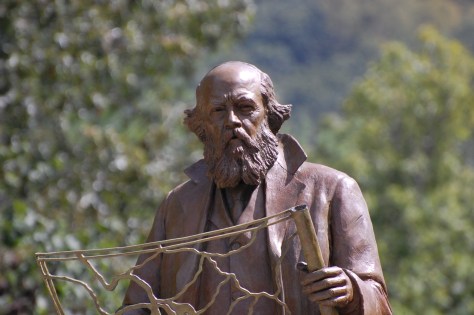
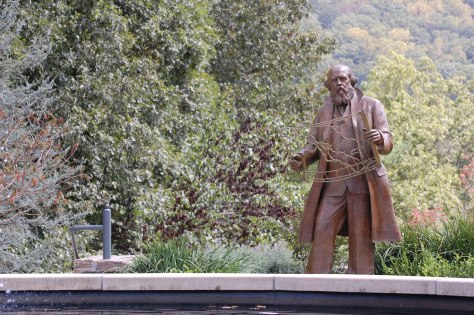
His influence is so great, that the Arboretum commissioned a statue of him:

dsc_0080

Frederick Law Olmsted. 8ft Bronze – Statue by Zenos Frudakis 2016 Photograph and Copyright Barbara Mattio


dsc_0077

Frederick Law Olmsted. 8ft Bronze – Statue by Zenos Frudakis 2016 – full view Photograph and Copyright by Barbara Mattio


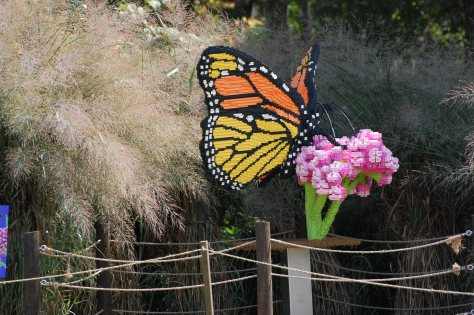
Also at the Arboretum this weekend — and for the rest of September and into October — is an exhibit of flower- and nature-based Lego sculptures, magnificent in both scale and execution.  I was so taken by their complexity and beauty, that I felt I had to share them with you, with some photos of some of the flowers they emulate.


I hope you enjoy them.


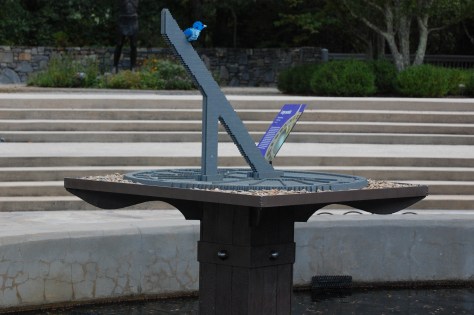
Sundial in Legos

Sundial in Legos Photograph and Copyright Barbara Mattio


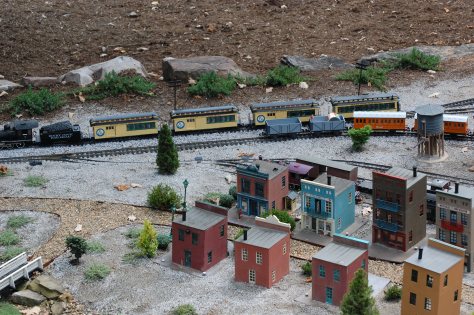
Train in the gardens. It is an O gauge. Photograph and copyright by Barbara Mattio,2016

Train in the gardens. It is an O gauge. Photograph and copyright by Barbara Mattio,2016


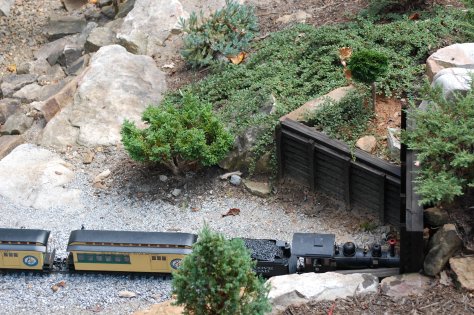
O gauge train. Photograph and copyright by Barbara Mattio, 2016

O gauge train. Photograph and copyright by Barbara Mattio, 2016


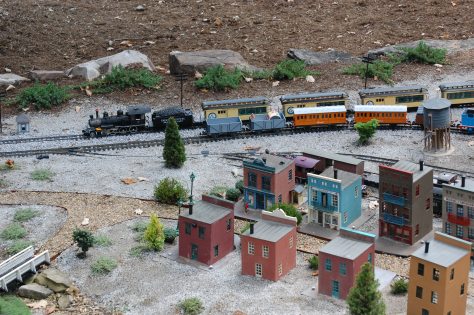
Two O gauge trains. Photography and copyright by Barbara Mattio, 2016

Two O gauge trains. Photography and copyright by Barbara Mattio, 2016


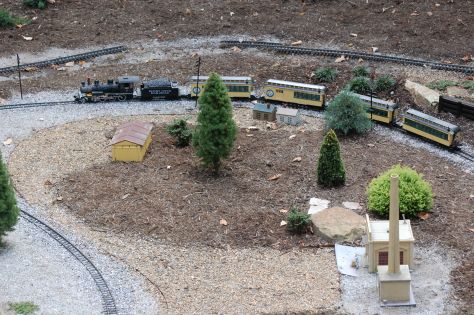
O gauge train. Photograph and copyright by Barbara Mattio, 2016

O gauge train. Photograph and copyright by Barbara Mattio, 2016


O gauge train photograph and copyright by Barbara Mattio, 2016

O gauge train photograph and copyright by Barbara Mattio, 2016


dsc_0164

Lego Woodpecker Photograph and Copyright Barbara Mattio


Giant White Lily Lego Sculpture (approx. 6 feet in length)

Giant White Lily Lego Sculpture (approx. 6 feet in length) Photograph and Copyright Barbara Mattio


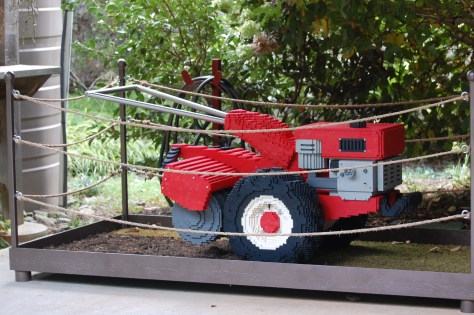
Life-Size Lego Rototiller

Life-Size Lego Rototiller Photograph and Copyright Barbara Mattio


Purple Orchid (this one is real!)

Purple Orchid (this one is real!) Photograph and Copyright Barbara Mattio


Lego Purple Orchid

Lego Purple Orchid Photograph and Copyright Barbara Mattio


Real Monarch Butterfly on Flower

Real Monarch Butterfly on Flower Photograph and Copyright Barbara Mattio


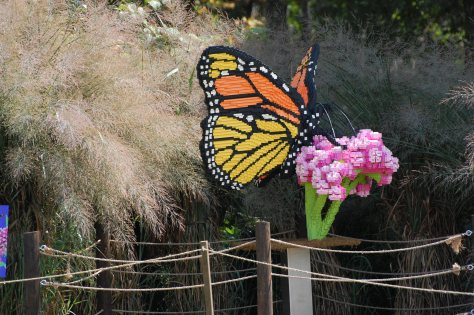
Lego Monarch Butterfly on Flower

Lego Monarch Butterfly on Flower Photograph and Copyright Barbara Mattio


Lego Hummingbird Drinking from Flower Photograph and Copyright Barbara Mattio

Lego Hummingbird Drinking from Flower Photograph and Copyright Barbara Mattio


Lego duck family. Photograph and copyright by Barbara Mattio,2016

Lego duck family. Photograph and copyright by Barbara Mattio,2016

The man stuffed and displayed like a wild animal


The man stuffed and displayed like a wild animal


This is one of the most unusual and creepy things I have heard of. I don’t like stuffed animals and stuffed humans is beyond the pale. But it is part of human history and one I hope we don’t repeat. I wonder, have we never had respect, kindness and compassion for each other?  We need to change this tendency in human nature.


Namaste

Barbara

An 1888 engraving of El Betchuanas

In the early 19th Century, it was fashionable for Europeans to collect wild animals from around the globe, bring them home and put them on display. One French dealer went further, bringing back the body of an African warrior. Dutch writer Frank Westerman came across the exhibit in a Spanish museum 30 years ago, and was determined to trace the man’s history.

WARNING: This story contains an image some readers may find disturbing

A decorative chain-link fence in the national colours – blue, white and black – marks the grave of one of the most famous, but least enviable sons of Botswana: “El Negro”. His resting place in a public park in the city of Gaborone, under a tree trunk and some rocks, is reminiscent of the tomb of an unknown soldier.

A metal plaque reads:

El Negro

Died c. 1830

Son of Africa

Carried to Europe in Death

Returned Home to African Soil

October 2000

El Negro's final resting place

His fame comes from his posthumous travels – lasting 170 years – as a museum exhibit in France and Spain. Generations of Europeans gaped at his half-naked body, which had been stuffed and mounted by a taxidermist. There he stood, nameless, exhibited like a trophy.

Back in 1983, as a university student from The Netherlands, I accidentally came across him on a hitchhiking trip to Spain. I had spent a night in the town of Banyoles, an hour north of Barcelona. The entrance of the Darder Museum of Natural History, behind a trio of leafless plane trees, happened to be next door.

Museu Darder

copyright Google – Museu Darder

“He’s real, you know,” a schoolgirl shouted at me.

“Who’s real?”

“El Negro!” Her voice blared out over the square – accompanied by the snorts and laughter of her friends.

The next instant an elderly woman stepped out of the hairdressing salon with a cardigan draped over her shoulders. A fragile lady with a pointy chin graced by a few single hairs, she turned a key ring around in her fingers like a rosary. Senora Lola opened up the museum, sold me a ticket and pointed in the direction of the reptile room.

“That way,” she ordered. “Then go through the rooms clockwise.”

As I was on my way to the Human Room, an annex of the Mammal Room, past a climbing wall with apes and the skeleton of a gorilla, my merriment gave way to a shudder. There he was, the stuffed Negro of Banyoles. A spear in his right hand, a shield in his left. Bending slightly, shoulders raised. Half-naked, with just a raffia decoration and a coarse orange loincloth.

El Negro turned out to be an adult male, skin and bones, who hardly came up to one’s elbow. He was standing in a glass case in the middle of the carpet.

This was not Madame Tussaud’s. I was not staring at an illusion of authenticity – this black man was neither a cast nor some kind of mummy. He was a human being, displayed like yet another wildlife specimen. History dictated that the taxidermist was a white European and his object a black African. The reverse was unimaginable. I flushed and felt the roots of my hair prickling – simply from a diffuse sense of shame.

Senora Lola didn’t have an explanation. She didn’t even have a catalogue or a brochure. She tapped a carousel postcard stand and stared at me through her glasses. I took a card of El Negro and read on the back: Museo Darder – Banyoles. Bechuana.

“Bechuana?”

Senora Lola kept staring at me. Head back, chin jutting forward. “The cards are 40 pesetas each,” she said.

I bought two.

postcard front and back

Twenty years later I decided to write a book about El Negro’s extraordinary journey from Botswana (Bechuana) to Banyoles and back again.

The story begins with Jules Verreaux, a French dealer in “naturalia”, who in 1831 witnessed the burial of a Tswana warrior in the African interior, a few days’ travel north of Capetown, and then returned at night – “not without danger to my own life” – to dig up the body and steal the skin, the skull and a few bones.

With the help of metal wire acting as a spine, wooden boards as shoulder blades, and stuffed with newspapers, Verreaux prepared and preserved the stolen body parts. Then he shipped him to Paris, along with a batch of stuffed animals in crates. In 1831 the African’s body appeared in a showroom at No 3, Rue Saint Fiacre.

In a review, the newspaper Le Constitutionnel praised the fearlessness of Jules Verreaux, who must have faced dangers “amid natives who are as wild as they are black”. This article set the tone, and the “individual of the Bechuana people” attracted more attention than the giraffes, hyenas or ostriches. “He is small in posture, black-skinned, and his head is covered in woolly frizzy hair,” the newspaper said.

More than half a century later, the “Bechuana” popped up in Spain. On the fringes of the world exhibition in Barcelona in 1888, the Spanish vet Francisco Darder presented him in a catalogue as “El Betchuanas”, complete with a drawing in which he is seen wearing raffia finery and holding a spear and a shield.

An 1888 engraving of El Betchuanas

By the 20th Century, having been brought over to Banyoles, a small city at the foot of the Pyrenees, his origins had been largely forgotten – on his pedestal was mistakenly written “Bushman of the Kalahari”. In the decades that followed, the link to his Tswana origins faded even further and he became known simply as “El Negro”.

At some point, the revealing loincloth that Jules Verreaux had decked him out in was replaced by the Roman-Catholic curators of the Banyoles museum with a more demure orange skirt. His skin was given a layer of shoe polish to make him seem blacker than he was.

Standing in his display case, slightly bowed and with a piercing gaze, El Negro embodied in a poignant and harrowing way, the darkest aspects of Europe’s colonial past. He confronted visitors head-on with theories of “scientific racism” – the classification of people according to their supposed inferiority or superiority on the basis of skull measurements and other false assumptions.

As the 20th Century progressed, El Negro became more and more of an anachronism. Not only was there increasing guilt and awareness of the fact that his body and grave had been violated, but as a European artefact from the 19th Century he reflected ideas that had become universally untenable.

Everything began to shift in 1992 when a Spanish doctor of Haitian origin suggested, in a letter to El Pais, that El Negro should be removed from the museum. The Olympic Games were coming to Barcelona that year and the lake of Banyoles was the venue for the rowing competitions. Surely, wrote Dr Alphonse Arcelin, any athletes and spectators who visited the local museum would take offence at the sight of a stuffed black man.

Arcelin’s call was supported by prominent names such as the US pastor Jesse Jackson and basketball player “Magic” Johnson. The Ghanaian Kofi Annan, then still Assistant Secretary-General of the UN, condemned the exhibit as “repulsive” and “barbarically insensitive”.

But due to heavy resistance among the Catalan people, who embraced El Negro as a “national” treasure, it was not until March 1997 that El Negro disappeared from public view and “Object 1004” was put into storage. Three years later, in the autumn of 2000, he began his final journey home.

Following long consultations with the Organisation for African Unity, Spain had agreed to repatriate the human remains to Botswana for a ceremonial reburial in African soil. The first stage of his repatriation was a night ride in a truck to Madrid.

Once in the capital, his stuffed body was divested of its non-human additions, such as his glass eyes. El Negro was dismantled – as if the film of the preparations that Jules Verreaux carried out 170 years earlier was simply rewound.

His skin, however, turned out to be hard and crusty – it crumbled. Because of this, and because of the treatment with shoe polish, it was decided to keep it in Spain. According to one newspaper report it was left behind at the Museum of Anthropology in Madrid.

So the coffin, destined for Botswana, contained only the skull and certain arm and leg bones.

Religious leaders accompany the coffin, draped in the flag and carried by Botswana soldiers, on 4 October 2000

copyright REUTERS Religious leaders accompany the coffin, carried by Botswana soldiers to its final resting place, on 4 October 2000


The remains of the Tswana warrior lay in state for a day in the capital Gaborone, where an estimated 10,000 people walked past to pay their last respects. The following day, 5 October 2000, he was committed to earth in a fenced-off area in the Tsholofelo park.

It was a Christian burial. “In the spirit of Jesus Christ,” the priest said with his hand on the Bible, “who also suffered.” An awning, supported by two rows of tent poles, protected the guests of honour from the sun.

“We are prepared to forgive,” said the then-Foreign Minister Mompati Merafhe to the assembled mourners. “But we must not forget the crimes of the past, so that we don’t repeat them.”

Blessings were pronounced, there was singing and dancing. Buglers wearing white gloves sounded a last salute.

Subsequently, the grave was neglected for many years, the field around it being used as a football pitch. Lately however, the Botswanan government has restored and enhanced the site with a visitor’s centre and explanatory signs.

But in 2016 it is still not known who this “son of Africa” was, what his name was, or exactly where he came from.

An autopsy, carried out in a Catalan hospital in 1995, nevertheless brought some things to light. The man who became world-renowned as El Negro lived to be about 27 years old. When alive, he stood between 1.35m and 1.4m tall (between 4ft 5in and 4ft 7in). He probably died of pneumonia.

Labor if you aren’t in the 1%


Striking photos of America’s child laborers reveal what work was like a century ago

The bloody origins of Labor Day — a holiday carved out from the post-Civil War clashes between workers and employers — have largely faded from public memory.

The day off is still a good time relax, but it’s worth remembering the grueling conditions faced by workers before the arrival of protections we often take for granted, like weekends off or 40-hour workweeks.

The first Labor Day was Tuesday,September 5, 1882, in New York City.

The American labor force has continued to evolve since then, but one of the biggest differences may be who is doing the work.

Lewis Hine, a photographer forthe National Child Labor Committee, captured photos of some of the children who made up the US labor force between 1908 and 1924.

Hine traveled throughout the US, documenting children working in factories, fields, and at home insupport the NCLC’s mission to promote the “rights, awareness, dignity, well-being and education of children and youth as they relate to work and working.”

The photos below, compiled by the Library of Congress, are the result of Hine and the NCLC’s work.

The descriptions come from NCLC caption cards, edited for clarity and length.

A Glassworks at midnight, taken in Indiana in August 1908.

Lewis Hine/Library of Congress


Jewel and Harold Walker, 6 and 5 years old, pick 20 to 25 pounds of cotton a day. Father said: “I promised ’em a little wagon if they’d pick steady, and now they have half a bagful in just a little while.” Location: Comanche County–[Geronimo], Oklahoma, October 1916.

Vance, a trapper Boy, 15 years old. He had trapped for several years in a West Virginia coal mine for $0.75 a day for 10 hours work. All he does is open and shut this door: Most of the time he sits here idle, waiting for the cars to come. On account of the intense darkness in the mine, the hieroglyphics on the door were not visible until plate was developed. Taken in September 1908.

Manuel, the young shrimp-picker, 5 years old and a mountain of child-labor oyster shells behind him. He worked the year before. Understands not a word of English. Dunbar, Lopez, Dukate Company. Location: Biloxi, Mississippi, February 1911.

Freddie Kafer, a very immature little newsie selling Saturday Evening Posts and newspapers at the entrance to the State Capitol. He did not know his age, nor much of anything else. He was said to be 5 or 6 years old. Nearby, Hine found Jack who said he was 8 years old, and who was carrying a bag full of Saturday Evening Posts, which weighed nearly 1/2 of his own weight. The bag weighed 24 pounds, and he weighed only 55 pounds. He carried this bag for several blocks to the car. Said he was taking them home. Sacramento, California, May 1915.

This little girl, like many others in this state, is so small she has to stand on a box to reach her machine. She is regularly employed as a knitter in a hosiery mill. Said she did not know how long she had worked there. Location: Loudon, Tennessee, December 1910.

Group of Breaker Boys in #9 Breaker, Hughestown Borough, Pennsylvania Coal Co. Location: Pittston, Pennsylvania, January 1911.

Four-year-old Mary, who shucks two pots of oysters a day and tends the baby when not working. The boss said that next year Mary will work steady as the rest of them. The mother is the fastest shucker in the place. She earns $1.50 a day. Works part of the time with her sick baby in her arms. Dunbar, Louisiana, March 1911.

Little Fannie, 7 years old, 48 inches high, helps sister in Elk Mills. Her sister (in photo) said, “Yes, she he’ps me right smart. Not all day but all she can. Yes, she started with me at six this mornin’.” These two belong to a family of 19 children. Taken in Fayetteville, Tennessee, November 1910.

Young cigarmakers at Englahardt & Co., Tampa, Florida. These boys looked under 14. Work was slack and youngsters were not being employed much. Youngsters all smoke. Witness Sara R. Hine. Taken January 1909.

The interior of a tobacco shed, Hawthorn Farm. Girls in foreground are 8, 9, and 10 years old. The 10-year-old makes $0.50 a day. Twelve workers on this farm were 8 to 14 years old, and about 15 are over 15 years. Location: Hazardville, Connecticut, August 1917.

A spinner takes moment’s glimpse of the outer world. She said she was 10 years old and had been working over a year. Lincolnton, North Carolina, November 1908.

The “Manly art of self-defense” Newsboys’ Protective Association, in Cincinnati, Ohio, taken around 1910.

Messenger boy working for Mackay Telegraph Company, said to be 15-years-old, Waco, Texas, September 1913.

Street gang, corner of Margaret & Water Streets – 4:30 p.m. Location: Springfield, Massachusetts, June 1916.

Nan de Gallant, 4 Clark Street, Eastport, Maine, a 9-year-old cartoner, Seacoast Canning Co., Factory No. 2. Packs some with her mother. Mother and two sisters work in factory. One sister has made $7 in one day. During the rush season, the women begin work at 7 a.m., and at times work until midnight. Brother works on boats. The family comes from Perry, Maine, just for the summer months. Work is very irregular. Nan is already a spoiled child. Location: Eastport, Maine, August 1911.

A “colored school” at Anthoston. Census 27, enrollment 12, attendance 7. Teacher expects 19 to be enrolled after work is over. “Tobacco keeps them out and they are short of hands.” Location: Henderson County, Kentucky, September 1913.

Boys picking over garbage on “the Dumps.” Location: Boston, Massachusetts, October 1909.


BJSquiggel


French police fire teargas at labor reform protesters

By Brian Love

PARIS (Reuters) – Riot police fired teargas and water cannon at protesters marching on Thursday in France against labor reforms in what unions say will likely be the last demonstrations to try to overturn the law.

Scuffles broke out in Paris and the western city of Nantes. Hooded youths hurled bottles, beer cans and on occasion makeshift firebombs on the fringes of marches against the law that will make hiring and firing easier.

As turnout fades after six months of protests, the head of the Force Ouvriere union signaled that the focus of opposition would now shift to legal challenges against the application of the new law, and that street marches were at an end.

“We are lifting our foot off the pedal for now. We are not going to do this every week,” Jean-Claude Mailly told reporters at a rally in Paris’s Place de la Bastille square.

Seven months from a presidential election, Mailly said that the unions would not let Socialist President Francois Hollande and his government off the hook.

“This law will be the chewing gum that sticks to the soles of the government’s shoes,” he told France 2 public television.

Mailly and Philippe Martinez, head of the CGT union, said they hoped legal challenges would force the withdrawal of the new law. They intend to challenge application decrees that will spell out exactly how the law applies on the ground.

The new law, forced through parliament in July, is designed to make France’s protective labor laws more flexible, in part by allowing firms to tailor pay and work terms to their needs more easily.

Martinez said the law could be exploited by employers to trim overtime pay from a 25 percent markup to 10 percent.

At their peak, the street protests brought close to 400,000 people into the streets last March but turnout has waned over time and was in the low thousands in most cities on Thursday according to early readouts from police.

Police said between 12,500 and 13,500 marched in Paris. More than a dozen people were arrested. Police representatives said about five police were injured.

The government hopes the law will help lower a jobless rate stuck close to 10 percent.

Unions say it will undermine high standards of labor protection as well as their ability to represent workers, notably in small firms where it will give employers more muscle to strike lower-standard deals on issues such as overtime pay.

(Additional reporting by Simon Carraud, Claude Canellas and Jean-Francois Rosnoblet; Writing by Brian Love; Editing by Richard Lough and Alison Williams)

BJSquiggel


 To the governments of the world:  You must treat your laborers fairly or your corporations will come down around you. In any country, workers banning together can bring a government down. Walk away from the greed and the feeling that you are better than the human beings working for you. We all deserve a decent roof over our heads, clean food, clean water to drink. We deserve educations and time in our lives to be people, the people we were created to be.
It is not fair to look at workers just as a means to an end; the end being you get to live well, while the workers are still living below the poverty line. Every human being has a right to a decent life and to dream dreams. Have things improved? Yes. Do they need to improve more? Yes. Do workers have a right to protest? Yes. They do if no one is listening to their demands and requests. They do not deserve to be attacked by police. Workers need to be treated with respect. The 1% wouldn’t get far without the rest of us.
Namaste
Barbara


Words and Music from Rumi


Take a few moments out of your day and sit and breath and allow Rumi’s words to heal and comfort you.

In harmony and love, Namaste, Barbara


Combat Flip Flops — Enlist in the Unarmed Forces


Many of us talk a lot about the eternal wars we seem to be involved in and that we want peace. Well, a peacenik friend send information about a company who is Paying It Forward. I did some research to see if it was authentic and it really is. Gift giving season is coming and this would be a way to put a check mark next to a name on your list and make a real difference.


I plan to join the unarmed forces and I hope that many of you will also join around the world. I am excited to share this company with you and that it will among other things help girls in Afghanistan get education.

Namaste

Barbara


BJSquiggel


THE MISSION

To create peaceful, forward-thinking opportunities for self-determined entrepreneurs affected by conflict. Our willingness to take bold risks, community connection, and distinct designs communicate, “Business, Not Bullets”–flipping the view on how wars are won. Through persistence, respect, and creativity, we empower the mindful consumer to manufacture peace through trade.


As Army Rangers with several Afghanistan tours behind them, Griff and Lee saw a country filled with hard-working, creative people who wanted jobs, not handouts.

Flip flops were just the start. We’ve taken a product that people in nearly every country on the planet wear, and made it a weapon for change. Right now, all our flip flops are made in Bogota, Colombia, providing jobs and investing in people who desperately need it. We’ve done that with all the products we sell.

Our USA made Claymore Bag’s flip the script, on traditional weapons of war. Instead of carrying bombs, these bags act as a carry-all for business tools like iPad’s, laptops and more.

Our Cover and Concealment sarongs are handmade in Afghanistan by local women. Each one takes three days to make, and each sale puts an Afghan girl into secondary school for a week.

The Peacemaker Bangle and Coinwrap are sent to us straight from artisans in Laos – and they’re made from bombs. Each bracelet sold clears 3 square meters of Unexploded Ordnance (UXO) from a region rocked by long-term war – saving lives and providing economic opportunity.

UNAPOLOGETICALLY, WE MAKE COOL STUFF IN DANGEROUS PLACES.

We do this because it’s our job to show others what’s possible, then encourage them to join us.


WELCOME TO THE UNARMED FORCES.


Their most popular product is their original, the AK47 flipflop:


ak_top_500_large


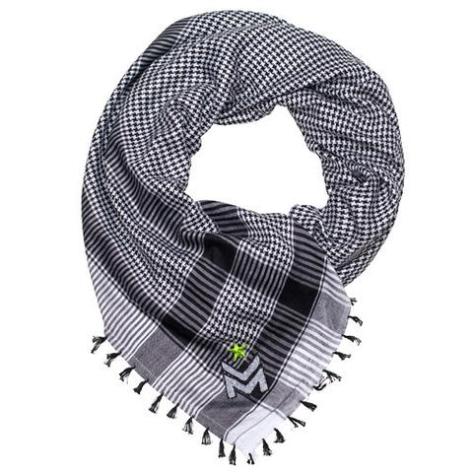
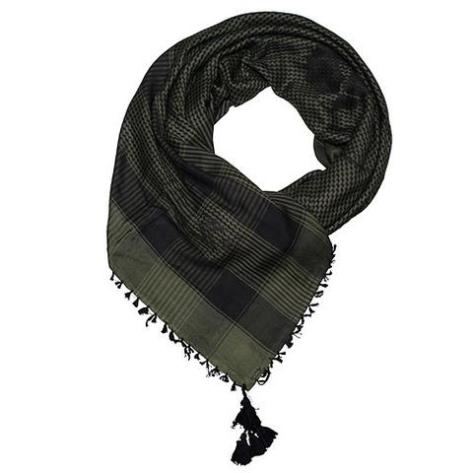
They also make fabric scarves, called shemaghs, made in Kabul, Afghanistan.  The sale of each shemagh puts one Afghan girl into secondary school for 1 day.  According to their website, 103 girls have been enrolled in school for the full year since Janaruy 2016.

These are the shemaghs available (more are on the website combatflipflops.com)

cff_white_500_large green_whole_shemagh_500_large


What she needs is an education. We can help give her one.

What she needs is an education. We can help give her one.


This week, in honor of back to school, charitable donations are increased by 2x


The charity supported is:  Aid Afghanistan for Education (AAE)

“When we educate a woman, we educate a family. Unless we educate the Afghan population, there will be no peace.”

~Hassina Sherjan, Executive Director, Aid Afghanistan for Education.

Devastation, war, and violence in Afghanistan created a regressive, fundamentalist education system that prevented modern education for children, and denied opportunities for women to work and fend for their families. We believe education is the only vehicle to a peaceful and prosperous Afghanistan. Every Afghan has the right to be educated, create opportunity, and add value to their country’s future.

Since 2003, AAE has established 13 schools in 9 provinces that educate marginalized Afghans deprived of an education during the years of conflict in the region—or do not have access to a formal education system. Currently, 3,000 female and 104 male students are attending AAE schools.

In Memorial for Those Who Died


It is the fifteenth anniversary of the largest attack on America since Pearl Harbor. My sister was in the hospital having surgery and I was in the waiting room. I asked the nurse to turn the TV on. It was maybe 30 seconds before the first plane hit.  That is all about me. From the depths of my heart I honor those killed at the 3 crash sites. Their bravery is legendary.


To all of the survivors, and including the first responders, I am sorry for your losses. Only the bravest of people were left here to continue the journey of life. I pray that each day brings you a little more peace and contentment and that the grief you hold lightens and pride replaces it. Thank you from the bottom of my heart to all of the first responders. May blessings be heaped upon the heads of everyone of you.  To the victims  WE HAVE NOT FORGOTTEN YOU.


Dakota Pipeline Protests


Protesters protesting pipeline going through sacred land

Protesters protesting pipeline going through sacred land

The original peoples of America, whom we took their land from are now standing up for the land and protesting the Dakota pipeline which is supposed to go through their land. Lousy land we pushed them onto, the Indian Reservations.  Now we want to build a pipeline through this land that we signed over to them and they worry about it breaking or leaking. This is their story.


Namaste

Barbara


bjwordpressdivider (1)

Domestic Violence Can End in Death


WOMEN

He Kidnapped, Beat And Tortured His Wife. Free On Bond, He Killed Her.

We know the risk factors for domestic homicide. So why are we failing to protect those in the gravest danger?

FAMILY PHOTO
The risk factors for domestic homicide are well-established. 

For 11 days this summer, Tierne Ewing was tortured by her husband.

Kevin Ewing kidnapped her, beat her, locked her in a closet, hit her in the head with a pistol, strangled her, burned her with a hot stick and made her sleep with a rope around her neck, according to Pennsylvania law enforcement. More than once, he put her in the bathtub and pointed a gun at her, threatening to kill them both.

On July 8, she managed to escape when Kevin allowed her to enter a bank. She was hysterical, and begged the bank tellers to call the police. After law enforcement arrived, she was too frightened to leave the building, telling them, “I don’t want to die.”

Kevin was arrested the same day and charged with kidnapping, aggravated assault, terroristic threats, unlawful possession of a firearm and other crimes. Less than two months later, while released on a $100,000 bond, he kidnapped his estranged wife again.

This time, he followed through on his threats.

On Aug. 30, Tierne was found shot to death in a barn. Her husband also shot himself in the head. Her death is now raising questions about what authorities in Washington County could have done differently.

District Attorney Eugene Vittone, who called Tierne’s murder a possibly“preventable tragedy,” told The Huffington Post that he has begun an investigation into what went wrong.

“We are trying to get all the facts and see where the system may be improved,” he said. “We probably need to take a look at how we address bail in these types of cases.”

While it’s impossible to predict every domestic violence case that turns lethal, experts believe that there are critical warning signs that can indicate when a case is especially dangerous and needs special monitoring.

Decades of research by Jacquelyn Campbell, a leading expert in domestic homicide, has helped to identify important risk factors for lethality, which include abusers’ access to firearms, previous strangulation attempts and death threats.

Her work has been distilled into an 11-question screening tool that a growing number of police departments across the country are now using to identify domestic violence victims who are at the greatest risk of being killed.

Tierne had almost all the signs of a woman in extreme danger.

She had been previously strangled, which made her seven times more likely to be killed by her abuser. Her husband owned guns, making her five times more likely to end up dead. He had threatened to kill her and himself. And she believed that he was capable of murder.

“I totally agree that it was preventable, because it was so predictable,” said Ellen Kramer, deputy director of program services at Pennsylvania Coalition Against Domestic Violence. “When you read down the list, this screams out for some kind of heightened safety measures for this victim.”

The case brought her to tears, she said.

Some police departments in Pennsylvania currently screen victims for risk of lethality, but the practice is not yet widespread.

PCADV has also created a fact sheet for judges on lethality factors, Kramer said, with the hope that courts will use it when assessing the danger that domestic violence offenders pose to their victims.

“If we are going to do something to prevent domestic violence homicides, communities have to come together in a much more meaningful way and understand lethality, and do a much better job at making sure that abusers like this guy don’t fall through the cracks,” she said. “My greatest hope is that Washington County can take a look at this, and learn something from it, make the changes that may be in order, and then share what they learned.”

Kevin posted bond after spending three days behind bars.

When the prosecutor handling the case, assistant district attorney Kristen Clingerman, found out he had been released from jail, she immediately asked the judge to increase his bail because of his history of domestic violence.

Tierne told Clingerman that if her husband was free, she was going to die.

“I had a really bad feeling,” Clingerman said. “In my heart, I knew that there was not going to be a good result. All the signs were there that this could be a fatality.”

While a judge denied her request for a bail increase, he agreed to some modifications that she asked for, including that the defendant have no contact with his wife, relinquish all weapons and wear an ankle bracelet that would alert authorities if he left the home. On the day he killed his wife, he cut it off.

Clingerman said that she did everything she could to keep Tierne safe.

“I wish that other people, whether they are lay people, family, law enforcement, would understand that domestic violence is so serious and so lethal,” she said. “If the defendant would have kidnapped a stranger off the street, and burned her and beat her and strangled her, I wonder what his bond would have been then.”

Between 2005 and 2015, at least 1,676 people in Pennsylvania were killed as a result of domestic violence, according to PCADV. (The Pennsylvania Coalition Against Domestic Violence)

Most of the victims were female domestic violence victims, but that number also includes children, law enforcement, friends, coworkers, passersby, and perpetrators who killed themselves or were killed by law enforcement.

Tierne’s death was not the first high profile domestic violence shooting in Pennsylvania this summer. Just last month, a man killed his wife and three kids on the day she had planned to move out.


BJSquiggel

Battered women often don’t leave because it is the most dangerous time in the cycle of violence. A tremendous number of men say “If I can’t have you, no one will have you.” However, it is a rare case that ends as this one did, when he had been through the system after she left and she still was murdered by her abuser.


A DV shelter will help you begin a new life under a new name with your children if that is necessary. If you do stay, sooner or later you will die. At your funeral, he will give you flowers for the first time in years, and people will console him because now he is alone without you. He will be the object of such considerate consolation.


No matter what material goods you have to leave behind, get out and stay out. If he threatens to kill you and you  believe him, take the children again and go to the shelter and ask for help getting to another city or even state. Some day your children will thank you.


Domestic Violence effects the entire entire family

Domestic Violence effects the entire entire family


Stop Abuse because it is wwrong and a crime

Stop Abuse because it is wrong and a crime


Even a slap, push or a shove is Domestic Violence

Even a slap, push or a shove is Domestic Violence