Part Time Monster has kindly nominated me for this award. I very much appreciate the nomination, and her — and I love that she is doing this as part of International Women’s Day and National Women’s History Month here in the U.S. Very cool take!
The rules of accepting the award are:
Display the award on your blog
Announce your win with a post and thank the blogger who nominated you.
Present 15 deserving bloggers with the award.
Link your nominees in the post and let them know of their nomination with a comment.
Post seven things about yourself.
7 Things about me:
I love Hershey’s Kisses
I am glad that I am a Woman
I love to eat Artichokes
I love to read, paint, take photographs and write
I like to laugh
I like to do needlepoint
I like classic rock, classical music, opera, ballet, blues, jazz, zydeco, pop
15 Nominees (I like what Part Time Monster did with this, so all my nominees are women)
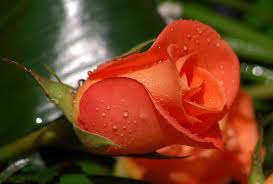
Dew is water in the form of droplets that appears on thin, exposed objects in the morning or evening due to condensation. As the exposed surface cools by radiating its heat, atmospheric moisture condenses at a rate greater than that at which it can evaporate, resulting in the formation of water droplets.
When temperatures are low enough, dew takes the form of ice; this form is called frost (frost is, however, not frozen dew).
Because dew is related to the temperature of surfaces, in late summer it is formed most easily on surfaces which are not warmed by conducted heat from deep ground, such as grass, leaves, railings, car roofs, and bridges.
~~Formation~~
Water vapour will condense into droplets depending on the temperature. The temperature at which droplets can form is called the dew point. When surface temperature…
I find that sometimes things happen that take our breath away either in a good way or in a bad way. We can have the wind knocked out from us by something happening that is so destructive that our lives will never be the same again, or something so good. so … beautiful, so wondrous that it changes our lives forever. These changes all have to be met so that you can adapt to the changes. I would say easily, but they are not always easy, in fact some may seem impossible, but impossible says “I’m Possible” There is always a way. Always
Life is an opportunity, benefit from it Life is beauty, admire it Life is a dream, realise it Life is a challenge, meet it Life is a duty, complete it Life is a game, play it Life is a promise, fulfill it Life is sorrow, overcome it
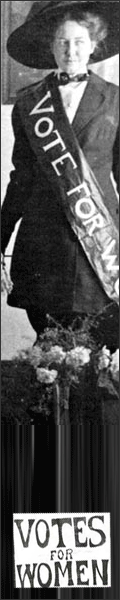
International Women’s Day has been observed since in the early 1900’s, a time of great expansion and turbulence in the industrialized world that saw booming population growth and the rise of radical ideologies.
1908
Great unrest and critical debate was occurring amongst women. Women’s oppression and inequality was spurring women to become more vocal and active in campaigning for change. Then in 1908, 15,000 women marched through New York City demanding shorter hours, better pay and voting rights.
1909
In accordance with a declaration by the Socialist Party of America, the first National Woman’s Day (NWD) was observed across the United States on 28 February. Women continued to celebrate NWD on the last Sunday of February until 1913.
1910
n 1910 a second International Conference of Working Women was held in Copenhagen. A woman named a Clara Zetkin (Leader of the ‘Women’s Office’ for the Social Democratic Party in Germany) tabled the idea of an International Women’s Day. She proposed that every year in every country there should be a celebration on the same day – a Women’s Day – to press for their demands. The conference of over 100 women from 17 countries, representing unions, socialist parties, working women’s clubs, and including the first three women elected to the Finnish parliament, greeted Zetkin’s suggestion with unanimous approval and thus International Women’s Day was the result.
1911
Following the decision agreed at Copenhagen in 1911, International Women’s Day (IWD) was honoured the first time in Austria, Denmark, Germany and Switzerland on 19 March. More than one million women and men attended IWD rallies campaigning for women’s rights to work, vote, be trained, to hold public office and end discrimination. However less than a week later on 25 March, the tragic ‘Triangle Fire’ in New York City took the lives of more than 140 working women, most of them Italian and Jewish immigrants. This disastrous event drew significant attention to working conditions and labour legislation in the United States that became a focus of subsequent International Women’s Day events. 1911 also saw women’s ‘Bread and Roses‘ campaign. 1913-1914
On the eve of World War I campaigning for peace, Russian women observed their first International Women’s Day on the last Sunday in February 1913. In 1913 following discussions, International Women’s Day was transferred to 8 March and this day has remained the global date for International Women’s Day ever since. In 1914 further women across Europe held rallies to campaign against the war and to express women’s solidarity.
1917
On the last Sunday of February, Russian women began a strike for “bread and peace” in response to the death over 2 million Russian soldiers in war. Opposed by political leaders the women continued to strike until four days later the Czar was forced to abdicate and the provisional Government granted women the right to vote. The date the women’s strike commenced was Sunday 23 February on the Julian calendar then in use in Russia. This day on the Gregorian calendar in use elsewhere was 8 March.
1918 – 1999
Since its birth in the socialist movement, International Women’s Day has grown to become a global day of recognition and celebration across developed and developing countries alike. For decades, IWD has grown from strength to strength annually. For many years the United Nations has held an annual IWD conference to coordinate international efforts for women’s rights and participation in social, political and economic processes. 1975 was designated as ‘International Women’s Year‘ by the United Nations. Women’s organisations and governments around the world have also observed IWD annually on 8 March by holding large-scale events that honour women’s advancement and while diligently reminding of the continued vigilance and action required to ensure that women’s equality is gained and maintained in all aspects of life.
2000 and beyond
IWD is now an official holiday in Afghanistan, Armenia, Azerbaijan, Belarus, Burkina Faso, Cambodia, China (for women only), Cuba, Georgia, Guinea-Bissau, Eritrea, Kazakhstan, Kyrgyzstan, Laos, Madagascar (for women only), Moldova, Mongolia, Montenegro, Nepal (for women only), Russia, Tajikistan, Turkmenistan, Uganda, Ukraine, Uzbekistan, Vietnam and Zambia. The tradition sees men honouring their mothers, wives, girlfriends, colleagues, etc with flowers and small gifts. In some countries IWD has the equivalent status of Mother’s Day where children give small presents to their mothers and grandmothers.
The new millennium has witnessed a significant change and attitudinal shift in both women’s and society’s thoughts about women’s equality and emancipation. Many from a younger generation feel that ‘all the battles have been won for women’ while many feminists from the 1970’s know only too well the longevity and ingrained complexity of patriarchy. With more women in the boardroom, greater equality in legislative rights, and an increased critical mass of women’s visibility as impressive role models in every aspect of life, one could think that women have gained true equality. The unfortunate fact is that women are still not paid equally to that of their male counterparts, women still are not present in equal numbers in business or politics, and globally women’s education, health and the violence against them is worse than that of men.
However, great improvements have been made. We do have female astronauts and prime ministers, school girls are welcomed into university, women can work and have a family, women have real choices. And so the tone and nature of IWD has, for the past few years, moved from being a reminder about the negatives to a celebration of the positives.
Annually on 8 March, thousands of events are held throughout the world to inspire women and celebrate achievements. A global web of rich and diverse local activity connects women from all around the world ranging from political rallies, business conferences, government activities and networking events through to local women’s craft markets, theatric performances, fashion parades and more.
Many global corporations have also started to more actively support IWD by running their own internal events and through supporting external ones. For example, on 8 March search engine and media giant Google some years even changes its logo on its global search pages. Year on year IWD is certainly increasing in status. The United States even designates the whole month of March as ‘Women’s History Month’.
So make a difference, think globally and act locally !! Make everyday International Women’s Day. Do your bit to ensure that the future for girls is bright, equal, safe and rewarding.
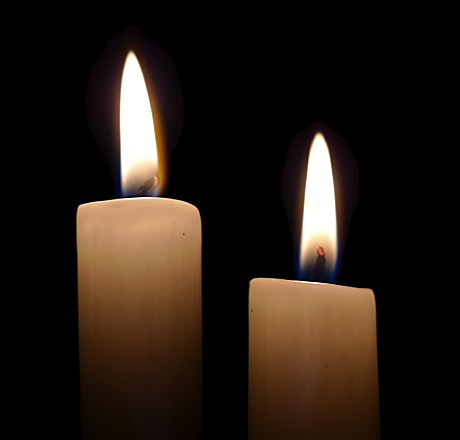
Women light candles while they take part in a rally to commemorate International Women’s Day in Karachi, Pakistan.Reuters
The world marks International Women’s Day on 8 March every year, at least since the United Nations recognised the official day of celebrations in 1975.
This year the day falls on Saturday.
Though officially in its 40th edition, the origin of International Women’s Day can be traced back to the early twentieth century in the form of various labour movements in North America and across Europe.
The chronology of the day’s history according to the UN is as below:
1909: The United States observed the first National Women’s Day on 28 Februray in honour of the 1908 garment workers’ strike in New York, where women protested against working conditions.
1910: A Women’s Day of international significance was established by The Socialist International, a global association of political parties seeking to establish democratic socialism, in Copenhagen to honour the movement for women’s rights. However, no fixed date was selected for the observance.
1911: March 19 was marked as International Women’s Day for the first time in Austria, Denmark, Germany and Switzerland, following the Copenhagen initiative.
Over one million women and men attended rallies and demanded women’s rights to vote, to hold public office, to work, to vocational training and to an end to discrimination on the job.
1913-1914: During their peace protest against World War I, women in Russia observed their first International Women’s Day on the last Sunday in February 1913.
Elsewhere in Europe, women held rallies either to protest the war or to express solidarity with other activists on or around 8 March in 1914.
1917: Once again on the last Sunday in February (which fell on 8 March on the Gregorian calendar), Russian women went on strike for “Bread and Peace”. On 12 March, the Czar stepped down and the provisional Government granted women the right to vote.
1945: The Charter of the United Nations, the first international agreement to affirm the principle of equality between women and men, was signed.
1975: The year was declared International Women’s Year by the UN which began celebrating International Women’s Day on 8 March.
International Women’s Day 2014 Theme: INSPIRING CHANGE
Women’s equality has made positive gains but the world is still unequal. International Women’s Day celebrates the social, political and economic achievements of women while focusing world attention on areas requiring further action.
Inspiring Change is the 2014 theme for our internationalwomensday.com global hub and encourages advocacy for women’s advancement everywhere in every way. It calls for challenging the status quo for women’s equality and vigilance inspiring positive change.
The vast array of communication channels, supportive spokespeople, equality research, campaigns and corporate responsibility initiatives means everyone can be an advocate inspiring change for women’s advancement.
Each year International Women’s Day (IWD) is celebrated on March 8. The first International Women’s Day was held in 1911. Thousands of events occur to mark the economic, political and social achievements of women. Organisations, governments, charities, educational institutions, women’s groups, corporations and the media celebrate the day.
Some groups select their own International Women’s Day theme, specific to their local context. For example, the European Parliament’s 2013 theme was “Women’s response to the crisis” and their 2012 theme “Equal pay for work of equal value”.
– 2013: A promise is a promise: Time for action to end violence against women
– 2012: Empower Rural Women – End Hunger and Poverty
– 2011: Equal access to education, training and science and technology
– 2010: Equal rights, equal opportunities: Progress for all
– 2009: Women and men united to end violence against women and girls
– 2008: Investing in Women and Girls
– 2007: Ending Impunity for Violence against Women and Girls
– 2006: Women in decision-making
– 2005: Gender Equality Beyond 2005: Building a More Secure Future
– 2004: Women and HIV/AIDS
– 2003: Gender Equality and the Millennium Development Goals
– 2002: Afghan Women Today: Realities and Opportunities
– 2001: Women and Peace: Women Managing Conflicts
– 2000: Women Uniting for Peace
– 1999: World Free of Violence against Women
– 1998: Women and Human Rights
– 1997: Women at the Peace Table
– 1996: Celebrating the Past, Planning for the Future
– 1975: United Nations recognizes International Women’s Day
Since March is Women’s history month, I will be sharing many stories of lesser known women who have remained authentic and real, despite anything that life throws at them. I salute every woman who ever lived and her story. I have great respect for the women who silently suffered what society gave them and allowed them. I respect every woman who broke out of the stereotype and reached her full potential despite what it cost her.
This is also the year women in the U.S. can gain legal equality. All women should be working for our equality. I, myself, would like to leave to our granddaughters a world where they are equal to everyone else, and where they do not need to live in violence or violence
Today, 8 March, marks the International Women’s Day! May it be a happy one to all the women of the world and as far as Croatian women are concerned my mind is turned to those who endured and survived with dignity the most horrendous of fates a woman (a human being) can endure. I turn to and bow the women that stood out and stand out as heroines of a nation (independent Croatia) created despite the brutal aggression, rape, ethnic cleansing, genocide … that swept across Croatia in the early 1990’s with only one intent: eradicate Croat lives, humiliate Croat lives … just because they are Croat and want freedom from communist totalitarian regime!
I also turn to the many Croatian women who left their stamp of truth, freedom and dedication to independence in many ways during the years of Croatia’s Homeland War and beyond.
Mensen maken de samenleving en nemen daarin een positie in. Deze website geeft toegang tot een diversiteit aan artikelen die gaan over 'samenleven', belicht vanuit verschillende perspectieven. De artikelen hebben gemeen dat er gezocht wordt naar wat 'mensen bindt, in plaats van wat hen scheidt'.







 idealisticrebel