
Monthly Archives: August 2015
The Enlightenment of Buddha
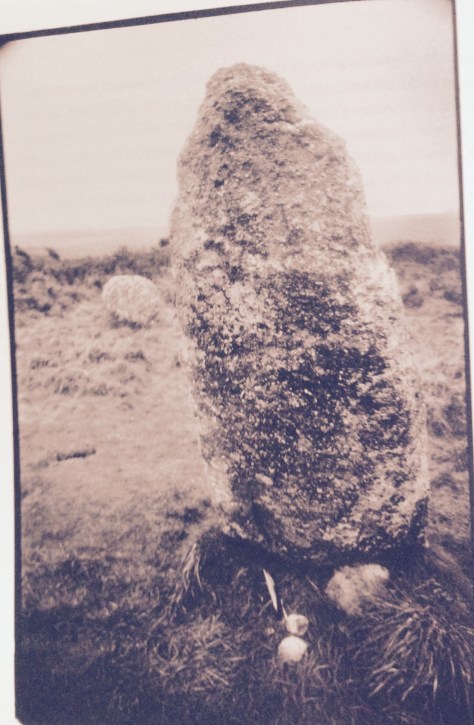
Buddha Nature
Copyright T.C. McLuhan
In an interview in 1984, the venerable Tara Tulku, Rinpoche, one of the last monks to receive a complete Buddhist training in his native Tibet before the catastrophic 1959 Chinese invasion, commented on the intrinsic nature of sacredness and its relationship to place. How ground becomes holy is considered within the context of Sakyamuni Buddha’s own metamorphosis at Bodhgaya, the immovable Spot near Gaya on the floodplain of the Ganges in northeast India.
The place itself under the Bodhi tree at Bodhgaya, was transformed as well. It became a place of diamond, a vajra place, a place of extreme sacredness. Why was it sacred? Because Buddha’s transformative experience of unexcelled perfect enlightenment blessed it in a special way.
Some people even believe that if you reach and stand on that place and take the Bodhisattva vow or make prayers to achieve Buddhahood for the benefit of all beings, then just because of the power of that place, you will never be reborn in the lower states. And if you meditate there, recite prayers, and study the place has a special power for the mind to come to realization.It is a place of light and bliss.
This is the place where Sakyamuni achieved the special Buddha body; a place which has only bliss and happiness and never suffers.
It doesn’t matter what religion people hold, if they are going with an open mind, if they are seeking truth. In this case, it is extremely meritorious to go to the holy sites of any religion.
Namaste, Barbara
Artist SHIRIN BARGHI CAPTURE #LASTWORDS SPOKEN BY BLACK VICTIMS OF POLICE MURDER

Are You a Feminist?
 What makes people decide to be a feminist person? For me it was reading about the witch trials in Europe and how women who understood the healing power of herbs and were in attunement with animals were called witches and killed in various horrible ways. Millions of women, men and children were killed for being witches. It was a mass hysteria which took over most of Europe and England. As always, there were sexual favors that might save your life. But torture was always a part of it and men were usually the jailers, guards, judges and executioners. Add to that the abuse from my childhood, and feminism was what made sense to me in this crazy world, though this was the seventies. We still live in a harsh, unjust and often uncompassionate world.
I got involved with Domestic Violence. And I was proud and excited to be able to help women and children; to be a feminist. “Feminist” is the only tag I will tolerate wearing. Many women live feminist lives and just don’t label themselves as such. I have known women who just never thought of themselves in these terms; but they lived it and passed it on to their children.
Feminists are like trees in a woods. We come in all sizes and shapes. Some are intensely passionate, as I was, and marched and picketed for women’s rights and children’s rights. Some quietly lived their lives without giving a thought to what kind of woman they were.
Every woman who has taught her sons never to hit a woman is a feminist, whether they use the term or not.
Every woman who has taught her sons that “no means no” is a feminist.
Every woman who insists their family functions with justice for all members is a feminist.
Every mother who teaches her daughters how to take care of themselves is a feminist.
A feminist isn’t a weird aberration of what a woman is. A feminist simply believes that all human beings are equal, regardless of sex.
He or she believes that women’s work is as important as a man’s, and they should be paid equal wages for equal work.
Feminists believe that no one should be owned. We do not believe that marriage means that one partner now owns the other. A couple, married or not, should be equal partners, each with their own set of strengths and weaknesses: a compliment to each other.
Feminists believe that no one should have control over a woman’s body except herself. Doctors and the government do not even try to tell men what to do to/with their bodies, yet it is acceptable for them to do so with a woman. Not to a feminist.
Feminists and Humanists believe that we are all brothers and sisters living on one planet together. We also believe that every child deserves a good education and corporate America should not benefit from these kids financially.
Feminists and Humanists believe that lives should be free from fear and violence. If you are in a violent relationship, get out. Call the hotline number on this blog and get the help you deserve.
It is time for a woman president. I strongly feel this. Men should not have all the power and control in governments and it is time to change this. There have been a few women leaders in countries around the world and now it is time for America to step into the future.
The time is way past the days of “the little woman at home, cleaning, taking care of children, and cooking dinners for the boss”. Those days, rightly, died out in the forties. They died out because of a man, Hitler who brought the world to the brink of destruction. Men were drafted to fight and push the Nazis back into Germany. So our government needed women to go to work. The icon of that age was “Rosie the riveter.”
Until the War, a woman had been told she only had value in the home, and then found out she had value in work outside of the home. Some even found out they enjoyed that work outside of the home; it made them feel needed and important. When WWII was over, women were forced back into the home to make jobs for returning vets. For some this was great. For some this chaffed like cheap wool on sensitive skin.
Then Betty Friedan wrote a book called the “Feminine Mystique” and the simmering pot boiled over. Many women wanted to work; others wanted to be home with their families. Many wanted to both have a job and family. Some women didn’t want to have children, and didn’t feel that made them incomplete, or less of a woman. None of this had to be an either/or choice. And suddenly, women began to realize that we do, indeed, have choices. We could be the woman we were meant to be. We weren’t less than men, and the choice we could make didn’t make us less of a woman, or more of a woman. Whatever we chose, we could be gloriously all we were meant to be, and all we wanted to be.
Progress is coming and women will be a part of it. We will partner in the future with feminist men and make this a better, fairer, kinder world. There will be equality for all lives. All lives will have quality. Hunger will end and disease will be cured not just for the wealthy but for the less fortunate also.
Whether you are a silent feminist, an outspoken one or not a feminist doesn’t matter. The future is coming and together we will make it be better than it has ever been.
Namaste, Barbara
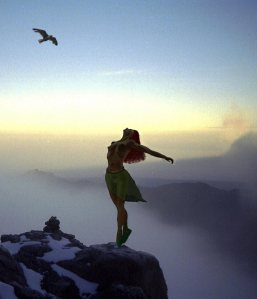
Embrace your world and make it be whatever you want.
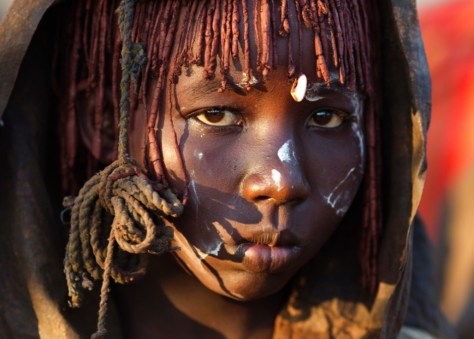
Just What is a Feminist?
I chose my subject this evening because I read a social media comment which described a feminist as a woman somewhere between an angry alien and a rabid wild animal. Now, I did not respond to the individual because I continue to work for peace and compassion in the world and in my personal world.
In case you are not aware, I am proud to be a feminist. A feminist is a woman. Just like any other woman. There are some differences. Feminists are men and women who believe females are people just like any man is a person.
Feminists also believe in equality. They believe that both sexes are born equal. Not every man can drive a race car at 100 mph, and not every woman can turn out a perfect Beef Wellington. Feminists do look at the world and see what is wrong and unjust. Some people look and turn away because what they see is horrific. For all of the wonderful people in this world of ours, there are many who are evil.
A feminist looks at what is wrong in the world and sees it and then begins to look at how it can be changed. Whether a feminist man or woman, they will not turn away from the ugliness but will work, speak out, write, protest to change the wrong.
We, as women, have the vote because of women like Susan B. Anthony and Elizabeth Cady Stanton and hundreds of Suffragettes (feminists) worked to make Congress to give us the vote. They even went to the dire length of handcuffing themselves to the White House fence. They were arrested, and once in jail they went on a hunger strike and the media told the world and we got the vote. This is of course, a simplified version of the tale.
I became a feminist in the seventies. Abuse was the issue that ignited my heart and passion. I do not believe that one person has the right to hit another. Women and children have the right to live without violence and fear. If a woman is the abuser, she needs to face the same consequences as any man who batters.
Women have the right to make their own decisions. To marry or not to. To pick her friends. Men have control over their bodies and the government would never think to tell them what to do with them. Even the man who hires the prostitute is usually protected from prosecution, while the woman is charged and will be in jail at least overnight. The government has repeatedly tried to control women’s bodies and how we choose to use them.
A feminist is a person who feels that women should receive equal pay for equal work. We have never had this in the USA. My sister found out she was making less than the men in her department. She was, justifiably, upset. She was doing more work than literally anyone in the company (when she left, her duties had to be spread over 5 people), yet she still made less than men with less education. Was that right? No.
Some feminists are wonderful wives and mothers, both stay-at-home mothers and working mothers. It is what they choose to be and that is great. I, myself, have nine grandchildren. I have also marched for Hard Hatted Women. Women who wanted the right to work in construction. It is their right to choose how to support themselves and /or their families.
So, like black lives matter, so do women’s lives. And for those who disagree, perhaps a long look in a mirror would be a good thing to try. Hugs, Barbara

A Saturday Adventure
Hello everyone. I thought I would tell you and show you about our adventure. On Saturday, Maggie, my sister and myself started out on the Blue Ridge Parkway. It was fascinating. Though still summer, there are many hues of green on the trees and shrubs. It was truly amazing. We went to the Folk Art Center, where local artists sell their wares and are often available to talk. Next we drove on to Black Mountain, where Maggie used to live. We had lunch with all the other tourists and took my sister to the old general store. They carry so many items. It is a huge building and it is full. Maggie hauled me over to a display of walking sticks.
Now I have my decade old cane which has a wizard carved into it. I keep refusing to get other sticks, but they both were hounding me and I did find one I like. They Amy found a matching one. They are from the Great Smokies and have bear prints on them. Amy told me they would be great for “off roading.” In other words, when they get me to leave solid ground for a trail. These beauties were the least expensive I have seen anywhere. So they came home with us.
I thought I would share some of my photographs from the day, with you.
Namaste, Barbara
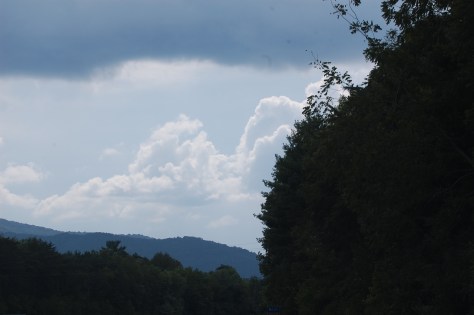
Really cool cloud formations as twilight begins to come upon us.
Photograph and copyright by Barbara Mattio 2015
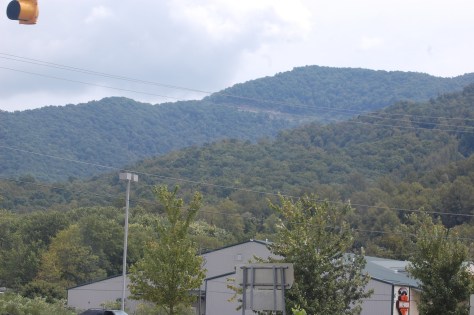
The mountains here are literally layer upon layer. There is a book published that gives all the names of the mountains. It is a fairly thick book. Photograph and copyright by Barbara Mattio 2015
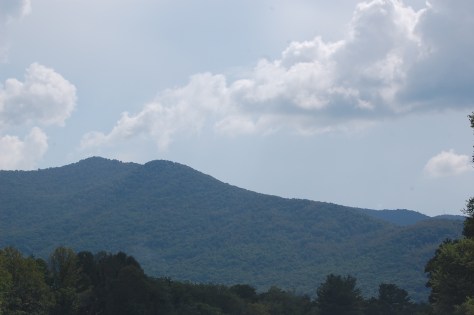
The clouds here are amazing. Photograph and copyright by
Barbara Mattio 2015
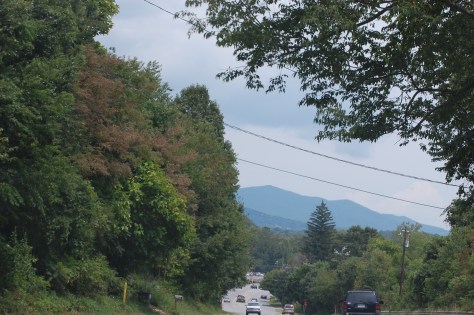
A predictor of autumn? Some leaves are turning colors. Photograph and copyright by Barbara Mattio 2015
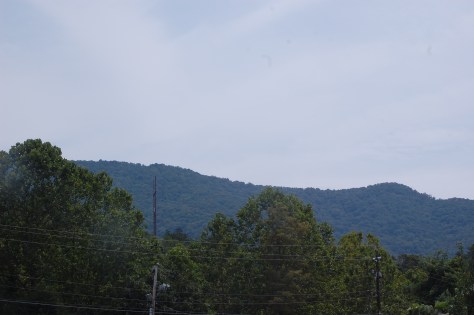 Blue Ridge Mountains. Photograph and copyright by
Barbara Mattio 2015
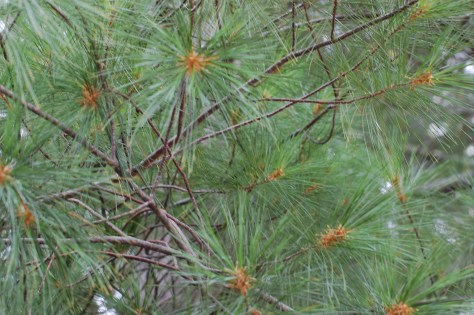
Thin needle evergreen. Photograph and copyright by Barbara Mattio 2015
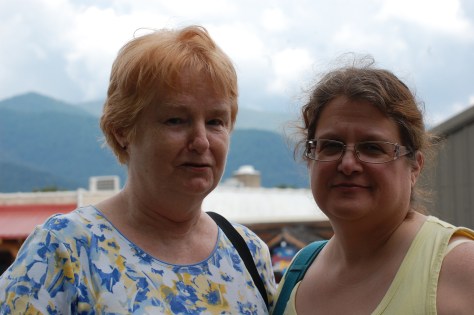
Maggie and Amy on our excursion.
Photograph and copyright by Barbara Mattio 2015
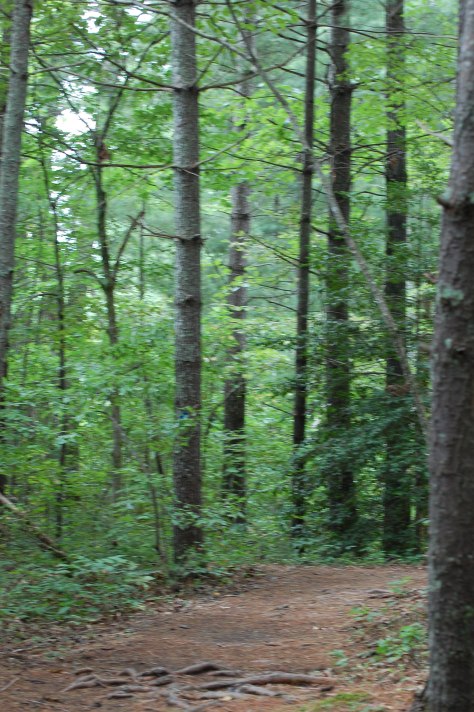
Off of the Blue Ridge Parkway. Photograph and copyright by Barbara Mattio 2015
Did you know there was Slavery in the North?

“The floor was very hard, and the bugs were terrible,” Mr. McGill, 54, recalled recently. “I woke up at about 3 a.m. to the sound of dogs barking in the distance. I’m not sure ‘spooky’ is the word, but the thought did run through my head of all those who had tried to escape.” The experience stuck with him, and in 2010 he formally began the Slave Dwelling Project, with the goal of filling what he calls “a void in preservation” at Southern plantations and beyond.
“We tend to save the iconic, architecturally significant buildings,” Mr. McGill said on a recent afternoon after leading a tour of restored slave cabins at Magnolia Plantation and Gardens in Charleston, where he works as a guide two days a week. “But what about these other buildings? They are part of the story, too.”
So far, Mr. McGill, whose ancestors were enslaved in Williamsburg County in South Carolina, has slept in more than 70 slave dwellings in 14 states, alone or in groups as large as 30, with the descendants of slaves sometimes lying alongside descendants of slave owners. This weekend, he is doing his first overnight stays in New York State, bedding down on three historic properties on eastern Long Island, in some of the region’s most beautiful (and expensive) resort areas.
If these are not places where slavery is the first — or 51st — thing to pop into visitors’ heads, it isn’t because it didn’t exist in them. In the mid-18th century, New York City’s slave market was second in size only to Charleston’s. Even after the Revolution, New York was the most significant slaveholding state north of the Mason-Dixon line. In 1790, nearly 40 percent of households in the area immediately around New York City owned slaves — a greater percentage than in any Southern state as a whole, according to one study.
In contrast to the image of large gangs working in cotton fields before retiring to a row of cabins, slaveholdings in New York State were small, with the enslaved often living singly or in small groups, working alongside and sleeping in the same houses as their owners. Privacy was scant, and in contrast to any notion of a less severe Northern slavery, the historical record is full of accounts of harsh punishments for misbehavior.
“Slavery in the North was different, but I don’t think it was any easier,” Mr. McGill said. “The enslaved were a lot more scrutinized in those places, a lot more restricted. That would have been very tough to endure.”
On his three previous trips to Northern states, Mr. McGill said, some people have wanted to connect his project to the Underground Railroad (slavery was legally abolished in New York State in 1827), or to the righteous cause of the Union Army.
“I get them out of that comfort zone,” he said. “It’s important to let them know that slavery was part of the Northern story, too.”
At each stop on Long Island, Mr. McGill will give a public talk about his project, which he says is aimed at making sure the perspective of slaves doesn’t fall out of history, even in places where the material traces of their existence may be scant.
“There’s more to the story than just glorifying the big house,” Mr. McGill said. “Why just tell the pretty parts of history? We’ve been doing that for far too long.”
Traces of Hard Lives

Slavery at Sylvester Manor
CreditNicole Bengiveno/The New York Times
Today, Shelter Island, nestled between the two forks of Long Island, is known as a quietly affluent summer community. But in the 17th century, its 8,000 acres made up the vast estate of Nathaniel Sylvester, an Englishman who used the land as a provisioning farm for his family’s sugar plantations in Barbados, and who was the first to bring enslaved Africans to what is now Suffolk County.
When Sylvester died in 1680, his will named 23 pieces of human property, making Sylvester Manor one of the largest slaveholding sites on Long Island. It is also the most intact, thanks to nearly 360 years of continuous Sylvester family habitation, which ended several years ago when the main house, built in 1737, and 243 surrounding acres became a nonprofit educational farm.
“The house is a record of all the lives lived here,” Maura Doyle, the historic preservation coordinator, said recently during an informal tour of the manor’s elegantly ramshackle, antique-stuffed rooms, which look as if the owners had gone out for a walk and never returned. “In repairing it,” she said, “we want to be careful not to Disneyfy the historic record.”
On Friday, Mr. McGill and a small group will sleep — or try to sleep — in the house’s stifling attic, reachable up the steep, twisting “slave stairs,” as they are known in manor lore. Little is documented about slave living conditions, but Ms. Doyle, picking her way past dusty trunks and cabinets filled with ornate china chamber pots and other family relics, pointed out the subtle traces of the hard lives endured under the eaves.
Random bits of paneling and scrap wood suggest efforts to carve out private spaces. Graffiti on several walls shows the outlines of sailing ships, probably carved by a Montaukett Indian boy who went to the manor as an indentured servant in 1829.
A few years ago, a researcher found a carefully arranged cache of ritual objects — a brass button, the frame of a writing slate — hidden under the floorboards, a trace of enduring West African religious practices similar to those found at other sites. Today, it is kept in the house’s concrete-walled vault, alongside treasures like a 1639 christening gown and an oversize teacup used by Henry Wadsworth Longfellow, a frequent visitor to the house.
The last slave at Sylvester Manor was freed in 1820, seven years before slavery was abolished in New York. But the complex story of African-Americans at Sylvester Manor does not end there.
Propped up on the lower part of the slave staircase is a photograph of Julia Johnson, a free black woman whose stepfather had saved enough money to buy land from his onetime Sylvester master. According to “The Manor” (2013), Mac Griswold’s history of the property, Johnson, who served three generations of Sylvesters as a housekeeper, eventually sold the waterfront parcel back to a Sylvester descendant at a bargain price.
Johnson, who died in 1907, was the last person buried in the small cemetery a few hundred yards from the house, where, Ms. Doyle said, more than 200 unmarked graves lie scattered in a grove of white pines, behind a large rock inscribed “Burying Ground of the Colored People of the Manor From 1651.”
“When we get even a scrap of a story about an individual, it’s so valuable,” Ms. Doyle said of the African-American side of the property’s history. “The record can be so silent.”
An Enslaved Poet’s Home

CreditNicole Bengiveno/The New York Times
The voices of the enslaved are more audible at Joseph Lloyd Manor, a white-shingled house on a steep slope overlooking Lloyd Harbor, in the North Shore town of Huntington.
In its heyday, the house was the seat of an estate belonging to one of the region’s wealthiest families. The family had a business shipping timber, crops and clay from 12 docks in the harbor, aided by an enslaved labor force that peaked at around a dozen on the eve of the Revolution. But these days, it’s more famous as the former home of Jupiter Hammon, an educated slave who in 1760 became the first published African-American poet.
Records show Hammon — who was born down the road from the manor around 1711, in a structure that still stands — traveling around the area to do business on behalf of the Lloyds. He tended his own garden of cash crops, according to information presented at the house, and at 22 he bought a Bible from his master for seven shillings and sixpence.
He served as a preacher for the African-Americans enslaved on the property, and his owners, who most likely educated him alongside their sons, encouraged him to publish his poems, which contained appeals to Christian piety (“O ye young and thoughtless youth/ Come seek the living God”) and a seemingly acquiescent view of slavery.
Hammon died sometime after 1790, at a time when owners were increasingly freeing slaves they could not or did not want to care for, leaving many homeless and impoverished.
“For my own part I do not wish to be free,” Hammon, in his 70s, wrote in his “Address to the Negroes of the State of New York,” published in 1787. “Yet I should be glad if others, especially the young Negroes, were to be free.” But in “An Essay on Slavery,” an unpublished poem from 1786 discovered two years ago in papers held at Yale University, he struck a more forceful tone, declaring: “Dark and dismal was the Day/ When slavery began/ All humble thoughts were put away/ Then slaves were made by Man.”
In the rear of the second floor, behind the genteel bedrooms of the Lloyd family, a room labeled “slave quarters” holds a bed and several mattresses bundled together on the floor, next to a large spinning wheel. “It’s meant to show that the work was never done,” Joan McGee, an educator with theSociety for the Preservation of Long Island Antiquities, which owns the property, explained during a recent visit.
On Thursday, Mr. McGill will sleep in a bigger room with a fireplace, presented as Hammon’s room, on a blue period-reproduction rope bed with a goose-feather mattress. Langston Hughes once described Hammon as a “privileged slave,” but such distinctions, Mr. McGill said, meant little.
“For any slave, beyond that little moment of serenity at bedtime, come daybreak, it was over,” he said. “They were back to doing things that benefited their masters, not themselves.”
Origins of a Rich Town

Slavery in Southampton, the oldest English settlement in New York, dates almost to its founding in the 1640s. A slave and Indian uprising burned many buildings in the 1650s. Census records show that by 1686, roughly 10 percent of the village’s nearly 800 inhabitants were slaves, many of whom helped work the rich agricultural land.
But this is not a part of its history that the town, better known for its spectacular beach and staggeringly expensive real estate, has been eager to embrace.
“I think for a while a lot of people didn’t know or didn’t want to acknowledge there were slaves out here,” said Brenda Simmons, executive director of the Southampton African-American Museum, which plans to open in an old barbershop — the village’s first designated African-American landmark — on North Sea Road. Mr. McGill’s visit, she said, “will help confirm the truth of the matter.”

On Saturday, Mr. McGill will spend the night on a bedroll in the kitchen of the Thomas Halsey Homestead, the oldest house in town, a gray shingled farmhouse on Main Street wedged between the weekend residence of the writer Tom Wolfe and a large house with a private golf course hidden behind an imposing hedge.
The homestead, established in 1648, can document having slaves at various points, including an unnamed man mentioned in the 1740 will of Thomas Halsey’s grandson. The house contains a gallery devoted to Shinnecock Indian culture, but no formal display is dedicated to slavery at the site, although guides discuss the subject.
“A lot of what we can say about slave life here is conjecture,” said Tom Edmonds, executive director of the Southampton Historical Museum, which owns the house. “No one wrote down, ‘My slave slept here.’ ”

The town has documented reminders of its African-American history, but not all of them have been well preserved. On Sunday, Mr. McGill will speak at the dedication of a marker on the site of the home of Pyrrhus Concer, an African-American born to an enslaved mother in 1814 who later became a whaler and is believed to be one of the Americans of African descent to set foot in Japan.
Concer’s house on the mansion-lined Lake Agawam, where he operated a ferry, was dismantled in January by private owners after a fierce preservation battle. But the tide may be turning. This summer, a small tourist boat named for Concer has been running on the lake, and in July the townearmarked $4.35 million to acquire the .82-acre site, where the house will be rebuilt, using its salvaged historical components.

The Slave Dwelling Project may be focused on places where people lived in bondage. But Mr. McGill said that it was also important to call attention to the fragile material traces of those who made the transition to freedom.
“The built environment of African-Americans has always suffered,” he said. “But all these tiny places can tell a story.”
A photograph from Southampton’s 250th anniversary celebration in 1890 shows Concer standing on a float with the town’s other aging whalers, thrusting a harpoon. When he died seven years later, he was buried in North Cemetery, under a marker inscribed: “Though born a slave, he possessed virtues without which kings are but slaves.”
Visiting the Sites
Joseph McGill, founder of the Slave Dwelling Project, will be staying overnight at three sites on Long Island and speaking about his experiences. Information on regular opening hours at the sites is on their individual websites.
JOSEPH LLOYD MANOR 1 Lloyd Lane, Lloyd Harbor, N.Y. Discussion with Mr. McGill on Thursday, 12:30 p.m., at Mac’s Steakhouse, 12 Gerard Street, Huntington; $45, including lunch, reservations required; 631-427-7045, Ext. 404. Reception with Mr. McGill and house tours, Thursday, 5:30 to 8:30 p.m.; free, reservations required; 631-692-4664. More information is at splia.org.
SYLVESTER MANOR 80 North Ferry Road, Shelter Island, N.Y. Panel discussion with Mr. McGill and others, Saturday, 1-2 p.m. House tours 12:15-2:45 p.m.; $10, reservations at 631-749-0626. More information is at sylvestermanor.org.
THOMAS HALSEY HOMESTEAD 249 South Main Street, Southampton, N.Y. Mr. McGill will speak at a dedication of a historic marker at the site of the former Pyrrhus Concer homestead, Agawam Park, Pond Lane, Southampton, Sunday, 11:30 a.m. More information is at southamptonhistoricalmuseum.org
Correction: August 13, 2015
An earlier version of this article, and a picture caption with it, referred incorrectly to Pyrrhus Concer. He is believed to be one of the first Americans of African descent to set foot in Japan, not one of the first people of African descent to do so.
The Blue Project
I recently found a new (to me) site called The Blue Project. It was started by Musician Jared Campbell to help middle schoolers and high schoolers deal with that difficult time, and to keep a positive attitude.
I found his music and message very uplifting, and thought you might enjoy it as well.
He wrote a song called World Changers about those who have come before us who, by simple acts, have had a major impact on the world. People such as Rosa Parks, Michael Jordan and Rachel Scott:
You can check it out more information about the project here: The Blue Project, and you can find more of Jason’s music here: The Blue Project Music
Paper Gods
I’ve always loved music. Classical, Rock, Pop, Jazz, BlueGrass, Zydeco, Reggae. I love the way it moves me, and makes me think.
My sister is the same way, and it’s a rare day when the stereo isn’t on in the house, or playing in our cars.
So it made sense that, over 30 years ago, my sister introduced me to her favorite band, which quickly became one of my favorites as well: Duran Duran.
At time, they were the most popular band in the world, but you would be ridiculed for liking them. But, as most of you know, I’ve never been that concerned about what other people think about what I think. We’re all entitled to our own opinions, after all, and no one has ever been able to scare me out of mine.
30 years after I first heard them, Duran Duran are still together, and still making records.
Yesterday, my sister introduced me to the title track of their new album, Paper Gods, being released on September 11.
If this song is any indication, we have a lot to look forward to!
I hope you enjoy it as much as my sister and I did.
Views from my new home
I am now settled into my new home which is in Asheville, NC. We have an apartment on the third floor and I have wonderful views of the mountains and the French Broad River. I have done some research and found out that the river is older than the mountains. I find that very cool. Also the river flows south to north and is the only one in America to do so.
I hope you enjoy the pictures:
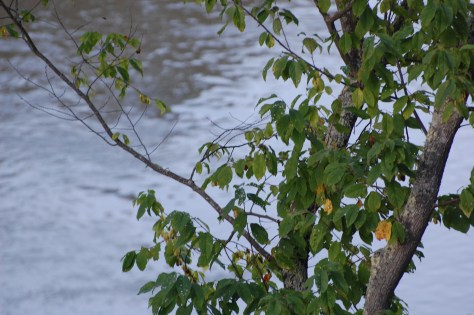
Photography and copyright Barbara Mattio 2015
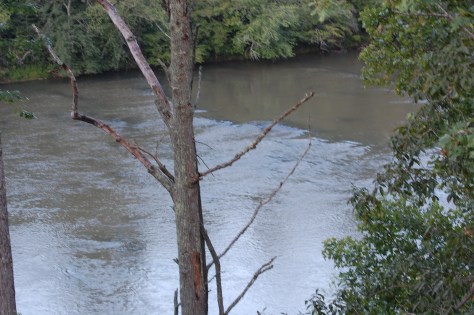
Photography and copyright by Barbara Mattio 2015
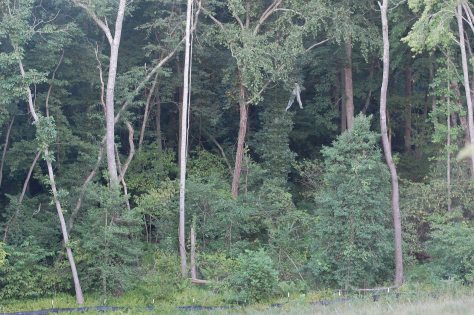
Photography and copyright by Barbara Mattio 2015
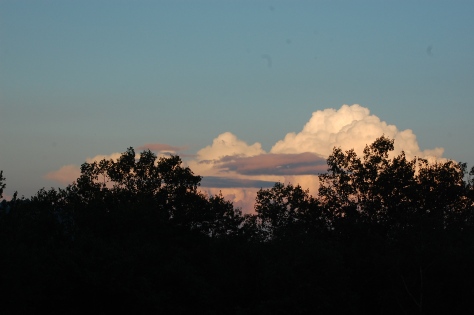
Photography and copyright by Barbara Mattio 2015
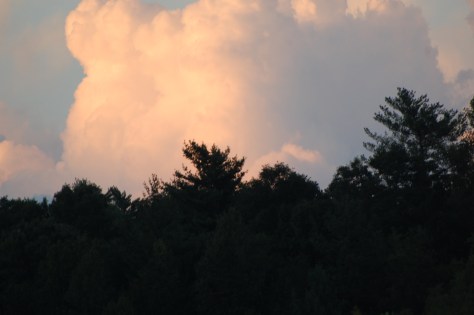
Photography and copyright by Barbara Mattio 2015
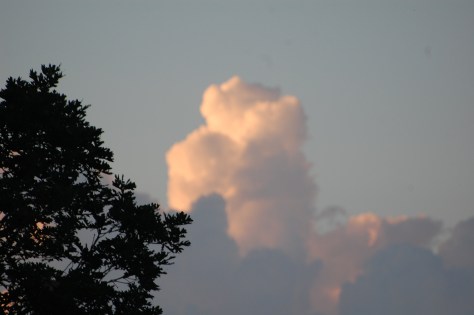
Photography and copyright by Barbara Mattio 2015
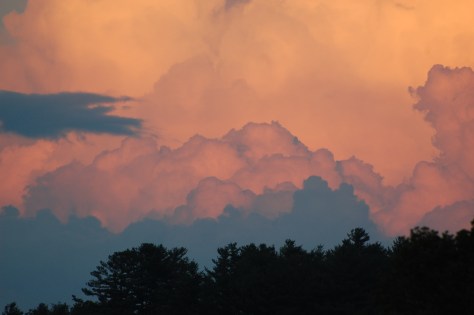
Photography and copyright by Barbara Mattio 2015
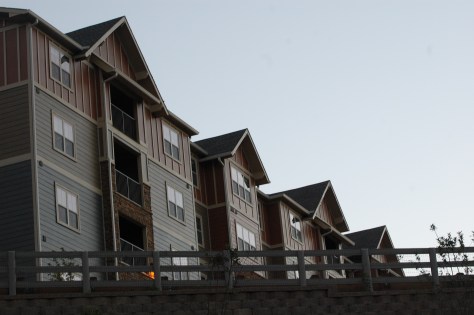
Photography and copyright by Barbara Mattio 2015
 idealisticrebel