Border Patrol prevents Journalist from reporting on Standing Rock


I’m a Journalist and Border Patrol Stopped Me From Covering Standing Rock


bjwordpressdivider-1


This is proof that America is being hypocritical about journalists and how they cover news stories such as Standing Rock. This will only get worse after Trump takes office. I am sure with as sensitive as he appears to be, he will be sure to limit what is covered in the press and on the TV. This is going to really challenge the First Amendment. We will have to really have keep our eyes on this. Let me know if you hear of any more incidences of censorship.


Namaste

Barbara

US Veterans build barracks for pipeline protesters


U.S. veterans build barracks for pipeline protesters in cold

Veterans have a demonstration on Backwater bridge during a protest against plans to pass the Dakota Access pipeline near the Standing Rock Indian Reservation, near Cannon Ball, North Dakota, U.S., December 1, 2016. REUTERS/Stephanie Keith

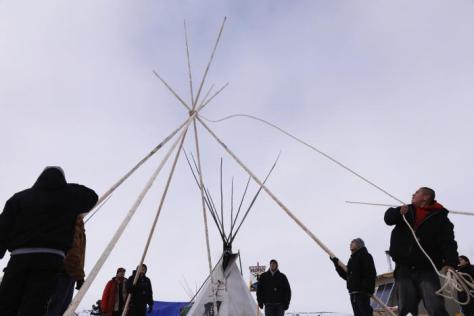
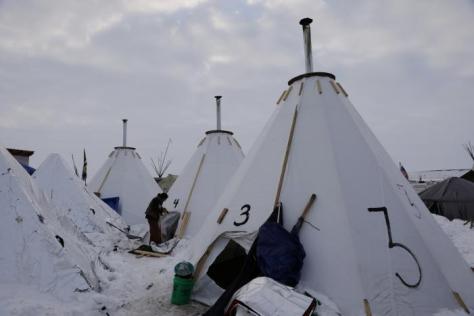
Members of the Oglala Lakota tribe erect a tipi inside of the Oceti Sakowin camp as "water protectors" continue to demonstrate against plans to pass the Dakota Access pipeline near the Standing Rock Indian Reservation, near Cannon Ball, North Dakota, U.S., December 2, 2016. REUTERS/Lucas Jackson

Members of the Oglala Lakota tribe erect a tipi inside of the Oceti Sakowin camp as “water protectors” continue to demonstrate against plans to pass the Dakota Access pipeline near the Standing Rock Indian Reservation, near Cannon Ball, North Dakota, U.S., December 2, 2016. REUTERS/Lucas Jackson


Benji Buffalo (R) greets a friend to his campsite inside of the Oceti Sakowin camp as "water protectors" continue to demonstrate against plans to pass the Dakota Access pipeline near the Standing Rock Indian Reservation, near Cannon Ball, North Dakota, U.S., December 2, 2016. REUTERS/Lucas Jackson

Benji Buffalo (R) greets a friend to his campsite inside of the Oceti Sakowin camp as “water protectors” continue to demonstrate against plans to pass the Dakota Access pipeline near the Standing Rock Indian Reservation, near Cannon Ball, North Dakota, U.S., December 2, 2016. REUTERS/Lucas Jackson


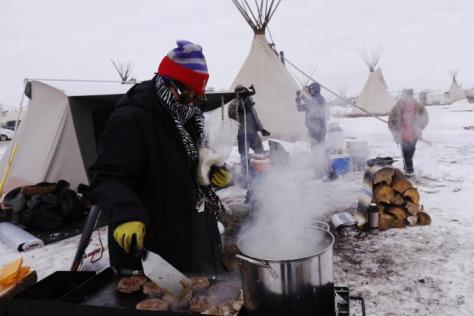
Campers cook lunch inside of the Oceti Sakowin camp as "water protectors" continue to demonstrate against plans to pass the Dakota Access pipeline near the Standing Rock Indian Reservation, near Cannon Ball, North Dakota, U.S., December 2, 2016. REUTERS/Lucas Jackson

Campers cook lunch inside of the Oceti Sakowin camp as “water protectors” continue to demonstrate against plans to pass the Dakota Access pipeline near the Standing Rock Indian Reservation, near Cannon Ball, North Dakota, U.S., December 2, 2016. REUTERS/Lucas Jackson


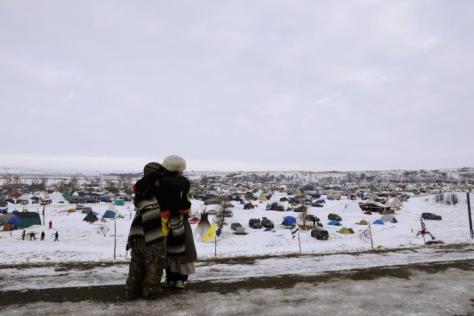
Demonstrators greet each other near the entrance of the Oceti Sakowin camp as "water protectors" continue demonstrations against plans to pass the Dakota Access pipeline continue near the Standing Rock Indian Reservation, near Cannon Ball, North Dakota, U.S., December 2, 2016. REUTERS/Lucas Jackson

Demonstrators greet each other near the entrance of the Oceti Sakowin camp as “water protectors” continue demonstrations against plans to pass the Dakota Access pipeline continue near the Standing Rock Indian Reservation, near Cannon Ball, North Dakota, U.S., December 2, 2016. REUTERS/Lucas Jackson


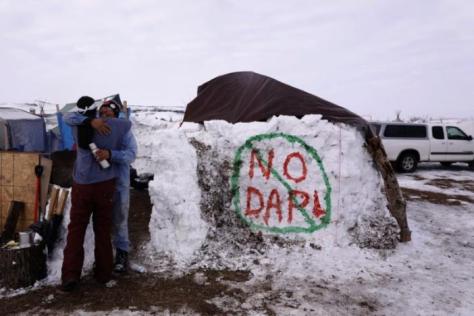
Benji Buffalo works to improve his campsite inside of the Oceti Sakowin camp as "water protectors" continue to demonstrate against plans to pass the Dakota Access pipeline near the Standing Rock Indian Reservation, near Cannon Ball, North Dakota, U.S., December 2, 2016. REUTERS/Lucas Jackson

Benji Buffalo works to improve his campsite inside of the Oceti Sakowin camp as “water protectors” continue to demonstrate against plans to pass the Dakota Access pipeline near the Standing Rock Indian Reservation, near Cannon Ball, North Dakota, U.S., December 2, 2016. REUTERS/Lucas Jackson


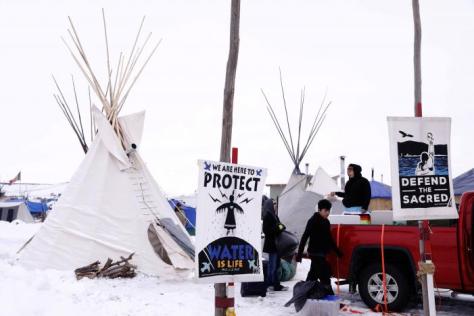
Messages of support adorn the side of a tipi inside of the Oceti Sakowin camp as "water protectors" continue to demonstrate against plans to pass the Dakota Access pipeline near the Standing Rock Indian Reservation, near Cannon Ball, North Dakota, U.S., December 2, 2016. REUTERS/Lucas Jackson

Messages of support adorn the side of a tipi inside of the Oceti Sakowin camp as “water protectors” continue to demonstrate against plans to pass the Dakota Access pipeline near the Standing Rock Indian Reservation, near Cannon Ball, North Dakota, U.S., December 2, 2016. REUTERS/Lucas Jackson


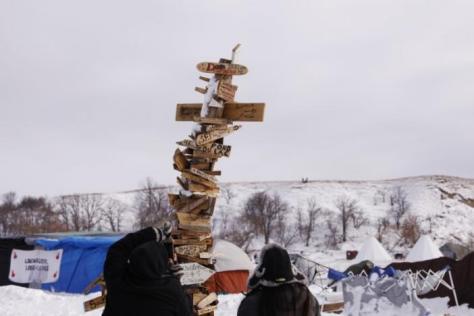
Campers photograph a signpost with the names of various tribes on it inside of the Oceti Sakowin camp as "water protectors" continue to demonstrate against plans to pass the Dakota Access pipeline near the Standing Rock Indian Reservation, near Cannon Ball, North Dakota, U.S., December 2, 2016. REUTERS/Lucas Jackson

Campers photograph a signpost with the names of various tribes on it inside of the Oceti Sakowin camp as “water protectors” continue to demonstrate against plans to pass the Dakota Access pipeline near the Standing Rock Indian Reservation, near Cannon Ball, North Dakota, U.S., December 2, 2016. REUTERS/Lucas Jackson


Members of the Oglala Lakota tribe erect a tipi inside of the Oceti Sakowin camp as "water protectors" continue to demonstrate against plans to pass the Dakota Access pipeline near the Standing Rock Indian Reservation, near Cannon Ball, North Dakota, U.S., December 2, 2016. REUTERS/Lucas Jackson

Members of the Oglala Lakota tribe erect a tipi inside of the Oceti Sakowin camp as “water protectors” continue to demonstrate against plans to pass the Dakota Access pipeline near the Standing Rock Indian Reservation, near Cannon Ball, North Dakota, U.S., December 2, 2016. REUTERS/Lucas Jackson


People donate food and equipment to campers inside of the Oceti Sakowin camp as "water protectors" continue to demonstrate against plans to pass the Dakota Access pipeline near the Standing Rock Indian Reservation, near Cannon Ball, North Dakota, U.S., December 2, 2016. REUTERS/Lucas Jackson

People donate food and equipment to campers inside of the Oceti Sakowin camp as “water protectors” continue to demonstrate against plans to pass the Dakota Access pipeline near the Standing Rock Indian Reservation, near Cannon Ball, North Dakota, U.S., December 2, 2016. REUTERS/Lucas Jackson


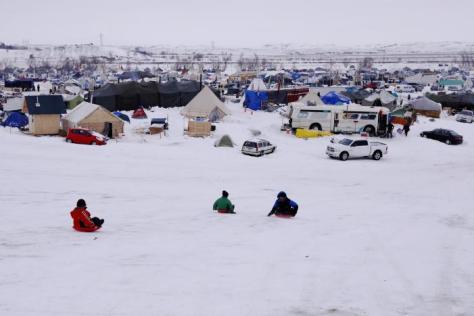
Children sled down a hill inside of the Oceti Sakowin camp as "water protectors" continue to demonstrate against plans to pass the Dakota Access pipeline near the Standing Rock Indian Reservation, near Cannon Ball, North Dakota, U.S., December 2, 2016. REUTERS/Lucas Jackson

Children sled down a hill inside of the Oceti Sakowin camp as “water protectors” continue to demonstrate against plans to pass the Dakota Access pipeline near the Standing Rock Indian Reservation, near Cannon Ball, North Dakota, U.S., December 2, 2016. REUTERS/Lucas Jackson


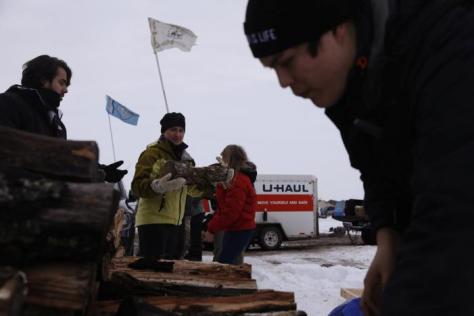
Campers unload donated wood inside of the Oceti Sakowin camp as "water protectors" continue to demonstrate against plans to pass the Dakota Access pipeline near the Standing Rock Indian Reservation, near Cannon Ball, North Dakota, U.S., December 2, 2016. REUTERS/Lucas Jackson

Campers unload donated wood inside of the Oceti Sakowin camp as “water protectors” continue to demonstrate against plans to pass the Dakota Access pipeline near the Standing Rock Indian Reservation, near Cannon Ball, North Dakota, U.S., December 2, 2016. REUTERS/Lucas Jackson


A camper works on her tent inside of the Oceti Sakowin camp as "water protectors" continue to demonstrate against plans to pass the Dakota Access pipeline near the Standing Rock Indian Reservation, near Cannon Ball, North Dakota, U.S., December 2, 2016. REUTERS/Lucas Jackson

A camper works on her tent inside of the Oceti Sakowin camp as “water protectors” continue to demonstrate against plans to pass the Dakota Access pipeline near the Standing Rock Indian Reservation, near Cannon Ball, North Dakota, U.S., December 2, 2016. REUTERS/Lucas Jackson


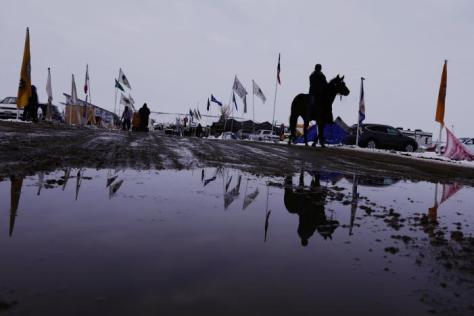
A man rides a horse down a road inside of the Oceti Sakowin camp as "water protectors" continue to demonstrate against plans to pass the Dakota Access pipeline near the Standing Rock Indian Reservation, near Cannon Ball, North Dakota, U.S., December 2, 2016. REUTERS/Lucas Jackson

A man rides a horse down a road inside of the Oceti Sakowin camp as “water protectors” continue to demonstrate against plans to pass the Dakota Access pipeline near the Standing Rock Indian Reservation, near Cannon Ball, North Dakota, U.S., December 2, 2016. REUTERS/Lucas Jackson


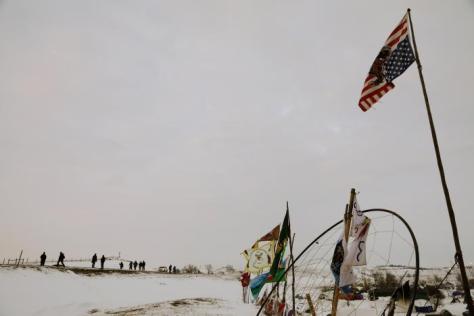
A group walks towards the entrance of the Oceti Sakowin camp as "water protectors" continue demonstrations against plans to pass the Dakota Access pipeline near the Standing Rock Indian Reservation, near Cannon Ball, North Dakota, U.S., December 2, 2016. REUTERS/Lucas Jackson

A group walks towards the entrance of the Oceti Sakowin camp as “water protectors” continue demonstrations against plans to pass the Dakota Access pipeline near the Standing Rock Indian Reservation, near Cannon Ball, North Dakota, U.S., December 2, 2016. REUTERS/Lucas Jackson


By Ernest Scheyder and Terray Sylvester | CANNON BALL, N.D.

U.S. military veterans were building barracks on Friday at a protest camp in North Dakota to support thousands of activists who have squared off against authorities in frigid conditions to oppose a multibillion-dollar pipeline project near a Native American reservation.

Veterans volunteering to be human shields have been arriving at the Oceti Sakowin camp near the small town of Cannon Ball, where they will work with protesters who have spent months demonstrating against plans to route the Dakota Access Pipeline beneath a lake near the Standing Rock Sioux Reservation, organizers said.

The Native Americans and protesters say the $3.8 billion pipeline threatens water resources and sacred sites.

Some of the more than 2,100 veterans who signed up on the Veterans Stand for Standing Rock group’s Facebook page are at the camp, with hundreds more expected during the weekend. Tribal leaders asked the veterans, who aim to form a wall in front of police to protect the protesters, to avoid confrontation with authorities and not get arrested.

Wesley Clark Jr, a writer whose father is retired U.S. Army General Wesley Clark, met with law enforcement on Friday to tell them that potentially 3,500 veterans would join the protest and the demonstrations would be carried out peacefully, protest leaders said.

The plan is for veterans to gather in Eagle Butte, a few hours away, and then travel by bus to the main protest camp, organizers said, adding that a big procession is planned for Monday.

Protesters began setting up tents, tepees and other structures in April, and the numbers swelled in August at the main camp.

Joshua Tree, 42, from Los Angeles, who has been visiting the camp for weeks at a time since September, said he felt pulled to the protest.

“Destiny called me here,” he said at the main camp. “We’re committed.”

“GO HOME”

The protesters’ voices have also been heard by companies linked to the pipeline, including banks that protesters have targeted for their financing of the pipeline.

Wells Fargo & Co (WFC.N) said in a Thursday letter it would meet with Standing Rock elders before Jan. 1 “to discuss their concerns related to Wells Fargo’s investment” in the project.

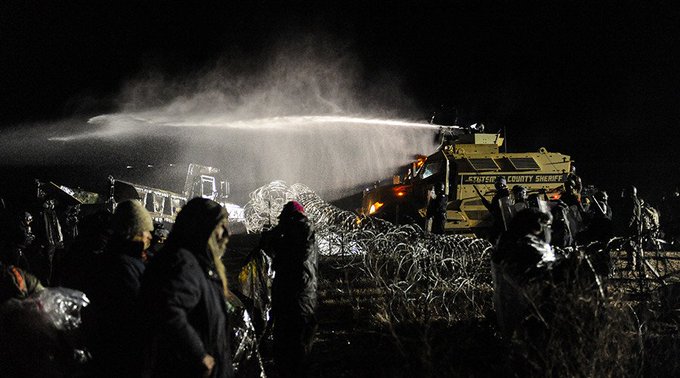
There have been violent confrontations near the route of the pipeline with state and local law enforcement, who used tear gas, rubber bullets and water hoses on the protesters, even in freezing weather.

The number of protesters in recent weeks has topped 1,000. State officials on Monday ordered them to leave the snowy camp, which is on U.S. Army Corps of Engineers land, citing harsh weather, but on Wednesday they said they would not enforce the order.

“There is an element there of people protesting who are frightening,” North Dakota Attorney General Wayne Stenehjem said on Thursday. “It’s time for them to go home.”

Morton County Sheriff Kyle Kirchmeier spoke by phone on Friday with U.S. Attorney General Loretta Lynch, but assistance for law enforcement and a timeline for a resolution to the situation were not offered, the sheriff’s office said.

Lynch said in a statement that the U.S. Department of Justice has been in communication with all sides in an effort to reduce tensions and foster dialogue. She said senior department officials will be deployed to the region as needed.

U.S. President-elect Donald Trump said on Thursday he supported the completion of the pipeline, and his transition team said he supported peaceful protests.

North Dakota Governor Jack Dalrymple said on Wednesday it was “probably not feasible” to reroute the pipeline, but he would try to rebuild a relationship with Standing Rock Sioux leaders.

On Friday, Morton County Commission Chairman Cody Schulz said his office has been working in conjunction with the governor’s office to meet with tribal leaders soon.

FREEZING COLD

Since the start of demonstrations, 564 people have been arrested, the Morton County Sheriff’s Department said.

State officials never contemplated forcibly removing protesters, and Dalrymple said his evacuation order stemmed mainly from concerns about dangerously cold temperatures.

The temperature in Cannon Ball is expected to fall to 4 degrees Fahrenheit (-16 Celsius) by the middle of next week, according to Weather.com forecasts.

The 1,172-mile (1,885-km) pipeline project, owned by Texas-based Energy Transfer Partners LP (ETP.N), is mostly complete, except for a segment planned to run under Lake Oahe, a reservoir formed by a dam on the Missouri River.

Protesters, who refer to themselves as “water protectors,” have been gearing up for the winter while they await the Army Corps decision on whether to allow Energy Transfer to tunnel under the river. The Army Corps has twice delayed that decision.


2,000 Veterans Standing up for Standing Rock


Dakota Pipeline Protesters Brave Winter’s Chill


GALLERY
DEC 2 2016, 11:45 AM ET

Dakota Pipeline Protesters Defy Winter’s Chill

Snow and biting temperatures are just a few of the challenges faced by protesters camped out near the site of the Dakota Access pipeline.

So far, those fighting the Dakota Access pipeline have shrugged off the heavy snow, icy winds and frigid temperatures that have swirled around their large encampment on the North Dakota grasslands. But if they defy next week’s government deadline to abandon the camp, demonstrators know the real deep freeze lies ahead. Life-threatening wind chills and towering snow drifts could mean the greatest challenge is simple survival.

Above: A student walks into the school at the Oceti Sakowin camp where people have gathered to protest the Dakota Access pipeline near Cannon Ball, North Dakota. The school teaches on average 20 students a day in the traditional Lakota curriculum as well as math, reading and writing.

David Goldman / AP

Loretta Reddog of Placerville, California, shovels a walkway to her tent while followed by her dog Gurdee Bean at the camp on Nov. 29.

“I’m scared. I’m a California girl, you know?” said Reddog who arrived several months ago with her two dogs and has yet to adjust to the harsher climate. Reddog has confidence in the camp community. “Everybody’s really stepping up and taking care of each other,” she said.

David Goldman / AP

Demonstrators sit on a closed bridge across from police protecting the Dakota Access oil pipeline site next to the camp on Nov. 30.

The camp is on the edge of the Standing Rock Sioux Reservation.

David Goldman / AP

Military veterans walk onto a closed bridge to protest across from police protecting the Dakota Access oil pipeline site on Dec. 1. Large groups of U.S. military veterans have said they will serve as “human shields” in any possible clashes with law enforcement at the site.

More than 525 people from across the country have been arrested since August. In a recent clash between police and protesters near the path of the pipeline, officers used tear gas, rubber bullets and large water hoses in sub-freezing temperatures.

David Goldman / AP

Beatrice Menase Kwe Jackson of the Ojibwe tribe leads a song during a traditional water ceremony along the Cannonball River at the camp on Nov. 29.

The pipeline is largely complete except for a short segment that is planned to pass beneath a Missouri River reservoir. The company doing the building says it is unwilling to reroute the project.

David Goldman / AP

A person prays along the Cannonball River during a Native American water ceremony at the camp on Nov. 29.

The government has ordered protesters to leave federal land by Dec. 5, but they insist they will stay for as long it takes to divert the $3.8 billion pipeline.

David Goldman / AP

A protester walks through a snow storm at the camp on Nov. 29.

David Goldman / AP

Grandma Redfeather of the Sioux tribe sits by the wood stove in her yurt at the camp on Nov. 29.

“I love it because I get to live my traditional way of life,” said Redfeather of living at the camp. “To see all the different tribal nations living together as a community, I would have loved my grandpa to see that.”

David Goldman / AP

A man stands inside a bus turned into a camper at the Oceti Sakowin camp on Nov. 30.

The camp covers a half square mile, with living quarters that include old school buses, fancy motorhomes and domelike yurts. Hay bales are piled around some teepees to keep out the wind. There’s even a crude corral for horses.

David Goldman / AP

Smokey, a member of the Sioux tribe, rides the horse Prophecy, a descendant of the horse belonging to war chief Crazy Horse, as he pulls a sled at the Oceti Sakowin camp on Nov. 29.

David Goldman / AP

Blackhorse Shasta, of Oregon, chops wood at the camp on Nov. 29.

Mountains of donated food and water are being stockpiled, as is firewood, much of which has come from outside of North Dakota, the least-forested state in the nation.

David Goldman / AP

Grandma Redfeather of the Sioux tribe walks in the snow to fetch water on Nov. 29.

“It’s for my people to live and so that the next seven generations can live also,” said Redfeather of why she came to the camp. “I think about my grandchildren and what it will be like for them.”

David Goldman / AP

Cat Bigney, of the Oglala tribe, waits on the shore of the Cannonball River for travelers to arrive by canoe at the camp on Dec. 1.

David Goldman / AP

Virginia Redstar, a member of the Colville tribe from Washington state, celebrates upon reaching shore by canoe at the camp on Dec. 1. Redstar and fellow tribal members traveled by canoe for 10 days down the Missouri River from Montana to reach the camp.

David Goldman / AP

Dan Nanamkin, of the Colville Nez Perce tribe in Nespelem, Washington, drums a traditional song on the shore of the Cannonball River before a group arrives by boat at the camp on Dec. 1.

David Goldman / AP

A protester is bundled against the chill at the camp on Nov. 29.


bjwordpressdivider-1


I am feeling a lot of admiration for the native people who are in the Dakotas in the freezing temperatures and the snow. They are proving that they come from a much hardier stock that those of us from European stock are. I am going to follow them all weekend because there are events unfolding that I believe warrant documenting. Say a prayer for their health and tenaciousness and say a prayer that they can find food.

Namaste

Barbara

Scientists are watching Trump on his science denial


2,300 Leading Scientists Send Trump A Clear Warning: We’re Watching You

An open letter signed by America’s top minds hopes to counter the influence of climate change deniers and oil execs.


MIKE SEGAR / REUTERS
President-elect Donald Trump’s administration needs to “support and rely on science as a key input for crafting public policy,” the scientists wrote. 

More than 2,300 scientists, including 22 Nobel Prize recipients, have a warning for Donald Trump: Respect science or prepare for a fight.

In an open letter Wednesday to the president-elect and Congress, scientists representing all 50 states called on the incoming administration to sufficiently fund scientific research as well as “support and rely on science as a key input for crafting public policy.”

Anything short of that, they stressed, is a direct threat to the health and safety of Americans and people around the world.

“The consequences are real: without this investment, children will be more vulnerable to lead poisoning, more people will be exposed to unsafe drugs and medical devices, and we will be less prepared to limit the impacts of increasing extreme weather and rising seas,” the letter reads.

The letter, organized by the Union of Concerned Scientists, comes amid growing concern about what a Trump presidency will mean for combatting today’s environmental challenges, namely climate change.

Trump and his fellow climate deniers have made it quite clear where they stand on the phenomenon and funding its continued study. Trump has dismissed climate change as “bullshit” and a Chinese “hoax,” and promised to pull the U.S. out of the historic Paris climate agreement. He has also said he would cut all federal spending on the issue, increase America’s production of coal, oil and natural gas, and do away with Obama administration regulations aimed at cutting emissions.


“Respect for science in policymaking should be a prerequisite for any Cabinet position” – .physicist Lewis Branscomb

In the weeks since the election, Trump has only added to scientists’ concerns by selecting climate change denier Myron Ebell and fossil fuel lobbyist Mike McKennato lead transition work at the Environmental Protection Agency and Department of Energy. Former Alaska Gov. Sarah Palin and oil executive Harold Hamm are front-runners to head the Interior Department, and Trump’s senior adviser on space policy wants to eliminate NASA’s research into climate change.

The letter, published Wednesday, features an impressive list of signatories, including David Baltimore, president emeritus of the California Institute of Technology; Eric Chivian, the founder and director of the Center for Health and the Global Environment at Harvard Medical School; and Wolfgang Ketterle, a German physicist and professor at Massachusetts Institute of Technology.

The scientists call on Trump and the 115th Congress to “adhere to high standards of scientific integrity and independence in responding to current and emerging public health and environmental threats.”

In a news release on the letter, Lewis Branscomb, a physicist and professor at the University of California, San Diego, said: “Americans recognize that science is critical to improving our quality of life, and when science is ignored or politically corrupted, it’s the American people who suffer. Respect for science in policymaking should be a prerequisite for any Cabinet position.”

The group also promised to keep a close eye on Trump ― and fight back if necessary.

“We will continue to champion efforts that strengthen the role of science in policy making and stand ready to hold accountable any who might seek to undermine it,” the letter states.

 bjwordpressdivider-1
It is illogical to not take care of Mother Earth. She will self-destruct without our peaceful intersession on her behalf. We have a responsibility to future generations of our families to protect and help her to heal. Don’t let Trump turn our world into a real dying planet.
Science is real. As it has been said, Science it True whether you believe it or not.  You can’t bury your head in the sand. This problem won’t go away. It will simply grow more serious.
Namaste,
Barbara
Mensensamenleving.me

Mensen maken de samenleving en nemen daarin een positie in. Deze website geeft toegang tot een diversiteit aan artikelen die gaan over 'samenleven', belicht vanuit verschillende perspectieven. De artikelen hebben gemeen dat er gezocht wordt naar wat 'mensen bindt, in plaats van wat hen scheidt'.

Best Photo Editing Service Provider

Enhance your photos with professional precision using our top-notch photo editing services

The Bee Writes...

🍀 “Be careful of what you know. That’s where your troubles begin” 🌷 Wade in The 3 Body Problem ~ Cixin Liu

John Oliver Mason

Observations about my life and the world around me.

Opalescence

The Middle Miocene Play of Color

Elicafrank's Blog

We didn’t end when we said goodbye maybe because the promise was ETERNITY

Ranjith's shortreads

Wanderers in the world

The Wallager

The news. The dog. Dialectics.

The Lewis Mix

Husband from Utah, Wife from Hong Kong, Two Mix Babies

Walter Singleton

Walter Singleton's blog, dedicated to Aiden Singleton and Seth Singleton living near Chattanooga, TN.

Gentle Joss / Wisdom of the Crone

Mentor and Writing assistance for women

Pax Et Dolor Magazine

Peace and Pain

SurveyStud, LLC

SurveyStud: https://appsto.re/us/Ddj18.i

Levi House

Speak out, judge righteously, defend the rights of the poor and the needy

Present Minded

A MODERN PERSPECTIVE ON COGNITIVE SCIENCE AND MENTAL HEALTH

oats

welcome!