October is Domestic Violence Awareness Month here in America.
Women are living in violence. Women are being raped by strangers, classmates or husbands. Violence is on the rise everywhere. Women do need to rise up and stand together. We need to scream, NO MORE VIOLENCE. Courts need to take a firm stand on Violence against women and maximum sentences should be given out and not community service. Community service does not make up for a woman being beaten so badly she ends up in the hospital. Community service does not make up for what is taken from a woman who is violently raped.
Rape isn’t about sex. It is about power and control. All violence against women is rooted in power and control. No matter how you attempt to rationalize it, violence against women has historically been a successful way of controlling women, in the home and in the community.
Things are really getting out of control in our world. Ladies, let’s take back our lives, our safety, our power, our ability to teach our children and grandchildren the right way to live; the right way to talk to each other, to women and to strangers. We must stop making excuses for those who practice violence in their lives. Those who insinuate violence, who hint at it if you don’t do what they want, are also practicing violence.
We have to rise up together, for together we are stronger. Together our voices are stronger. Together we can get the respect we deserve in non-violent ways. Ghandi taught non-violent protests. I believe in his teachings.
The female gender is approximately one half of the world’s population. Together we can demand equality and the right to live free from violence.
Namaste
Barbara
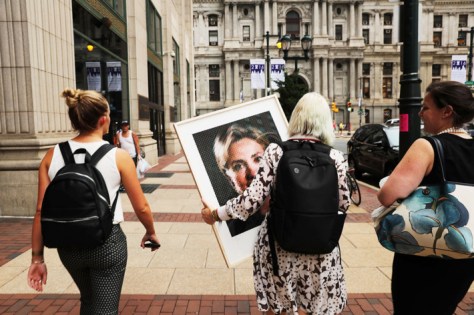
Women Strike in Argentina After the Brutal Rape and Murder of a 16-Year-Old Girl
PHOTO OF WOMEN IN MEXICO CITY PROTESTING THE FEMICIDES IN ARGENTINA BY PEDRO PARDO
Argentina has seen 226 femicides in 2016, with 19 in just October alone. Following the news of Lucia Perez’s murder, women gather to protest the ongoing violence against women in the country.
Today, women across Argentina are participating in a national protest against gender-based violence after a 16-year-old girl was drugged, raped, and murdered earlier this month. Prosecutors told media that two drug dealers forced Lucia Perez to consume a large amount of cocaine to incapacitate her, and “impaled her through the anus, causing pain so excruciating that she went into cardiac arrest and died,” The Straits Times reports.
“I know it’s not very professional to say this,” said Maria Isabel Sanchez, lead prosecutor on the case, “but I’m a mother and a woman, and though I’ve seen thousands of cases in my career, I’ve never seen anything like this.”
Perez joins a long list of victims of femicide in Argentina. Since her death on October 8, three more women were killed in separate incidents just in Córdoba, Argentina. The naked, strangled body of another woman, 22 years old, was discovered in a box in a vacant lot near Buenos Aires last week.
According to local media, Argentina has seen 226 femicides in 2016 so far, with 19 in the first 17 days of October alone.
In response to these killings, and in particular Perez’s brutal rape and murder, women’s rights organization Ni Una Menos and other groups dubbed today Black Wednesday to mourn those lost, calling for a “women’s strike” to demand an end to the violence and draw attention to the economic disparity between Argentine men and women. According to Economía Feminista, the wage gap between men and women in Argentina is approximately 27 percent; for informal jobs, which one-third of Argentine women have, that figure jumps to 40 percent.
Women were asked to wear black and walk out of their jobs and houses at 1 PM “to be seen, to be heard.” The hashtags #NiUnaMenos (Not One Less),#NosotrasParamos (Women Strike) and #VivasNosQueremos (We Want Ourselves Alive) have united protesters on social media.
In a document addressed to participants, organizers wrote: “Because behind the increase and viciousness of femicide and violence against women, there’s also an enormous economic plot; the lack of women’s autonomy leaves us unprotected when it comes to saying ‘no.’ In consequence, this lack of autonomy turns us into moving targets of trafficking networks or of ‘cheap’ bodies that are used for trafficking and retailing.”
Cassia Roth teaches Latin American history at the University of California-Los Angeles. She says socioeconomic factors influence gender-related violence. “Poverty requires many women to work outside of the home,” she tells Broadly, and when they do, men often feel emasculated because of a long history of “patriarchal gender relations that privilege male power and female submissiveness,” a lot of which has to do with family honor, toxic masculinity and a double sexual standard.
“All of these factors can converge in a patriarchal system that stresses male superiority and which normalizes violence towards women,” she says.
In July, Argentine President Mauricio Macri announced a national plan to lower the rates of violence against women. The plan includes working to change the patriarchal culture by introducing gender violence awareness into school curriculum.
But more needs to be done, Roth says. The protests today reveal a shift away from blaming the victim toward blaming the system, she continues. “This a larger problem and not an individual problem. The onus is not on women; the onus is on changing the way women are viewed in our culture.”
In an interview with Americas Quarterly, Ingrid Beck, one of the founders of Ni Una Menos, calls machismo a global issue. “Well if you look at what’s happening in the US, what [Donald] Trump is saying, to me it speaks to the fact that the problem isn’t just of the countries of Latin America.”
Roth agrees. “This culture is also present in the United States, where victim-blaming for both sexual crimes and domestic violence is still common, and a presidential candidate can be caught on tape talking about sexually assaulting women and pass it off as ‘locker room’ talk.'”
As gender issues have increasingly become central to this election — from Trump’s taped “locker-room talk” to the wave of sexual-harassment allegations that followed — it’s been easy to start feeling hopeless. The excitement of a woman approaching the White House is tempered by the vile misogyny of her opponent, who will eagerly gaslight, humiliate, and exploit women in order to stop her getting there.
But there’s something of a silver lining to the nastiness. Trump’s egregious behavior — in addition to laying bare GOP misogyny — is making it impossible to ignore the ongoing realities of sexism in this country. And many women are seizing this moment to make their voices heard. As the presidential campaign enters its final throes, I spoke to nine women about how this election has moved them to fight back against misogyny in their own lives, and how they plan to carry that mission forward beyond November 8.
Piper, 24, digital archivist
“Not only is this my first time voting for a Democrat, but up until a few months ago, I was a red-blooded, rural, Christian conservative from North Dakota. For the first time, hearing the sexism, hatred, and fear in Trump’s message opened my eyes to the insidious ways that I had been allowing sexism and the patriarchy to govern my life, but had always made excuses for it, justified it, and managed to ignore it because it was in less-offensive packaging. While his words are like barbed wire, the message is the same when coming out of the bills and legislation from more reasonable party members. Now I can’t look away. Thanks to Trump, I’m a newly awoken woman and am proselytizing everyone in my family, my hometown, my (former) church, everyone from my old life: It’s easy to denounce a dog who’s barking this loudly, but whether he’s howling or not barking at all, he (and the party at large) are the same dog.
Everyone else in my life, though, has really engaged in the conversation and, for the first time, we’re willing to discuss the ‘sacred’ GOP in a critical light. My formerly conservative boyfriend has come with me on this journey and now freely admits to being a feminist himself, though a few months ago, before this election cycle, I think through perpetuated misinformation, he would have considered it a dirty or shameful word.”
Lani, 45, professor
“My female colleagues and I have an informal network to help us navigate the sexual predators or rampant misogynists in our midst. We will warn each other about the bad behavior in various departments so we can navigate ourselves and our students away from those places. It seems like the typical strategy of the powerless, doesn’t it?
I recently I got an email from somebody in one of these known departments. The email had a job and asked me to send potential candidates their way. Instead of ignoring it or deleting it like I might normally do, I decided to write back. I let the sender know that their department was known for having an unchecked sexual predator in their midst. I let the sender know that under no circumstances would I advise a junior colleague to take a position in the department given the nonresponse of the administration to complaints that I know were lodged by some of my colleagues there.
I am quite clear that this shift in my response comes out of my frustration at how women are continually silenced and how this response, in turn, manages to protect toxic bad behavior. But I also know that we often feel powerless because our complaints are met with nonresponses by universities. I hope that withholding potential strong candidates can incentivize universities to do better. I think, like many women, I am fed up with our silence around chronic abusers. It was right after Sunday’s debate that I chose to respond in that way. The connection was quite clear.”
Ashley, 35, public-relations professional
“In my high-school years I was a pretty active member of the local riot-grrrl scene, but as I got older I sort of fell out of touch with my own feminism until this election. It’s brought me closer to the women in my life — my mom, my sister, and my friends of all forms of feminism — people of color, LGBT women, and my concerns lie in how we keep this going past November 8. Just because misogyny right now has a face and a name in Donald Trump, doesn’t mean it is done.
One of the ways I’m thinking about extending this beyond November is by becoming more engaged in political issues impacting women on a local and state level, especially looking at things like equal pay, health care, and parental leave. I’m also taking a more active role in my profession to mentor and support younger women to develop more confidence in sharing ideas and owning their seat at the table. I think the biggest change in behavior is looking at women’s issues beyond those that directly impact me. Being less selfish with my feminism and thinking about how political policy impacts women of all ages around the world. I feel closer to the women around me as we’ve shared our experiences with misogyny and learned a lot from some of their particular experiences as women of color and LGBT women. My mom and I haven’t always seen eye-to-eye on who we vote for, but as a nurse she’s felt a lot of sexism in the workplace, and that’s drawn us closer together.”
Maybe that this entire, convulsive moment of horribleness is also an opportunity to talk about it, as painful as itis.
Sonia, 30, writer
“After the [Access Hollywood] video came out, what I saw happening on Twitter was the cycle of making jokes about this phrase. But I was like: I actually think that’s very much a real thing, and not everyone realized that. And women who had experienced that maybe felt like they were floundering, because it’s really confusing when something that has happened to you, that made you feel like a victim and was traumatizing, hits the news cycle, because then you are facing it regularly. And then, when it becomes something that is funny, it minimizes what it really is.
So I posted this thing on my Twitter that was like: I’m sure that a lot of women are remembering the time this happened to them, and if this has happened to you, share it. It seemed important to share what that story was. So I started doing that, and I was surprised at how many responses I got. It was pretty crazy how many women responded from all kinds of ages, like, I was walking on the street, or in a boardroom, or in a concert. It was really intense — responses kept coming in. So many women were saying: This is this thing that sounds like a joke, and this is the reality that we live in. And I wasn’t quite prepared for the reality that we live in, that so many women could say something that was so upsetting. It was both me trying to make a point and me realizing a point. It was pretty emotional hearing all of this. It sort of has felt like this is the only thing I can do.
What’s cool is I’ve seen women with much bigger follower counts do the same thing. It sort of seems like there’s this massive catharsis happening where a lot of women who wouldn’t have felt comfortable to speak up even a couple of years ago are realizing that they don’t have to be afraid of what will happen, and maybe that this entire convulsive moment of horribleness is also an opportunity to talk about it, as painful as it is.”
Jen*, 26, freelance producer
“I think even in my adulthood, even until very recently, and kind of even now, I have this weird thing in my head of, Oh, sex is a compromise. Which it can be. But I think I have never really stood firm in my ability to say no to things. We have this idea that women have the right to say no, but I’ve always thought of that as, ‘I have the right to say no to a stranger.’ I never really thought about that as, ‘Oh, I have the right to say no to someone I like and care about, because I still have autonomy.’ And I think my view is kind of shifting about what I’m willing to take or not take.
I had some very interesting conversations when the Donald Trump stuff came out, partially because I tweeted a story about experiencing a sexual assault. Guys started tweeting at me saying, Oh my god, this is so terrible, I can’t believe women go through this, what can we do to help? And then I thought through the guys in my life who generally think of themselves as respectful towards women, and who I generally think of as respectful towards women, but when I got into bed with them it was like: No, you pushed me way too far, over and over again. I think one of the things we can do is help the ‘good guys’ to see their blind spots. So, I called some of those guys who had made me uncomfortable and actually had some amazing conversations. Because there are things like that that I remember so unbelievably vividly, because I was so uncomfortable at the time, that they hardly remember at all.
There was one situation that made me immensely uncomfortable. So I wanted to talk to the guy about it. I tried to talk to him about it that morning, but he wouldn’t hear it, and then when I eventually did bring it up, he kept shutting me down. And that night rang in my head over and over because it was so uncomfortable for me. So we hadn’t talked in a while and I emailed him, and I was just like, Hey, it’s been a while, but do you think we could have a conversation? And I don’t know if it’s because time went by or what, but we talked, and we had the conversation, and I tried to tell him in very calm terms, like, I’m not here to attack you, I just need you to know this is how I felt, and I just want you to be aware of it for the future. And he was amazingly responsive. Of course, one conversation doesn’t solve anything, but I’m kind of happy that he kind of gets it.”
Emily, 28, journalist
“In general, I’ve noticed that I’ve really been relishing the moments when I’m surrounded exclusively by women. I’ve also realized how lucky I am to have those moments automatically as a part of my day since I work on an all-female team in the fashion industry. I feel like that’s a luxury and a built-in support group not many women get to experience in their lives.
This past Friday, I was egged by a man while having a conversation with friends in a courtyard about creating safe spaces for women … After our initial shock, the experience weirdly bonded us together and allowed us to have a deeper conversation and open up about previous experiences of violence or alienation we’ve had in our lives.”
Colleen, PhD student and researcher
“While a graduate student at Duke, I was sexually assaulted. Due to a combination of denial, exhaustion, and fear of professional judgment, I didn’t follow up on my police report. I later found out that this man had sexually assaulted other graduate students in the area and had a history of sexual solicitation and abuse of children. Knowing this, I decided I could no longer stay silent, and I agreed to provide testimony in child-custody and physical-assault charges against him at the time. He then threatened me and told me that his partner was a prominent staff member at Duke, and that they had accessed my records, that they knew things about me, and that they would make me be silent.
This election cycle has shown me that no matter how high-achieving, every woman is susceptible to sexual harassment and violence. This has inspired me to share my own stories of assault and harassment more broadly, because it is important that more women and men know that sexual assault doesn’t happen to just one type of woman and that victims shouldn’t be embarrassed because of what they have been through. [Becoming involved in grad-student unionization efforts on campus] is for me an effort to ensure that there are external bodies which monitor and prevent what happened to me from ever happening to another women or child, and in so doing, return the university to its place as a source of light, knowledge, and right in society.”
Ainsley, 28, software designer
“Watching the unbelievable double standards of this election, I’ve been motivated to redraw the division of domestic labor in my own relationship and talk my female friends through the same.
I feel like there has been a noticeable shift in the women that I talk to everyday in my life. What I noticed happening is, overall, there has been general lower tolerance for this kind of stuff, whether it’s situations in the workplace, or out in public on the street, or the sort of normalized things that play out in our hetero relationships. I was having these conversations with some of my women friends in a Slack group, sharing complaints, those of us who live with our boyfriends, about how much we do, and how it’s so difficult to get them to meet us halfway. I realized I had to lay out all the things that I did without asking or that were going unnoticed. There were so many things I took on by default.
Watching the election play out and seeing how much work women have to do to be considered the equal of men made me angry, and I started reading more about feminism and realizing that the progress that we’ve made hasn’t gotten us out of traditionally female responsibilities. So, like when women went back to work, it didn’t mean we weren’t still expected to keep our places looking clean. These dynamics are still playing out.”
Vinca, 26, grad student
“I’m planning to volunteer on Election Day. I have volunteered before, in 2008, working on the Obama campaign a little bit. I phone banked and handed out ballots. But Trump is so scary. And as a woman, I don’t know if I would feel safe in a country run by him, and I don’t know if my friends, who are other things that are not white men, would feel safe in a country run by him. I live in Toronto, and I’m only [back home in Chicago] for six days, and I was not planning on using one of them volunteering — but yeah. He’s just so scary.”
*Name has been changed.
Women finding misogyny continues to be an ugly truth in America.
Those of us of a certain age are familiar with what these women are describing. Misogyny has been just as real in American History as Slavery is. It is part of the reason I became a feminist. We need to be a country of equality: equality between races, religions, genders, and economic status. That is what the Founding Fathers were trying for in our beautiful and elegant Constitution. A real American should never think of another American as less than they are. We are all the same. We all require food, water, sleep. We all have feelings and need to be loved.
Man, woman; black, brown, white, yellow; Christian, Jew, Muslim, Sikh, Buddist, or Atheist; Democrat, Republican, Independent, Libertarian; we are all the same.
It’s about time we started treating each other that way.
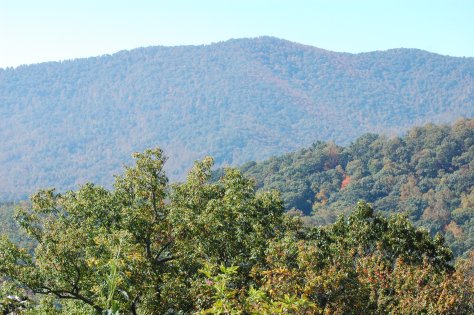
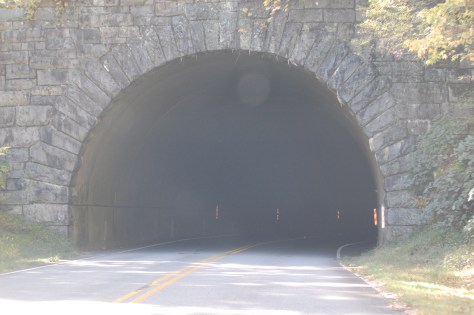
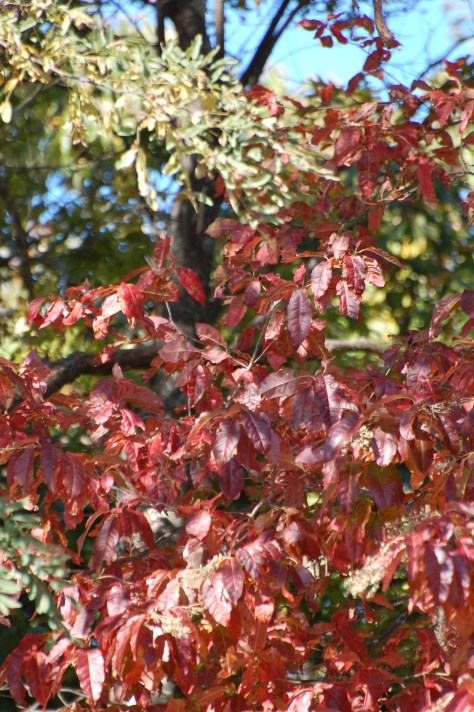
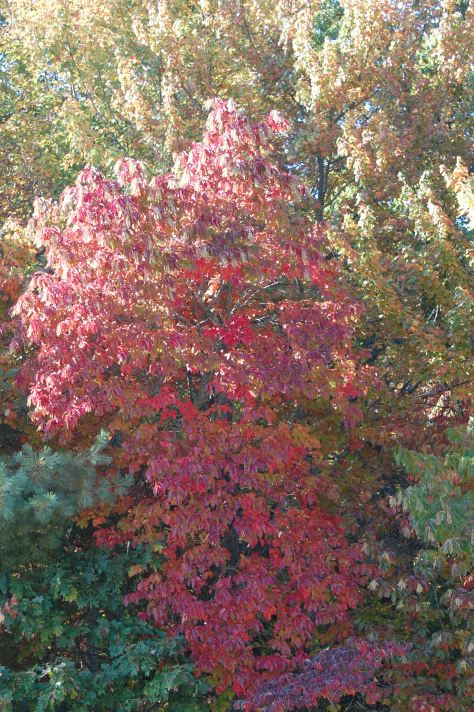
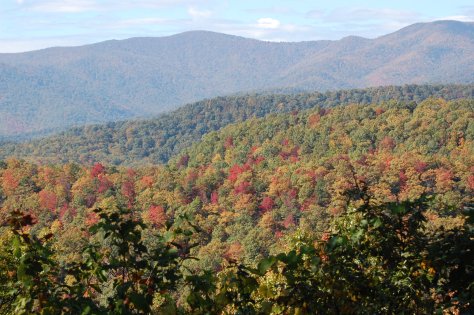
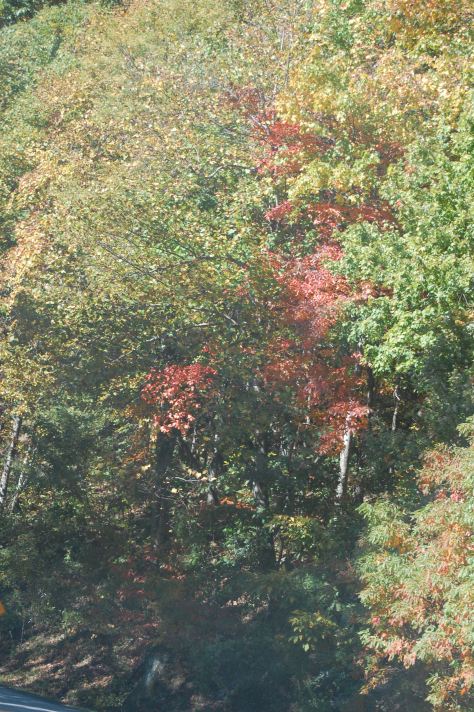
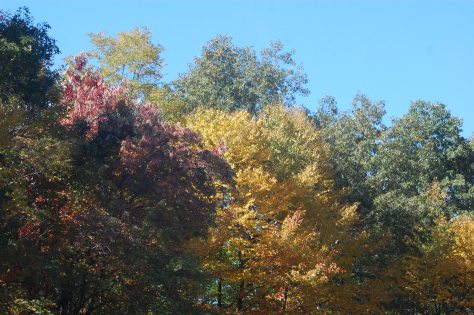
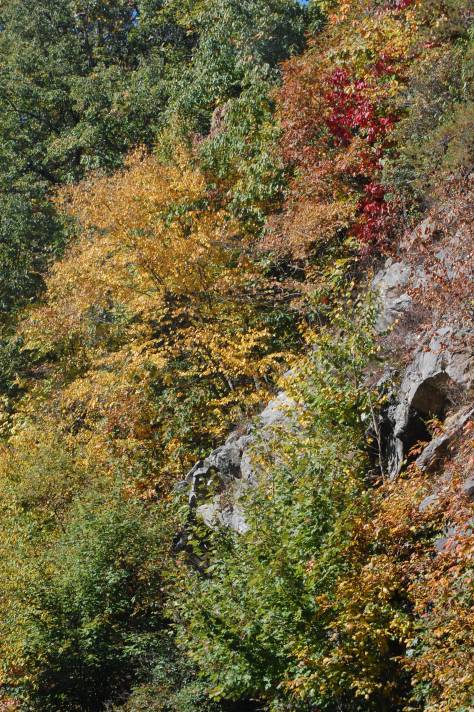
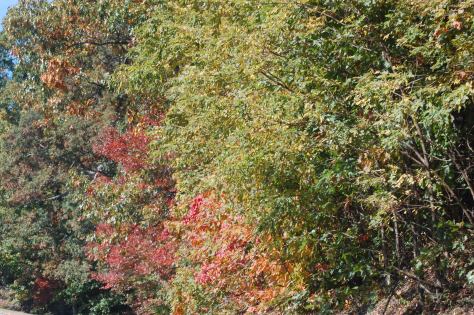
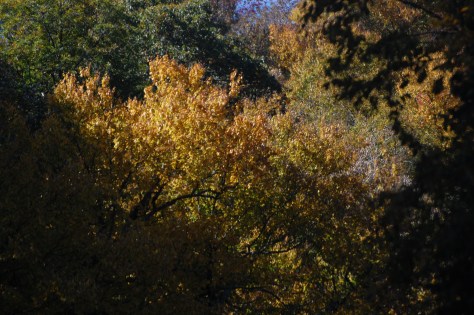
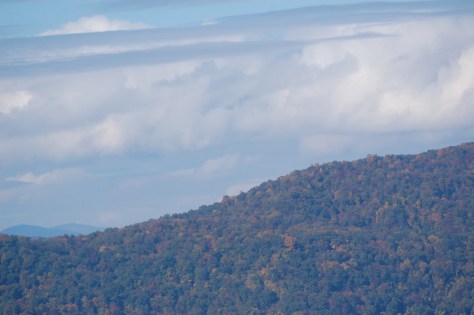
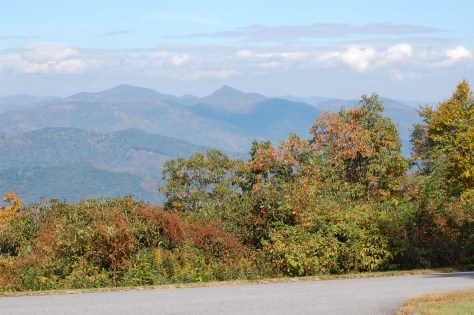
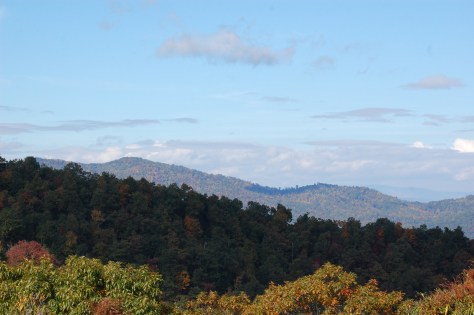
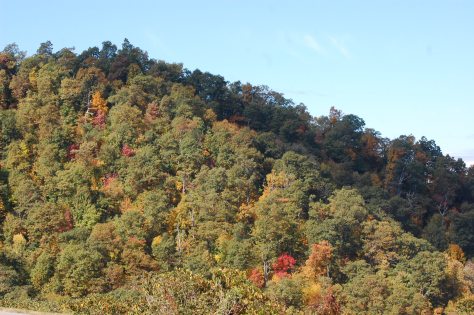
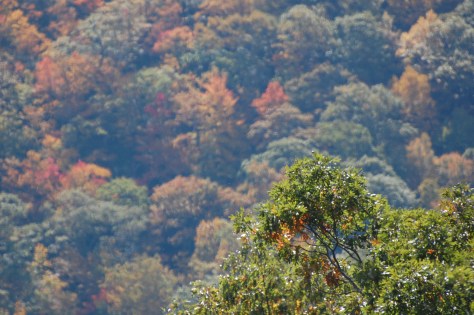
My best friend Maggie and I took a day trip down the Blue Ridge Parkway to Pisgah Mountain today, to see the fall leaves which are beginning to turn.
My children were able to return to Lumberton, and they have power, although no clean water except what they have been able to get in bottles and in buckets from their friends and the charities that are assisting after Hurricane Matthew’s devastation.
Yesterday, they helped served meals to the people who are homeless now. My grandchildren are learning more about charity and compassion, from both sides of the equation. I am proud that, even in hard times, my daughter and her family are able to give to others.
It helps me to take a moment to remember the beauty around us, so I wanted to share these photos with all of you, in gratitude for your thoughts and prayers for my family.
Namaste,
Barbara
All photographs taken and copyrighted by Barbara Mattio, 2016
All photographs taken and copyrighted by Barbara Mattio, 2016
All photographs taken and copyrighted by Barbara Mattio, 2016
All photographs taken and copyrighted by Barbara Mattio, 2016
All photographs taken and copyrighted by Barbara Mattio, 2016
All photographs taken and copyrighted by Barbara Mattio, 2016
All photographs taken and copyrighted by Barbara Mattio, 2016
All photographs taken and copyrighted by Barbara Mattio, 2016
All photographs taken and copyrighted by Barbara Mattio, 2016
All photographs taken and copyrighted by Barbara Mattio, 2016
All photographs taken and copyrighted by Barbara Mattio, 2016
All photographs taken and copyrighted by Barbara Mattio, 2016
All photographs taken and copyrighted by Barbara Mattio, 2016
All photographs taken and copyrighted by Barbara Mattio, 2016
All photographs taken and copyrighted by Barbara Mattio, 2016
All photographs taken and copyrighted by Barbara Mattio, 2016
All photographs taken and copyrighted by Barbara Mattio, 2016
All photographs taken and copyrighted by Barbara Mattio, 2016
All photographs taken and copyrighted by Barbara Mattio, 2016
All photographs taken and copyrighted by Barbara Mattio, 2016
I am having my oldest daughter and her family her today and for and indefinite time. They live on the coast of NC and the NC governor did not evacuate people. They live in a small town right on I-95. They have been out of power, water since Thursday. They still have no power or water, food, or gas. The levee on the river just broke a little while ago I heard on the weather channel. They had to airlift people out. So the kids are coming here to Asheville while they can still get out of Dodge.
I will try to entertain them with a little sight seeing. I and also going to breathe. Long slow breaths. We had company coming for the weekend which we have postponed. My best friend is taking Stephanie’s dogs. So any prayers anyone might want to raise up would be more than appreciated. My love to all my readers. I will be back up when there is room to blog. There will be wall to wall people here this week.
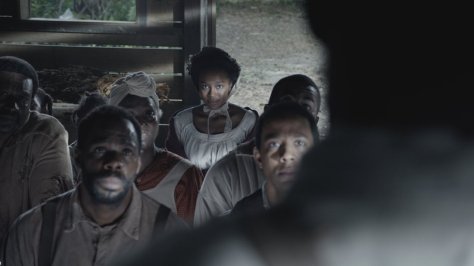
The 1831 slave rebellion that is the inspiration for the new movie The Birth of a Nation is commonly known as Nat Turner’s Rebellion, after the enslaved man (played by controversial filmmaker Nate Parker) who led the uprising that left dozens of people, including children, dead.
But there’s another name for that historical event: The Southampton Rebellion, after the Virginia county in which it took place.
And, says Vanessa M. Holden, an assistant professor of history at Michigan State University who is working on a book about the topic, that name is a more accurate description of what actually happened. Though Nat Turner was the man whose name has gone down in history as synonymous with rebellion, the entire community was involved. Holden recalls reading about the rebellion as an undergraduate student and realizing that almost everything she could find approached the event in one of two ways: dissecting Turner’s character to figure out why he had instigated the uprising, or examining the broad implications and impact of what he did. There was little time spent on the rest of the people who participated, and especially little time spent on the women.
“There’s a broad misconception that it’s almost impossible to find material about enslaved women, but when I’m asked what sources I look at, I actually look at the same sources everybody else looks at,” Holden says. “I just ask, Where are the women?”
And in fact, though only person among the dozens tried for the rebellion and executed by the state was a woman, Holden says she has found plenty of evidence from court records and other sources that women were deeply involved in what happened. The involvement of the woman who did hang was undeniable—she held her mistress down to try to ensure that the rebels would kill her, Holden says, but her mistress lived to tell the tale—and many others who were not found guilty were just as implicated as some of the men who were later executed. For example, both women and men were spotted near the sites of murders along the route of the uprising.
In addition, historians have shown that free women of color and enslaved women were deeply involved in the work of “everyday resistance” to slavery. That resistance could take forms that ranged from work stoppages or slow-downs to sheltering and feeding runaways. They were involved in illicit meetings that kept the black church alive, and they were crucial conduits for information.
“Women were essential to those sorts of everyday actions,” Holden says. “They’re not afterthoughts and they’re not being told what to do by men. They’re actually orchestrating these kinds of actions every single day.”
So why isn’t that history better known?
There are a few reasons, Holden explains. For one thing, there was an obvious incentive among the slaves and their supporters to minimize the number of people implicated in insurrection. And the source material historians use makes it easy to focus on Turner. His published jailhouse “confession” helped spread the word about what had happened, helping it become, as Holden says, “historicized almost as soon as it happened.”
For another thing, a primary goal of the trials and executions that took place following the uprising was to lessen the impact on white slaveholders, not to achieve justice. (Holden points to Patrick Breen’s scholarship on the subject as supporting this view of the trials as “an elaborate exercise in mastery.”) Emphasizing Nat Turner’s role was a way to create an image of “this ultimate rebellion slave who was just deranged and convinced people who would otherwise have been happy slaves” to rebel. As a result, the idea of resistance didn’t have to be quite so terrifying—which comforted slaveholders and served as a rebuttal for those who might use the uprising as a reason to support abolition. In fact, even the Virginia legislature did debate ending slavery in the wake of the event, but the voices in favor of maintaining the institution were stronger. It was safer for the rulers of the slave economy to position Turner as one bad apple than to admit that any person of color in the region would have had a motive to do what he did.
“If they really did investigate everybody who could have possibly been involved, they would have had every slave in Southampton in the courtroom,” Holden says. “The truth is that everybody had a reason to rebel.”
And that, she says, is the most important thing for anyone seeing The Birth of a Nation to remember: slavery was always awful. That always crucial point gains an extra layer of importance in light of the brutality and violence of the Southampton Rebellion.
“Slavery wasn’t evil at the hands of one evil master; it wasn’t only evil in moments of extreme violence and torture or extreme moments of deprivation; it wasn’t only evil when families got separated. It was evil every moment of every day. In turn, resisting slavery always meant making a conscious decision to do harm—economically, socially, physically, mentally, emotionally—because the system was abhorrent,” Holden says. “It’s important to remember that the violence [in Southampton] was a direct response to the specter of violence that was American slavery. It’s not fair to the historical subjects that I study, the women, to assume that they could only be victims of that violence.”
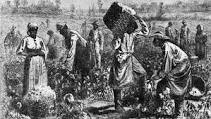
I dedicate this post to the thousands of men and women who were sold into slavery and treated like animals. My heart is heavy for you and I can’t tell you but I will work for your grandchildren and great grandchildren. I will speak for them and support them. I will stand up for them. They are equal to me and my grandchildren.
There is One God and our Universe is One and there is One unified humanity.
“A human being is a part of the whole called by us universe, a part limited in time and space. He experiences himself, his thoughts and feelings as something separated from the rest, a kind of optical delusion of his consciousness. This delusion is a kind of prison for us, restricting us to our personal desires and to affection for a few persons nearest to us. Our task must be to free ourselves from this prison by widening our circle of compassion to embrace all living creatures and the whole of nature in its beauty.”
—Albert Einstein
Physicist Albert Einstein
We need to feed the hungry,
to house the homeless,
to free those in bondage,
to clothe the naked,
to embrace the despised
to reject the obscene
and to destroy complacency.
That’s what God wants—
nothing more and nothing less.
—Rabbi Greenspan
“There is an old Chinese tale about the woman whose only son died. In her grief she sent to the holy man and asked, “Fetch me a mustard seed from a home that has never known sorrow. We will use it to drive the sorrow out of your life.”
The woman set off at once in search of the magical mustard seed. She came first to a splendid mansion, knocked at the door, and said, “I am looking for a home that has never known sorrow. Is this such a place?” They told her, “You’ve certainly come to the wrong house,” and began describing all the tragic things that had recently befallen them. The woman said to herself, “Who is better able to help these unfortunate people than I, who have had misfortune of my own?”
She stayed to comfort them for a while, then went on in her search for a home that had never known sorrow. But wherever she turned, in hovels and in palaces, she found one tale after another of sadness or misfortune.
Ultimately, she became so involved in ministering to other people’s grief that she forgot about her quest for the magical mustard seed, never realizing that it had in fact already driven the sorrow out of her life.”
–author unknown
Peace
“Let us live in peace, God.
Let children live in peace, in homes free from brutality and abuse.
Let them go to school in peace, free from violence and fear.
Let them play in peace, God, in safe parks, in safe neighborhoods; watch over them.
Let husbands and wives love in peace, in marriages free from cruelty. Let men and women go to work in peace, with no fears of
terror or bloodshed.
Let us travel in peace; protect us, God, in the air, on the seas, along whatever road we take.
Let nations dwell together in peace, without the threat of war hovering over them.
Help us, God. Teach all people of all races and faiths, in all the countries all over the world to believe that the peace that seems so far
off is in fact within our reach.
Let us all live in peace, God. And let us say, Amen.”
—Naomi Levy
Everyone talks about peace. And then the conversation ends and we put the thoughts of peace aside. Peace begins within each and every one of us. We must develop peace within our own hearts and souls. Then we have to make the effort to spread it out by giving old clothes to charity, volunteering in our communities, helping the sick and homeless. We can show compassion for those who are suffering financially, or who are struggling with mental illness. Then we can care about the politics of our country and our world, we can join a peace and/or justice organization.
We can pay attention when, in times like these, people talk and promote war and injustice, and we can speak up for justice and peace. We cannot allow ourselves be caught up in talk of war.
I am old enough that I remember the Chinese Genocide. I read a lot and I thought a lot. But today I don’t want to scare anyone but to remind us all that men and women who run governments are capable of killing their own citizens for power, greed, and money. If you have listened to any of the American election rhetoric, you know candidates don’t always say what they mean but what they think think citizens want to hear. It is a concept as old as time.
The key to having power and money is not having people who are different. They should not look different or act different. They should not think for themselves. Citizens should not band together and create fraternal orders or unions. They should not be educated too much, just enough to do what is required of them. They should also have no or little to say in the government. It is the government of the leaders, and not the people.
With every life which is ended in Genocide, we, the human family, potentially lose great musicians, the cure for cancer, the next great art movement. We lose the scientist who may have been more intelligent than Einstein. We may loose the mathematician who invents flying cars or the biologist who figures out how to raise enough food to feed every person on the planet. We will never know what all the genocides have robbed from the family of man.
What is important now is to be informed. If the media isn’t discussing something, get a book, look it up on the internet or ask someone who does know. Ignorance is not bliss. Ignorance can lead to war and genocide and the marginalization of human beings. If you think you are being lied to by your government, investigate. George W. Bush told us we had to go to war with Iraq because they had weapons of mass destruction. Iraq did not. Bush started his Presidency in the black. We had extra money and he left the White House terribly in debt. A debt President Obama has been working to whittle down. Humans often try to change history to make certain acts and/or misdeeds more palatable. Be aware, look for the truth. Speak up when you know that the text books are not exactly telling the truth.
Namaste
Barbara
A chart of the genocides the world has endured and their severity
The Negroes are not the only people America has not treated as equals. The Native Americans were murdered by the thousands, their land was stolen, they were herded onto reservations and killed the Buffalo, a species key to the survival of many tribes and nations.
Now our government is trying to quietly pass a bill through congress too take more land away from the Utes in Utah. So we are now stealing more land from the Native Americans. Again.
The Native Americans are protesting the building of the Dakota pipeline through their sacred land. They care about what we are doing to Mother Earth. The state has been given permission to shoot protesters who do not leave.
What kind of world are we living in? President Obama you must stop the shooting of protesters. Peaceable protest is a First Amendment right. What is needed here at a minimum is to sit down together and negotiate and use diplomacy. These are America’s first people. They deserve to be treated with respect and honor.
Mensen maken de samenleving en nemen daarin een positie in. Deze website geeft toegang tot een diversiteit aan artikelen die gaan over 'samenleven', belicht vanuit verschillende perspectieven. De artikelen hebben gemeen dat er gezocht wordt naar wat 'mensen bindt, in plaats van wat hen scheidt'.