

The pain of trauma
The aftermath,
Different in each eyes
The longing for answers,
And letting go,
For some easier as time goes by
View original post 163 more words

The pain of trauma
The aftermath,
Different in each eyes
The longing for answers,
And letting go,
For some easier as time goes by
View original post 163 more words
This year, 2014 is going to be remembered for many tragedies. Not as big as 9-11 or the crash of 2008. It will be marked by millions of tragedies marked as insignificant. Our government leaders mark them as insignificant. The people who are homeless, hungry, fallen off the employment-goround, are disabled or who at one time had a good job and now have nothing left, are fallen through the cracks on a daily, nay hourly basis.
I love all of our wild animals. I am allergic to all animals and birds. Fish are the exception. If you were to take the blinders off and really look around, you would see millions of starving American citizens. Many of these starving citizens are children. My point being, that we seem to care more about stray dogs and cats than we do starving children. In many states, children do receive free lunches at school which is a help. Have you ever tried to eat one meal a day and grow and learn and receive good grades? In some states, some children also receive a free breakfast. When was the last time that a child came home from school and wasn’t starving? Even though dinner will be given to them in a couple of hours.
When our poor children come home from school, there is often no food or perhaps some oatmeal. Did they learn at school that day? Well, actually not. Because their stomachs were rumbling, they couldn’t focus because they were hungry, and sad and their minds ramble around in their heads because they want more food, or sleep. Domestic Violence often keeps millions of children awake because of screaming and crying. Or they may have been dragged to the Emergency Room so Mom can receive treatment.

In our society, children go hungry. Who else goes hungry? The elderly. Since the 2008 crash, rents climb every year because many could no longer afford to stay in their homes. Gas prices are very high. Food prices are through the roof. So our seniors living on a fixed income or disability need to cut back and then back some more. And these are former professional people, former teachers, firemen and former police officers. The ones who risk their lives every day and chose to give back to the world. Now they have a fixed income and can’t afford many of their medications, can’t afford to buy healthy food because it costs more. They eat less vegetables and fruits. They don’t go anywhere, because they don”t have the money to spend for even a simple movie.
The young and the elderly are the two groups in America who suffer the most. They are the ones we look away from. They are a reminder of what the GOP, the Grand Old Party have done to the Americans who were not born into or worked their way into the 1%. Rich Philanthropists give away millions everyday and some of it might even go the the people who need it. Much of it goes to organizations and their executives and not to the homeless and hungry.
The GOP would have us believe that in this country, if you aren’nt rich, you are a slacker, a lazy bum. Our children coming home from war, who have risked their lives and come back to American soil physically and mentally and emotionally injured and scared are overlooked as well. We don’t want to see them because their suffering reminds us that we sent them to other countries to fight in wars.
What can be done? Well, we can get out and vote. Not just in Presidential elections, but in all elections. We can take off the blinders and see who is suffering around us and act. Write to your Congressmen and Senators. Go to your poling place and vote in November for the candidates who care about the less fortunate. Democrats this means you too. We often don’t vote in the middle elections. We vote in the Presidential elections. We need to keep in place the Congress in our states and in Washington and in our states who care that the man living in the old run down house down the block is slowly starving to death. The Death Certificate will say “natural causes” and I say that we as a society killed him. The hungry child isn’t going to learn enough to improve his/her position in life. They will probably quit high school to find a minimum wage job to try to augment the family income. They may meet some other young people who are in a gang and really realize how little they have and how much others have. Then bitterness, anger and resentment begin to grow in their hearts. Gangs provide not only violence, drugs, prostitution and death, they provide people who care. Gangs use the term “homey” because the largest segment of society do not care about them and see them as a liability. We must change things here in America. Not just for the 1% but also for the 99%. The guy who chose to be a cop instead of a professional football player isn’t worth less because all he did was to save lives and risk his everyday.
So, I ask you to vote in our election later this year. Vote for the people who are decent and caring. Turn your back on the political machine that manipulates what happens to the people who live in our country. Vote for the women and men who are not dirty and don’t see politics as a way for them to get rich and to have the power they crave. Vote for the fairly rare politician who cares about the kids and the elderly. Remember we will all be elderly one day; how sad if your votes will leave you hungry or without being able to afford your meds. How sad if you can’t go and visit your grandchildren because the money for a plane ticket is more than the cost of feeding yourself for six months.

Vote this year to give everyone that opportunity

Well, we are in our third day of severe storms and tornadoes and I have lived here on this lake in two different states. Tornadoes have always been the very rare happening, not a frequent occurrence. LA is reaching triple digits when they should be below 70 degrees. Winter this year was horrendous and most severe. It was and will continue to be harsh. Why? When I was a child there was a margarine commercial that advised that, “It’s not nice to fool Mother Nature.” She would react to mischief with a lightening bolt or torrential rain.
We are indeed playing with Mother Nature. It is a serious crime or actually a series of disrespectful acts that all of us are committing around the world against Mother Nature. Scientists have warned us but on the whole mankind has chosen to ignore the warnings. And sadly, we are destroying the very planet we live on. Why??? Why do we as a people not care? Well, when it hits us personally we do care. It is just that it is easier to expect others to stop the damage to the planet that to actually get involved. Governments are turning a blind eye to the damage. They are hoping it will stop. They are looking for a scapegoat. They will let us all be destroyed. That is the nature of politics.
So, you are someone who does cares and respects Mother Nature. What to do? Well, I am saying to Americans, vote in the mid-term elections. Get out and vote for the people who will use their power and influence to take steps to stop the damage we are doing to our planet. Democrats often do not bother voting in the mid-term elections. Please make this a priority. I know you have concerns about a lot of issues. We all do. But we must take care of the environment and save this planet we live on. Without our planet, we all will have no life.
I don’t know the election cycles in other countries, but please get involved with saving our planet. Contact your elected officials and tell them you want them to help the environment. Tell them that this planet is important to all of us. Tell them that this isn’t a political game.
” Let others pray for the passenger pigeon,
the dodo, the whooping crane, the eskimo
everyone must specialize
I will confine myself to a meditation
upon the giant tortoises
withering finally on a remote island.
I concentrate in subway stations,
in parks, I can’t quite see them,
they move to the peripheries of my eyes
but on the last day they will be there,
already the event
like a wave travelling shapes vision.
on the road when I stand they will materialize,
plodding past me in a straggling line
awkward without water
their small heads pondering
from side to side, their useless armor
sadder than thanks and history,
in their closed gaze ocean and sunlight paralysed.
lumbering up the steps, under the archways
toward t6he square glass altars
where the brittle gods are kept,
the relics of what we have destroyed,
our holy and absolute symbols.”
———poem by Margaret Atwood, feminist novelist and poet

Spring in Asheville, NC
Photograph taken by Barbara Mattio and copyrighted 2014

The beauty of mountains.
Photograph taken and copyright by Barbara Mattio 2014
Just a quick post. My sister had surgery on her shoulder today. It was more extensive do to a tear in her rotator cuff as well as the original issues. She is in a lot of pain. Just got her to bed. We got hit with terrible storms and tornadoes. Had a leak in living room which we found at four am when we got up to go to hospital. Maintenance came but can find no roof damage. More storms coming tonight. I have covered furniture with black plastic bags. Forgive me. I need to go to bed. I will really blog tomorrow. Hugs to all of you, Barbara
Lovely sentiment. Hugs, Barbara
Mother’s love true love
Her love is unconditional
Like love from above
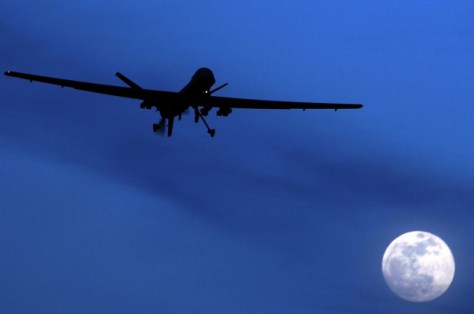
This was excerpted from Salon.com
Enemies, innocent victims, and soldiers have always made up the three faces of war. With war growing more distant, with drones capable of performing on the battlefield while their “pilots” remain thousands of miles away, two of those faces have, however, faded into the background in recent years. Today, we are left with just the reassuring “face” of the terrorist enemy, killed clinically by remote control while we go about our lives, apparently without any “collateral damage” or danger to our soldiers. Now, however, that may slowly be changing, bringing the true face of the drone campaigns Washington has pursued since 9/11 into far greater focus.
Imagine if those drone wars going on in Pakistan and Yemen (as well as the United States) had a human face all the time, so that we could understand what it was like to live constantly, in and out of those distant battle zones, with the specter of death. In addition to images of the “al-Qaeda” operatives who the White House wants us to believe are the sole targets of its drone campaigns, we would regularly see photos of innocent victims of drone attacks gathered by human rights groups from their relatives and neighbors. And what about the third group — the military personnel whose lives revolve around killing fields so far away — whose stories, in these years of Washington’s drone assassination campaigns, we’ve just about never heard?
After all, soldiers no longer set sail on ships to journey to distant battlefields for months at a time. Instead, every day, thousands of men and women sign onto their computers at desks on military bases in the continental United States and abroad where they spend hours glued to screens watching the daily lives of people often on the other side of the planet. Occasionally, they get an order from Washington to push a button and vaporize their subjects. It sounds just like — and the comparison has been made often enough — a video game, which can be switched off at the end of a shift, after which those pilots return home to families and everyday life.
And if you believed what little we normally see of them — what, that is, the Air Force has let us see (the CIA part of the drone program being off-limits to news reporting) — that would indeed seem to be the straightforward story of life for our drone warriors. Take Rene Lopez, who in shots of a recent homecoming welcome at Fort Gordon in Georgia appears to be a doting father.Photographed for the local papers on his return from a tour in Afghanistan, the young soldier is seen holding and kissing his infant daughter dressed in a bright pink top. He smiles with delight as the wide-eyed child tries on his military hat.
From an online profile posted to LinkedIn by Lopez last year, we learn that the clean-cut U.S. Army signals intelligence specialist claims to be an actor in the drone war in addition to being a proud parent. To be specific, he says he has been working in the dark arts of hunting and killing “high value targets” using a National Security Agency (NSA) tool known as Gilgamesh.
That tool is named after a ruthless Sumerian king who ruled over Uruk, an ancient city in what is now Iraq. With the help of the massive trove of NSA documents leaked by Edward Snowden, Glenn Greenwald and Jeremy Scahill recently explained that Gilgamesh is the code name for a special device mounted on a Predator drone that can track the mobile phones of individuals without their knowledge by pretending to be a cell phone tower.
Lopez’s resumé yields more details on what Gilgamesh is capable of. The profile writer claims that he “supervised a team of four personnel supporting the lead targeting force in Laghman and Nuristan provinces [in Afghanistan]. Assisted top-level commanders with developing concepts, approaches, and strategies to Capture/Kill HVTs [high value targets].”
Last year, on completing his time in the military, Lopez says he took a civilian job operating Gilgamesh for Mission Essential, an intelligence contractor providing technical support for Pentagon drones. For that company, he says he conducted “pattern of life analysis” and provided support for “targeting and strike operations.” Lopez lives in Grovetown, Georgia, home to a joint Army-NSA code-breaking and language translation operation, involving 4,000 personnel that, since 9/11, has taken the lead in analyzing real-time data feeds from Central Asia and the Middle East.
Gilgamesh is just one of several NSA tools used on drones to track targeted cell phones. Another program, Shenanigans, was designed specifically for use by the Central Intelligence Agency. According to other documents leaked by Snowden, an operation code-named Victorydance used these tools in March 2012 to map every computer, router, and mobile device in Yemen.
What do men like Lopez actually think about the sort of human destruction, not to speak of the destabilization of whole regions, that Gilgamesh and its like help to unleash? In his online job pitch, Lopez indicates straightforward pride in his work: “My efforts, both as a contractor and in the military, yielded success in identifying, locating, and tracking high value targets, and protection of U.S. and coalition forces.” It would be easy enough to assume that the kind of analytical work such remote pilots do would result in a sense of job satisfaction and little more. And that, it turns out, would be a mistake.
Haunted by Death
In recent months, the first evidence that drones are not only killing thousands in distant lands, but also creating an unexpected kind of blowback among the pilots themselves, provides a curious parallel to the Epic of Gilgamesh, the 5,000-year-old poem about the Sumerian king. In the ancient saga, the gods are said to have sent Enkidu to befriend the cruel king and divert him from the oppression of his subjects. When the pair travel together to slay a monster named Humbaba, Gilgamesh begins to have nightmares about death and war, causing him to question their plan.
Today, like Gilgamesh of old, signals intelligence personnel connected to the drone programs have started reporting themselves haunted by the deaths that they have participated in, and plagued by the knowledge that, in the end, they often had next to no idea who they were actually killing. The publicity about a “kill list” in the White House has left the impression that those who find themselves on the other end of a drone-launched missile have been carefully identified and are known to the drone pilots. “People get hung up that there’s a targeted list of people,” one drone pilot told the Intercept two months ago. His view, however, was quite different: “It’s really like we’re targeting a cell phone. We’re not going after people — we’re going after their phones, in the hopes that the person on the other end of that missile is the bad guy.”
Brandon Bryant, a 28-year-old U.S. airman, whose squadron has been credited with 1,626 kills, was among the first to be openly critical of the impact of remote tracking and targeting, of, that is, robot war. Bryant was a “sensor operator,” which meant that he operated the cameras on the drone aircraft as part of a three-person team that included a pilot and an intelligence analyst.
In an interview with GQ magazine last October, Bryant offered a vivid description of a targeting operation in Afghanistan he took part in when he was just 21. “This figure runs around the corner, the outside, toward the front of the building. And it looked like a little kid to me. Like a little human person,” he said. “There’s this giant flash, and all of a sudden there’s no person there.”
Bryant says he asked the pilot: “Did that look like a child to you?” The message came back from another intelligence analyst: “Per the review, it’s a dog.”
After six years, Bryant couldn’t take it any more. He saw a therapist who diagnosed him with post-traumatic stress disorder. This was a novel, even shocking development for an airman who had hardly ever come close to a battlefield. Bryant was suitably taken aback and, as a result, began speaking out against the system of killing he had been enmeshed in and what it does both to the killers and those killed. “Combat is combat. Killing is killing. This isn’t a video game,” he wrote in an angry tirade on Facebook. “How many of you have killed a group of people, watched as their bodies are picked up, watched the funeral, then killed them, too?”
Killing for the CIA
Bryant’s campaign against drone war without accountability took on new life in late April when Tonje Hessen Schei, a Norwegian filmmaker, released her filmDrone. In it, Bryant reveals that his former colleagues in the Air Force had not just been carrying out drone strikes on the battlefields of Afghanistan and Iraq where the military was involved in open warfare. They were also conducting the strikes in the supposed CIA drone assassination campaigns in Pakistan and Yemen.
This was news. The CIA’s “covert” drone wars in those countries were, it turns out, secretly Air Force operations. “The CIA might be the customer, but the Air Force has always flown it,” Bryant says in the film. “A CIA label is just an excuse to not have to give up any information. That is all it has ever been.”
Schei’s film also reveals the name of the U.S. Air Force unit that does the CIA killing — the 17th Reconnaissance Squadron at Creech Air Force Base in Nevada. “From what I was able to gather, it was pretty much confirmed they were flying missions almost exclusively in Pakistan with the intent to strike,” Michael Haas, another drone pilot, told Chris Woods at the Guardian.
Thanks to the film, Bryant made an unusual connection in the world of drone pilots — to the victims of Washington’s drone campaign, previously just so many pixels on a screen to him. Invited to Belgium and Norway to speak at the premieres of Schei’s film, he met with Shahzad Akbar, a Pakistani lawyer who runs the Foundation for Fundamental Rights and has been leading a campaign to put a face — quite literally — on the death and destruction CIA drone strikes have caused in his country.
Faces of the Victims
Up in the mountains of Khyber Pakhtunkhwa in northern Pakistan, a giant image of an orphan girl is now laid out next to the mud houses of the locals. She is nameless, but according to her photographer, Noor Behram, she lost her parents in a drone strike in 2010 in the village of Dande Darpa Khel. Her picture, the size of a soccer playing field, is a product of Akbar’s planning with the help of JR, a French street artist, and Clive Stafford-Smith, the founder ofReprieve, a British human rights organization. Their intent: to create images of the victims of Washington’s drone wars that could be seen from the sky. Smaller images have, in fact, been placed on rooftops in Waziristan. Their target audience: drone pilots like Bryant, Haas, and Lopez who, searching for targets to kill, might just see the face of the child of one of their previous victims. (The Bureau of Investigative Journalism, which keeps a tally of drone victims in Pakistan, offers a provisional figure of up to 957 civilians, including as many as 202 children, killed between 2004 and the present day.)
For the last five years, Akbar and Smith have worked tirelessly on similar projects. One of their first efforts was to reveal the name of the CIA station chief in Pakistan: Jonathan Banks. In December 2010, they brought a $500 million lawsuit against him in that country, causing him to flee. The next summer they put together a collection of Noor Behram’s photographs of the dead, as well as their relatives and neighbors, that was exhibited in London.
Last year, Akbar even made plans to take the relatives of drone victims to testify before the U.S. Congress. Though he himself was denied entry to the country, he succeeded. Rafiq-ur-Rehman and his two children, nine-year-old Nabila-ur-Rehman and 13-year-old Zubair-ur-Rehman, did speak at a special hearing arranged by Representative Alan Grayson.
Now, with the unexpected support of a small but growing group of former drone pilots, a campaign against “targeted killings” might well take on a new life in the U.S. At least six other drone pilots have already spoken anonymously to Woods, largely confirming what Bryant and Haas have said publicly.
The Strain of Long-Distance War
There is evidence that other drone pilots are also beginning to crack under the pressure of drone war. Two recent studies by the Air Force strongly suggest that Bryant’s PTSD diagnosis is no anomaly, that no matter how far you may be from the battlefield, you never quite leave it.
Published in June 2011, the first study by Wayne Chappelle, Joseph Ouma, and Amber Salinas of the School of Aerospace Medicine at Wright-Patterson Air Force Base in Ohio concluded that nearly half of the drone pilots studied had “high operational stress.” A number also had “clinical distress” — that is, anxiety, depression, or stress severe enough to affect them in their personal lives. The study attributed this to long “flying” hours and erratic shifts, but did not compare drone pilots to those in combat aircraft fighting above the battlefield.
A second study by Jean Otto and Bryant Webber of the Armed Forces Health Surveillance Center and the Uniformed Services University of the Health Sciences, published in March 2013, compared drone pilots to those performing standard military missions. The level of stress, it found, was almost the same, a surprising conclusion for those who assumed that drone pilots were essentially video gamers.
“Remotely piloted aircraft pilots may stare at the same piece of ground for days,” Otto told the New York Times. “They witness the carnage. Manned aircraft pilots don’t do that. They get out of there as soon as possible.”
Some believe that drone stress is significantly related to a major shortage of pilots for such planes. A Government Accountability Office report released in April tersely notes that “high work demands on RPA [remotely piloted aircraft] pilots limit the time they have available for training and development and negatively affects their work-life balance.”
Speaking from the Heavens
There is, however, likely to be far more to it than that. After Bryant came forward, for instance, Heather Linebaugh, a former drone intelligence analyst, broke her silence, too. Writing in the Guardian in late December, she summed up the largely unpublicized failure of Washington’s drones this way: “What the public needs to understand is that the video provided by a drone is not usually clear enough to detect someone carrying a weapon, even on a crystal-clear day with limited cloud and perfect light. The feed is so pixelated, what if it’s a shovel, and not a weapon? We always wonder if we killed the right people, if we destroyed an innocent civilian’s life all because of a bad image or angle.” (And she didn’t even point out that, in the areas being attacked in Pakistan and Yemen, carrying a weapon is commonplace and not necessarily a sign that you are a “terrorist.”)
Linebaugh explained that, under these circumstances, a “mistake” had terrible consequences, and not just for those erroneously targeted, but even for the pilots. “How many women and children have you seen incinerated by a Hellfire missile? How many men have you seen crawl across a field, trying to make it to the nearest compound for help while bleeding out from severed legs?” She added, “When you are exposed to it over and over again it becomes like a small video, embedded in your head, forever on repeat, causing psychological pain and suffering that many people will hopefully never experience.”
And don’t count on Linebaugh being the last drone analyst to speak out, either. Whether future Rene Lopezes ever actually look down from the computerized “heavens” and see the picture of that little Pakistani orphan girl, we already know that they will see horrors that are likely to prove hard to absorb.
It is this third face of war, along with those of the “enemy” and innocent victims, which provides the crucial evidence that the drone project, Obama’s remote control campaign, is a failure; that it is not clinical but bloody and riddled with error; that it creates enemies even as it kills others; that it is, above all, no more a video game for those who fly the planes and loose the missiles than it is for those who die in distant lands.
To stay on top of important articles like these, sign up to receive the latest updates from TomDispatch.com here.
Pratap Chatterjee is the author of “Halliburton’s Army: How A Well-Connected Texas Oil Company Revolutionized the Way America Makes War”. He is the managing editor of CorpWatch.
This video says about itself:
AMNESTY INTERNATIONAL – TORTURE & EXCESSIVE FORCE AGAINST PROTESTORS CONTINUE IN BAHRAIN
From the blog of Lancaster University Law School in England:
Denial in Bahrain? The Links Between Sickle Cell Disease, Detention and Tear Gas
Dr. Gearóid Ó Cuinn
Since the outbreak of pro-reform protests in Bahrain in early 2011 security forces have deployed an unprecedented amount of tear gas resulting in the deaths of numerous individuals. This torrent has also revealed a genetic component to Bahrain’s political unrest through a record spike in sickle cell deaths– a condition that predominantly affects the marginalised Shia population.
The Bahrain Independent Commission of Inquiry (BICI), set up to consider human rights violations following the Government’s crackdown, concluded that Bahrain’s police used a disproportionate amount of CS gas in the urban spaces of this community. It found that private homes were targeted in an “unnecessary and…
View original post 1,272 more words


what can you do to stop bullying?
Mensen maken de samenleving en nemen daarin een positie in. Deze website geeft toegang tot een diversiteit aan artikelen die gaan over 'samenleven', belicht vanuit verschillende perspectieven. De artikelen hebben gemeen dat er gezocht wordt naar wat 'mensen bindt, in plaats van wat hen scheidt'.
Enhance your photos with professional precision using our top-notch photo editing services
Observations about my life and the world around me.
The Middle Miocene Play of Color
We didn’t end when we said goodbye maybe because the promise was ETERNITY
Wanderers in the world
The news. The dog. Dialectics.
Husband from Utah, Wife from Hong Kong, Two Mix Babies
Walter Singleton's blog, dedicated to Aiden Singleton and Seth Singleton living near Chattanooga, TN.
Mentor and Writing assistance for women
Peace and Pain
SurveyStud: https://appsto.re/us/Ddj18.i
Speak out, judge righteously, defend the rights of the poor and the needy
A MODERN PERSPECTIVE ON COGNITIVE SCIENCE AND MENTAL HEALTH
welcome!


