Human Trafficking


636045257698558441-CHILD-SEX-HEROIN-1

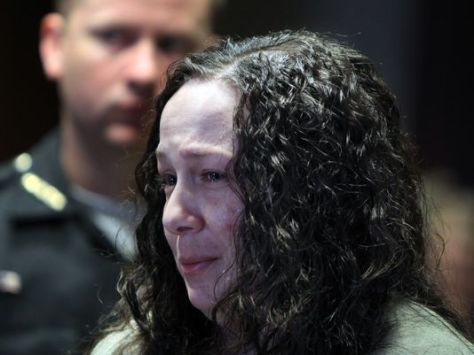
CINCINNATI — She said she was ashamed that she traded her 11-year-old daughter for sex to get heroin, but the judge pointed out that April Corcoran never offered an apology to the child.

“You showed no kind of mercy,” Judge Leslie Ghiz said.

In turn, Ghiz said she’d have no mercy on Corcoran and sentenced her to 51 years to life during her sentencing Tuesday in Hamilton County Common Pleas Court.

Corcoran, 32, of Warren County, pleaded guilty in June to multiple counts of complicity to rape, of human trafficking and child endangering involving the child. Corcoran also admitted giving the girl heroin sometimes as a reward. The child vomited each time.

Ghiz allowed Corcoran to read a statement in court.

“I made selfish, horrible choices that will affect (the girl) for the rest of her life,” Corcoran said. “I am consumed by guilt and shame every day.”

That didn’t move the judge.

The girl was sodomized, raped, forced to perform oral sex and frequently videotaped by Corcoran’s drug dealer in his Camp Washington home, prosecutors say. The encounters happened between February and June 2014.

Shandell Willingham, 42, who faces the same charges as Corcoran, has been convicted in Indiana on unrelated drug charges as well as on child pornography charges. He was returned to Hamilton County last month. A hearing in his case is set for Aug. 10.

The girl’s grandparents told the judge they hoped for justice for their granddaughter and that others would be protected from Corcoran. The girl’s grandmother spoke quietly in court.

“I saw my granddaughter. I heard her small voice,” Sylvia Corcoran said. “It was horrific. How could she (Corcoran) do this? I don’t know if my granddaughter is going to be able to have a normal life.”

The girl, now, 13, is living out of state with her father and stepmother.

Ghiz said she had to take breaks while reading everything that was admitted into the court case.

“I can honestly say that, in three-and-a-half years on the bench, this is by far the worst thing that has come before this court,” Ghiz said. And she’s seen everything from thefts to physical harm done by people addicted to heroin, she said.

“I don’t know that you grasp the damage that has been done to this poor child,” Ghiz said, noting that the girl is undergoing medical care, has had suicidal thoughts and is taking medications.

Corcoran’s lawyer, James Bogen, said his client has been “sickened and disgusted” by what she’s done since she’s been jailed.

Dr. Daniel Bebo of UC Health told the court that when someone’s in withdrawal from opioids or heroin,  “There’s a lot of leeway to what they’ll say or do.”

But he confirmed Bogen’s statement in court about addicts: “They still know right from wrong.”

Staff writer Kevin Grasha contributed.


bjwordpressdivider (1)


This case sickens me and makes me feel that we can never save every child. But we can and we will. The sentence this woman received was just and fair. What she allowed her daughter to live through is beyond description.

What a sad way to begin your life. That little girl needs a lot of counseling and people who care about her to surround her with positiveness, love, support and patience.


So in the middle of wars, insurrections, domestic terrorism, Domestic Violence, rape; we must not forget the human trafficking that continues to go on. You can help. If you see or hear something suspicious report it. Better to be wrong than to let something terrible happen to someone.


Human trafficking is increasing in infrequency and young people of all colors are being taken and sold. This is just slavery, pure and simple. Every human being has a God given right to live free, to make their own decisions and to never be owned by another human being. I believe that sentences for human trafficking should always be life without parole. The cost of the crime should be worse than people want to pay.


Namaste,

Barbara


Human trafficking in Romania

Human trafficking in Romania


Domestic Violence has not slowed down


 There is so much violence happening in the world I want to make sure a special group knows we have not forgotten about them… the women who live in battering, violent relationships.
We have not forgotten your day to day struggle trying not to be beaten, injured or murdered. We know your children are in harm’s way and live in fear.
You continue to be important to the police, hospital staff and shelter staff in your communities. Everyone of you is vital. We are still here for you and will always be here for you. Use your Hotlines, talk to your counselors and remember that it is a crime for anyone to hit anyone else. This is a form of domestic terrorism. Some states are looking at passing laws that would make it a crime for anyone, of either sex, to own a gun once they have been found guilty of Domestic Violence.
It is hard to understand how a soldier who saved the lives of women and children in the Middle East could come home and beat his own family or kill them; but it happens. We haven’t been there and lived through what they have had to. So contact some one at the base and tell them what is happening and they can help you get the specific help your abuser needs.
Never stay in an abusive relationship for any reason. It isn’t your fault. If his boxer shorts came out of the wash pink and you end up with a black eye, get out. Yeah, you might still love him. He may tell you he is sorry and feel sorry for that moment of time but he isn’t capable of really loving anyone. If you stay, at some point, you will have been hurt enough that you might pick up his gun and shoot him before he kills you.
It is better to live without this twisted sort of love, than for your children to have watched him put roses on your casket. He will teach them that you deserved what he did and they will grow up to resent you. Living in a shelter is a new start and a grave is the end of this earth plane.
 bjwordpressdivider (1)
Published July 18, 2016  on Foxnews.com

Jason Earl Armstrong Jr. and surveillance video of Armstrong on July 1, 2016. (FBI)

Jason Earl Armstrong Jr. and surveillance video of Armstrong on July 1, 2016. (FBI)

The FBI is hunting a man wanted in the killing of his wife, a Fort Bragg soldier.

The FBI is offering a $5,000 reward for information leading to the arrest of 27-year-old Jason Earl Armstrong Jr., Fox 11 Los Angeles reported Saturday.

A federal warrant charges him with killing Iris Armstrong in the couple’s Fort Bragg home in North Carolina July 1.

She had been stabbed and beaten, the station reported.

The FBI said Armstrong was captured on a surveillance video using his wife’s debit card shortly after the murder, the station reported.

He has ties to South Carolina; Atlanta; New Orleans; Amarillo, Texas; Phoenix and Los Angeles.

Iris Armstrong was a human resources specialist assigned to the 189th Combat Sustainment Support Battalion of the 82nd Airborne Division Sustainment Brigade, the Fayetteville Observer reported. She joined the Army in 2012.

The couple’s two children are safe, according to the FBI.

Lt. Col. Jeremy St. Laurent, commander of the 189th Combat Sustainment Support Battalion, told the Observer Iris Armstrong was an outstanding soldier and well-liked.

“Our thoughts, prayers and condolences go out to her family, friends and loved ones during this very difficult time,” he said.


iseeviolence

The Question of Race Relations


people diversified

Diversity is beautiful.


bjwordpressdivider (1)


8 in 10 Seek ‘Major’ Focus on Race as Most Say Relations Are Worsening (POLL)

  • By CHAD KIEWIET DE JONGE


A vast 83 percent of Americans say the next president should place an “especially major” focus on trying to improve race relations – which, following the Dallas police killings and high-profile shootings of blacks by police, majorities see as bad and getting worse.

Sixty-three percent in a new ABC News/Washington Post poll say race relations generally are bad and 55 percent say they’re worsening, sharply more negative views than just two months ago. Only a third say relations are good and just one in 10 say they’re getting better.

See PDF with full results here.

This translates into a broad desire for progress. Not only do 83 percent say the next president should put an especially major focus on trying to improve race relations, nearly half in this group also say it’s “extremely” important. Just 12 percent don’t want a major focus on the issue, and few of them feel strongly about it.

To the extent race relations influence the presidential campaign, Hillary Clinton may benefit: the public trusts her more than Donald Trump to handle the issue by 58 to 26 percent, with Clinton preferred by 89 percent of Democrats, 55 percent of independents and a quarter of Republicans. She also leads Trump by 66-21 percent on the issue among those who think the next president should focus heavily on race relations.

Racial Groups

Clinton-Trump gaps on race relations span racial groups in this poll, produced for ABC byLanger Research Associates. Though her advantage expands to 74-12 percent among nonwhites (a broadly Democratic group), Clinton also leads Trump on the issue by 15 points among whites, 50-35 percent. Among whites who think relations are deteriorating, though, Trump’s trust deficit with Clinton disappears.

Seventy-two percent of blacks, 65 percent of Hispanics and 63 percent of whites say race relations currently are bad. Half of blacks, and 55 and 56 percent of whites and Hispanics, respectively, also say they’re getting worse.

Blacks and Hispanics are 11 points more apt than whites to say the next president should put a major focus on the issue. But the big difference is in how many call this extremely important: Just 40 percent of whites who favor a major focus on race relations, vs. 67 and 64 percent of blacks and Hispanics, respectively.

Other Groups

Pessimism about race relations is higher among young adults, 73 percent, compared with 61 percent of those older than 29. Americans without a college degree are 10 points more likely than those with a college degree to think relations are poor and 14 points more likely to think the situation is getting worse. Both groups contain higher shares of minorities.

City dwellers are 10 points more likely than rural residents to view relations as generally poor, but the latter are 9 points more apt to think things are getting worse. And women are 8 points more likely than men to think relations are worsening.

Democrats and liberals both split on whether race relations are getting worse or merely staying the same. By contrast, majorities of independents and moderates – as well as about two in three Republicans, conservatives and evangelical white Protestants – think relations are declining.

In the largest political difference, four in 10 liberal Democrats think race relations are worsening (a plurality says they’re staying the same), compared with two-thirds of conservative Republicans.

That said, improving race relations is a bigger priority for Democrats and liberals; more than nine in 10 say the next president should be someone who puts a major focus on the issue, and among them, six in 10 say it’s extremely important. While three-quarters of Republicans also favor a major focus on race relations, only 35 percent say it’s extremely important.


bjwordpressdivider (1)


Peace is what most of us want. Peace is what we need. One of the things we need to bring about peace is to end all racism. I didn’t used to think racism remained a real problem. I worked with people of color, volunteered with them and envied their ready-made tans. But as time has gone on I have realized that other Caucasian people felt differently. With the election of Obama and the re-election, I realized that I was different from most Caucasians that I knew. Now I am speaking up about race relations and I am sorry for all the innocent lives of color that have been lost. Black people have a right to worry about their children. So do Muslim parents, Asian parents and indigenous parents.


Bob Marley was right. There is One Family, One Love, and One World. If we destroy it, we are all responsible; if we heal it and ourselves we all get credit. May peace be the word you wake up to in the morning and the last word you think of before you go to sleep.


A New Perspective


https://www.youtube.com/watch?v=8CK0f3wyDDU


Full Poem:


I was not born on the upper rungs of the ladder, though I am white. My paternal grandfather raised a family of eight washing windows and I am so proud of him. He had the work ethic. My maternal grandfather went to Chicago to work during the Depression to support his immediate family and the extended family who crossed over from the old country. He was a tool and dye maker. He sent money home to Cleveland to buy food so my grandmother could cook food and feed all of them. My pride in them as people is immense and I inherited my desire to make the world a better place comes from their example.

In truth, I never talked about people of color. They were there but they weren’t people of color. They were just people we knew. Archie Bunker introduced me to racism, bigotry and hatred.


When I heard this young boy’s poem, I was touched. There are people who get it. And they tell  others and some of them get it and they tell others and on and on. I challenge all of you who are non-haters, non-racists, non-bigots to tell someone who you really are. Speak up. This is the time before we find ourselves in another World War. The world is shaky right now, but we can stabilize it with our voices and our actions.

We can want or even demand that our elected officials stop the racism and hatred, but it truly is our job. This is our world and we are the ones who are responsible for speaking, nay yelling, out the truth. Black Lives Matter, Women are equal even if not legally, refugees deserve compassion and assistance, women deserve equal pay for equal work, Muslims deserve to worship in their own way. Everyone does except for those who feel their way is the only right way and non-believers deserve to die.


I believe we can get past this without a war. I believe that love, peace, forgiveness and compassion is where we  begin.


Namaste

Barbara


bjwordpressdivider (1)


friends

       People of color everywhere are friends and share life’s ups and downs.

A Brief Message


Hi, All

It’s The Sister, with a brief explanation

It’s been some days since you’ve heard from the IdealisticRebel. This is because a) we’ve been traveling and b) her computer died

We are working on getting the replacement broken in and she should be back with you all soon.

Namaste,

Amy

Separation


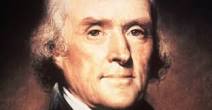
In 1801, members of the small Baptist church in Danbury, Connecticut, wrote a letter to President Thomas Jefferson (1743-1826) congratulating him on his recent election. At the time, Baptist’s were a minority religion. In New England the Congressional Church was prominent. Jefferson assured them that they had nothing to worry about. Their letter had expressed worries about being in the minority. They were afraid they would lose their rights and be forced to become Congregationalists.


A few months later, the President answered their letter. jefferson said,in effect, that the First Amendment to the Constitution had erected a “wall of separation” between church and state that meant Connecticut could not interfere with the Baptist’s religious freedom.


“Believing with you that religion is a matter with lies solely between Man and his God, that he owes account to none other for his faith or his worship. that the legitimate powers of government reach actions only,  and not opinions, I contemplate with sovereign reverence that act of the whole American people which declared that their legislature should ‘ make no law respecting an establishment of religion, or prohibiting the free exercise thereof,’ thus building a wall of separation between Church and State.


Jefferson’s metaphor of the wall between church and state became enormously influential, Although not part of the Constitution, Jefferson’s metaphorical wall has been recognized by the Supreme Court as a guiding concept in the relationship between church and state. It has been cited by many American political and religious leaders.


Jefferson’s letter remains a cornerstone, an influential interpretation of First Amendment cause and a cornerstone of religious liberty in the United States.


bjwordpressdivider (1)


President Thomas Jefferson

President Thomas Jefferson

All Humans Need Equal Oportunity


Even if you don’t back Hillary, what she is saying is true. We need equality, tolerance and compassion for one another. We need to care when bad events happen in other people’s lives. We need to care that some of us work so hard and just can’t catch a break. It needs to matter. As our lives matter.


bjwordpressdivider (1)


The Way of Love

The way of love is not

a subtle argument.


The door there

is devastation.


Birds make great sky-circles

of their freedom.

How did they learn it?


They fall and falling,

they are given wings.

—Rumi, translated from the Persian by Coleman Barks


Just What did George Washington Feel About Tolerance?


In  August, 1790, President George Washington (1732-1799) wrote a letter to the Jewish       congregation in Newport, Rhode Island. Rhode  Island was the destination for the first Jewish immigrants to America in the 1650’s. At the time that Washington was President, there were about  300 members of the Temple.


General Washington felt a special connection to the synagogue and had visited the Jewish congregation during the Revolution. He further promised that the newly formed government of the United States would treat Jews no differently than other Americans.

The center of the Jewish community in Newport, Touro Synagogue was completed in 1762 and is now America’s oldest synagogue.


“The citizens of the United States of America have a right to applaud themselves for having given to mankind (humankind) examples of an enlarged and liberal policy—a policy worthy of imitation. All possess alike liberty of conscience and immunities of citizenship.


It is now no more that toleration is spoken of as if it were the

13colonies

Original 13 Colonies when we won the Revolutionary War

indulgence of one class of people that another enjoyed the exercise of their inherent natural rights, for, happily, the   Government of the United States which gives to bigotry no  sanction, to persecution no assistance, requires only that they  who live under its protection should demean themselves as  good citizens in giving it on all occasions their effectual support.

Washington’s famous letter, and its promise to give “bigotry no sanction,” has historical significance in both the American and global contexts. In the late eighteenth century, persecution of Jewish communities was the norm in most European countries. Virtually no other leader could have guaranteed the “enlarged and liberal policy” towards towards Jews promised by Washington.


The letter was also significant because it expanded the American definition of “religious toleration” to include non- Christians. For even the most open-minded colonial settlers, religious toleration meant only a respect for the differences between different versions of Christianity. Their understanding of toleration rarely extended to  Native American religions, Judaism, or other non-Christian denominations.


like Jefferson’s letter to the Danbury Baptists, which was written about a decade later, Washington’s letter to Newport’s Jewish community became a key document in the evolution of modern American concepts of religious tolerance.


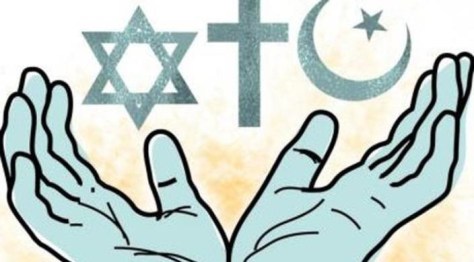
The religions of the book

The religions of the book

Love Has No Labels – An Easy Translation


I hope all my friends and readers had an enjoyable holiday. Mine was less so. My low blood pressure condition kept us at home but I am 90% better today. I spent time reading and thinking about the founding fathers. I have read much about what was documented but what did they dream for this new country, what did they whisper to their wives at night snuggled up before sleep overtook them? Did the wives agree or disagree? We know Abigail Adams at least once did disagree.

I wonder what they saw in the future for their children’s children’s children. Or were they able to see that far ahead in time? There are many things they planned for and made provisions for and we are slowly letting them slide into the rubbish heap. When I saw this I knew they would agree with much of this as do I. Your comments are welcome and we can discuss the points you wish to.

Namaste,

Barbara


We are indeed all Americans. We are not all the same, we are not all perfect but we can and must love each others as Americans. If we can’t love each other as Americans then how will we ever love each other as human beings? How will we hurtle ourselves over the barriers that divide us all now? Those ever growing walls of differences and prejudice?


bjwordpressdivider (1)


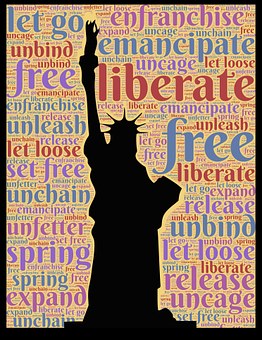
The statue of liberty was a gift from France

The statue of liberty was a gift from France


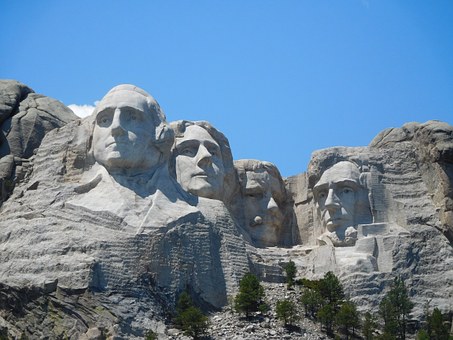
Four of our Presidents carved into the mountainside.

Four of our Presidents carved into the mountainside.

Why the 4th of July Does Belong to Slaves


 From the Daily Beast, by Alan Gilbert

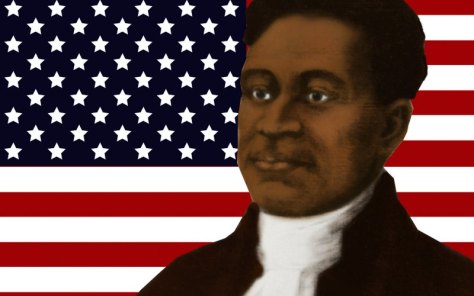
 Blackguy with flag

As we know all too well, the Revolutionary War was not fought so that all men could be free, but its role in creating the seeds of abolition should not be forgotten.

A central myth of American history teaching is that the American Revolution was fought for the “life, liberty and pursuit of happiness” of each person. By each, Jefferson sadly meant mainly white farmers. This patriotic myth—what I call a Founding Amnesia—drove Frederick Douglass, in 1852, to declare that the Fourth of July was not for slaves. 

But perhaps in contrast to its long history of racist exclusion, the Daughters of the American Revolution should first honor black Patriots. As Georg Daniel Flohr, a German private who fought at the decisive battle Yorktown with the French Royal Deux-Ponts for the Patriots, noted while walking around the field of battle the next day: “all over the place and wherever you looked, corpses… lying about that had not been buried; the larger part of these were Mohren [Moors, blacks].”

And as I emphasize in Black Patriots and Loyalists (2012), the acme of freedom in the American Revolution was the gradual emancipation of slaves in Vermont (not yet a state) in 1777, in Pennsylvania in 1780, in Massachusetts in 1782, in Connecticut and Rhode Island in 1784, in New York in 1799, and in New Jersey in 1804. If we ask the central question in American history: how did there come to be a free North to oppose bondage in the Civil War, the answer is, surprisingly: gradual emancipation during and just after the American Revolution. Thus, black Patriots and their white abolitionist allies played a central, undiscussed role both in battle and in the deepening of American freedom.

Finally, why did the man believed to be the first martyr of the American Revolution, Crispus Attucks, an escaped slave of black and Native American parentage who became a sailor, fiercely take on the Redcoats in the Boston Massacre? Attucks is part of a complex history that reveals how much the Revolutionary War and the Fourth of July are a day that belongs to African Americans.

1.  The violent fight against Imperial press-gangs

The first part of this story is the emergence of a violent revolutionary movement of self-defense among sailors in the 18th century. The Imperial Navy needed bodies for its expanding empire. But the crown had never relied on volunteers. Instead, it sent armed gangs to kidnap people at sea or in the street. But people did not go willingly. All around the Atlantic—in Antigua, Jamaica, Halifax, and Boston, for example—there were 604 uprisings against these royal gangs in the 18th century. 

Sailors often defended themselves with pikes or muskets. Soldiers and sailors were killed in such raids.

The greatest of these uprisings was a three day battle in Boston against Admiral Knowles’s gangs in 1746. In the Independent Advertiser in 1747, Sam Adams wrote that multiracial, multinational movement against press-gangs was a driving force in making a free regime: “All Men are by nature on a Level: born with an equal Share of Freedom, and endow’d with Capacities nearly alike.”

Whole communities rebelled against the gangs. Women, left behind, were called “Impressment widows.” Mary Jones, an Irish teenager, and her children starved after her husband was taken during the Falklands war scare of 1770. Mary was arrested for shoplifting a small piece of muslin.  Suckling one of her children even as the noose was put around her neck, she was hung. British “law” meant hanging and it was used depravedly against the poor. And in the colonies, it was worse.

Merchants and members of the Boston House of Representatives feared revolutionary crowds. They denounced “a tumultuous riotous assembling of armed Seamen, Servants, Negroes, and others… tending to the Destruction of all Government and Order.” The phrase, “Armed Seaman, Servants, Negroes, and others” became almost a formula in such denunciations. They would be echoed by many later historians.

But a vast, Atlantic-wide succession of rebellions against Impressment was the key feature of the run up to the Revolution. These rebellions mobilized sailors against the crown, motivated them to participate vigorously in other demonstrations about taxes, and taught them, their relatives and communities, in Lockean terms, the need for violent self-defense. In America, press-gangs made revolutionaries.

Now black escapees, like Crispus Attucks, often found freedom at sea. Sailors, notably blacks, would lead revolutionary crowds against press-gangs and other abuses.

In 1760 in Jamaica, Tacky’s Rebellion, the largest uprising against bondage until that time, lasted for 4 months. Between 1760 and 1775, the outbreak of the American Revolution, some 20 slave uprisings took place in Bermuda, Nevis, Surinam, British Honduras, Grenada, Montserrat, St. Vincent, Tobago, St. Croix, St. Thomas, and St. Kitts.

Seized without compensation, forced to abandon their families, sailors on British ships often identified with slaves. They took the word to London and Boston. In 1760, J. Philmore talked with mariners on London docks, and wrote the memorable Two Dialogues concerning the Man-Trade. In the broad abolitionist movement in England and America, Philmore’s 1760 pamphlet marks the most thorough transition politically from fighting for the basic “rights of an Englishman” to natural, universal or what we name today humanrights. Unlike non-abolitionist authors, Philmore replaces the commonly labeled “slave trade”—a pro-bondage appellation which falsely legitimizes owners, merchants, and hunters—with the shocking but true name: the Man-trade. James Otis wrote a similar pamphlet in Boston. These ideas would be discussed in every poor people’s tavern in the 11 years leading up to the Revolution and shape rank-and-file abolitionism.

Integrated riots against press-gangs marked the pre-Revolutionary period as well as protest against taxes on tea or stamped paper. In Newport in June 1765, 500 “seamen, boys, and Negroes” rioted after five weeks of impressment. In Norfolk in 1767, Captain Jeremiah Morgan retreated, sword in hand, before a mob of armed whites and Negroes. “Good God,” he wrote to the governor, “was your Honour and I to prosecute all the Rioters that attacked us belonging to Norfolk there would not be twenty left unhang’d belonging to the Toun.” According to Thomas Hutchinson, the Liberty Riot in Boston in I768 was as much against impressment as against the seizure of John Hancock’s sloop. To understand this militancy, we might say that a second and deeper emancipatory revolution against bondage surged from the Caribbean via sailors into the U.S. and London, and shaped the revolution for independence from Britain.

In 1776, the crown authorized large numbers of press warrants in London for bodies to fight the American Revolution. But sailors, armed, marched together “having resolved to oppose any violence that might be done to them, and rather die than assist the Royalists in shedding the Blood of their American Brethren.” This was a startling example of democratic solidarity or internationalism from below, anti-patriotic, despising the Royalists’ haughty colonialism.     

2.  Lord Dunmore’s Proclamations and massive black Toryism

Freedom for blacks did not come about initially on the side of those who opposed the British. From 1772 on, Royal Governor Dunmore of Virginia had threatened rebellious Patriots. “It is my fixed purpose,” he said, “to arm my own Negroes and accept all others whom I shall declare free… and I shall not hesitate at reducing [Patriots’] houses to ashes and spreading destruction wherever I can reach.” By the time he issued his Proclamation on Nov. 7, 1775, thousands of blacks had flocked to the British side to join his Royal Ethiopian Regiment. Because of Dunmore and the High Court’s 1772 Somersett decision that bondage was outlawed on English soil, the Southern states seceded from Britain to preserve slavery. In his 1775 “Taxation not Tyranny,” Samuel Johnson, the great English essayist, rightly quipped: “How come we hear the greatest yelps for liberty from the drivers of Negroes?”

But Dunmore’s black troops suffered smallpox; he was eventually forced to retreat to Manhattan. One of his soldiers, Titus, however, became Captain Tye, the leader of successful multiracial guerrillas operating in New Jersey. In addition, every English commander recruited blacks. And thousands of the unorganized followed every command, gradually being recruited to become soldiers or pursue jobs around the camps.  

In 1779, the commander of British forces in the colonies, Sir Henry Clinton, issued a Proclamation welcoming  blacks in any occupation. A huge number of escapees, perhaps 40,000, ultimately joined the Loyalists; many became regular troops, including at Yorktown. Britain did not have so many Redcoats in America so they had to rely on black troops. In 1781, Murphy Steele, a Black Pioneer, reported a vision to an aide of Sir Henry Clinton. A voice had come to him—God’s voice, he said—telling him to tell Clinton to tell General Washington that he must surrender or Clinton would recruit every black man in America to fight. Steele’s was wise strategic advice. But Clinton did not listen.

Before the Civil War, American abolitionist authors did not discuss the central role of the Empire as the freer of the most oppressed for fear of being thought unpatriotic. Afterward, this matter has long been eschewed as, in Gary Nash’s apt phrase, “the revolution’s dirty secret.”

3.  Black Patriots as the best American soldiers

Free blacks and slaves fought in every American battle. Initially, George Washington sought to discourage black recruitment. But he soon realized that Lord Dunmore’s strength might grow against him, “like a snowball in rolling,” and become an avalanche. It was thus military competition which produced a major impetus to recruit black Patriots.

In 1778, Governor James Mitchell Varnum of Rhode Island wrote to Washington that he could not find enough recruits among whites and wanted to form a black regiment. Washington agreed. Promising to purchase the freedom of black volunteers, the governor formed the First Rhode Island Regiment of some 250 blacks and Narragansett Indians. Most militiamen fought for only nine months. In contrast, these Rhode Island soldiers, who did not desert or were not killed, fought for five years. They became, as Baron von Closen, Washington’s advisor, observed in the march to Yorktown in 1781, “the most neatly dressed,the best under arms and the most precise in maneuvers” among Patriot soldiers. Another black unit was recruited in Connecticut and another in Massachusetts. According to von Closen, these composed one-quarter of the American forces at Yorktown.

In 1855, the black abolitionist Henry Nell reported in his Colored Patriots of the American Revolution that 5,000 African-American soldiers fought for the Patriots. This number has been echoed by American historians ever since. But multiracial protest has finally forced the Daughters of the American Revolution, hesitantly, to count. In their 2008 Forgotten Patriots, Brianna L. Diaz and Hollis L. Gentry list by name 6,600 black and indigenous soldiers. Their dedication is to known and unknown nonwhite Patriots. With more research, this number will increase.

4.  That genuine freedom is freedom for all

The revolutionary struggle in the United States was led by sailors and artisans, black and white, slave and free. It produced gradual emancipation in the North. It also inspired a deeper sense of liberty from below. For instance, General Washington had promised farmer recruits that their lands would be there when they returned. But soldiers from the Northeast came back to find their farms threatened with seizure for debt by banks. Led by Captain Daniel Shays, they rebelled in 1786-87.

These soldier-farmers of Western Massachusetts also protested the Constitution because it sanctioned bondage. Here are the words of three of these men in The Hampshire Gazette. As Consider Arms (a pseudonym), Malachi Maynard and Samuel Field put it,

Where is the man who under the influence of sober, dispassionate reasoning, and not void of natural affection, can lay his hand upon his heart and say, I am willing my sons and my daughters should be torn from me and doomed to perpetual slavery? We presume that man is not to be found amongst us: And yet we think the consequence is fairly drawn that this is what every man should be able to say who voted for this constitution.”

Their words prefigure John Rawls’s later modeling of an original position in which a moral judgment is one that empathically puts ourselves in the position of “the least advantaged.” The ardor of revolutionary soldiers like John Laurens extended this vision even into South Carolina. The movement that created gradual emancipation in the North would eventually explode bondage and, a century later, segregation in the South. As Black Lives Matter and Justice Sonia Sotomayor’s powerful dissent this June in Utah v. Strieff show, the fight for a decent, multiracial America continues to this moment. The long struggle before, during and after the Revolution on the Patriot side was a great and heroic beginning, and deserves, at last, to be widely known.

Alan Gilbert is John Evans Professor at the Josef Korbel School of International Studies, University of Denver, and author of Black Patriots and Loyalists; Fighting for Emancipation in the War of Independence, University of Chicago Press, 2012 and “Slave-gangs, Press-gangs and Emancipation in the American Revolution.” 

H/t Jesse Lemisch, Marcus Rediker and Peter Linebaugh.


bjwordpressdivider (1)


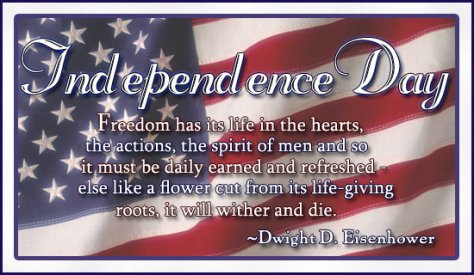
july-4-05b


bjwordpressdivider (1)


Mensensamenleving.me

Mensen maken de samenleving en nemen daarin een positie in. Deze website geeft toegang tot een diversiteit aan artikelen die gaan over 'samenleven', belicht vanuit verschillende perspectieven. De artikelen hebben gemeen dat er gezocht wordt naar wat 'mensen bindt, in plaats van wat hen scheidt'.

Best Photo Editing Service Provider

Enhance your photos with professional precision using our top-notch photo editing services

The Bee Writes...

🍀 “Be careful of what you know. That’s where your troubles begin” 🌷 Wade in The 3 Body Problem ~ Cixin Liu

John Oliver Mason

Observations about my life and the world around me.

Opalescence

The Middle Miocene Play of Color

Elicafrank's Blog

We didn’t end when we said goodbye maybe because the promise was ETERNITY

Ranjith's shortreads

Wanderers in the world

The Wallager

The news. The dog. Dialectics.

The Lewis Mix

Husband from Utah, Wife from Hong Kong, Two Mix Babies

Walter Singleton

Walter Singleton's blog, dedicated to Aiden Singleton and Seth Singleton living near Chattanooga, TN.

Gentle Joss / Wisdom of the Crone

Mentor and Writing assistance for women

Pax Et Dolor Magazine

Peace and Pain

SurveyStud, LLC

SurveyStud: https://appsto.re/us/Ddj18.i

Levi House

Speak out, judge righteously, defend the rights of the poor and the needy

Present Minded

A MODERN PERSPECTIVE ON COGNITIVE SCIENCE AND MENTAL HEALTH

oats

welcome!