Judge to consider completion of Dakota pipeline in February
WASHINGTON — A federal judge Friday set a tentative court hearing for February in the Dakota Access pipeline’s bid to force the government to approve finishing the contested project.
Citing losses of $20 million a week, David Debold, an attorney for pipeline company Energy Transfer Partners, said that without a expedited decision the matter could “drag out forever” after construction was halted Sunday by the Obama administration.
U.S. District Judge James Boasberg acknowledged that the company’s challenge could be rendered moot following next month’s inauguration of President-elect Donald Trump, whose incoming administration has expressed support for the fraught project, which for months has been shadowed by protests involving the Standing Rock Sioux reservation.
Last weekend, the Army Corps of Engineers said it would not approve an easement for the pipeline to cross a reservoir on the Missouri River in North Dakota at the Standing Rock reservation, where protesters have been camped. The contested portion represents the final section of the 1,172-mile line.
“None of us have any idea of whether the incoming administration will make this matter moot,” Boasberg told a packed courtroom, which included a number of protesters who traveled to D.C. for the hearing and a demonstration scheduled for Saturday.
“They are desperate to get this pipeline under the river,” said DiDi Banerji, 51, who serves as a nurse at the protest camp. “We are worried about what a change in administration could do. If Trump approves this, the (protest) actions are going to start again.”
Demonstrators greet each other near the entrance of the Oceti Sakowin camp as “water protectors” continue demonstrations against plans to pass the Dakota Access pipeline continue near the Standing Rock Indian Reservation, near Cannon Ball, North Dakota, U.S., December 2, 2016. REUTERS/Lucas Jackson
While our native people decide whether to stay or leave the Standing Rock, the courts are looking at what they will decide after the New Year and Trump is inaugurated. Can and will the court be and/or remain neutral after Trump is in office, we can only guess. It is my hope that the insanity that surrounds Trump will not reach into the judicial branch.
My heart goes out to the native people because they have all worked so hard and have endured so much from weather, to water canons, to rubber bullets and law enforcement making rude comments. They have had to leave their homes and comforts. I am sure in a moment of complete honesty they would miss their beds, showers and kitchens. Would they conduct the protests again? I am sure they would and I am sure that if they leave, they will return to protest.
They are America’s water protectors and their sacred land is of utmost important to them. I think that the rest of America needs to really think about this and the importance of water to the life and health of all Americans. Think about what has happened to the city of Flint, Michigan and its residents. For two years, children and adults have become ill and were hospitalized and have suffered unnecessarily. Suffered because they didn’t have access to safe clean water. Here in America.
The native people are Americas’ water protectors and they are mine and I hope your heroes. They took a stand and they put their actions where their words were. There was no hypocrisy. These descendents of the original people, that we murdered and put on reservations have shown us how to be authentic Americans. I will always stand with them in pride.
Stay or go? Tribe gives conflicting messages to protest camp
Stay or go? Tribe gives conflicting messages to protest camp
Campers shovel out an exit ramp at the Oceti Sakowin camp where people have gathered to protest the Dakota Access oil pipeline in Cannon Ball, N.D., Tuesday, Dec. 6, 2016. Many Dakota Access oil pipeline opponents who’ve gathered for months in the camp are committed to staying despite wintry weather and demands that they leave. An overnight storm brought several inches of snow, winds gusting to 50 mph and temperatures that felt as cold as 10 degrees below zero. (AP Photo/David Goldman)
Pipeline opponents ride out storm in shelters, casino
Ray Franks, of New York, carries a case of water into a mess hall at the Oceti Sakowin camp where people have gathered to protest the Dakota Access oil pipeline in Cannon Ball, N.D., Tuesday, Dec. 6, 2016. An overnight storm brought several inches of snow, winds gusting to 50 mph and temperatures that felt as cold as 10 degrees below zero. (AP Photo/David Goldman)
Pipeline opponents ride out storm in shelters, casino
A motorist checks the condition of an exit ramp before attempting to drive out of the Oceti Sakowin camp where people have gathered to protest the Dakota Access oil pipeline in Cannon Ball, N.D., Tuesday, Dec. 6, 2016. An overnight storm brought several inches of snow, winds gusting to 50 mph and temperatures that felt as cold as 10 degrees below zero. (AP Photo/David Goldman)
For protesters fighting the Dakota Access pipeline, the messages from the Standing Rock Sioux reservation are confusing: The tribal chairman tells demonstrators that it’s time to leave their camp and go home. Another leader implores them to stay through the bitter North Dakota winter.
The conflicting requests show how the camp’s purpose has widened beyond the original intent of protecting the tribe’s drinking water and cultural sites into a broader stand for Native American rights.
Camp occupants are working through the confusion, said Jade Begay, an organizer with the Indigenous Environmental Network. “The rest of the world just needs to hold tight and be patient,” he said.
Since August, the camp on federal land near the reservation and the pipeline route has been home to thousands of people protesting the four-state $3.8 billion pipeline designed to carry oil to a shipping point in Illinois.
After the camp endured two recent severe storms, Standing Rock Chairman Dave Archambault declared this week that it’s time for the demonstrators to disband.
Archambault said there’s no reason for people to put their lives at risk because no additional pipeline work is expected for months. The company building the project, Energy Transfer Partners, and the Army Corps of Engineers are battling in court over permission to dig under the Missouri River reservoir that provides the tribe’s drinking water. It’s the last big unfinished segment of the 1,200-mile pipeline.
“We understand this fight is not over,” Archambault said. “But the fight is not here, at this moment.”
Native American rights activist Chase Iron Eyes, an enrolled Standing Rock tribe member who made an unsuccessful bid for Congress this fall, implored pipeline opponents to stay in a social media post this week.
The camp rejoiced Sunday when the Army announced that it would not issue an easement for the pipeline to cross under Lake Oahe, but it’s unclear what might happen when pipeline supporter Donald Trump enters the White House in January. The dispute also could be decided by a federal judge.
“We are not in the clear by any means whatsoever,” Iron Eyes said. “This is not a time for celebration. If it’s a time for anything … it’s a time to honor all the sacrifices that have been made” by camp occupants. More than 500 have been arrested since August.
The camp began as a peaceful, prayerful protest of the pipeline. It has since drawn in people who believe the dispute represents an overall stand for American Indian rights.
Iron Eyes said protesters need to stand up for other tribes and treaty rights. “We don’t stand in a place to tell people to leave,” he said.
State Emergency Services spokeswoman Cecily Fong said the state isn’t surprised by the competing messages, noting the “different agendas” of people in camp.
Camp occupants are “working on finding a middle ground and some sort of compromise” through informal discussions, according to Begay, who lives in Tesuque, New Mexico.
“These kinds of decisions don’t happen in just a day or two,” she said. “We need to consider everybody’s safety, everybody’s goals, the different points of view.”
The Corps recently declared the camp area closed to public access and said those who remain are trespassing, but the agency is not issuing citations. North Dakota Gov. Jack Dalrymple has also called on camp occupants to leave, and Sen. John Hoeven issued a similar plea Wednesday from the floor of the Senate.
Iron Eyes said he believes the calls for people to leave the camp are aimed at limiting liability, and he said those who stay do so at their own risk. But he implored people “who understand the inherent risks of staying in a North Dakota winter to stand with us, because this pipeline is not finished, and we have to stand strong and stay vigilant.”
Archambault acknowledged the efforts of people who came from around the world to support the tribe. But, he said, “their purpose has been served.”
The native people have a huge decision to make. They have a huge and difficult decision and must consider everyone’s opinion as well as the big picture. Our opinion doesn’t count because we are not there living in the winter conditions and being freezing cold. We aren’t trying to decide if we can trust the federal government. I am very proud of them for standing by their principles. They have had more integrity than many white people have.
The European whites who came to America and killed them and robbed them and marched them to reservations proved they could not be trusted. I stand with the native people but I am here in my warm house. I respect them tremendously and will be the first to say they have accomplished a great deal.
Whatever, the people decide, they have shown the rest of America that they are the kind of Americans that we should be. I hope they begin to be proud of themselves and to take good care of each other. They are the real heroes of America.
Graham, McCain want to investigate Russian hacks of the DNC
Sens. Lindsey Graham and John McCain might finally be doing something useful in the Senate.
WASHINGTON ― Sen. Lindsey Graham (R-S.C.) on Tuesday said he wants Senate hearings to investigate whether Russian President Vladimir Putin interfered in the U.S. election, casting doubts on President-elect Donald Trump’s desire to improve relations with Russia.“Assuming for a moment that we do believe that the Russian government was controlling outside organizations that hacked into our election, they should be punished,” Graham told reporters on Capitol Hill. “Putin should be punished.” […]
“With the U.S. presidential transition underway, Vladimir Putin has said in recent days that he wants to improve relations with the United States,” McCain said in a statement on Tuesday. “We should place as much faith in such statements as any other made by a former KGB agent who has plunged his country into tyranny, murdered his political opponents, invaded his neighbors, threatened America’s allies, and attempted to undermine America’s elections.”
Senate Foreign Relations Committee Chair Bob Corker is decidedly less concerned, saying that basically this happens all the time. Sure, Russia interfered in the election. That was obvious. But: “In the world of covert activities, countries, large sophisticated countries do things against each other to understand what’s happening within those countries. I think people who have been around for awhile understand that’s what happens,” he said on MSNBC. Oh, but there’s more:
Intelligence officials believe Russia is responsible for hacking the emails of the Democratic National Committee as part of an effort to influence the election results. Russia has also been linked to hacking emails belonging to John Podesta, Hillary Clinton’s campaign chairman. Despite this, Corker said the effort to interfere had “backfired” because the election appeared to be rigged for Clinton but Donald Trump won.
Um, Bob. You got that kind of backwards—they were trying to rig it for your guy. So it’s not entirely clear that there will be hearings, at least not in Corker’s committee. Relatedly, Corker has been floated as a possible secretary of state in the Trump administration and says he’s “in the mix” for the post. So, yeah, he’s not going to be too concerned about how this all came to be.
The upside in all of this is that Graham and McCain might use their hawkishness for good, for once, to block the Trump administration where they can. Maybe.
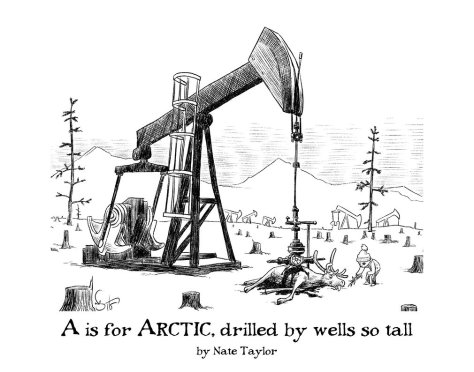
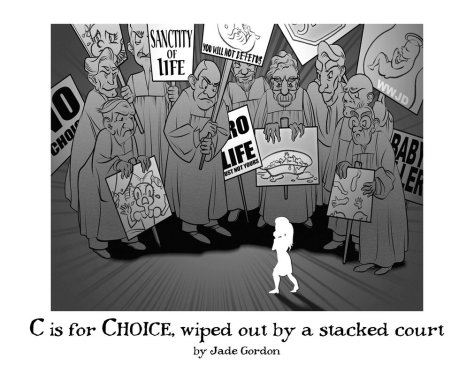
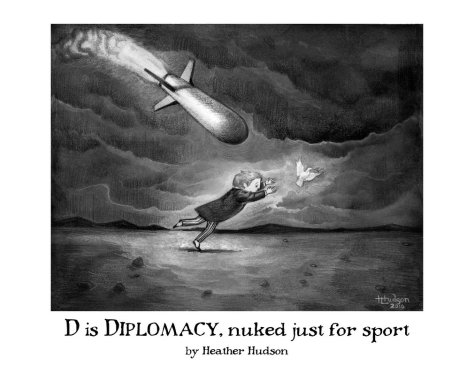
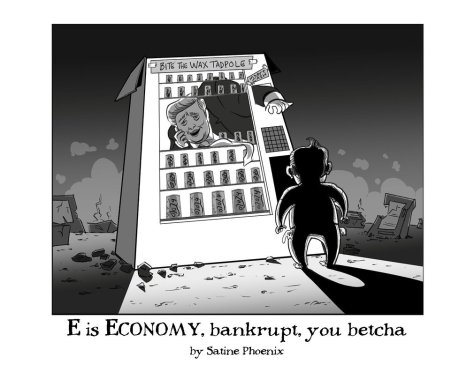
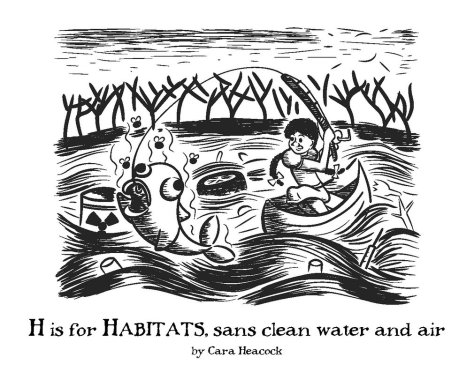
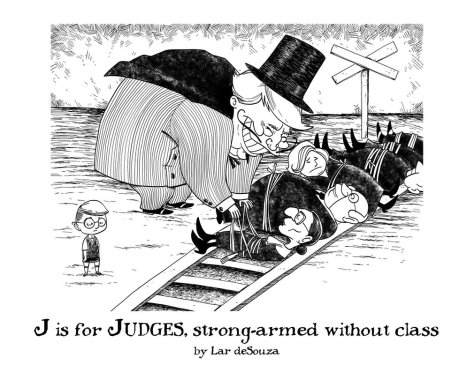
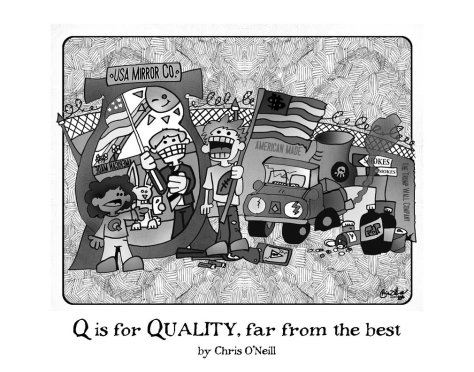
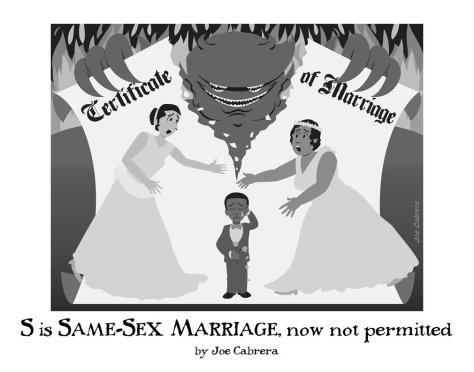
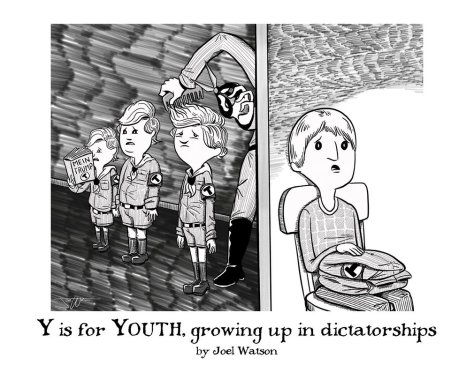
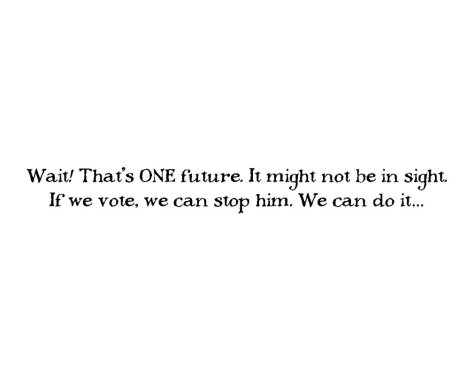
These say everything there is to say about a Trump Presidency. The illustrations are elegant in their approach.
Namaste
Barbara
In his 1963 abecederian picture book The Gashlycrumb Tinies, Edward Gorey recounted the increasingly gruesome deaths of 26 children. In this parody the US game designer Mike Selinker outlines an A to Z of similarly gruesome eventualities he expects will befall a world in which Trump is president – with each one illustrated by a favourite comic or fantasy artist.
‘Whilst listing all of the things that we would lose if Mr Trump ascended to Pennsylvania Avenue, I thought, “Why don’t people remember these things?”’ Selinker writes in the introduction. ‘And then I thought perhaps it was because they didn’t have a mnemonic to remember it by. Something catchy. Something horrifying. And so this book.’
As gender issues have increasingly become central to this election — from Trump’s taped “locker-room talk” to the wave of sexual-harassment allegations that followed — it’s been easy to start feeling hopeless. The excitement of a woman approaching the White House is tempered by the vile misogyny of her opponent, who will eagerly gaslight, humiliate, and exploit women in order to stop her getting there.
But there’s something of a silver lining to the nastiness. Trump’s egregious behavior — in addition to laying bare GOP misogyny — is making it impossible to ignore the ongoing realities of sexism in this country. And many women are seizing this moment to make their voices heard. As the presidential campaign enters its final throes, I spoke to nine women about how this election has moved them to fight back against misogyny in their own lives, and how they plan to carry that mission forward beyond November 8.
Piper, 24, digital archivist
“Not only is this my first time voting for a Democrat, but up until a few months ago, I was a red-blooded, rural, Christian conservative from North Dakota. For the first time, hearing the sexism, hatred, and fear in Trump’s message opened my eyes to the insidious ways that I had been allowing sexism and the patriarchy to govern my life, but had always made excuses for it, justified it, and managed to ignore it because it was in less-offensive packaging. While his words are like barbed wire, the message is the same when coming out of the bills and legislation from more reasonable party members. Now I can’t look away. Thanks to Trump, I’m a newly awoken woman and am proselytizing everyone in my family, my hometown, my (former) church, everyone from my old life: It’s easy to denounce a dog who’s barking this loudly, but whether he’s howling or not barking at all, he (and the party at large) are the same dog.
Everyone else in my life, though, has really engaged in the conversation and, for the first time, we’re willing to discuss the ‘sacred’ GOP in a critical light. My formerly conservative boyfriend has come with me on this journey and now freely admits to being a feminist himself, though a few months ago, before this election cycle, I think through perpetuated misinformation, he would have considered it a dirty or shameful word.”
Lani, 45, professor
“My female colleagues and I have an informal network to help us navigate the sexual predators or rampant misogynists in our midst. We will warn each other about the bad behavior in various departments so we can navigate ourselves and our students away from those places. It seems like the typical strategy of the powerless, doesn’t it?
I recently I got an email from somebody in one of these known departments. The email had a job and asked me to send potential candidates their way. Instead of ignoring it or deleting it like I might normally do, I decided to write back. I let the sender know that their department was known for having an unchecked sexual predator in their midst. I let the sender know that under no circumstances would I advise a junior colleague to take a position in the department given the nonresponse of the administration to complaints that I know were lodged by some of my colleagues there.
I am quite clear that this shift in my response comes out of my frustration at how women are continually silenced and how this response, in turn, manages to protect toxic bad behavior. But I also know that we often feel powerless because our complaints are met with nonresponses by universities. I hope that withholding potential strong candidates can incentivize universities to do better. I think, like many women, I am fed up with our silence around chronic abusers. It was right after Sunday’s debate that I chose to respond in that way. The connection was quite clear.”
Ashley, 35, public-relations professional
“In my high-school years I was a pretty active member of the local riot-grrrl scene, but as I got older I sort of fell out of touch with my own feminism until this election. It’s brought me closer to the women in my life — my mom, my sister, and my friends of all forms of feminism — people of color, LGBT women, and my concerns lie in how we keep this going past November 8. Just because misogyny right now has a face and a name in Donald Trump, doesn’t mean it is done.
One of the ways I’m thinking about extending this beyond November is by becoming more engaged in political issues impacting women on a local and state level, especially looking at things like equal pay, health care, and parental leave. I’m also taking a more active role in my profession to mentor and support younger women to develop more confidence in sharing ideas and owning their seat at the table. I think the biggest change in behavior is looking at women’s issues beyond those that directly impact me. Being less selfish with my feminism and thinking about how political policy impacts women of all ages around the world. I feel closer to the women around me as we’ve shared our experiences with misogyny and learned a lot from some of their particular experiences as women of color and LGBT women. My mom and I haven’t always seen eye-to-eye on who we vote for, but as a nurse she’s felt a lot of sexism in the workplace, and that’s drawn us closer together.”
Maybe that this entire, convulsive moment of horribleness is also an opportunity to talk about it, as painful as itis.
Sonia, 30, writer
“After the [Access Hollywood] video came out, what I saw happening on Twitter was the cycle of making jokes about this phrase. But I was like: I actually think that’s very much a real thing, and not everyone realized that. And women who had experienced that maybe felt like they were floundering, because it’s really confusing when something that has happened to you, that made you feel like a victim and was traumatizing, hits the news cycle, because then you are facing it regularly. And then, when it becomes something that is funny, it minimizes what it really is.
So I posted this thing on my Twitter that was like: I’m sure that a lot of women are remembering the time this happened to them, and if this has happened to you, share it. It seemed important to share what that story was. So I started doing that, and I was surprised at how many responses I got. It was pretty crazy how many women responded from all kinds of ages, like, I was walking on the street, or in a boardroom, or in a concert. It was really intense — responses kept coming in. So many women were saying: This is this thing that sounds like a joke, and this is the reality that we live in. And I wasn’t quite prepared for the reality that we live in, that so many women could say something that was so upsetting. It was both me trying to make a point and me realizing a point. It was pretty emotional hearing all of this. It sort of has felt like this is the only thing I can do.
What’s cool is I’ve seen women with much bigger follower counts do the same thing. It sort of seems like there’s this massive catharsis happening where a lot of women who wouldn’t have felt comfortable to speak up even a couple of years ago are realizing that they don’t have to be afraid of what will happen, and maybe that this entire convulsive moment of horribleness is also an opportunity to talk about it, as painful as it is.”
Jen*, 26, freelance producer
“I think even in my adulthood, even until very recently, and kind of even now, I have this weird thing in my head of, Oh, sex is a compromise. Which it can be. But I think I have never really stood firm in my ability to say no to things. We have this idea that women have the right to say no, but I’ve always thought of that as, ‘I have the right to say no to a stranger.’ I never really thought about that as, ‘Oh, I have the right to say no to someone I like and care about, because I still have autonomy.’ And I think my view is kind of shifting about what I’m willing to take or not take.
I had some very interesting conversations when the Donald Trump stuff came out, partially because I tweeted a story about experiencing a sexual assault. Guys started tweeting at me saying, Oh my god, this is so terrible, I can’t believe women go through this, what can we do to help? And then I thought through the guys in my life who generally think of themselves as respectful towards women, and who I generally think of as respectful towards women, but when I got into bed with them it was like: No, you pushed me way too far, over and over again. I think one of the things we can do is help the ‘good guys’ to see their blind spots. So, I called some of those guys who had made me uncomfortable and actually had some amazing conversations. Because there are things like that that I remember so unbelievably vividly, because I was so uncomfortable at the time, that they hardly remember at all.
There was one situation that made me immensely uncomfortable. So I wanted to talk to the guy about it. I tried to talk to him about it that morning, but he wouldn’t hear it, and then when I eventually did bring it up, he kept shutting me down. And that night rang in my head over and over because it was so uncomfortable for me. So we hadn’t talked in a while and I emailed him, and I was just like, Hey, it’s been a while, but do you think we could have a conversation? And I don’t know if it’s because time went by or what, but we talked, and we had the conversation, and I tried to tell him in very calm terms, like, I’m not here to attack you, I just need you to know this is how I felt, and I just want you to be aware of it for the future. And he was amazingly responsive. Of course, one conversation doesn’t solve anything, but I’m kind of happy that he kind of gets it.”
Emily, 28, journalist
“In general, I’ve noticed that I’ve really been relishing the moments when I’m surrounded exclusively by women. I’ve also realized how lucky I am to have those moments automatically as a part of my day since I work on an all-female team in the fashion industry. I feel like that’s a luxury and a built-in support group not many women get to experience in their lives.
This past Friday, I was egged by a man while having a conversation with friends in a courtyard about creating safe spaces for women … After our initial shock, the experience weirdly bonded us together and allowed us to have a deeper conversation and open up about previous experiences of violence or alienation we’ve had in our lives.”
Colleen, PhD student and researcher
“While a graduate student at Duke, I was sexually assaulted. Due to a combination of denial, exhaustion, and fear of professional judgment, I didn’t follow up on my police report. I later found out that this man had sexually assaulted other graduate students in the area and had a history of sexual solicitation and abuse of children. Knowing this, I decided I could no longer stay silent, and I agreed to provide testimony in child-custody and physical-assault charges against him at the time. He then threatened me and told me that his partner was a prominent staff member at Duke, and that they had accessed my records, that they knew things about me, and that they would make me be silent.
This election cycle has shown me that no matter how high-achieving, every woman is susceptible to sexual harassment and violence. This has inspired me to share my own stories of assault and harassment more broadly, because it is important that more women and men know that sexual assault doesn’t happen to just one type of woman and that victims shouldn’t be embarrassed because of what they have been through. [Becoming involved in grad-student unionization efforts on campus] is for me an effort to ensure that there are external bodies which monitor and prevent what happened to me from ever happening to another women or child, and in so doing, return the university to its place as a source of light, knowledge, and right in society.”
Ainsley, 28, software designer
“Watching the unbelievable double standards of this election, I’ve been motivated to redraw the division of domestic labor in my own relationship and talk my female friends through the same.
I feel like there has been a noticeable shift in the women that I talk to everyday in my life. What I noticed happening is, overall, there has been general lower tolerance for this kind of stuff, whether it’s situations in the workplace, or out in public on the street, or the sort of normalized things that play out in our hetero relationships. I was having these conversations with some of my women friends in a Slack group, sharing complaints, those of us who live with our boyfriends, about how much we do, and how it’s so difficult to get them to meet us halfway. I realized I had to lay out all the things that I did without asking or that were going unnoticed. There were so many things I took on by default.
Watching the election play out and seeing how much work women have to do to be considered the equal of men made me angry, and I started reading more about feminism and realizing that the progress that we’ve made hasn’t gotten us out of traditionally female responsibilities. So, like when women went back to work, it didn’t mean we weren’t still expected to keep our places looking clean. These dynamics are still playing out.”
Vinca, 26, grad student
“I’m planning to volunteer on Election Day. I have volunteered before, in 2008, working on the Obama campaign a little bit. I phone banked and handed out ballots. But Trump is so scary. And as a woman, I don’t know if I would feel safe in a country run by him, and I don’t know if my friends, who are other things that are not white men, would feel safe in a country run by him. I live in Toronto, and I’m only [back home in Chicago] for six days, and I was not planning on using one of them volunteering — but yeah. He’s just so scary.”
*Name has been changed.
Women finding misogyny continues to be an ugly truth in America.
Those of us of a certain age are familiar with what these women are describing. Misogyny has been just as real in American History as Slavery is. It is part of the reason I became a feminist. We need to be a country of equality: equality between races, religions, genders, and economic status. That is what the Founding Fathers were trying for in our beautiful and elegant Constitution. A real American should never think of another American as less than they are. We are all the same. We all require food, water, sleep. We all have feelings and need to be loved.
Man, woman; black, brown, white, yellow; Christian, Jew, Muslim, Sikh, Buddist, or Atheist; Democrat, Republican, Independent, Libertarian; we are all the same.
It’s about time we started treating each other that way.
Mensen maken de samenleving en nemen daarin een positie in. Deze website geeft toegang tot een diversiteit aan artikelen die gaan over 'samenleven', belicht vanuit verschillende perspectieven. De artikelen hebben gemeen dat er gezocht wordt naar wat 'mensen bindt, in plaats van wat hen scheidt'.


























 idealisticrebel