Hidden Victims Of War And Trafficking Revealed By Panama Papers
April 4, 2016 Carolina Chávez
Panama Papers: An Incomplete List Of Perpetrators And Unseen List Of Victims
The Panama Papers rattled the world when they were released on Sunday. A massive leak of millions of documents exposed offshore financial records for clients around the globe seeking to hide bank accounts from domestic eyes. The Panama Papers now under the international spotlight have so far revealed that over 140 politicians from around the world have been involved with the Panamanian company firm Mossack Fonseca and networks of secret offshore deals that may have helped those involved to build fortunes.
Yet, the importance of the Panama Papers not only relies on the exposure of possible crime and corruption by world leaders, politicians, monarchs, and their friends and families. Tax havens, especially Panama, are well-known around the world. The offshore accounts are legal, but the Panama Papers have revealed that the legal accounts may be used for illegal activities, such as money laundering, tax evasion, and criminal activity. In addition, there are numerous victims behind these offshore deals. As stated by Al Jazeera,
“In a world of extreme inequality and massive social problems such as ours, the economic, social, and political effects of tax avoidance due to the existence of tax havens are enormous.”
While workers and small to medium size business keep paying their tax obligations, world leaders, celebrities and business executives continue to pay less and less. Imagine how different many global issues would be without this money hidden away, but reinvested in the public. Think of the inequality, poverty, the refugee crisis, education, health, etc. TheInternational Consortium of Investigative Journals or ICIJ (who closely worked with The Guardian, BBC and other newspapers in the exposure of the documents) also made sure to explain how these offshore deals affect others.
For example, it is known how barrel bombs and missiles have been dropped on civilian neighborhoods killing thousands of innocent lives in Syria. However, while the war crimes have been documented, the offshore finance behind these crimes has not. According to the Panama Papers, offshore companies have been accused of supplying fuel for jets slaughtering civilians in the Syrian civil war. And although many countries like the United Stated or the United Kingdom have called for bans on these companies, it is now known that
The 4 minute video done by ICIJ and the Pulitzer Center on Crisis Reporting use alleged real life examples to explain the impact of these deals. In Russia, for example, it is said that businessmen kidnap girls and make them sex slaves whom they will later sell to clients; one of the ringleaders is believed to have been a client of Mossack Fonseca. The company allegedly turned a blind eye to evidence of underage human trafficking victims. In Uganda, a country that faced a brutal and bloody dictatorship that has left deep scars in the society, and considered one of the poorest countries in the world, a company was helped to avoid 400 million in taxes with simple paperwork. The Guardian has also recently claimed that a British banker, Nigel Cowie, helped the North Korean regime to sell arms and expand its nuclear weapons program. The US sanctioned Daedong Credit Bank, the first foreign bank in North Korea headed by Cowie.
Yet two questions remain: The first one is why US officials have not made any public declaration on the Panama Papers. The second is why there aren’t any US names outed yet in the Panama Papers.
Could the revelations actually be hiding something bigger? Why have stories so far revolved mainly around Russian President Vladimir Putin, or leaders of countries like Ukraine, Pakistan, Zimbabwe, and North Korea? Perhaps understandable, as Craig Murray has stated, if we considered the US-based ICIJ is actually funded and organized by the USA’s Center for Public Integrity, including funds from Ford Foundation, Carnegie Endowment, Rockefeller Family Fund, W K Kellogg Foundation and Open Society Foundation.
The US Justice Department said it is reviewing the documents and reports, looking for any US corruption or wrongdoing. It seems like that some in the US are holding their breath. And for good reason, as Mathew Ingram, senior writer at Fortune magazine, tweeted,
“Editor of Süddeutsche Zeitung responded to the lack of U.S. individuals in the documents, saying “Just wait for what is coming next”. “
Children are also profitable to kidnap and sell.
You have to wonder what will come out next. Does America have a role in the Panama Papers and who is involved? Are American women and children being kidnapped and sold as sex slaves or labor slaves? We will find out.
More human beings live in slavery than ever before. It must end.
Former Sex Slave Says Kayla Mueller Was Killed By ISIS, Not An Airstrike
Yazidi girls share insight about the American aid worker’s time in captivity.
Willa Frej Reporter, The Huffington Post
Posted: 09/10/2015 04:44 PM EDT
Several Yazidi girls who were imprisoned by Islamic State militants spoke to the BBC recently about American aid worker Kayla Mueller’s time in captivity.
One of the girls, who gave her name only as Amshe, claims that the Islamic State was responsible for Mueller’s death, based on a conversation she had with Haji Mutazz, the group’s second-in-command. Mutazz was holding Amshe as a sex slave.
The Islamic State, also known as ISIS had previously claimed that Mueller was killed in an airstrike by the U.S.-led coalition against the militant group.
Mueller was an American aid worker who began working on the Syria-Turkey border in 2012. ISIS captured her in Syria in August 2013.
The BBC interview, published Thursday, focuses on accounts by Dalal and Susan, two young Yazidi girls who escaped from Islamic State captivity and have since returned to northern Iraq. The girls say they met Mueller when all three shared a prison cell. Their recollections reveal previously unknown details about Mueller’s time as an ISIS prisoner.
U.S. officials told Mueller’s parents in June that the group’s leader, Abu Bakr al Baghdadi, raped Mueller “repeatedly” while she was in captivity. Dalal and Susan confirmed this to the BBC.
The two girls said Mueller told them that after she was kidnapped, her fingernails were pulled out in an effort to torture her into confessing that she was a spy.
Mueller used notebooks to write of her travels in India and France, and kept busy by reading books. She had learned some Arabic from Islamic State members, according to Susan.
The girls also recounted how caring Mueller was. “When IS brought food for us, Kayla ate very little,” Susan said. “She didn’t want us to be hungry.”
Mueller shared stories about her life in the U.S., while the other two told her of their own lives back home.
When Baghdadi would call for Mueller to pay him a visit, Dalal said she would come back “shaken,” according to the BBC. He allegedly told Mueller that he would behead her unless she married him. Baghdadi subsequently married her and raped her, Dalal explained, though he never referred to her as his slave, the way he did with a Yazidi girl he also raped.
Baghdadi paid extra attention to Kayla, the girls said, and gave her a Quran and a wristwatch as gifts. He dressed her in all black and banned other men in the house from looking at her.
But other men took interest in Kayla, too, Amshe said. Mutazz made Mueller his sex slave as well, viewing her as a trophy because of her American nationality.
That’s also the reason Islamic State leadership ultimately killed Mueller: Amshe says Mutazz told her it was an effort to seek revenge on thee West.
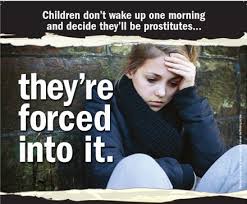
Human trafficking continues to spread its own brand of evil across the planet. ISIS is not taking responsibility for girls being forced into prostitution or being forced to marry ISIS soldiers. There is so much going on in the world right now. There are natural disasters, mass murders, kids dying from heroin. Millions of people live in violence and fear.
There are so many people running for President that it looks like the Indie 500. The items we use for every day life such as food are escalating in price. There are even pockets of Leprosy in our world. There are actually hundreds of thousands of infected people world wide.
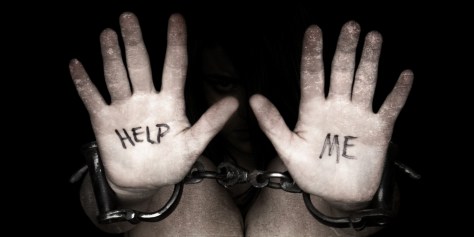
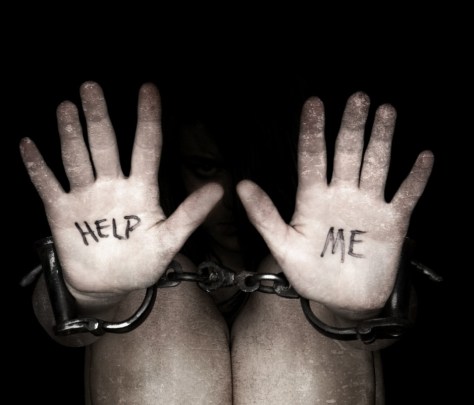
There is terrorism, mass murders, Mental health problems are on the rise. So it is easy to allow a problem such as human trafficking to go by the wayside. It is easy to forget the women and children stolen and sold like cattle. Slavery on our globe is alive and well and we need to be alert for people who look like they are terrified or might be trying to send you a look which cries HELP.
There are many things we can do. We can notify the police when a situation looks suspicious. We can listen to women who are being abused at home and advise them to call a Domestic Violence hotline for help. We can be compassionate and look out for others. We can spend our money feeding the poor. We can all do a little volunteer work every week or month. We can let these difficult problems continue or we can all help fight them each in our own way.
All I ask, is for everyone not to turn away from human trafficking, realize that our citizens don’t need guns, and keeping kids in school is vital for their futures. Domestic Violence needs to be eliminated and every human being needs to know that they are important and it is their right to live in freedom.
One day at a time, let us all do one thing to create a world where slavery and violence are defeated.
Let us make a world for ourselves in which all people thrive and flourish in.
Confronting Slavery at Long Island’s Oldest Estates
Photo
Joseph McGill, founder of the Slave Dwelling Project, in a restored slave cabin at Magnolia Plantation and Gardens in Charleston, S.C.CreditStephen B. Morton for The New York Times
Joseph McGill first unrolled bedding in a former slave cabin in 1999. He was participating in a documentary about Civil War re-enactors and the controversy over the Confederate battle flag, and the producers asked Mr. McGill — an African-American museum professional from South Carolina who dresses in the Union blue — if he could add some spice to a scene being filmed at a plantation near Charleston.
“The floor was very hard, and the bugs were terrible,” Mr. McGill, 54, recalled recently. “I woke up at about 3 a.m. to the sound of dogs barking in the distance. I’m not sure ‘spooky’ is the word, but the thought did run through my head of all those who had tried to escape.” The experience stuck with him, and in 2010 he formally began the Slave Dwelling Project, with the goal of filling what he calls “a void in preservation” at Southern plantations and beyond.
“We tend to save the iconic, architecturally significant buildings,” Mr. McGill said on a recent afternoon after leading a tour of restored slave cabins at Magnolia Plantation and Gardens in Charleston, where he works as a guide two days a week. “But what about these other buildings? They are part of the story, too.”
So far, Mr. McGill, whose ancestors were enslaved in Williamsburg County in South Carolina, has slept in more than 70 slave dwellings in 14 states, alone or in groups as large as 30, with the descendants of slaves sometimes lying alongside descendants of slave owners. This weekend, he is doing his first overnight stays in New York State, bedding down on three historic properties on eastern Long Island, in some of the region’s most beautiful (and expensive) resort areas.
If these are not places where slavery is the first — or 51st — thing to pop into visitors’ heads, it isn’t because it didn’t exist in them. In the mid-18th century, New York City’s slave market was second in size only to Charleston’s. Even after the Revolution, New York was the most significant slaveholding state north of the Mason-Dixon line. In 1790, nearly 40 percent of households in the area immediately around New York City owned slaves — a greater percentage than in any Southern state as a whole, according to one study.
In contrast to the image of large gangs working in cotton fields before retiring to a row of cabins, slaveholdings in New York State were small, with the enslaved often living singly or in small groups, working alongside and sleeping in the same houses as their owners. Privacy was scant, and in contrast to any notion of a less severe Northern slavery, the historical record is full of accounts of harsh punishments for misbehavior.
“Slavery in the North was different, but I don’t think it was any easier,” Mr. McGill said. “The enslaved were a lot more scrutinized in those places, a lot more restricted. That would have been very tough to endure.”
On his three previous trips to Northern states, Mr. McGill said, some people have wanted to connect his project to the Underground Railroad (slavery was legally abolished in New York State in 1827), or to the righteous cause of the Union Army.
“I get them out of that comfort zone,” he said. “It’s important to let them know that slavery was part of the Northern story, too.”
At each stop on Long Island, Mr. McGill will give a public talk about his project, which he says is aimed at making sure the perspective of slaves doesn’t fall out of history, even in places where the material traces of their existence may be scant.
“There’s more to the story than just glorifying the big house,” Mr. McGill said. “Why just tell the pretty parts of history? We’ve been doing that for far too long.”
Today, Shelter Island, nestled between the two forks of Long Island, is known as a quietly affluent summer community. But in the 17th century, its 8,000 acres made up the vast estate of Nathaniel Sylvester, an Englishman who used the land as a provisioning farm for his family’s sugar plantations in Barbados, and who was the first to bring enslaved Africans to what is now Suffolk County.
When Sylvester died in 1680, his will named 23 pieces of human property, making Sylvester Manor one of the largest slaveholding sites on Long Island. It is also the most intact, thanks to nearly 360 years of continuous Sylvester family habitation, which ended several years ago when the main house, built in 1737, and 243 surrounding acres became a nonprofit educational farm.
“The house is a record of all the lives lived here,” Maura Doyle, the historic preservation coordinator, said recently during an informal tour of the manor’s elegantly ramshackle, antique-stuffed rooms, which look as if the owners had gone out for a walk and never returned. “In repairing it,” she said, “we want to be careful not to Disneyfy the historic record.”
On Friday, Mr. McGill and a small group will sleep — or try to sleep — in the house’s stifling attic, reachable up the steep, twisting “slave stairs,” as they are known in manor lore. Little is documented about slave living conditions, but Ms. Doyle, picking her way past dusty trunks and cabinets filled with ornate china chamber pots and other family relics, pointed out the subtle traces of the hard lives endured under the eaves.
Random bits of paneling and scrap wood suggest efforts to carve out private spaces. Graffiti on several walls shows the outlines of sailing ships, probably carved by a Montaukett Indian boy who went to the manor as an indentured servant in 1829.
A few years ago, a researcher found a carefully arranged cache of ritual objects — a brass button, the frame of a writing slate — hidden under the floorboards, a trace of enduring West African religious practices similar to those found at other sites. Today, it is kept in the house’s concrete-walled vault, alongside treasures like a 1639 christening gown and an oversize teacup used by Henry Wadsworth Longfellow, a frequent visitor to the house.
The last slave at Sylvester Manor was freed in 1820, seven years before slavery was abolished in New York. But the complex story of African-Americans at Sylvester Manor does not end there.
Propped up on the lower part of the slave staircase is a photograph of Julia Johnson, a free black woman whose stepfather had saved enough money to buy land from his onetime Sylvester master. According to “The Manor” (2013), Mac Griswold’s history of the property, Johnson, who served three generations of Sylvesters as a housekeeper, eventually sold the waterfront parcel back to a Sylvester descendant at a bargain price.
Johnson, who died in 1907, was the last person buried in the small cemetery a few hundred yards from the house, where, Ms. Doyle said, more than 200 unmarked graves lie scattered in a grove of white pines, behind a large rock inscribed “Burying Ground of the Colored People of the Manor From 1651.”
“When we get even a scrap of a story about an individual, it’s so valuable,” Ms. Doyle said of the African-American side of the property’s history. “The record can be so silent.”
An Enslaved Poet’s Home
The Slave Quarters at Joseph Lloyd Manor
CreditNicole Bengiveno/The New York Times
The voices of the enslaved are more audible at Joseph Lloyd Manor, a white-shingled house on a steep slope overlooking Lloyd Harbor, in the North Shore town of Huntington.
In its heyday, the house was the seat of an estate belonging to one of the region’s wealthiest families. The family had a business shipping timber, crops and clay from 12 docks in the harbor, aided by an enslaved labor force that peaked at around a dozen on the eve of the Revolution. But these days, it’s more famous as the former home of Jupiter Hammon, an educated slave who in 1760 became the first published African-American poet.
Records show Hammon — who was born down the road from the manor around 1711, in a structure that still stands — traveling around the area to do business on behalf of the Lloyds. He tended his own garden of cash crops, according to information presented at the house, and at 22 he bought a Bible from his master for seven shillings and sixpence.
He served as a preacher for the African-Americans enslaved on the property, and his owners, who most likely educated him alongside their sons, encouraged him to publish his poems, which contained appeals to Christian piety (“O ye young and thoughtless youth/ Come seek the living God”) and a seemingly acquiescent view of slavery.
Hammon died sometime after 1790, at a time when owners were increasingly freeing slaves they could not or did not want to care for, leaving many homeless and impoverished.
“For my own part I do not wish to be free,” Hammon, in his 70s, wrote in his “Address to the Negroes of the State of New York,” published in 1787. “Yet I should be glad if others, especially the young Negroes, were to be free.” But in “An Essay on Slavery,” an unpublished poem from 1786 discovered two years ago in papers held at Yale University, he struck a more forceful tone, declaring: “Dark and dismal was the Day/ When slavery began/ All humble thoughts were put away/ Then slaves were made by Man.”
In the rear of the second floor, behind the genteel bedrooms of the Lloyd family, a room labeled “slave quarters” holds a bed and several mattresses bundled together on the floor, next to a large spinning wheel. “It’s meant to show that the work was never done,” Joan McGee, an educator with theSociety for the Preservation of Long Island Antiquities, which owns the property, explained during a recent visit.
On Thursday, Mr. McGill will sleep in a bigger room with a fireplace, presented as Hammon’s room, on a blue period-reproduction rope bed with a goose-feather mattress. Langston Hughes once described Hammon as a “privileged slave,” but such distinctions, Mr. McGill said, meant little.
“For any slave, beyond that little moment of serenity at bedtime, come daybreak, it was over,” he said. “They were back to doing things that benefited their masters, not themselves.”
Origins of a Rich Town
Photo
The Thomas Halsey Homestead in Southampton, N.Y., can document having slaves at various points, including an unnamed man mentioned in the 1740 will of Thomas Halsey’s grandson.CreditNicole Bengiveno/The New York Times
Slavery in Southampton, the oldest English settlement in New York, dates almost to its founding in the 1640s. A slave and Indian uprising burned many buildings in the 1650s. Census records show that by 1686, roughly 10 percent of the village’s nearly 800 inhabitants were slaves, many of whom helped work the rich agricultural land.
But this is not a part of its history that the town, better known for its spectacular beach and staggeringly expensive real estate, has been eager to embrace.
“I think for a while a lot of people didn’t know or didn’t want to acknowledge there were slaves out here,” said Brenda Simmons, executive director of the Southampton African-American Museum, which plans to open in an old barbershop — the village’s first designated African-American landmark — on North Sea Road. Mr. McGill’s visit, she said, “will help confirm the truth of the matter.”
Photo
A bedroll has been placed on the floor in the kitchen, where Joseph McGill will spend the night.CreditNicole Bengiveno/The New York Times
On Saturday, Mr. McGill will spend the night on a bedroll in the kitchen of the Thomas Halsey Homestead, the oldest house in town, a gray shingled farmhouse on Main Street wedged between the weekend residence of the writer Tom Wolfe and a large house with a private golf course hidden behind an imposing hedge.
The homestead, established in 1648, can document having slaves at various points, including an unnamed man mentioned in the 1740 will of Thomas Halsey’s grandson. The house contains a gallery devoted to Shinnecock Indian culture, but no formal display is dedicated to slavery at the site, although guides discuss the subject.
“A lot of what we can say about slave life here is conjecture,” said Tom Edmonds, executive director of the Southampton Historical Museum, which owns the house. “No one wrote down, ‘My slave slept here.’ ”
Photo
A photo, circa 1890, of Pyrrhus Concer, an African-American born to an enslaved mother in 1814 who later became a whaler and is believed to be one of the first Americans of African descent to set foot in Japan.CreditCollection of the Southampton Historical Museum
The town has documented reminders of its African-American history, but not all of them have been well preserved. On Sunday, Mr. McGill will speak at the dedication of a marker on the site of the home of Pyrrhus Concer, an African-American born to an enslaved mother in 1814 who later became a whaler and is believed to be one of the Americans of African descent to set foot in Japan.
Concer’s house on the mansion-lined Lake Agawam, where he operated a ferry, was dismantled in January by private owners after a fierce preservation battle. But the tide may be turning. This summer, a small tourist boat named for Concer has been running on the lake, and in July the townearmarked $4.35 million to acquire the .82-acre site, where the house will be rebuilt, using its salvaged historical components.
Photo
A historical marker for Concer at the boat ferry on Lake Agawam in Southampton.CreditNicole Bengiveno/The New York Times
The Slave Dwelling Project may be focused on places where people lived in bondage. But Mr. McGill said that it was also important to call attention to the fragile material traces of those who made the transition to freedom.
“The built environment of African-Americans has always suffered,” he said. “But all these tiny places can tell a story.”
A photograph from Southampton’s 250th anniversary celebration in 1890 shows Concer standing on a float with the town’s other aging whalers, thrusting a harpoon. When he died seven years later, he was buried in North Cemetery, under a marker inscribed: “Though born a slave, he possessed virtues without which kings are but slaves.”
Visiting the Sites
Joseph McGill, founder of the Slave Dwelling Project, will be staying overnight at three sites on Long Island and speaking about his experiences. Information on regular opening hours at the sites is on their individual websites.
JOSEPH LLOYD MANOR 1 Lloyd Lane, Lloyd Harbor, N.Y. Discussion with Mr. McGill on Thursday, 12:30 p.m., at Mac’s Steakhouse, 12 Gerard Street, Huntington; $45, including lunch, reservations required; 631-427-7045, Ext. 404. Reception with Mr. McGill and house tours, Thursday, 5:30 to 8:30 p.m.; free, reservations required; 631-692-4664. More information is at splia.org.
SYLVESTER MANOR 80 North Ferry Road, Shelter Island, N.Y. Panel discussion with Mr. McGill and others, Saturday, 1-2 p.m. House tours 12:15-2:45 p.m.; $10, reservations at 631-749-0626. More information is at sylvestermanor.org.
THOMAS HALSEY HOMESTEAD 249 South Main Street, Southampton, N.Y. Mr. McGill will speak at a dedication of a historic marker at the site of the former Pyrrhus Concer homestead, Agawam Park, Pond Lane, Southampton, Sunday, 11:30 a.m. More information is at southamptonhistoricalmuseum.org
Correction: August 13, 2015
An earlier version of this article, and a picture caption with it, referred incorrectly to Pyrrhus Concer. He is believed to be one of the first Americans of African descent to set foot in Japan, not one of the first people of African descent to do so.
We are ending ten long years of war. Wars not won but thousands of people dead. Now we are putting ourselves into Syria to protect the citizens and the Western world. Peace isn’t being spoken about at all. Yet, there are many of us who know that peace is the only way for us to go.
As sides line up and stories begin to flow out of the war torn countries, we will find that not only will there be deaths and emotional scarring but there will be a huge amount of using women to shame their families and themselves. The countries in Africa and the Middle East are finding that their women and children are in particular danger due to all the wars around the world.
Raping women and girls has become an important aspect to war. It is part of the plans for winning wars. The Democratic Republic of Congo is known as the “rape capital of the world.” Women and children are enslaved and gang raped. If they conceive, they are killed. Why rape women and children? If women can escape, their husbands and families don’t want them. They are dirty and full of shame.
Women and girls raped in war are far more likely to die due to pregnancy and childbirth complications. Young women who are impregnated during war do not receive prenatal care. They are owned, after all. The death rate increases by five times for these young women. It would have been kinder if we could have provided abortions for those that wish them. These babies represent the horrors of their rapes and /or gang rape. All monies going to war-torn countries from America cannot be used to provide a compassionate abortion for these women who have suffered the worst thing that can happen to a women.
So, US aid is prohibited from being used for abortions and they can’t even be discussed. Today’s wars continue to use sexual violence as a tool to win battles and even wars. It is part of genocide. To contaminate the gene pool of a country has a devastating effect on its citizens.
Currently in Syria, reports have found that armed men, often many at a time, kidnap, rape, torture and kill women and girls. One of the primary reasons for human displacement during this conflict has been fear of rape. The Global Summit held in London this past summer, rape as a tactic of war was discussed.
Because we do not provide abortions for rape victims, we are re-victimizing these poor women and children. The United Nations and the Security Council have urged countries to take steps to help these women. Because the US forbids any of its monies from being used for abortions in these cases, America is in violation of the Geneva Conventions policy to comply with the human rights of women and children.
President Bush’s administration specifically forbade funding for rape survivors and child slaves. The Obama administration can take steps to address this injustice but hasn’t so far. The administration has yet to abolish Bush’s unfair restriction.
When applied to women and girls raped in war, the abortion ban not only denies them their rights to all necessary care under the Geneva Convention, it also interferes with the way the aid is distributed by countries that do allow abortion.
For young girls, their bodies are not developed enough to give birth. Young girls who do manage to give birth and live, face long-term economic and psychological trauma. Again, we are re-victimizing these human beings.
Save the Children’s “Unspeakable Crimes Against Children: Sexual Violence in Conflict” report says that these children are being condemned to a lifetime of extreme poverty, illiteracy, increased vulnerability to risky or exploitative economic practices as children and then as adults. Poverty will spread across generations.
Female bodies must not be used as a background in war.
We are all one family and we are all the same species
Susan Griffin is a poetess who has published two collections of poetry. She worked in many stereotypical female jobs. Her poetry reflects much of the experiences she gained in these jobs. She lives in San Francisco. This poem is one of my favorites.
I Like to Think of Harriet Tubman
I like to think of Harriet Tubman.
Harriet Tubman who carried a revolver,
who had a scar on her head from a rock thrown
by a slave-master (because she
talked back), and who
had a ransom on her head
of thousands of dollars and who
was never caught, and who
had no use for the law
when the law was wrong,
who defied the law. I like
to think of her.
I like to think of her especially
when I think of the problem of
feeding children.
The legal answer
to the problem of feeding children
is ten free lunches every month,
being equal, in the child’s real life,
to eating lunch ever other day.
Monday but not Tuesday.
I like to think of the President
eating lunch Monday, but not
Tuesday.
And when I think of the President
and the law, and the problem of
feeding children, I like to think to
think of Harriet Tubman
and her revolver.
and then sometimes
I think of the President
and other men,
men who practice the law,
who revere the law,
who make the law,
who enforce the law
who live behind and operate through
and feed themselves
at the expense of
starving children
because of the law,
men who sit in paneled offices,
and think about vacations
and tell women
whose care it is
to feed children
not to be hysterical
not to be hysterical as in the word
hysterikos, the greek for
womb suffering,
not to care,
not to bother the men
because they want to think
of others things
and do not want
to take the women seriously.
I want them
to take women seriously.
I want them to think about Harriet Tubman,
and remember,
remember she was beat by a white man
and she lived
and she lived to redress her grievances,
and she lived in swamps
and wore the clothes of a man
bringing hundreds of fugitives from
slavery, and was never caught,
and led an army,
and won a battle,
and defied laws
because the laws were wrong, I want men
to take us seriously.
I am tired wanting them to think
about right and wrong.
I want them to fear.
I want them to feel fear now
as I have felt suffering in the womb, and
I want them
to know
that there is always a time
there is always a time to make right
what is wrong,
there is always a time
for retribution
and that time is beginning.
Ms. Tubman also worked in the women’s movement. She believed in equality for all people regardless of gender or skin color.She was tough and determined. Ms. Tubman crossed the Mason Dixon line hundreds of times to bring runaway slaves north to live in freedom. She also gave lectures to abolitionist groups, which wasn’t done. She was a woman and a woman of color standing up in front of a room of mostly white people speaking her truth. Explaining what slavery was really like. Perhaps God did touch her and give her an angel to protect her as she went about her very important work. In my heart and soul, Harriet Tubman earned a Medal of Honor even though there was no such thing in the 1800’s. There wasn’t a Medal of Honor but she wouldn’t have been awarded it if there had been. But, when I think of Harriet Tubman, she is a woman who has earned all medals and whose bravery and determination helped to change the world and helped end the horror of slavery.
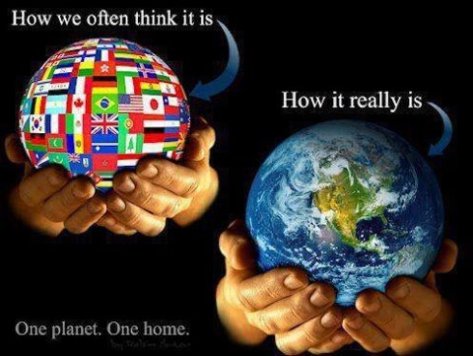
No matter what gender we are, or what skin color we have, or what religion or spiritual system we practice, of if we practice any system, no matter if we are Oxford educated or street educated, we are all one people and we are the family of man. We have a journey of one life and we are all equal. We have one planet and we must preserve her to preserve our lives.
Right now the Jewish people are celebrating one of their biggest holidays. Passover is a holiday that centers on the family. It is not a holiday in remembrance of a person, but a time in Jewish history. The celebration is in recognition of the end of slavery for the Jewish people. They had been slaves in Egypt for a very long time. They made bricks and were owned by their masters just as black people used to be owned here in America. Memories are the strength of the Jewish people. Memory is the secret of eternal life.
“A scattered nation that remembers its past and connects it with the present will undoubtedly have a future as a people and probably even a more glorious than the one in the past.” —-Lev Levanda
“Memories are the key not to the past, but to the future.” —Corrie Ten Boom
Passover is more than a holiday. Passover is the magical message of spring, the season Thoreau called “an experience in immortality.” It is the time when Mother Nature reminds us that rebirth and rejuvenation are part of God’s plan for the world. Passover is a biblical proclamation that human beings are meant to be free. Let me repeat that. Human beings are meant to be free.They are meant to be free and equal. Passover is the birthday of the Jewish people, when the descendants of Abraham, Issac and Jacob were redeemed from Egypt and chosen by G-d to begin their roles as His Chosen People who would serve as a “light unto the natures.”
Passover is the wonder of ritual, the beauty of ceremony, the power of customs and the spirituality of tradition, the meaningfulness of shared observance. At the Passover Seder, all of this is transmitted to the next generation. It is handed down generation to generation. It is passed from the past to the present. Each Jew relives the escape every year during the Seder.
When the Jewish people are overwhelmed by personal problems that we think are insurmountable, they remember the story of their ancestors escaping from Egypt. It was impossible for the Jewish people to escape their owners, it was impossible for them to realize their dream of freedom, until G-d helped Moses lead them to freedom. The story is saved in the Torah to be re-experienced by any Jewish person.
“In Israel, in order to be a realist you must believe in miracles.” —Prime Minister Ben Gurion
“There are only two ways to live your life. One is as though nothing is a miracle. The other is as though everything is a miracle.” —Albert Einstein
The story is found in the Torah, in the book of Exodus. Joseph, the favorite son of Jacob who had been sold into Egyptian slavery by his own brothers, rose to a position of leadership second only to King Pharaoh. Years later, famine forced the family of Jacob to settle in Egypt where they were reunited. The Hebrews were accepted warmly out of respect for the assistance Joseph gave to the Pharaoh over the years. The Egyptian government acknowledged Joseph as their nation’s savior. In time, a new Pharaoh came to power and did not recognize the Hebrews past services to the nation of Egypt. He soon turned the Hebrew into slaves. The people cried out to G-d and with their leader, Moses, their prayers were answered. It took centuries but their prayers were answered. God performed a number of miracles, Ten Plagues that were visited on Egypt to convince the Pharaoh to “Let His People Go.” On the night of the Tenth Plague, G-d smote the lives of every first born child. He passed-over the homes of the Jews and they fled into the night towards their freedom. Passover begins on the anniversary of that flight into the dark night being chased by the Egyptians.
Here in Cleveland, three women who have been missing for 10 years and presumed dead have been found alive. A man kidnapped them a decade ago and has held them prisoner for all of these years. Shackled, tortured, raped, impregnated and forced to assist the man to give abortions to the unlucky one who was pregnant. They were all pregnant more than once. One young woman has a daughter that he did not abort and who now six years old. What were that little girl’s first six years of life like? We won’t know, however she will have to live with the nightmares for the rest of her life. The three young women, now in their 20’s, have to restart their lives. iPads, Facebook, MySpace, texting and a million other common place activities which we all use in 2013 must be learned. Relationships with families must be renewed. Trust in the people around them must be attempted. I think this will be a huge issue. This is what has pushed me into studying about trafficking and slavery.
We can’t just look away because it is unpleasant. We have to see it, grasp the meaning of this evil and balance it with beauty so we can face the fact that we might know some who is currently or had once been part of the culture of slavery.
We can save lives by looking around us and questioning what is happening.
Things that pull people into slavery are varied. Globally women are second class citizens. Many girls and women are not able to receive the education that is needed to obtain a good paying job. We all realize that flipping burgers at McDonald’s is just not a job that will enable people to have a living wage.
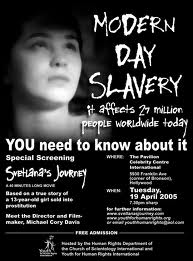
Globally, men, boys, girls,and women who exist in slavery are from all socioeconomic backgrounds. They come from every race, country and religion. They are all lost to us and to the world unless we can stop the buying and selling of human beings in this world.
Besides kids being sold as soldiers, they are also sold into the sex trade. The demand makes a huge supply necessary. Sweatshops around the world use women and children to increase the profit margin on the clothes they make. Cheap labor is needed around the world in agricultural regions. The thing about some of these areas is that paying a living wage increases the price people pay in the markets.
How to stop traffeting
Don’t look away, care, and help
Global unrest and abject poverty lead to refugees who have to leave their homes and possessions. They have no roof or food or medication. They do have desperation and hopelessness. People are often deceived about what they will have if they leave and go to another country. They are often offered education and jobs which never happen. You can help. If someone complains about Force, Fraud, or Coersion, call 911. If a person is 18 or younger, they need only ask for assistance under the Trafficking Victims Protection laws because they are completely protected by law. (For more information, visit the Department of State’s website on trafficking laws at http://www.state.gov/j/tip/laws/).
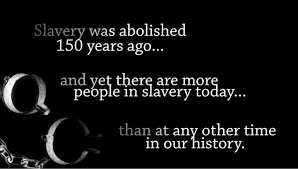
Slavery did not end with President Lincoln and the Emancipation Proclamation. It is happening in 2013 also.
Yes, there is slavery in America as well as in most other countries in the world. Why would people buy and sell other human beings? Greed, profit, gender discrimination, cheap labor force are some of the reasons.
In some parts of our country and other countries, a girl is more likely to be raped than to learn how to read. Every year, 60 million girls are sexually assaulted at or on their way to school. There is an estimated 800,000 people trafficked across national borders annually. Eighty per cent are girls and women.
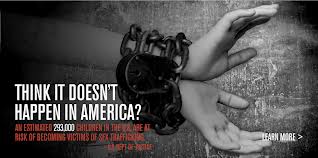
Here in America, on any day in any month, someone may be sold into slavery. 100,000 to 300,000 people are trafficked annually. 83 % are being sold for sexual work. It is the fastest growing criminal industry in the world.
Public Broadcasting Stats
Worldwide, most trafficked persons are Asians. Up to 800,000 people, men, women, boys and girls are Trafficked across international borders. They account for up to 32 billion dollars in revenue. Most trafficking has to do with labor, including sexual labor, and children being sold to armies as soldiers. Can you imagine knowing that every day for the rest of your life, you will work for someone who oppresses human beings? You will never see a penny of the fruits of your labor, and they can do with you whatever they wish, including raping you or sending you to kill or die in a battle you will never live long enough to understand.
I have been listening to people, what they write and what they say. I have looked around me at the people in my life and the acquaintances. When people talk, there is a flow of negativity. If one person does not make themselves clear, the other assumes the worst.
Now, it occurs to me that these threads of negative thought and speech are influencing more and more of the energy of our communities. People hurt others’ feelings, there is a lack of respect of others, of the elderly. Everyone seems to be on a hair-trigger. This trigger seems ready to go off and escalation is the result. My confusion comes from the fact that many of the angriest people have everything they could want. Yet it isn’t enough. Then I began thinking about how if friends and neighbors can’t have conversations without hurt feelings, there is something going on.
Times are changing. There is a lot of negativity in our cities, our country and all the countries of the world. There is an outcry across the world by the people who have been living under dictators, who live amidst bombs and fear. We human beings are committing terrible crimes against each other. Racism, sexism, greed and power are bringing out the worst in humanity. Not that we historically have had any difficulty torturing or causing pain to our fellow sentient beings.
Genocide is happening yet again. We have made it a purpose in life to try to wipe out races of people who are different. Their skin color, religion, education, natural abilities all have worked together to sound the battle cry to kill…the “others”. Some countries are keeping women and girls from receiving an education. This leaves them in perpetual poverty and controlled by the males in their families. They are owned by fathers, brothers, and husbands. They never even have a chance to figure out who they are. They never get to experience themselves as a child of the Universe. They are stuck having to always do what they are told. They don’t know how to protect their daughters because no one protected them.
Girls are being married off at as young as 10 years old. Their bodies are not even completely formed yet. In my mind, only a pedophile could or would do something like this. IN some cultures, if a man wants a woman and she doesn’t want him, he has the right to throw acid in her face. This is done to save his family shame. Also no one will ever want her. I have seen such horrible pictures of young beautiful women who are scarred so much their families are shocked. Little girls disappear. Mothers cry and pray, but the girls are gone and have been sold into sexual slavery. Their life is essentially over. Very few governments will search for them, so they are used until they commit suicide or are thrown away like garbage. In many countries, when girls reach puberty and their menses begin, the mother takes her to the midwife for genital mutilation. This practice is what will make them marriageable. It is done to decrease sexual pleasure and to ensure virginity. Some men have their wives sewn closed while they are away on business so their labia is sewn together to prevent sexual intercourse. A small opening is left so they can pee.
All of this adds to the negativity which is swirling around our world. Every time a girl or woman is saved and educated, we decrease the negative energy. It takes getting involved and understanding that every woman who is injured, is a sister.
Here in America, Domestic Violence is not stopping but increasing according to the FBI statistics. A woman who is married is not owned. She is not required to obey. She is not the reason he hits her. We started building Domestic Violence shelters and giving hope to abused women and their children in the 1970’s. We taught them to do the Activities of Daily Living so they could escape and survive in the world. Legal advice and assistance was provided. We saved lives. In those days, we were grass-roots organizations. Hard work, prayers and tenacity is what we lived on while we counseled, loved, fed and sheltered millions of women and their children. We just saw a need and began to do something to change lives.
This is exactly what we need to do to go forward into the future. We need to form grass-roots groups of dedicated men and women to stop the violence and negativity, of all kinds. Righting wrongs is an important aspect of our journey here on our World. Stopping negative energy and gut reactions is necessary to take us forward into the future. Caring is good, it is important. Volunteering a few hours a month would do much to create positive energy. People need to just think and act positively. Get out and give the Universe a few of the hours of your life and we will feel the energy brighten and we will feel joy within us. This must be a present and the future and we all can participate.
Bob Marley said it so well. One World, One God, One life. Do what you can do to add positive energy to our world.
Sojourner Truth was born a slave in New York in 1795. She gained her freedom in 1827 when the state of NY freed its slaves.At the age of forty-six, she felt called by God to travel the country testifying to the sins against her people.
Her slave name was Isabella, and at this point she took the name of Sojourner Truth. She became a frequent speaker at abolitionist meetings and at feminist gatherings. She attended the First national Women’s Rights Convention in Worcester, Mass. and was the only black woman present. The following year she was an attendee at the women’s Akron, Ohio.Sojourner was not able to read or write.But she spoke at the Akron convention.
“Well, children, where there is so much racket there must be something out of kilter. I think that ‘twixt the Negroes of the South and the women at the North, all talking about rights, the white men will be in a pretty fix pretty soon. But what’s all this here talking about?
That man over there says that women need to be helped into carriages, and lifted over ditches, and to have the best place everywhere. Nobody ever helps me into carriages, or over mud-puddles, or gives me any best place! And ain’t I a woman? Look at me! Look at my arm! I have ploughed and planted, and gathered into barns, and no man could head me! And ain’t I a woman?
I could work as much and eat as much as a man–when I could get it–and bear the lash as well! And ain’t I a woman? I have borne thirteen children, and seen them most all sold off to slavery, and when I cried out with my women’s grief, none but Jesus heard me! And ain’t I a woman?
Then they talk about this thing in the head; what’s this they call it? (Intellect, someone whispers). That’s it, honey. What’s that got to do with women’s rights or negro’s rights? If my won’t hold but a pint, and yours holds a quart, wouldn’t you be mean not to let me have my little half measure full?
Than that little man in back there, he says women can’t have as much rights as men, ’cause Christ wasn’t a woman! Man had nothing to do with Him.
If the first woman God ever made was strong enough to turn the world upside down all alone, these women together ought to be able to turn it back, and get it right side up again! And now they is asking to do it, the men better let them. Obliged to you for hearing me, and now old Sojourner ain’t got nothing more to say.”
There has been a play written about Sojourner’s life. It is called, “God and a Woman.” So now we come to the present. And women do not have equality as of yet. Next year, 2013, Congress will have the opportunity to ratify the Equal Rights Amendment or ERA. Just how long will the women in America have to struggle to be legally equal? This is the time to contact your congress people and tell them, Enough is Enough. We must be equal. We can’t settle for less. Two hundred years is long enough to be America’s second class citizens. Stand up and tell congress you must be legally equal. We won’t stop until we are equal.
(Sojourner Truth quote from Feminism: The Essential HIstorical Writings” Miriam Schneir, Vintage Books 1972)
Mensen maken de samenleving en nemen daarin een positie in. Deze website geeft toegang tot een diversiteit aan artikelen die gaan over 'samenleven', belicht vanuit verschillende perspectieven. De artikelen hebben gemeen dat er gezocht wordt naar wat 'mensen bindt, in plaats van wat hen scheidt'.
















 idealisticrebel