
Our society has two sections, the mainstream and the marginalized. What makes up the marginalized? Important components of our culture and country. Changes of thinking, prioritizing parts of American life, immigrants, artists, circus performers, writers, poets, photographers and anyone who pulls society screaming into new ways of thinking and living.
Initial reactions to accepting new ideas and priorities are often challenging to those who have walked solidly year after year, in the right way, the mainstream. In our age, we are still working on women’s rights, hunger issues, and the rights of people who disagree with the government. I am not speaking here of homegrown terrorists. just those who are willing to think outside of the box and disagree with the powers that be.
The edges of society call for justness and fairness. They won’t settle for less. History shows us the immense changes which have been instigated by the disenfranchised or marginalized. The edges of society eventually pull society forward into the place where they are more inclusive, more tolerant, and less willing to put up with dishonesty. The colonists who began the American Revolution were fringe, and yet they founded a new country based upon freedom and democracy. In England, they were criminals. In America, they are heroes and heroines.
So as the fringe slowly becomes the mainstream, the artist becomes well-paid, the writer is finally published, the marginalized becomes the mainstream. New fringe elements appear to challenge the acceptable, the mainstream and so on and so on. A never ending cycle, in which the marginalized move us into our own future. If we persecute the marginalized, then, we will cease to move forward. This is why tolerance of ideas is so important.
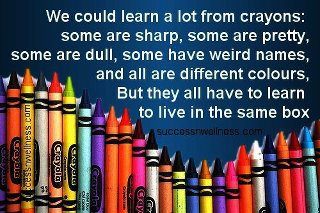
” I am willing to put myself through anything; temporary pain or discomfort means nothing to me as long as I can see that the experience will take me to a new level. I am interested in the unknown, and the only path to the unknown is through breaking barriers, an often painful process.” –Diana Nyad
 idealisticrebel