Give us Shelters


(Reprinted from MS Magazine,  Summer 2014.  Author Lindsey O’Brien)

A unanimous Supreme Court decision in late March reaffirmed a federal law making it a crime for domestic-violence offenders to possess a gun.  James Castleman had claimed that his state conviction for assaulting his child’s mother had not required proof that he had used violence.  But as Justice Sonia Sotamayor pointed out in her opinion on United States v. Castleman, domestic violence includes “seemingly minor acts” such as pushing, grabbing, shoving, pulling hair and “a squeeze of the arm that causes a bruise.”

This was a major victory in fighting violence against women, and will undoubtedly saves lives.  But at the same time, there is a disturbing trend that has gone little notices:  the reduction in the number and staffing of domestic-violence shelters.

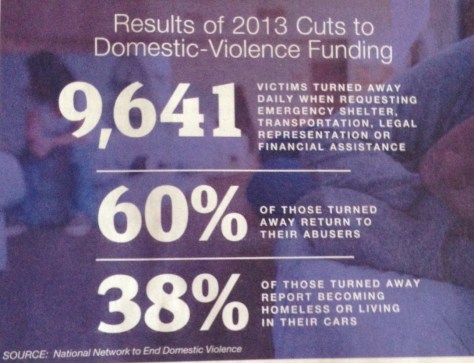
Last year, according to the National Network to End Domestic Violence (NNEDBV), cuts to domestic-violence funding caused the loss of 1,696 jobs in the field — including legal advocates and those providing direct services in shelters.  This resulted in 9,641 victims turned away daily when requesting emergency shelter, transportation, legal representation or financial assistance.

The first reason for these cutbacks is simple:  State and federal budget cuts have reduced funding for human services.  The Family Violence Prevention and Services Act (FVPSA), the only federal law dedicated to funding domestic-violence shelters, authorizes $175 million in spending a year, but last year Congress appropriated less than $122 million.

The second problem is a cap on the Victims of Crime Act.  VOCA is funded by criminal fines and penalties that provide services to crime victims.  In the beginning of 2013, however, Congress voted to allow only $730 million to be distributed annually, no matter how much had come in.  As of September 2013, $9 billion has accumulated and has yet to be seen by victims of crime.

Of those victims who are turned away from services due to budget cuts, 60 percent return to their abusers.  “That’s pretty stark.  And that, of course, means that their kids are going back too,” explains Kim Gandy, president and CEO of the NNEDV.  Thirty-eight percent of those turned away report becoming homeless or living in their cars.

For the past five years, Louisiana has averaged one domestic-violence shelter closure per year.  Yet the state faces one of the highest domestic-violence homicide rates in the nation.  Women in Louisiana are murdered at a rate exceeding 40 percent higher than the national average.  “I think that’s directly correlated to this lack of a safety net[for victims],” explains Beth Meeks, executive director of the Louisiana Coalition Against Domestic Violence.

As another example, the state of Rhode Island has been lucky enough to escape closures, but can no longer offer around-the-clock staffing at every shelter.  That means that those facing domestic violence can’t seek emergency shelter during the night.

Gandy suggests two ways to start turning around the situation:  Congress needs to appropriate all the money authorized in FVPSA, and lift the cap on VOCA.  “Even the most conservative members of Congress,” she says, “ought to see the appeal in sending money to the states to serve their own victims of crime.”

GiveUsSheltersStats


bjwordpressdivider

When I helped to start a Domestic Violence Shelter in the seventies, we were one of the first shelters in America. I can’t express my anxiety and worry that shelters are closing and staff is being cut. Why? It is not because there are less battered women. In truth, today in 2014, a woman is battered every 11 seconds according to the FBI. My original shelter is functioning and use a large amount of volunteer staff. It provides many services for women. The last time I went back and visited, they had a half million dollar budget.


Today, we need women to help fund raise and to start new shelters. Shelters don’t need to be fancy, just warm, good food, and safety. It is a place where women can volunteer.  There is so much needed to be done. Children need to be counseled and played with. Moms need to receive counseling, legal assistance, transitional housing, they need to talk and express their feelings. They need to learn how to fill out a job application or practice interviewing. I They need other women to lean on and to draw strength from.


It is a crime to beat a woman.

It is a crime to beat a woman.


No one should have to live in violence

No one should have to live in violence

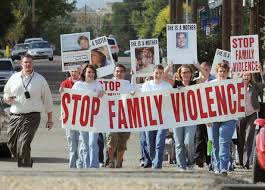
Family Violence


This is excerpted from Time magazine:

On June 25, 2013, Sara Naomi Lewkowicz won the 2013 Ville de Perpignan Rémi Ochlik Award for her work documenting Domestic Violence, to be awarded later this year at Visa Pour l’Image in Perpignan.

Photographer Sara Naomi Lewkowicz has continued to document the story of Maggie and her life since November 2012, when she was the victim of a violent attack by her now ex-boyfriend Shane. In an assignment for TIME in March 2013, Lewkowicz visited Maggie and her family in Alaska to document their life as they continue to move on from the incident.

More than three months since the assault, Maggie has moved her family to Alaska to try to repair her marriage and give the children a chance to be closer to their father. Maggie and her husband met at 14. She said they’d been on and off since eighth grade, yet they always seem to find their way back to one another.

Domestic violence is often shielded from public view. Usually, we only hear it muffled through walls or see it manifested in the faded yellow and purple bruises of a woman who “walked into a wall” or “fell down the stairs.” Despite a movement to increase awareness of domestic violence, we still treat it as a private crime, as if it is none of our business.

During my time as a freelance photojournalist and as a Master’s candidate at Ohio University, one of the biggest challenges of my career came in November of 2012, while working on a project about the stigma associated with being an ex-convict. Suddenly, an incident of domestic violence unexpectedly became my business.

I had met Shane and Maggie two-and-a-half months before. Southeastern Ohio was still warm that time of year and brimming with small regional festivals. I had gone to the Millersport Sweet Corn Festival to shoot my first assignment for an editorial photography class. Almost immediately, I spotted a man covered in tattoos, including an enormous piece on his neck that read, “Maggie Mae.” He was holding a beautiful little girl with blonde curls. His gentle manner with her belied his intimidating ink, and I approached them to ask if I could take their portrait.

I ended up spending my entire time at the fair with Shane, 31, and his girlfriend Maggie, 19. Maggie’s two children, Kayden, four, and Memphis, nearly two, were not Shane’s, but from her then-estranged husband.

Shane and Maggie had started dating a month prior to meeting me, and Shane told me about his struggles with addiction and that he had spent much of his life in prison. Maggie shared her experience losing her mother to a drug overdose at the age of eight, and having the challenges of raising two small children alone while their father, who was in the Army, was stationed in Afghanistan. Before they drove home, I asked if I could continue to document them, and they agreed.

I intended to paint a portrait of the catch-22 of being a released ex-convict: even though they are physically free, the metaphorical prison of stigma doesn’t allow them to truly escape. That story changed dramatically one night, after a visit to a bar.

In a nearby town where Shane had found temporary work, they stayed with the kids at a friend’s house. That night, at a bar, Maggie had become incensed when another woman had flirted with Shane, and left. Back at the house, Maggie and Shane began fighting. Before long, their yelling escalated into physical violence.

Shane attacked Maggie, throwing her into chairs, pushing her up against the wall and choking her in front of her daughter, Memphis.

After I confirmed one of the housemates had called the police, I then continued to document the abuse — my instincts as a photojournalist began kicking in. If Maggie couldn’t leave, neither could I.

Eventually, the police arrived. I was fortunate that the responding officers were well educated on First Amendment laws and did not try to stop me from taking pictures. At first, Maggie did not want to cooperate with the officers who led Shane away in handcuffs, but soon after, she changed her mind and gave a statement about the incident. Shane pled guilty to a domestic violence felony and is currently in prison in Ohio.

The incident raised a number of ethical questions. I’ve been castigated by a number of anonymous internet commenters who have said that I should have somehow physically intervened between the two. Their criticism counters what actual law enforcement officers have told me — that physically intervening would have likely only made the situation worse, endangering me, and further endangering Maggie.

I have continued to follow Maggie since the abuse, and I’ve also begun working closely with photographer Donna Ferrato, who first began documenting domestic violence 30 years ago.

Since that November night, Maggie has moved to Alaska to be with the father of her two children, who is stationed in Anchorage. In March, I will travel to Alaska to document Maggie as she tries to put the pieces of her family and life back together. My goal is to examine the long-term effects of this incident on her current relationship, her children, and her own sense of self. Devoted to revealing these hidden stories of domestic abuse, Maggie asked me to move forward with this project and to tell her story, because she feels the photographs might be able to help someone else.

“Women need to understand this can happen to them. I never thought it could happen to me, but it could,” she told me. “Shane was like a fast car. When you’re driving it, you think ‘I might get pulled over and get a ticket.’ You never think that you’re going to crash.”

The Violence Against Women Act, which provides funding to help victims of domestic violence, was signed into law by President Bill Clinton in 1994, and is now up for re-authorization. Read more about the law and why it’s currently stuck in Congress.

Sara Naomi Lewkowicz is a photographer and first year graduate student at Ohio University in Athens.

UPDATE: Readers who feel they–or people they know–need assistance can call the National Domestic Violence hotline at 1-800-799-SAFE.

BJWordPressDivider

I wanted to share the above story because it is true. Violence against women is being reported more often and happening more often. The FBI statistics show that a woman was beaten every eleven seconds. Now a woman is beaten every nine seconds. These are cases that are reported. Many women are much too terrified to tell anyone and they still love the abuser and they continue to convince themselves that it won’t happen again. He will always tell her that. And he will be loving and bring gifts and they will have what we call “the honeymoon phase”. This part of the cycle of violence can last for an undetermined amount of time. But, I can assure you from twenty plus years  of experience, it never ends. Unless he kills her.

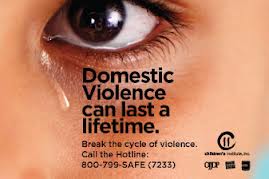
Beatings can last for an entire lifetime.

Beatings can last for an entire lifetime.

As the honeymoon phase is coming to an end, tension begins to build between the man and woman. She is aware of the escalation of tension, but she doesn’t want to have to look at the reality. He will become impatient with the children. He will begin to complain again about her cooking, the way she irons his shirts, the neighbor who asked how she was. Jealousy is often a trigger. The abuser wants to know where she is at every moment and whom she is talking to and what they talked about. He has a deep need to control. The abuser also never takes responsibility for his actions. Everything bad that happens in his job or with the neighbors or in the house is everyone else’s fault. His boss picks on him. He is upset because the neighbors forgot to put out the trash.

As the tension continues to increase it becomes harder and harder to anticipate his moods. More things upset him. He may begin swearing at the woman and/or at the children. If he doesn’t like dinner, he may throw his plate of food or smear it all over the woman’s face. There may be a slap or two or a push or shove. It isn’t full abuse. But the tension continues to build.

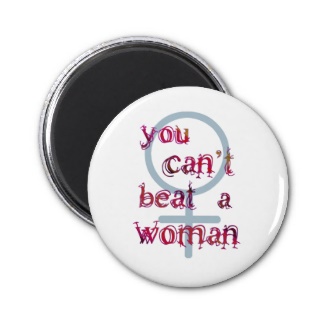
You Can't Beat a Woman.

You Can’t Beat a Woman.

Then one day, he goes into active abuse. It might be hair pulling, swearing, punching, kicking, slapping, spitting, it can also include cutting her with a knife, threatening to kill her. Holding a gun to her head for hours while she is consumed with fear and terror. He will talk to her about how she is going to die. He may even play Russian Roulette to intimidate her. The twenty plus years I worked in Domestic Violence have given me many many stories. I remember them all clear as a bell. After the active abuse phase, they hit the honeymoon phase again. It is a deadly, painful cycle that must either end in her leaving and going to a shelter for help and protection. Or he will kill her. ( In my time, I lost two women. They didn’t listen.) Or in her fear, she will kill him.

BJWordPressDivider

In 1994, we, the National Organization of Women put on a rally in Washington D.C. Thousands of women came from all over the country. They brought t-shirts in memory of someone they knew who had died due to Domestic Violence or that were survivors of Domestic Violence. We strug clothes lines on the Mall and the women hug the shirts they had decorated in memory of mothers, sisters, friends, cousins and the survivors celebrated their freedom from fear. When all the shirts were hung up and the women were walking around looking at them, you just couldn’t help but cry at all of the wasted lives. Women and children deserve to live without fear or violence.

You can't beat a woman!

You can’t beat a woman!

BJWordPressDivider

you_cant_beat_a_woman_fridge_magnet-r2f60f43b75094530ab858f2d1647231d_x7js9_8byvr_324

BJWordPressDivider

                                                                                                                  Break the silence, stop the violence 

Are You Being Abused?


End Violence in the Home

End Violence in the Home

I have found that young women have many questions about battering. They seem to lack information they need to be safe. Domestic Violence or abuse is a crime punishable by a fine and jail time. The states vary with the laws. Battering can begin at any time in a relationship. During the dating phase, after the wedding, when a woman is pregnant, or as the children grow up.

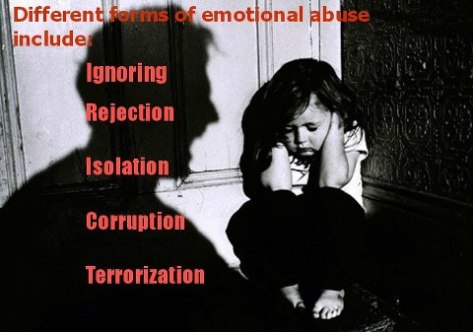
Abuse is physical, verbal or emotional. It can also be a combination of any of these. You have the right to live without fear.  Often in an abusive relationship, the abuser will begin trying to isolate the woman from friends and neighbors. He doesn’t want anyone to have influence on his woman besides him. Often he wants the women to stay home and not work. That outside contact can make controlling her more difficult. If a woman is working, she often is quiet at work. She is passive and is in the emergency room frequently. If she confides in a co-worker, she will insist that she loves and needs him. He says he loves her too. But this is not love. This is torture.

There is a cycle of violence which was identified in the seventies.

There is a cycle of violence which was identified in the seventies.

you_cant_beat_a_woman_fridge_magnet-r2f60f43b75094530ab858f2d1647231d_x7js9_8byvr_324If you can’t bring yourself to leave, then fill a go bag with items that are extremely necessary. Money, prescriptions, clothes, ID for you and the children, and what ever your children will need immediately. Hide it well. If another attack happens you will need these things to flee. If you can’t get to the go bag, just leave and go to your local shelter. Husbands do kill wives. So your safety is vital. The things he has told you about being stupid, ugly, trash, or that you want to be hit is pure BS. Don’t buy into what he says. There is nothing you can do to justify his abusing you.

National Organization of Women

National Organization of Women

The fear you live with day in and day out does not mean you deserve it or asked for it. Examples of physical abuse are: pinching, slapping,hitting, punching, burning, pushing you, twisting your arms, and you have the right to live without violence. Forced sex in a marriage is rape…spousal rape. It is also illegal. It is hard to leave because you often still love him but you need to be a good role model for your children.

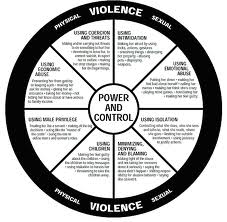
Anatomy of Violence

Anatomy of Violence

Domestic Violence is learned generation after generation. Little girls learn to be victims and little boys learn to be abusers. Some boys will try to stop their fathers and will punch and kick and yell at the father to stop the violence. Even if the violence is not turned against him, he learns to disrespect women. He will statistically become an abuser.  So your children need positive role models. They need to know that you can discuss problems and work them out. Remember if your abuser kills you he may very well end up raising your children.

There is nothing wrong with you. You do not deserve to be hit, spit at, spoken to in a demeaning manner. Your city has many people who care what happens to you and your children. There is help available.

Stop the Violence

Stop the Violence

Don’t let this be you. You deserve better. If you need to go to a hospital for your injuries, tell the ER staff what really happened. They will notify the police and they will call the shelter for you. If you are being hit now, get out and you will find love again, the community will help you with housing and education. No one deserves to be beaten. It is so hard to decide about all of these things when you are being beaten frequently, but believe me you can go on to a good life. A life where you are safe and live without violence.

BJWordPressDivider

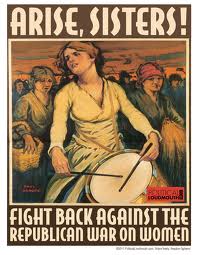
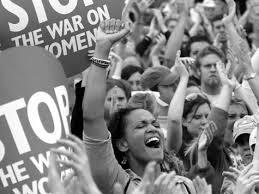
The Continuing War on Women


Women need to unite to regain our rights.

Women need to unite to regain our rights.

Despite the persistent gender gap in opinion polls and mounting criticism of their hostility to women’s rights, Republicans are not backing off their assault on women’s equality and well-being. New laws in some states could mean a death sentence for a pregnant woman who suffers a life-threatening condition. But the attack goes well beyond abortion, into birth control, access to health care, equal pay and domestic violence.
Republicans seem immune to criticism. In an angry speech last month, John Boehner, the House speaker, said claims that his party was damaging the welfare of women were “entirely created” by Democrats. Earlier, the Republican National Committee chairman, Reince Priebus, sneered that any suggestion of a G.O.P. “war on women” was as big a fiction as a “war on caterpillars.”

But just last Wednesday, Mr. Boehner refuted his own argument by ramming through the House a bill that seriously weakens the Violence Against Women Act. That followed the Republican push in Virginia and elsewhere to require medically unnecessary and physically invasive sonograms before an abortion, and Senate Republicans’ persistent blocking of a measure to better address the entrenched problem of sex-based wage discrimination.

On Capitol Hill and in state legislatures, Republicans are attacking women’s rights in four broad areas.

ABORTION On Thursday, a House subcommittee denied the District of Columbia’s Democratic delegate, Eleanor Holmes Norton, a chance to testify at a hearing called to promote a proposed federal ban on nearly all abortions in the District 20 weeks after fertilization. The bill flouts the Roe v. Wade standard of fetal viability.

Seven states have enacted similar measures. In Arizona, Gov. Jan Brewer signed a law that bans most abortions two weeks earlier. Each measure will create real hardships for women who will have to decide whether to terminate a pregnancy before learning of major fetal abnormalities or risks to their own health.

These laws go a cruel step further than the familiar Republican attacks on Roe v. Wade. They omit reasonable exceptions for a woman’s health or cases of rape, incest or grievous fetal impairment. These laws would require a woman seeking an abortion to be near death, a standard that could easily delay medical treatment until it is too late.

All contain intimidating criminal penalties, fines and reporting requirements designed to scare doctors away. Last year, the House passed a measure that would have

Stop. Stop trying to control women

Stop. Stop trying to control women

allowed hospitals receiving federal money to refuse to perform an emergency abortion even when a woman’s life was at stake. The Senate has not taken up that bill, fortunately.

ACCESS TO HEALTH CARE Governor Brewer also recently signed a bill eliminating public funding for Planned Parenthood. Arizona law already barred spending public money on abortions, which are in any case a small part of the services that Planned Parenthood provides. The new bill denies the organization public money for nonabortion services, like cancer screening and family planning, often the only services of that kind available to poor women.

Gov. Rick Perry of Texas and the state’s Republican-dominated Legislature tried a similar thing in 2011, and were sued in federal court by a group of clinics. The state argues that it is trying to deny money to organizations that “promote” abortions. That is nonsense. Texas already did not give taxpayer money for abortions, and the clinics that sued do not perform abortions.

Last year, the newly installed House Republican majority rushed to pass bills (stopped by the Democratic-led Senate) to eliminate funding for Planned Parenthood and Title X. That federal program provides millions of women with birth control, lifesaving screening for breast and cervical cancer, and other preventive care. It is a highly effective way of preventing the unintended pregnancies and abortions that Republicans claim to be so worried about.

EQUAL PAY Gov. Scott Walker of Wisconsin, the epicenter of all kinds of punitive and regressive legislation, signed the repeal of a 2009 law that allowed women and others to bring lawsuits in state courts against pay discrimination, instead of requiring them to be heard as slower and more costly federal cases. It also stiffened penalties for employers found guilty of discrimination.

He defended that bad decision by saying he did not want those suits to “clog up the legal system.” He turned that power over to his government, which has a record of hostility toward workers’ rights.

President Obama has been trying for three years to update and bolster the 1963 Equal Pay Act to enhance remedies for victims of gender-based wage discrimination, shield employees from retaliation for sharing salary information with co-workers, and mandate that employers show that wage differences are job-related, not sex-based, and driven by business necessity.

DOMESTIC VIOLENCE Last month, the Senate approved a reauthorization of the Violence Against Women Act, designed to protect victims of domestic and sexual abuse and bring their abusers to justice. The disappointing House bill omits new protections for gay, Indian, student and immigrant abuse victims that are contained in the bipartisan Senate bill. It also rolls back protections for immigrant women whose status is dependent on a spouse, making it more likely that they will stay with their abusers, at real personal risk, and ends existing protections for undocumented immigrants who report abuse and cooperate with law enforcement to pursue the abuser.

Whether this pattern of disturbing developments constitutes a war on women is a political argument. That women’s rights and health are casualties of Republican policy is indisputable.

—Excerpted from the New York Times
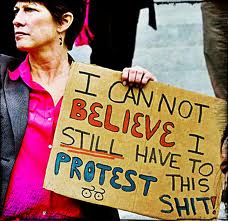
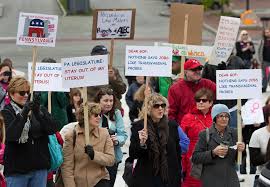
This is the second time we have picketed many of our issues

This is the second time we have picketed many of our issues

There are no doubts that there is a War on Women. There was one in the 60’s and 70’s. We protest to Take Back the Night. These protests are organized because women need to be able to be out at night without fear of violence, such as rape. 95% of rape victims are women. When a woman says no, it is no. Forcing sex on her is a crime. If a woman has too much to drink or has done some drugs, if she says no, it is no. A woman wears a mini skirt to a party? She is not advertising, she is being a fashonista. She has the right to say no. There is never a reason for a man to ignore a woman saying no. You wanting sex with a woman in these circumstances is not because you are a stud, she is too hot to leave alone. It has to do with the perp’s need for power and control. It makes you a sexual predator.

Domestic Violence is also a crime. There is never a reason to hit a woman. Abuse can be physical such as slapping, pinching, hitting, punching, kicking, or twisting limbs. Abuse can also be verbal and emotional. This includes demeaning words, telling a woman how stupid she is. It is telling her she is ugly and no other man will want her. It is manipulating her to do what you want her to do. Please refer to previous blogs that you will see in my sidebar for October, 2013. If you are being hit, save some money and keep it hidden well. Call your local hotline for your city. Leave and take your children and go to the shelter. You will receive all you need to be free. You never have to live in violence ever again. Women have legal recourse and you will have support getting a protection order or a restraining order.

Equal pay for equal work. People often think this is funny. But woman work as hard as a man and sometimes harder. Even with the Equal pay law that President Obama has signed and it is law women earn less. This is left over from the sixties and seventies. Corporations  felt men where heads of households and if the wife was working, then she was just doing it for “pin money?” When we worked to get women the right to leave the house and go to work it was so that every woman had a choice. That she had the right to do what would make her happy. So staying home raising kids was fine and so was going to work.But our wonderful corporations made it almost necessary for a woman to work. Two incomes are needed to survive.

Sexual harrassment is a federal crime. If you have a supervisor or someone else and they want sex from you and you are not interested just say no. If he makes it plain that your job or salary or promotion are at risk you are being sexually harrassed. Go to Human Resources and file a complaint. It is your right. You can’t be fired because you said no. They may try to tell you that but it isn’t true. Get a lawyer.

waronwomen3

Remember that being a woman is something to be proud of, just as being a man is something to be proud of if you are not sexist or racist. You have the right, as a woman, to live freely in a place where you or you and your children are safe from violence.
war on women4

waronwomen2

Our Journey in Life


Autumn color

Autumn color

          Presque Isle, Pa.

The present moment, the here and now moment is the most important moment. Each moment is fleeting and passes us by very quickly. When we are children the present moment is their entire world. As adults, we know that each fleeting moment will be followed by another moment and another and another. The present moment of time in the history of the universe because it is the only time we have any control over.  This is why it is important to teach our children what is important, which values really count, and hope we have given them what they need to carry on after we are gone.

This means walking our path and traveling our journey. A major part of our journey in life is figuring out what our purpose is.  Just what is the reason we are put here? If our lives have not been enchanted, we wonder what is wrong. If we have experienced violence and abuse. Even though we are almost at the end of October, Domestic Violence Awareness Month,  Abuse can and will happen at any time during the year. You may not hear as much or read as much about it as you have been this month but those of us who  do work or did work in DV are still here and caring for your safety. Once again, I have to say you are never alone. If attempts are being made to isolate you, we are here. The hotlines will still work, the shelters will still be there and nothing will ever change this fact.

Purple ribbons signify that we do not accept Domestic Violence

Purple ribbons signify that we do not accept Domestic Violence

Be assured you were not put on a path of slavery, abuse and other forms of violence. The strength and determination to get yourself out and to a safe place is inside you. God wants none of us to suffer. You must not listen to the abuser who is telling you how stupid, and ugly you are. Emotional abuse will include that no one else will want you, you are a terrible parent, no one cares about what happens to you. If you are hearing lies like this know that they are not true. The Divine One is within you and you are strong, you are beautiul, you are intelligent.
So what is the reason we are here? Where is our journey taking us and what are we to discover? Some people find their answer with work, others with their avocation. Some form a link between the two.  To change the world for the better you don’t need to be a king, a prince, president or a prophet. God’s plan is that it only takes one human being, doing good right in the present moment.

Inside of yourself are seeds for you to sow. Seeds of hope in your own heart and in the hearts of people around you. This is how you build bonds by the ties of hope and trust. When you put yourself into a place of hope and trust it builds not only within  ourselves but also for the world. A positive, hopeful countenance to the world, then the small world that we call our everyday life can become richer with meaning and filled with the positive presence of hope.

 Truly Magestic Tree that come from a seed someone sowed to make their world a better place to be.

Truly Majestic Tree that come from a seed someone sowed to make their world a better place to be.

Getting Out and Staying Safe


dvribbon.jpg

So you have had it.  You are tired of living in fear. Last night he threatened you with a knife. His hunting knife. It felt huge when he held it up against your throat. You hate being called names such as bitch, whore and ugly. It should have been all right but your daughter called from a friend’s house and asked if she could stay  a while and study together. Your son  came home from school with an F on a test. But dinner was ready and he, your abuser, came home and was upset with his supervisor. He yelled at you when he got home. But he was calmer when you told him dinner was ready.  He tells you that there is a  party next week his boss is giving. He tells you you had better look good and not embarrass him because you are slutty and stupid.

You sat down at the table and you brought out the food. He doesn’t want cold food.  You can hear the baby crying so you get up to go and get the baby. As you walk past him to get the baby, he grabs your upper arm and it hurts. He is asking why you are leaving the table and you say because the baby is crying. Actually, he is now screaming. He gives you a shove and tells you the baby wouldn’t be crying if you weren’t such a lazy slob. Oh, where is our daughter? At a friend’s, studying. He then declares he wants you to call and get her home.  He asks your son a question as you run upstairs to grab up the baby. But from there you can hear a slap flesh upon flesh. You  are standing in the nursery listening to him screaming at your son and you are shaking with fear.

You make the call, and walk downstairs with the baby and he tells you to hurry up. You grab the high chair and slide the baby in. You give the baby a sippy cup full of milk and some mashed potatoes. As you get the beer your abuser demands, the baby pours milk into potatoes and begins finger-painting with it. Your husband screams at the child and the child begins to cry hard. He throws mashed potatoes at the center of the table.  Your son laughs because he thought it was really funny. Your husband grabs your son and begins to punch him. This has never happened before. You are surprised. Your son runs upstairs. You reach to pick up the baby and your husband reaches for you and punches you.  Your first thought is how you will cover the bruise. Then he shoves you against the room and you end up against the stove and the handle of the oven stabs you.  He stares at you, picking the baby up and putting him on the floor to toddle quickly away.  You begin to leave the room also and he grabs your hair and pulls you close to him. He slaps you across the face. And then he pushes you down into a chair and tells you to  eat the swill you made for dinner.

Tonight it feels worse and you are terrified. Then he punches your face again and a tooth cuts your lip.  He sees your fear and he thinks it is funny that he can control  you with such little effort. Your daughter quietly comes in and runs to room. Your husband picks up a bowl of steamed vegetables and throws it. The crash sounds loud. He then reaches for his plate and pushes the plate into your face and spreads it around. You are now crying and hurting and then he punches you in the stomach. You slide to the floor and he begins to kick you over and over again. You scream for him to stop and he kicks harder. Your kidneys, your stomach and your head. There is blood everywhere. Then he picks you up and begins to choke you while telling you he is thinking of killing you tonight. Your son comes down and begs your husband to stop hurting you.  Then he pounds on your husband’s back with his fists, tears sliding down his face. Your husband shakes off your son and grabs a jacket and stalks out the door.

You are crying hysterically, you are in terrible pain. Your children are all crying now. You finally think that you can’t stay because of everything he screamed at you, that he wanted to kill you, is what you know will happen. You clean up the kitchen and gently wipe little faces and your own. You look into the mirror and wonder what has happened to that pretty young girl that used to look back at you. You put the children to bed and they have cried themselves to sleep. You sit down on the couch and think about all that the hotline counselor told you. Because you have to get out, He will kill you.

The counselor told you to take your information off of the computer. You haven’t emailed anyone except to pass on a joke or a cartoon. You get up and change your username and passwords. You change the password on your secret bank account. It has your escape money. He knows nothing about it. But you know you will be raising three children alone.  You never use the house phone because a corded phone is easier to tap. The counselor told you to get a burner phone and have one hidden in the tank of the toilet. You pack up clothes and toys and medications and hide the bags in the attic. You take a shower and go to bed. At sometime during the night he comes home and you can feel the mattress sink as he gets into bed. You are pretending to be asleep. But what you are really doing is praying that he has not killed you before dawn. At some time during the night, you fall asleep. He is gone when the baby’s cries awaken you. You turn over in the bed and feel so sore and then you remember last night. You know you have to get out and stay out.

You get the children up, dressed and they are eating breakfast.  While they eat you get ready; going over the mental list the hotline counselor gave you. You begin checking things off as you do them. You know in your heart, you will get a restraining order as soon as possible. You had thought you would never do that. You had left before and gone to your mom’s but he came and brought you roses and candy. He cried. He swore to your parents it would never happen again. You know this time you won’t believe him. You call a cab and one arrives and the driver is very nice and helps the kids into the vehicle. He puts all of your bagged up possessions into the trunk. He is going to take you to the domestic violence shelter. You get into the cab and get a glimpse of yourself in the mirror. The bruising is really getting bad. You wonder if your ribs are broken. But you sigh and the cab driver pulls the cab into traffic. You are starting a new life for yourself and your children. You are scared but staying is scarier. You just want to be safe.

Break the silence, protect women and children

Break the silence, protect women and children

Are You Being Abused


There is a cycle of violence which was identified in the seventies.

There is a cycle of violence which was identified in the seventies.

Take a close look at this Cycle of Violence. Does this pattern look like your life? Are you scared when you are home? Are you very careful of what you do when he is around? Are you afraid to ask hime questions? Are you afraid to disagree with him? Do you make the children be silent when he comes home? If you have even one yes, you are being abused. These excuses may be what you are being told, but the violence really has to do with the abuser”s need for power and control.

Do you end up in the Emergency Room often?

Do you end up in the Emergency Room often?

If you are being scratched, punched, bit, strangled or kicked then you are in a physical abusive relationship. These are not accidents. You did not make the abuser hurt you. No one has the right to hurt another person. Throwing something at you such as a phone book, a book, a shoe or plate is abuse. Pulling your hair, pulling out some of your hair, pushing and pulling you, grabbing your clothes, threatening you with a knife, box cutter, bat, mace or any other weapon means you are being victimized.

Grabbing your face to make you look at them, smacking your bottom or preventing you from leaving the house is battering. Abuse does not happen just once. No matter what he promises, he will beat you again.  Women who are brought to the emergency room with fractures and bruising are asked if they need help. Hospital employees have been trained to help you and they are also following the law.  They will ask if you have a support system. If you don’t have friends you spend time with, family you are close to, someone you can  vent to, you are abused. They want to be the only influence in your life. They don’t want people to give you advice. Isolation means you only have him and his opinions and the fear of what he will do to you.

Girls who grow up in violent homes have a larger chance to grow up and be victimized. Even as teens. Date abuse is frequently happening. You need to tell your parents or go to the police. There is nothing you can say or do that makes it ok for someone to beat you. Beating is not love. Beating is power and control. Boys who witness violence in the home are likely to become men who batter and beat their partner.

Date abuse is a real threat to young teens                                                                                                                                            Your boyfriend does not have the right to hit you.

Domestic Violence costs more than $37 billion a year in law enforcement costs, legal work, medical and mental health treatment, and lost productivity at work.  In NYC, 25% of  homeless heads of households became homeless due to domestic violence. This is huge for any city to deal with.

Don't live with Fear

Don’t live with Fear

You need to make a escape plan. You need to have a hidden bag filled with some clothes, some money, ID, and know where you are going to go. To a shelter, to a new city, are you going to change your name? Talk to an adult you trust, consider getting a restraining order or a Protection From Abuse Order, do not accept someone’s  abusive behavior. Physical abuse is never your fault. Emotional abuse is not your fault.

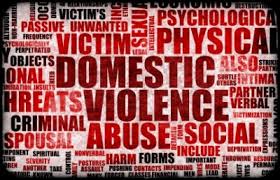
Types of abuse seen in the home.

Types of abuse seen in the home.

MOST DOMESTIC VIOLENCE IS NEVER REPORTED. CURRENT STATISTICS SHOW A WOMAN IS BEATEN EVERY ELEVEN SECONDS. YOU CAN GET OUT. THERE ARE MANY PEOPLE WHO WANT TO HELP YOU. IF YOU AREN’T A VICTIM, AND YOU KNOW SOMEONE THAT IS BEING ABUSED SUPPORT HER,  HELP HER GET TO A SHELTER. LET HER KNOW SHE IS NOT ALONE.

Domestic Violence Must End


You Can Help End Domestic Violence

You Can Help End Domestic Violence

According to the US Department of Housing and Urban Development domestic viollence is the third leading cause of homelessness among families. If a couple has a violent arguement in the home, it is usually the woman and children who flee. They flee with little but what is on their backs. This is another reason why Domestic Violence Shelters are so important. They can place the women and children into temporary housing. Most can then also help them to find housing for her and the children. In my long experience I have never known a man to leave unless he is the victim.

End Violence in the Home

End Violence in the Home

Survivors of domestic violence face higher rates of depression, sleep disturbances, anxiety, flashbacks (PTSD) and other mental disturbances. Many are too ashamed of being beaten to go to a doctor or mental health workder and ask for help.

You Can't Beat a Woman.

You Can’t Beat a Woman.

Domestic Violence contributes to poor health in survivors. Chronic conditions such as heart disease, gastrointestinal disorders can become more serious due to repeated battering. Fear and anger build up in the victim and the stress can lead to other health issues.

Among women brought to an Emergency Room after being beaten, were socially isolated, and had fewer social and financial resources than women who were not abused. Part of the emotional abuse is social isolation. The victim is cut off from friends, family, therapists, neighbors because the abuser needs to have total control over the victim. Abusers don’t want women to hear there is a place to go and get help. i often would put the hotline number on a piece of paper and pass it to the victim without being seen. Each city has a hotline number and you can help save a life by getting the number and gently putting it into a woman’s hand.

Without help, girls who witness domestic violence are more vulnerable to abuse when they are teens and young adults. Without help, boys who witness domestic violence, are far more likely to become abusers of their partners and/or  children as adults. This continues the cycle of violence into later generations.

How do we End Violence in the Home


All members of families suffer when violence also lives in that house.

All members of families suffer when violence also lives in that house.

Ending violence in the home is a national imperative that requires vigilance and dedication from every sector of our society.  We need to stand with the advocates, law enforcement and our criminal justice system. Why do I mention standing with the police?  Domestic Violence calls are the biggest reason police officers are injured on the job. To confuse things, there are many officers who also are abusers. This is a place to build on. These people need encouragement because they give a lot to some of our weakest citizens. I did help start a shelter and worked there as my second job for over two decades. I wish I could explain what it is like to bring a bleeding, broken women with her terrified, crying children into a shelter. You have to give, you have to remain strong and you have to decide if medical care is needed and if children need hugs and you to tell them that now they are safe or do they just need food and to go to sleep. Domestic Violence is full of mostly unsung heroines and heroes who often put their lives on the line for strangers.  They are dedicated to saving lives.

Children view and hear more during a domestic quarrel that the parents realize. Children  suffer more than I can tell you. When you are young and the two most important people in your world are in an abusive relationship, you live in a house than isn’t a home because it isn’t safe anymore. Children need to know there are adults who care and will help them. They need to know they are important and loved.

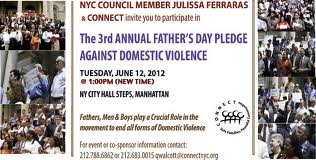
Father's Day pledge

Father’s Day pledge

Women experience more than four million physical assaults and rapes due to intimate partners a year. Men are victims of nearly three million physical assaults a year.  However,women are more likely to die due to abuse in the home. Women are in the most danger when they are trying to leave an abusive intimate relationship. I lost two women to their abusers. It is devastating and even though I have saved hundreds of lives, I always remember the two who died. One woman opened the door to her new apartment that we had assisted her to get, and the abuser was standing there with a shotgun and killed her in front of her children.

An abuser does not own your body.

An abuser does not own your body   

Every year, more than three million children witness violence in their homes. Children who live in abusive homes also suffer abuse or neglect. Why neglect? Because they are terrified and Mom might be in the hospital, or in bed bruised and crying and in pain. Cracked ribs, broken fingers, bruising so intense she can hardly move make it difficult to take care of a woman’s children. Children go through terrible emotional swings and anger issues. They love their parents, but they are also angry. They soon realize that their friends don’t live this way.  It is difficult to make meals, do laundry, help with homework and hundreds of other things that are necessary in any home. Children who live in violent homes also suffer abuse and are also confused about their emotions. They love their parents and yet they want the violence to end.

Beatings can last for an entire lifetime.

Beatings can last for an entire lifetime.

Domestic Violence Hotline is 800+621-HOPE. You are not alone. There is hope and people who will stand up for you.  You can begin an abuse free life.

Progress in the Effort to End Domestic Violence


anatomyofviolence1.jpg

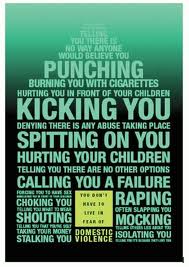
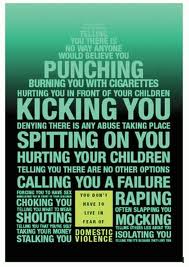
                                                                                                                                                               See these words? If someone 

                                                                                                                                                              is doing any of them to you

                                                                                                                                                               You are a victim of physical and 

                                                                                                                                                                mental abuse.

Domestic Violence is an issue that affects all of us, and in particular the number of women impacted every day is staggering, One in three women experience domestic violence in their lifetime. Because October is Domestic Violence Awareness month,, National Coalition Against Domestic Violence,  the NCADV, is making an announcement. NCADV is partnering with Valeant Pharmaceuticals International Inc. Valeant has pledged to donate a portion of sales from all Medics and Obagi products to the NCADV in support of its initiatives.

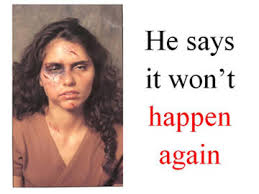
They always say they won't do it again.

They always say they won’t do it again.

The company Mineral Fusion has partnered with NCADV to help raise awareness and show survivors of Domestic Violence that they are not alone. Mineral Fusion supports NCADV with products proudly displaying the NCADV logo and website along with monetary donations and product donations for shelters. Mineral Fusion is sold at Whole Foods Markets, Sunflower Markets, Vitamin Cottage and other independent natural product retailers.

Now, The National Organization for Women. stopping abuse and rape.

Now, The National Organization for Women.
stopping abuse and rape.

NCADV has also partnered with Cellular Recycler for the collection of used cell phones. They receive  a portion of the monies that come from  the sale of refurbished cell phones to support our programming that helps stop violence in the home.

Through I Am Generess, you’ll discover how the Pill you choose can help women in need. For every Generess Fe prescription filled, you can donate $5 worth of  coins to a participating women’s of your choice. That means that every time you have your prescription filled, you have the opportunity to help a woman in need.

Marital Rape is a crime in most states. You can say no.

Marital Rape is a crime in most states. You can say no

                                                                                                                                                               To donate to the NCADV click here.