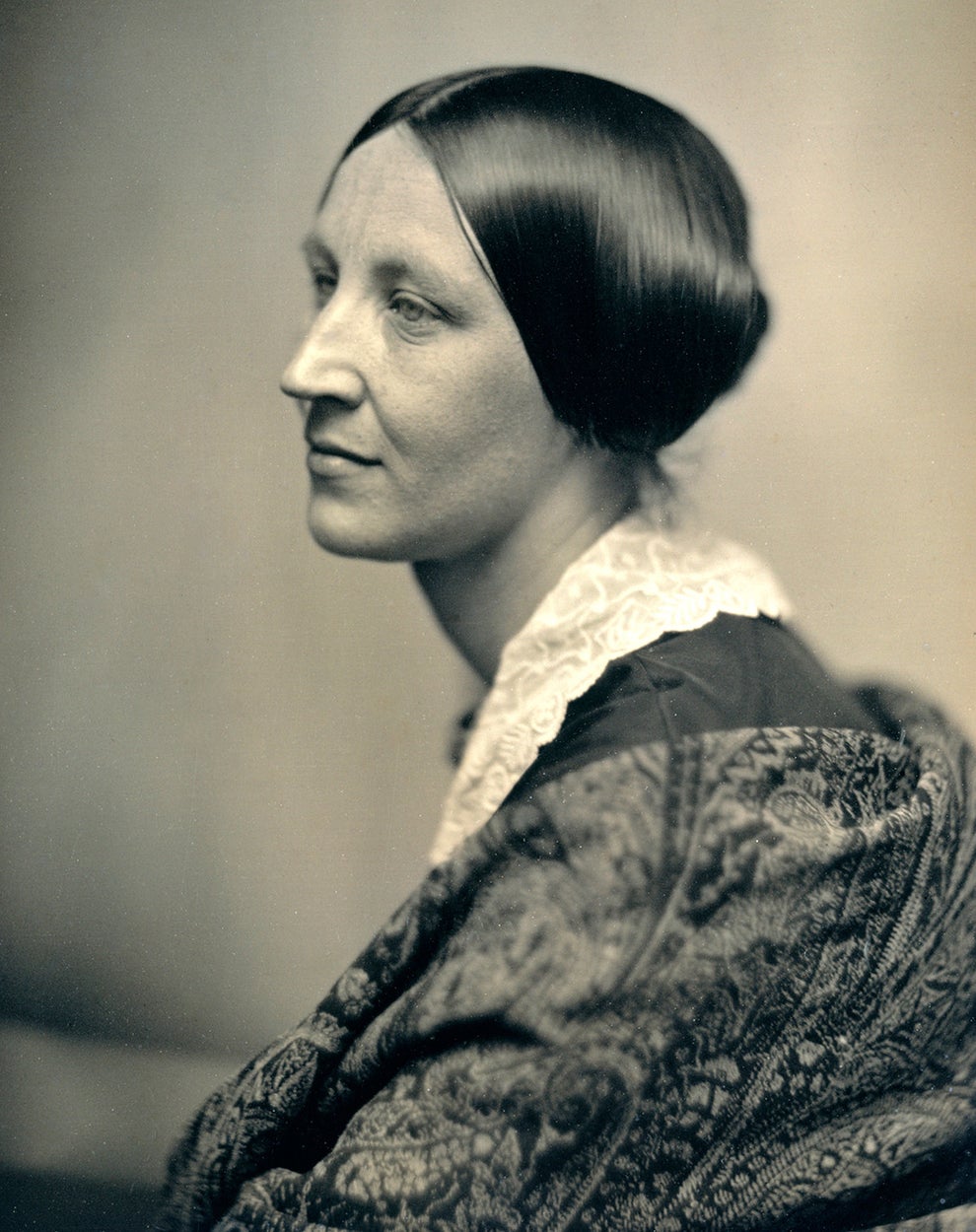
. Susan B. Anthony, crusader for the women’s suffrage movement.
Graphicaartis / Getty Images
Aside from her advocacy for women’s suffrage, Anthony also campaigned extensively for the abolition of slavery and the labor rights of women.
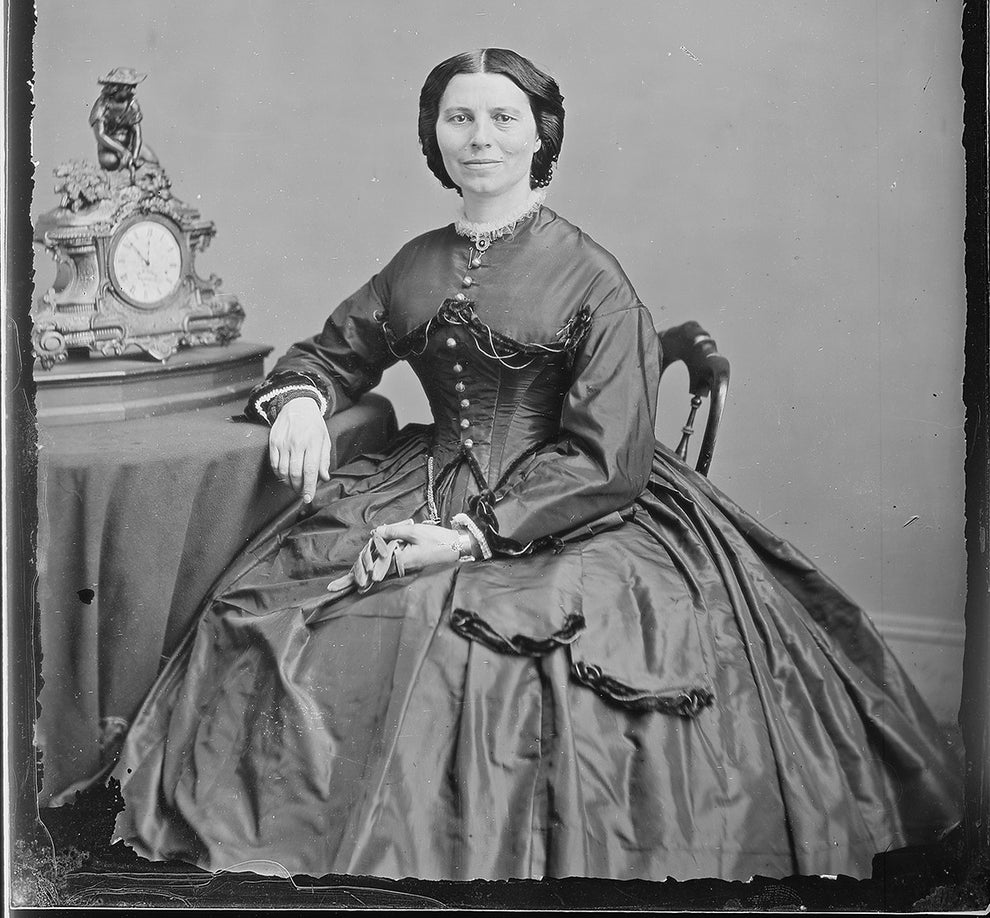
2. Clara Barton, Civil War nurse and founder of the American Red Cross.
Smith Collection / Getty Images
Barton played a pivotal role during the American Civil War by operating hospitals on the front lines of Virginia. In 1881, she established the American Red Cross, which continues to operate and provide humanitarian aid across the world today.
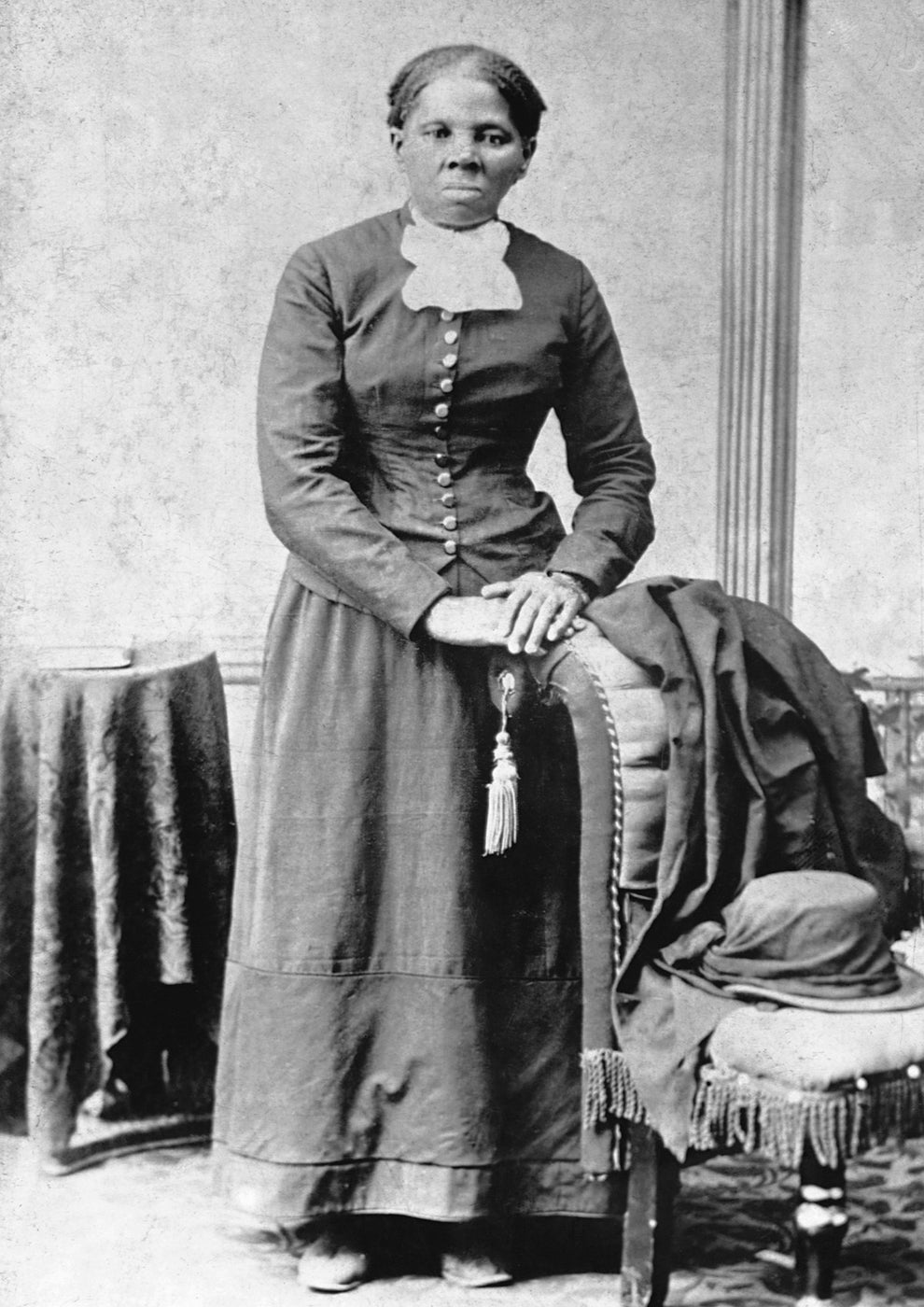
3. Harriet Tubman, American abolitionist and armed spy for the Union Army during the American Civil War.
Historical / Getty Images
Tubman, herself an escaped slave, helped hundreds of slaves escape the South by means of the Underground Railroad. She nursed Union troops during the Civil War and took on spying missions at great personal risk. Her actions earned her the nickname “Moses of her people.”
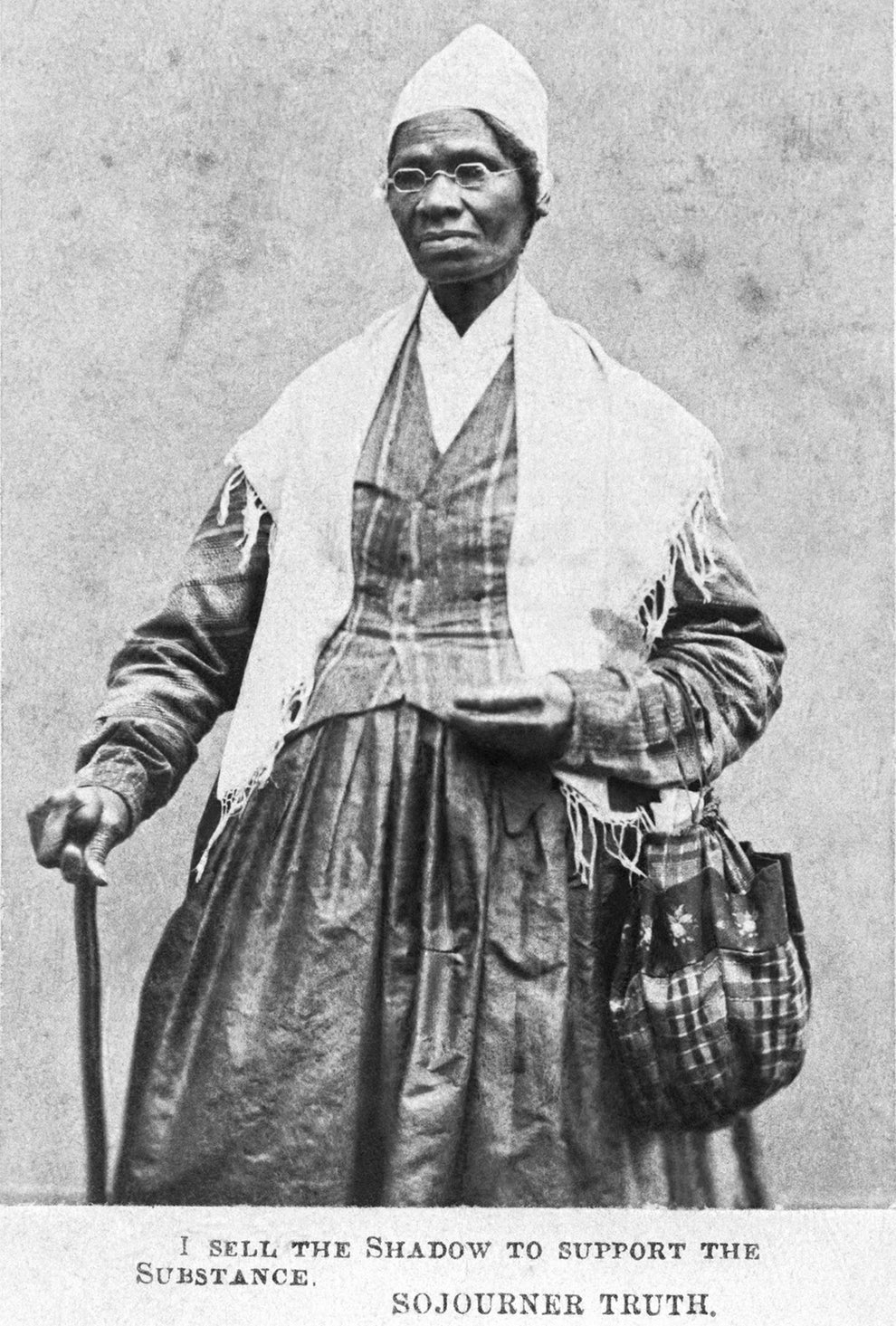
4. Sojourner Truth, abolitionist and women’s rights advocate.
Underwood Archives / Getty Images
Sojourner Truth escaped slavery with her infant daughter in 1826. In 1828, Truth brought a case to recover her son to court and won the filing — and was the first black woman to achieve such a victory over a white man. She became an outspoken advocate for civil rights and women’s rights until her death in 1883.
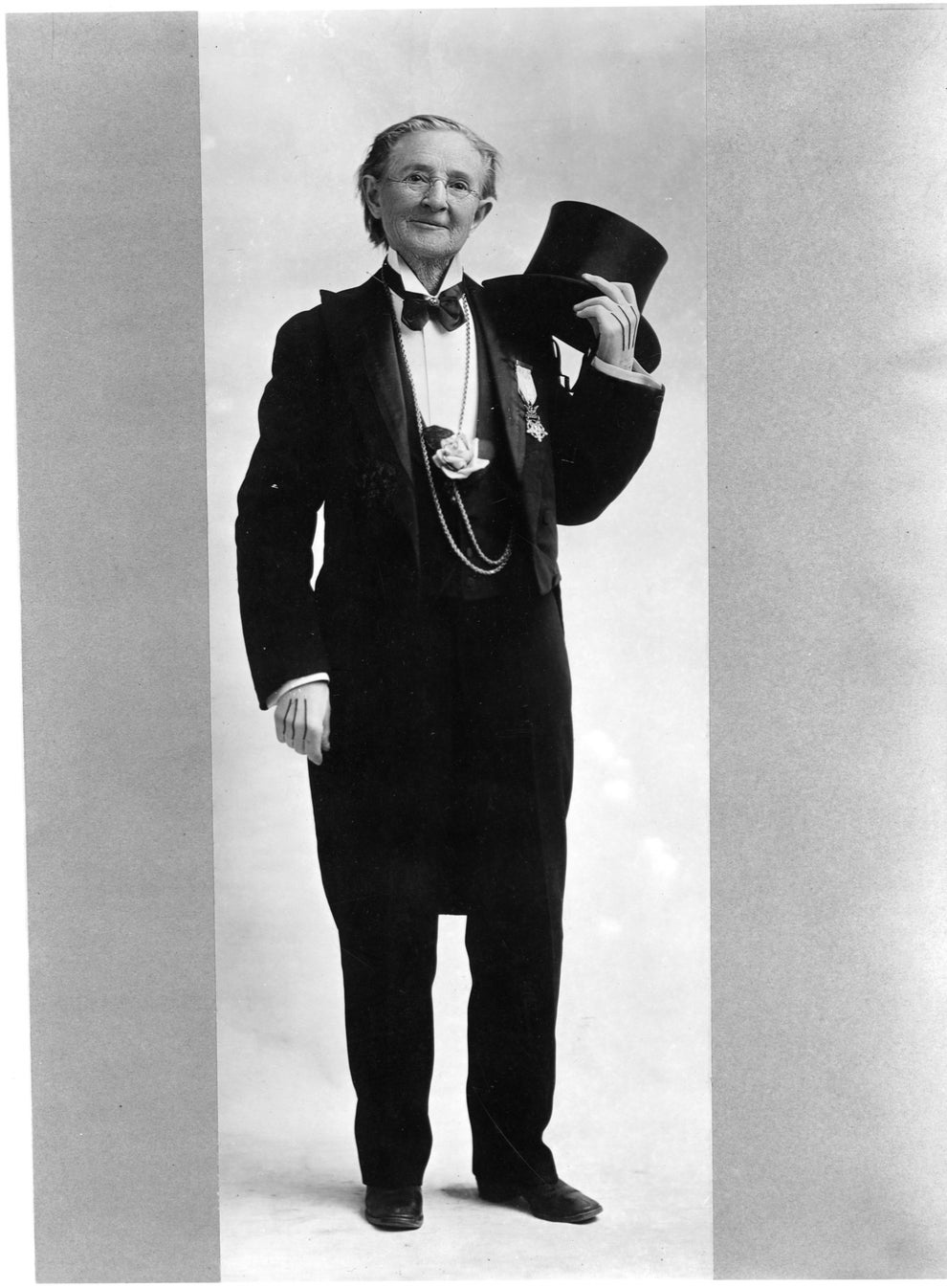
5. Mary Edwards Walker, the only woman in US history to be awarded the Medal of Honor.
Library Of Congress / Getty Images
After the outbreak of the American Civil War, Walker volunteered to assist the Union Army, serving as a surgeon at a military outpost in Washington, DC. She was caught by the Confederate Army in April 1864 and became a prisoner of war until her release in October later that year. During her stay as a POW, Walker repeatedly denied her captive’s orders to wear more “womanly” apparel.
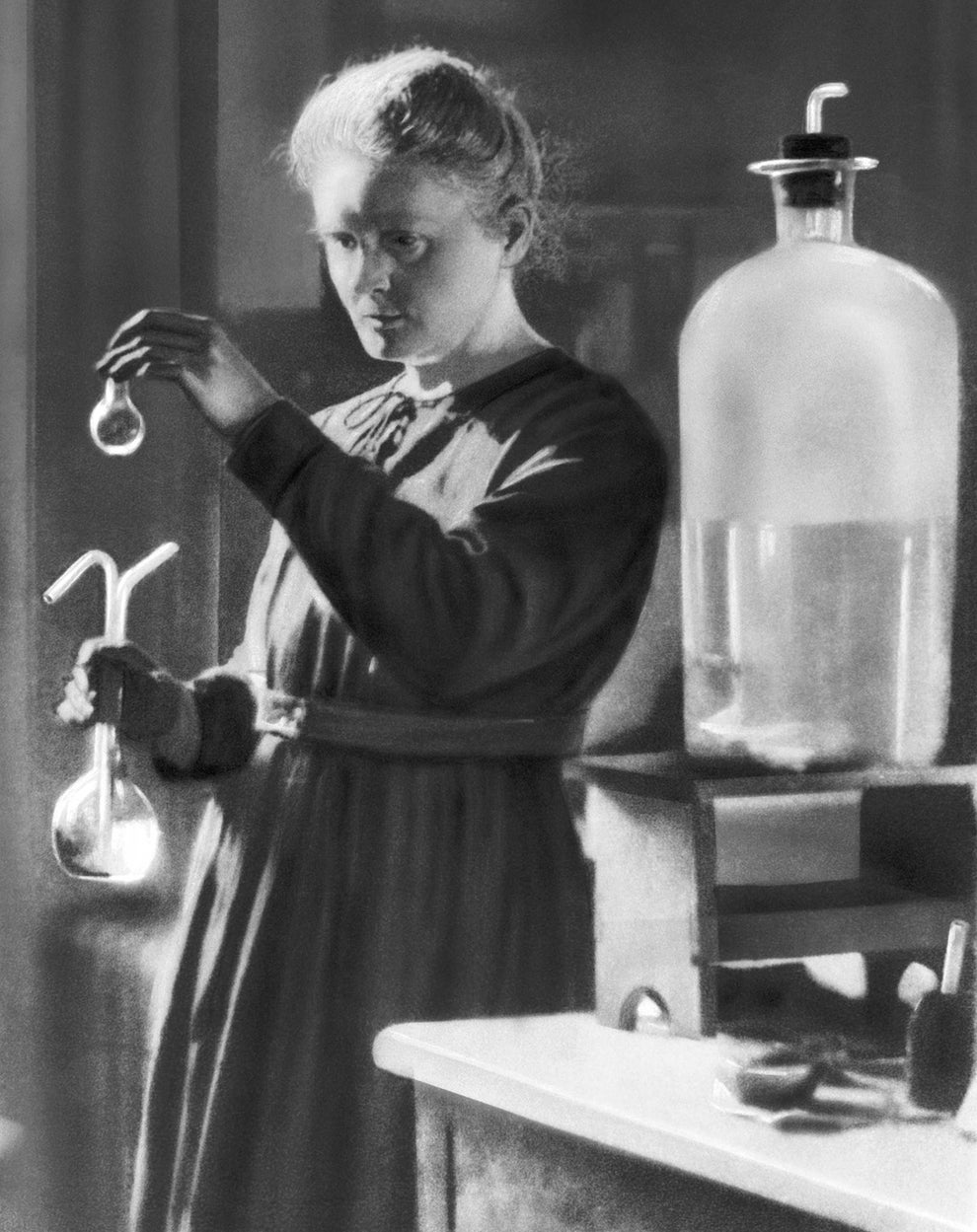
6. Marie Curie, the first woman to be awarded a Nobel Prize (twice!)
Bettmann / Bettmann Archive
In 1903 Curie was awarded a Noble Prize in physics for her work on radioactivity, and 1911 she received a second Nobel Prize in chemistry for her study of the elements polonium and radium.
7. Edith Wharton, the first woman to be award the Pulitzer Prize for literature.
Culture Club / Getty Images
The American novelist, short story writer, and designer was awarded the 1921 Pulitzer Prize for literature for her novel The Age of Innocence.
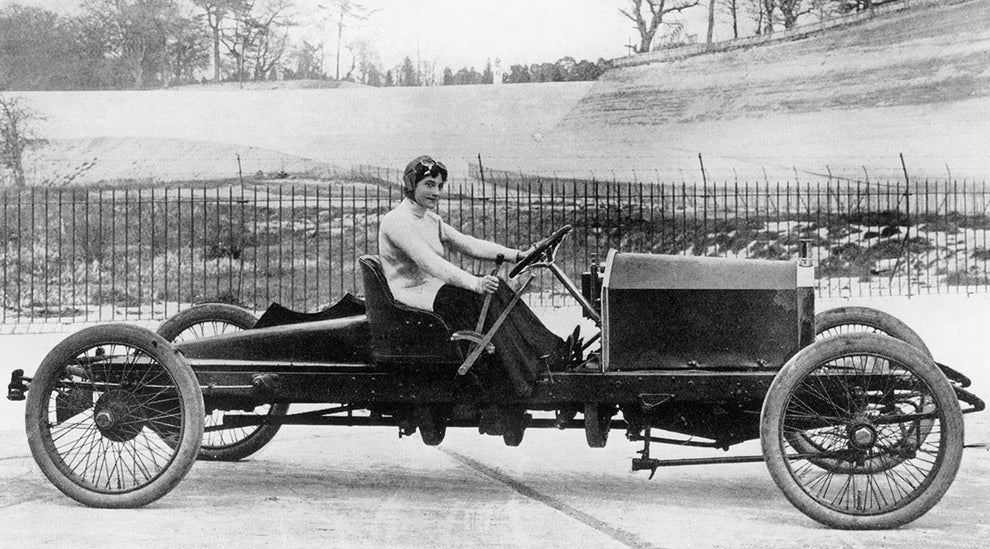
8. Dorothy Levitt, pioneer of automotive racing.
Heritage Images / Getty Images
In 1906 she broke the women’s world speed record, recording a speed of 96mph.
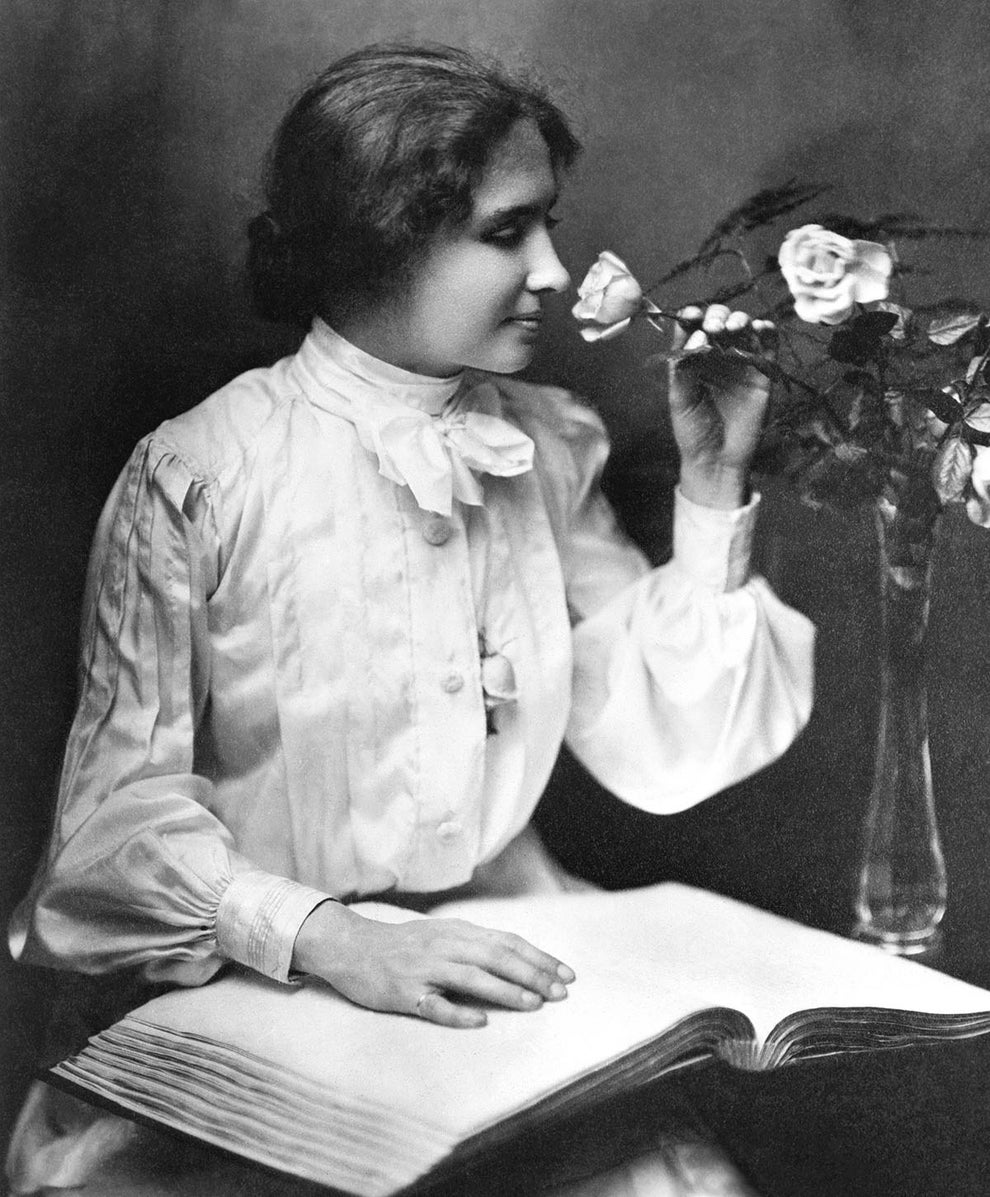
9. Helen Keller, author, activist, and the first deaf and blind person to earn a Bachelor of Arts degree.
Bettmann / Bettmann Archive
Keller was a tremendous presence in advocating for people with disabilities, women’s suffrage, and reproductive rights. In 1980, on the occasion of Keller’s 100th, birthday, former president Jimmy Carter designated June 27 as Helen Keller Day in Pennsylvania.
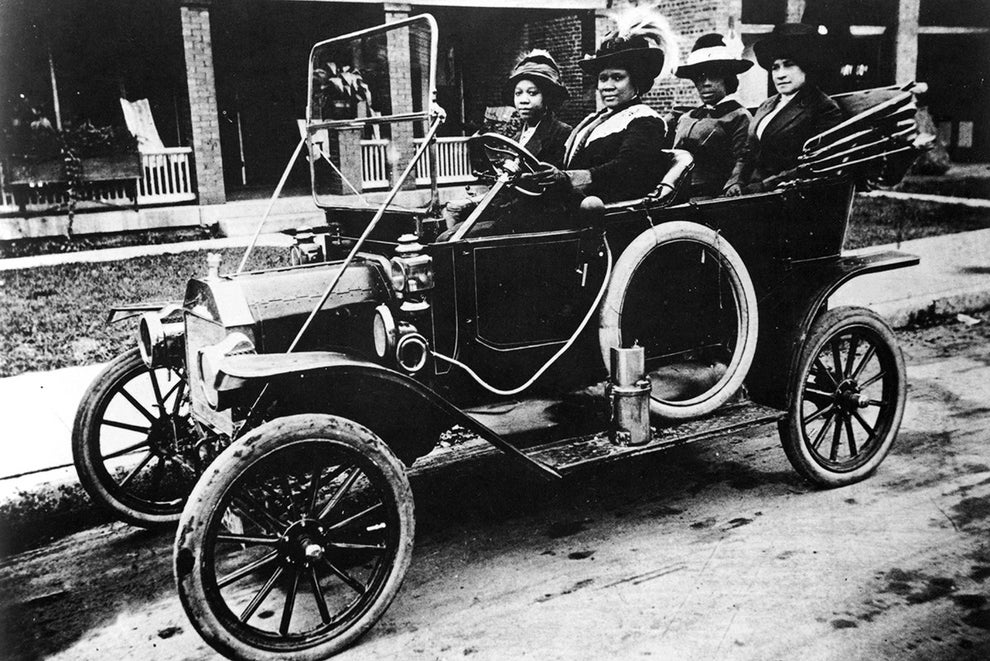
10. Sarah Breedlove, the first female self-made millionaire in US history.
Smith Collection / Getty Images
After developing a line of beauty products designed specifically for black women, Breedlove established herself as a powerhouse entrepreneur and an icon of American innovation.
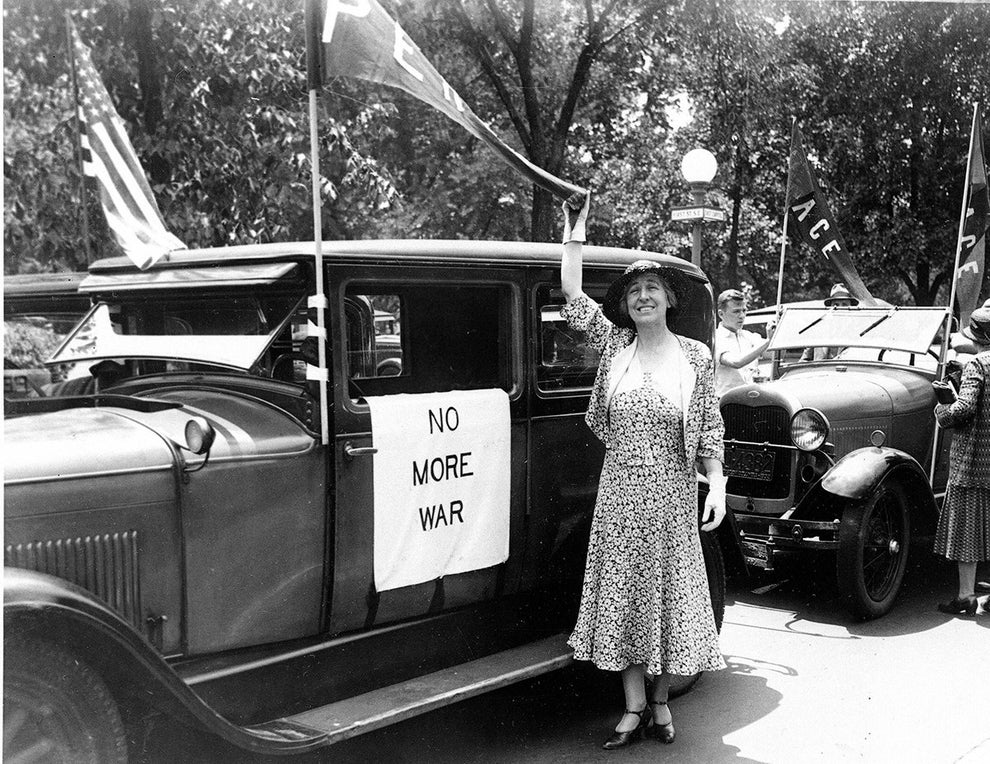
11. Jeannette Rankin, the first woman to hold national office in the United States.
AP
Rep. Rankin was elected to the US House of Representatives in both 1916 and 1940. She also played a pivotal role in the development of the 19th Constitutional Amendment, which granted full voting rights to American women.
12. Amelia Earhart, the first female aviator to fly solo across the Atlantic.
Getty Images
Earhart completed the record-breaking journey from the US to Ireland in nearly 15 hours. During an attempt to fly around the world in 1937, her aircraft disappeared mysteriously over the Pacific Ocean without a trace.
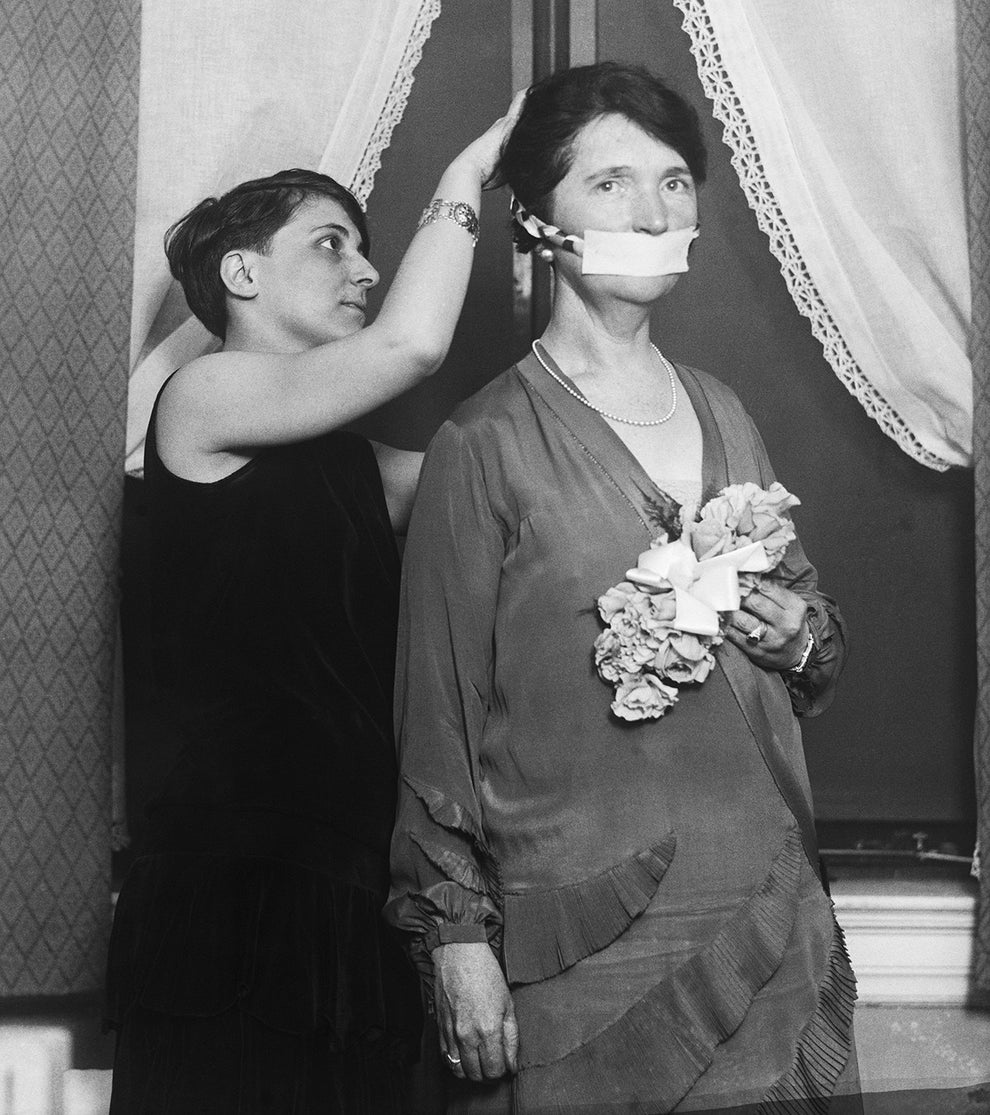
13. Margaret Sanger, a reproductive rights activist who popularized the term “birth control” and laid the foundation for Planned Parenthood.
Bettmann / Bettmann Archive
In this picture from April 17, 1929, Sanger has her mouth covered in protest of not being allowed to talk about birth control in Boston. Sanger instead stood silent onstage in front a crowd of 800 as Harvard professor Arthur M. Schlesinger read her prepared speech.
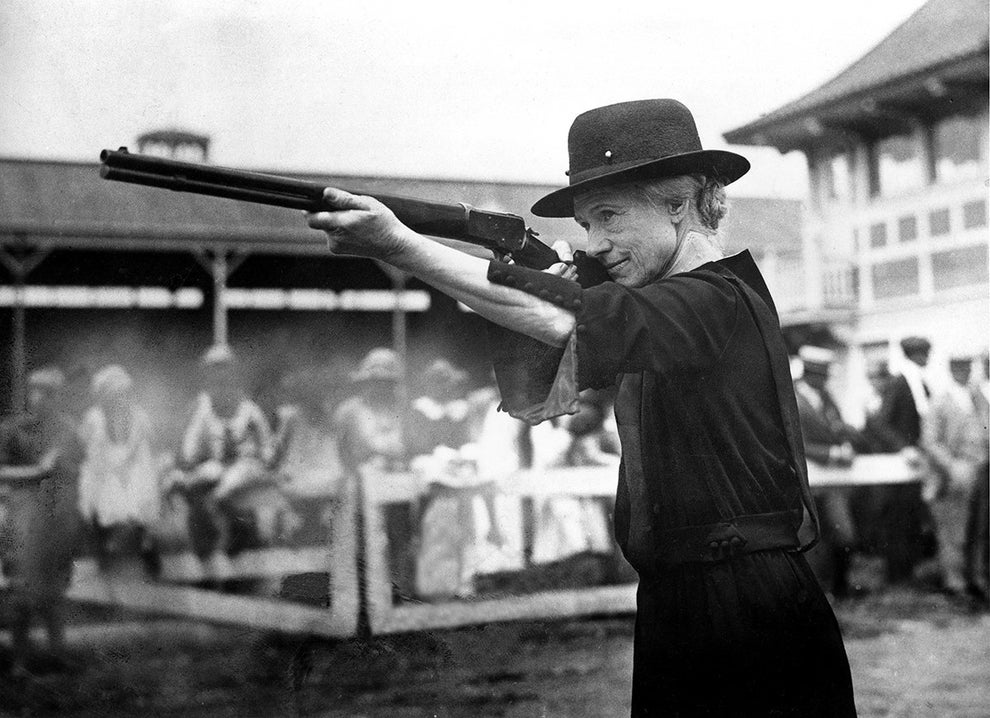
14. Annie Oakley, prodigy sharpshooter and American icon.
/ AP
From 1885 to 1902, Oakley performed as an exhibition shooter in Buffalo Bill’s Wild West Show, launching the 15-year-old phenomenon into international stardom.
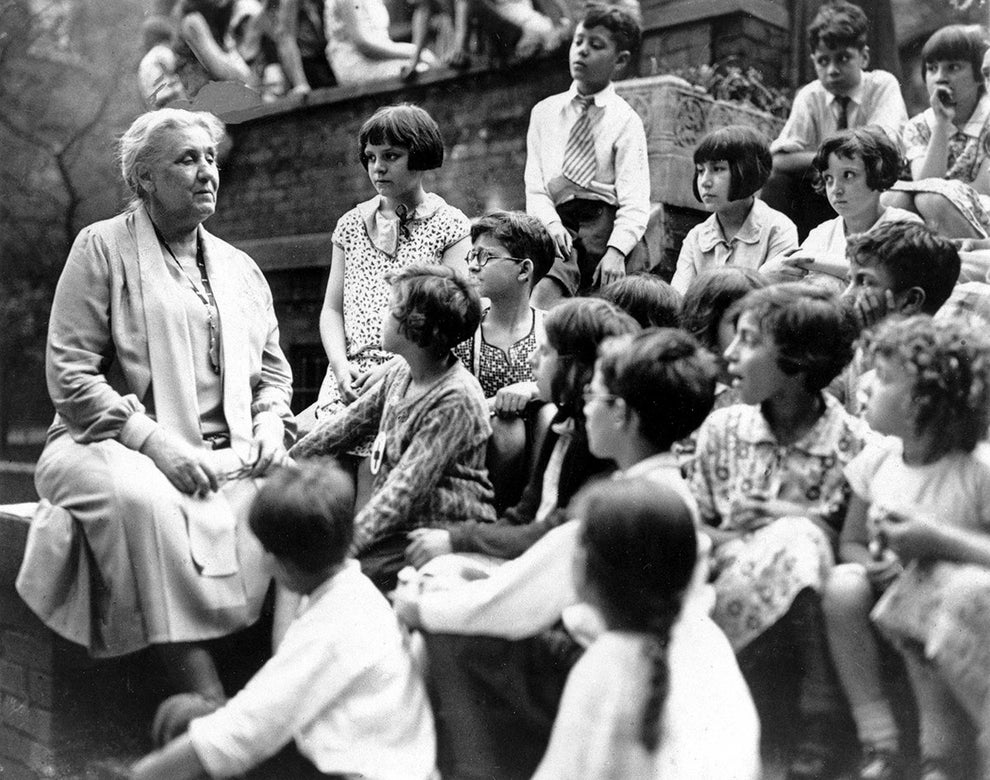
15. Jane Addams, the first American woman to be awarded the Nobel Peace Prize.
AP photo
For her extensive contributions in housing reform, women’s suffrage, and social work, Addams was awarded the Nobel Peace Prize in 1931.
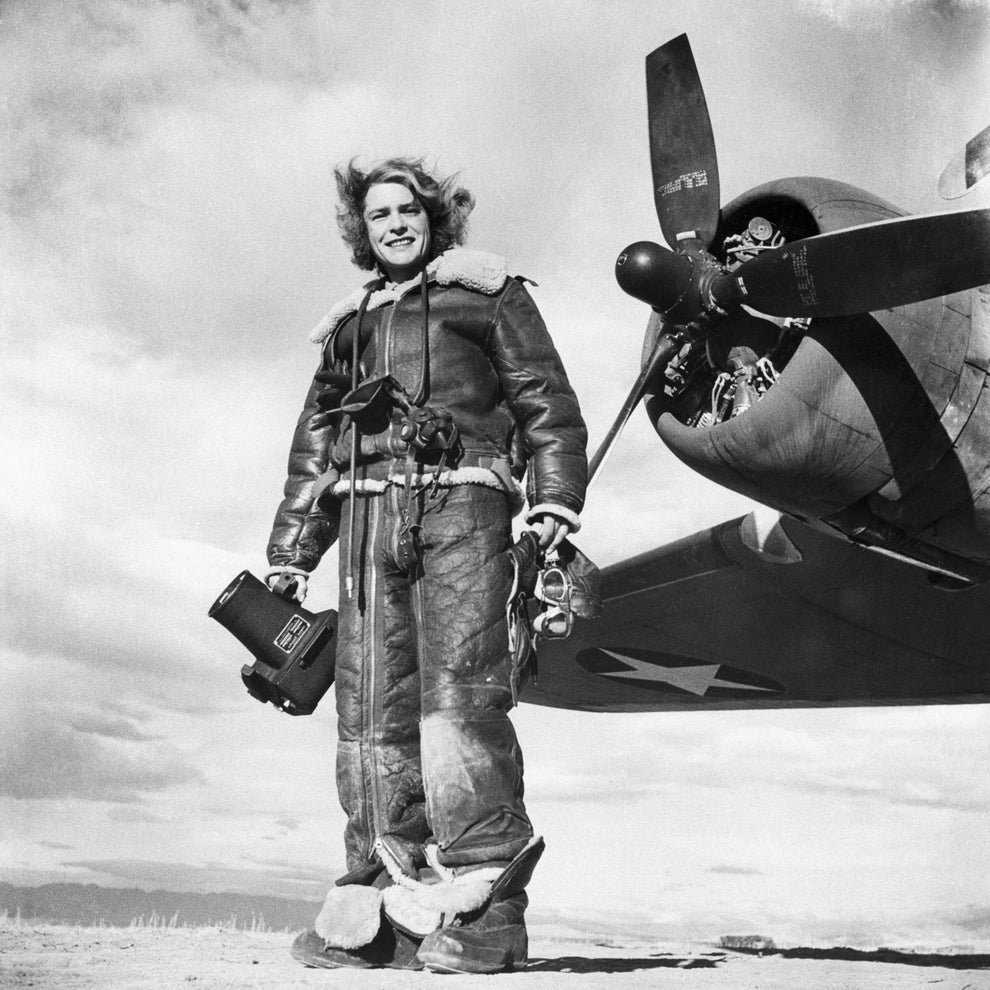
16. Margaret Bourke-White, the first American female war correspondent.
Time Life Pictures / Getty Images
During WWII, Bourke-White was the first woman permitted access to active combat zones and was the only photojournalist in Moscow when Nazi forces invaded. In 1936 her work appeared on the first ever cover of Life magazine.
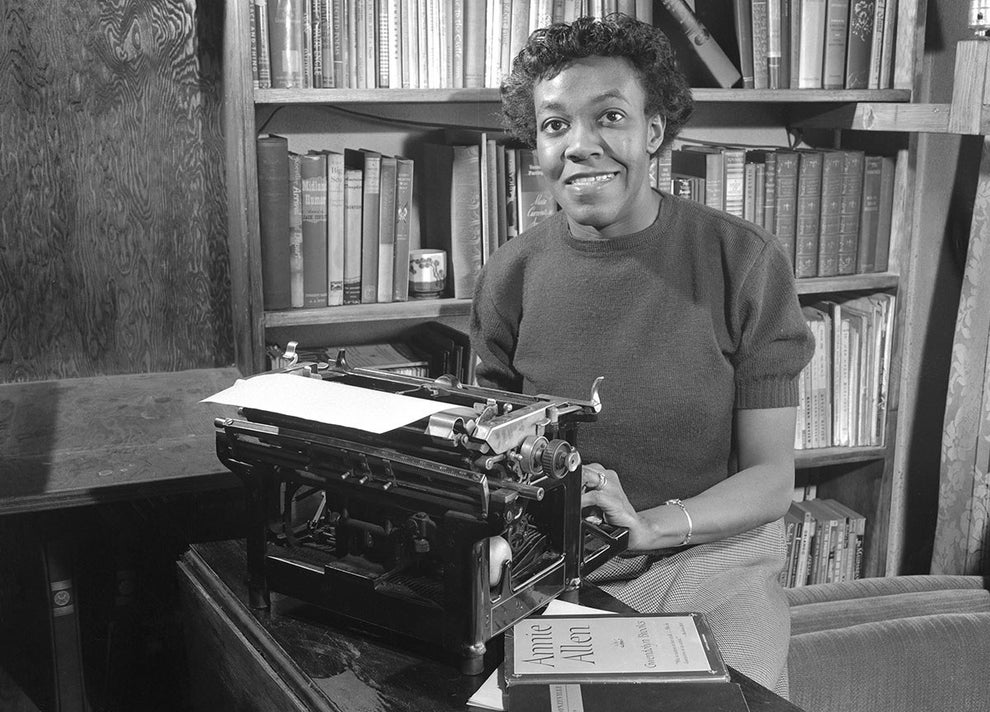
17. Gwendolyn Brooks, the first black woman to be awarded the Pulitzer Prize for poetry.
Bettmann / Bettmann Archive
In 1950, as a 32-year-old mother and part-time secretary, Brooks was awarded the Pulitzer Prize in Poetry for her text Annie Allen.
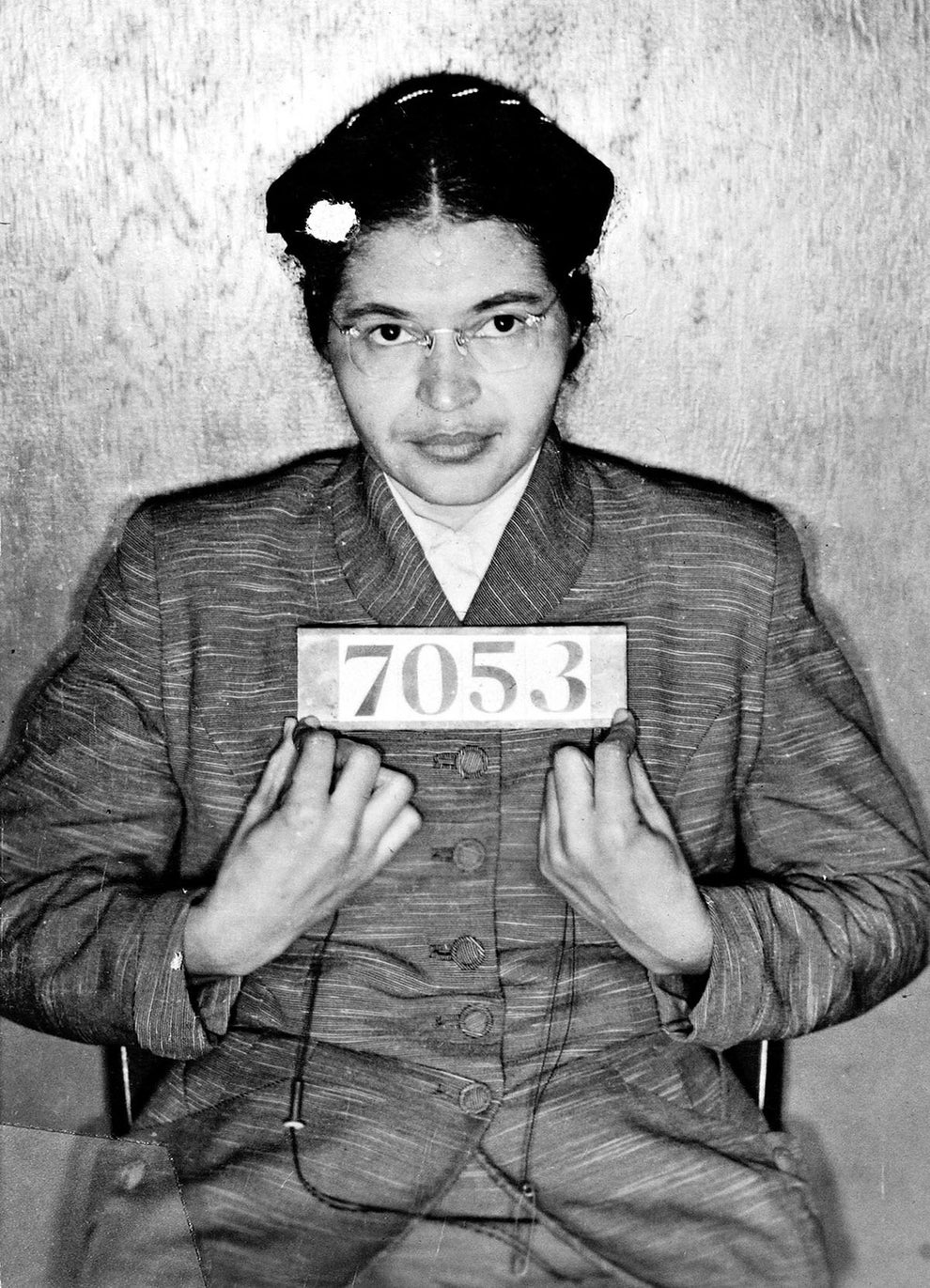
18. Rosa Parks, activist and icon of American civil rights.
Universalimagesgroup / Getty Images
Parks in a booking photo taken on Dec. 1, 1955, at the time of her arrest for refusing to give up her seat to a white passenger on a Montgomery, Alabama, bus. The action sparked the Montgomery Bus Boycotts and became a milestone in the struggle for American civil rights.
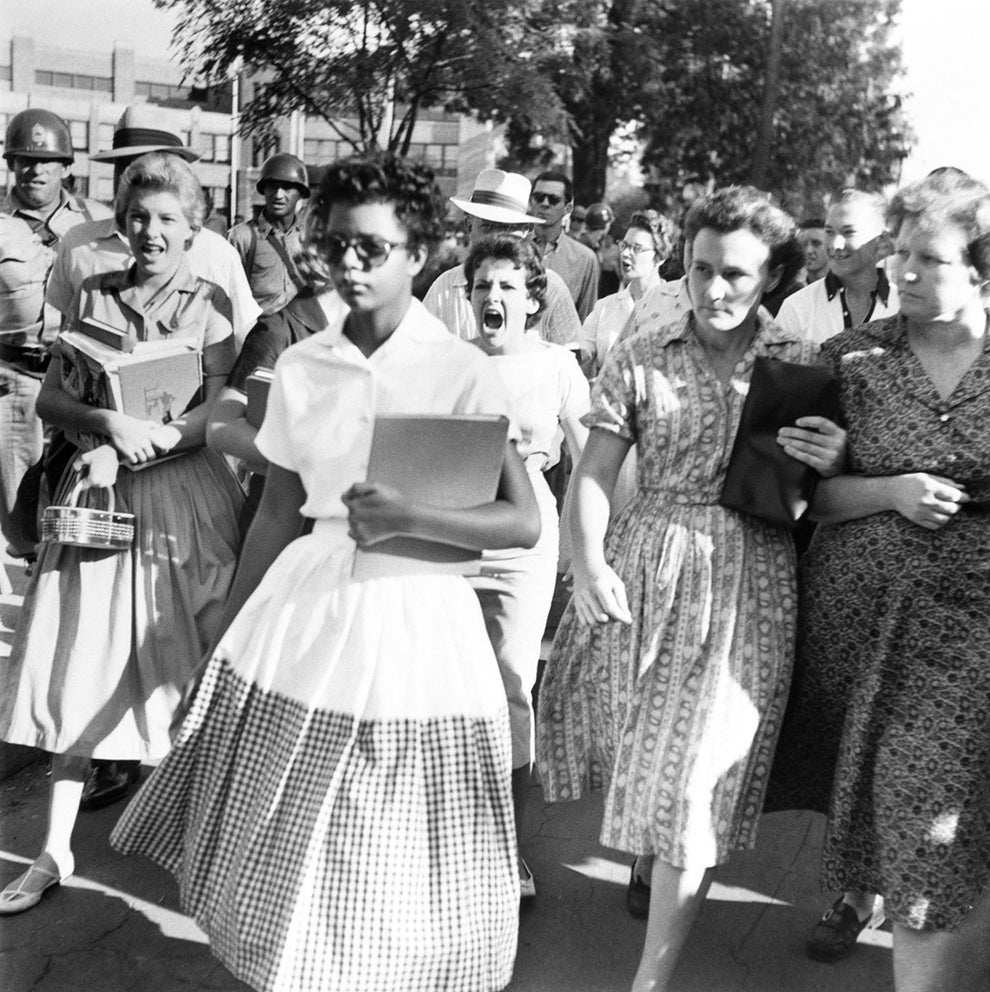
19. Elizabeth Eckford, one of the first black students to attend a desegregated high school in Little Rock, Arkansas.
Bettmann / Bettmann Archive
In 1957, she was one of nine black students whose integration into Little Rock’s Central High School was ordered by a federal court following legal action by the NAACP. In this picture from her first day of school, Eckford ignores the hostile screams and stares of fellow students on her walk to class.
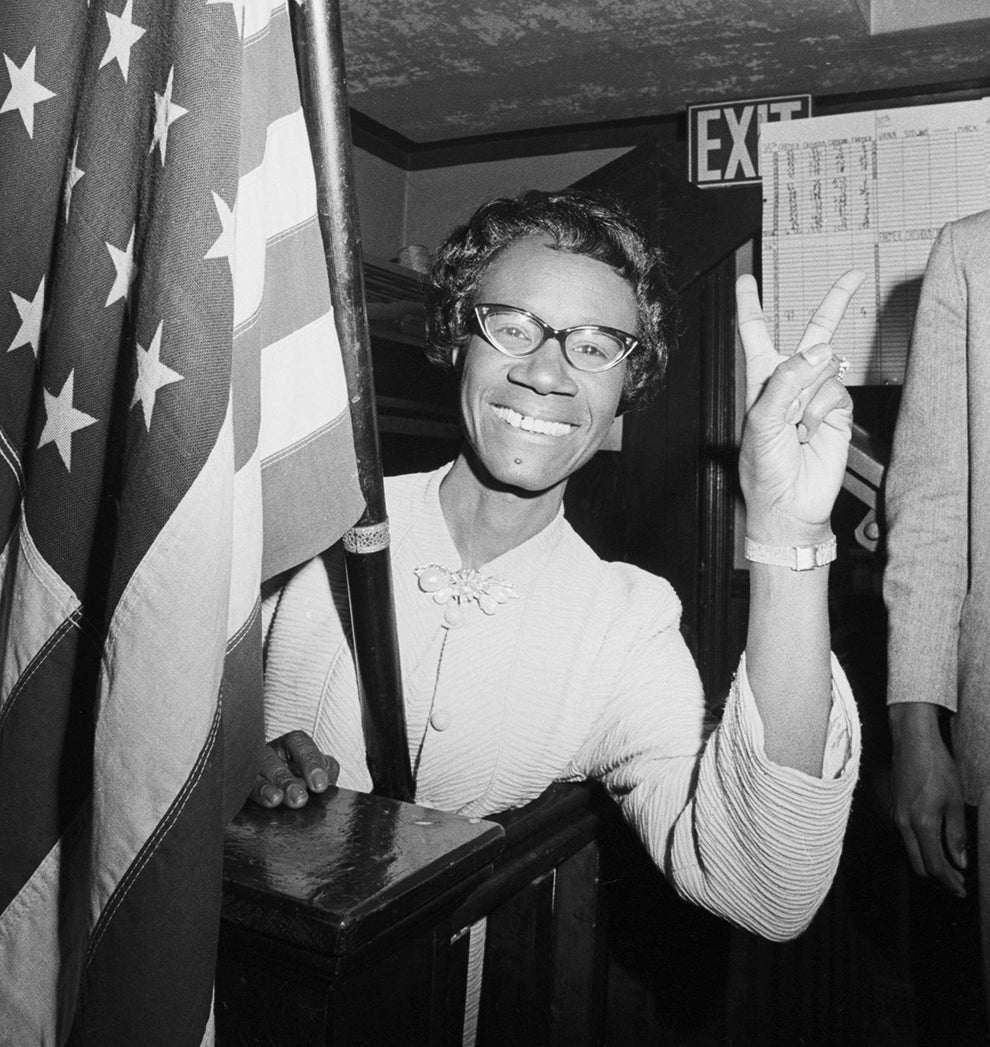
20. Shirley Chisholm — the first black woman elected to the United States House of Representatives.
Bettmann / Bettmann Archive
In this picture from 1968, Shirley Chisholm gives the victory sign after winning the Congressional election in Brooklyn’s 12th District. She defeated civil rights leader James Farmer to become the first African American woman elected to Congress.
21. Valentina Tereshkova, the first woman to travel into space.
Keystone-france / Getty Images
On June 16, 1963, Tereshkova departed Earth on the VOSTOK 6 and orbited the planet 48 times, over a 70-hour period of time.
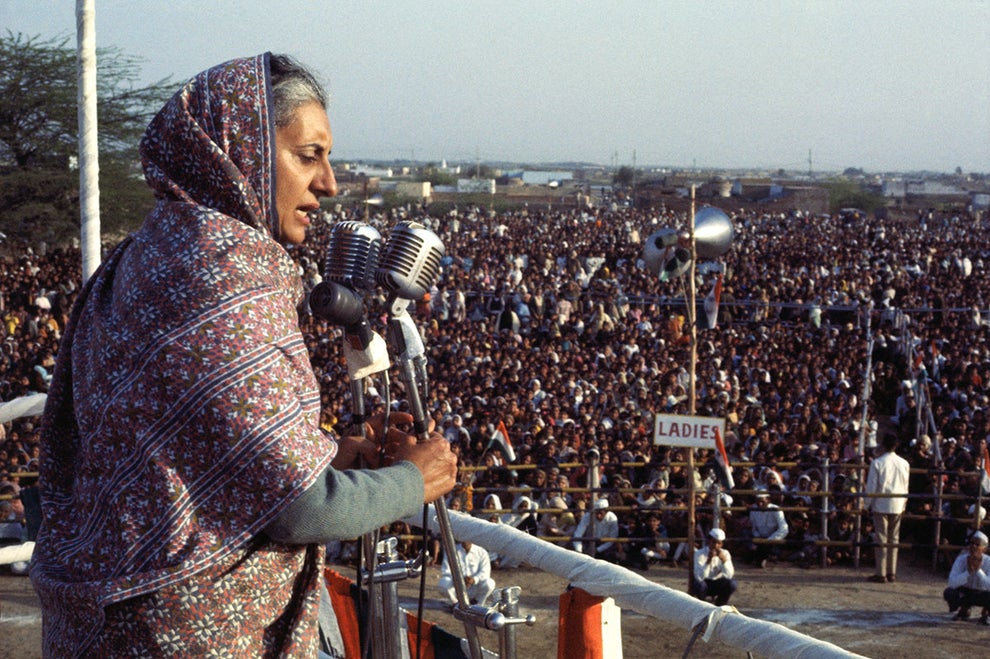
22. Indira Gandhi, the first and only female prime minister of India to date.
Bettmann / Bettmann Archive
In 1966, Gandhi became the first and only woman to become prime minister in India. She was elected prime minister once more in 1980, before she was assassinated by two of her bodyguards in 1984.
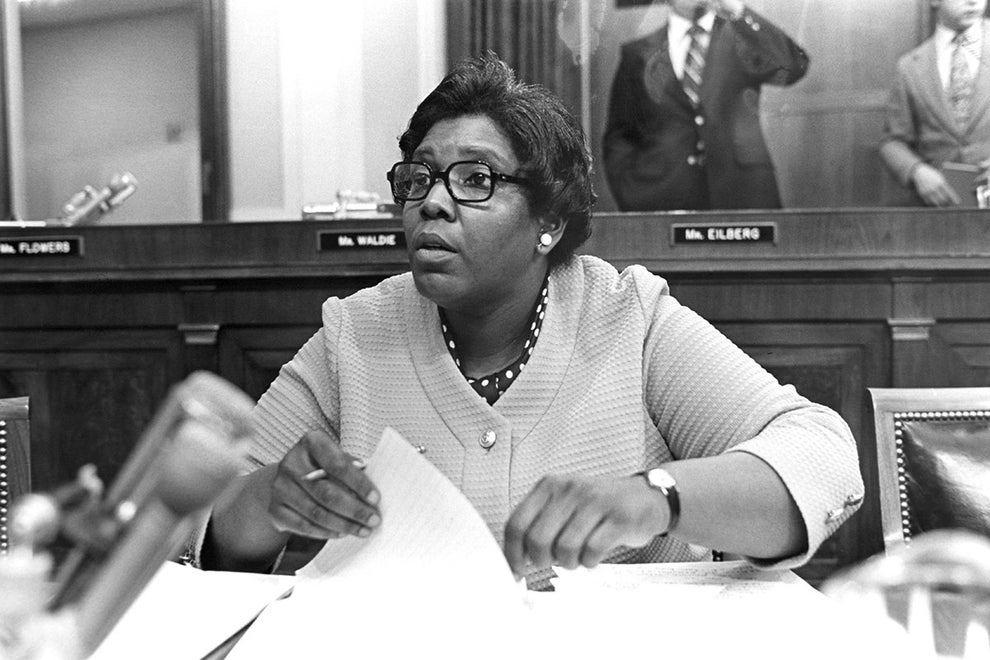
23. Barbara Jordan, the Southern first black woman elected to the United States House of Representatives.
Keystone / Getty Images
In this picture from July 1974, Rep. Jordan is seen on the House Judiciary Committee during a hearing on the impeachment of President Richard Nixon in Washington, DC.
24. Junko Tabei, the first woman to climb Mount Everest.
Anonymous / ASSOCIATED PRESS
The Japanese mountaineer was the first woman to stand on the summit of Mt. Everest in Nepal on May 16, 1975.
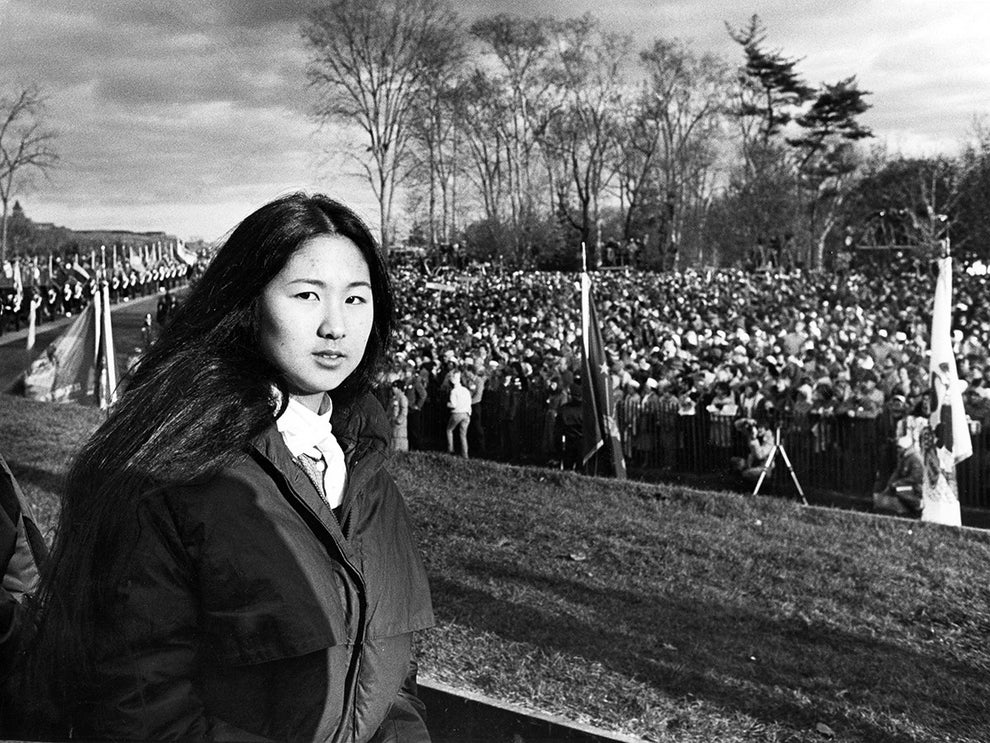
25. Maya Lin, artist, designer, and architect of the Vietnam Memorial.
The Washington Post / Getty Images
In this picture from Nov. 13, 1982, Maya Lin, then only 23, stands during the dedication of the Vietnam Memorial. Lin was a 21-year-old undergraduate student when she won a public competition to design the war memorial.
26. Sally Ride, the first American woman in space.
Apic / Getty Images
At the age of 32, Sally Ride journeyed to the stars in 1983 as a crew member on space shuttle Challenger.
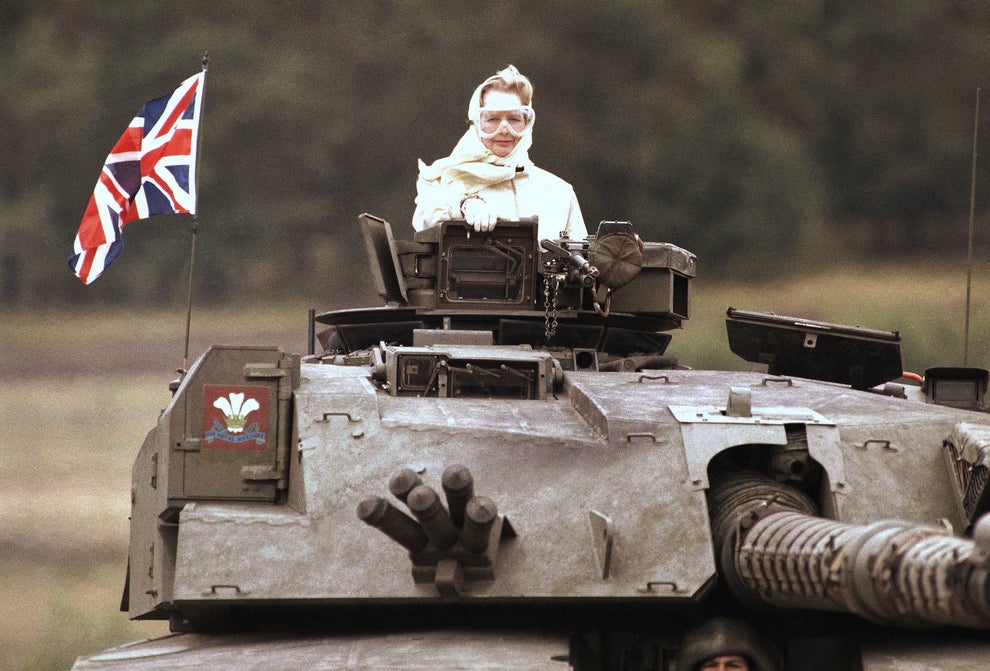
27. Margaret Thatcher, the first female British prime minister.
Jockel Fink / AP
Serving as the UK’s prime minister from 1979 until1990, Thatcher is the longest-serving British politician to have held that post and the first woman to have been elected to it.
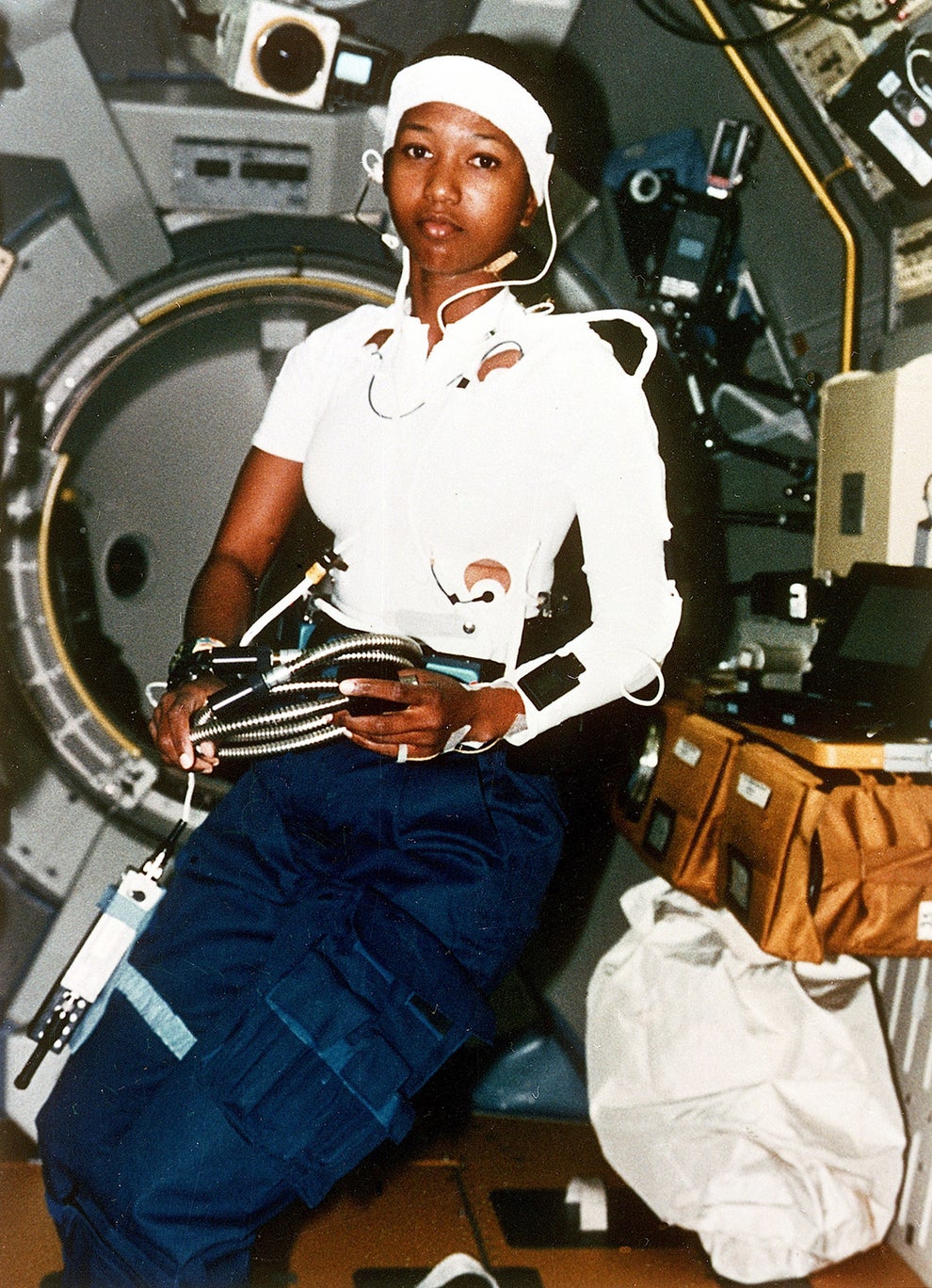
28. Dr. Mae C. Jemison, engineer, physician, and first black woman to orbit Earth.
AP
In this picture from September 1992, Dr. Jemison is shown aboard space shuttle Endeavour as the science mission specialist on a US/Japan joint mission. For part of the Autogenic Feedback Training Experiment, she wears a headband and other monitoring devices for a series of physiological evaluations.
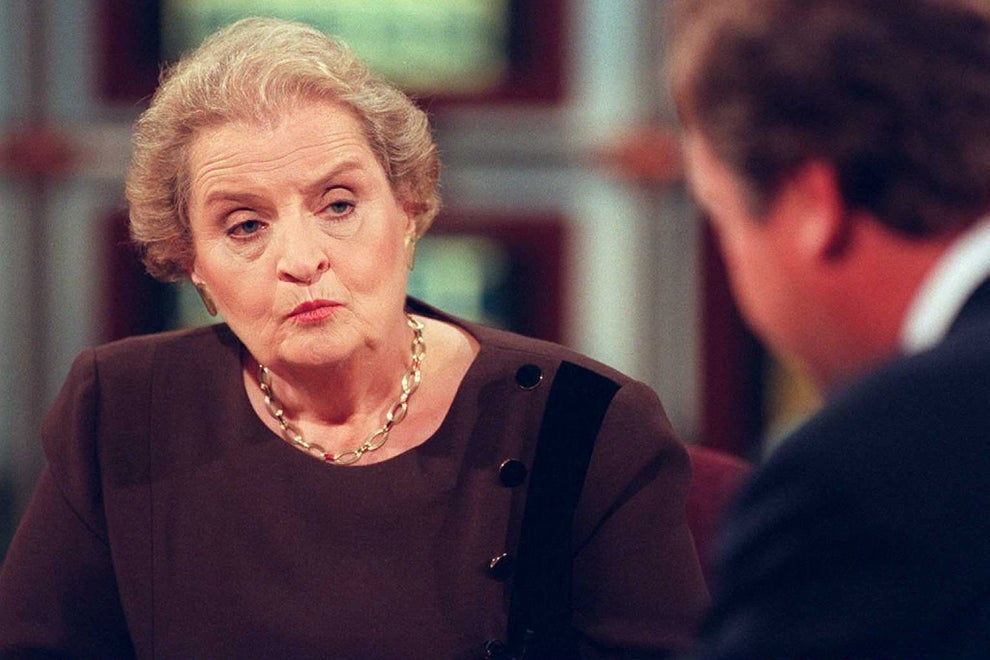
29. Madeleine Albright, first female US secretary of state.
Jon Levy / AFP / Getty Images
Albright was confirmed unanimously by a US Senate vote of 99–0 and was sworn in on Jan. 23, 1997.
30. Gen. Ann E. Dunwoody, the first woman to achieve the rank of four-star general.
Susan Walsh / ASSOCIATED PRESS
In 2008 Gen. Dunwoody of the US Army became the first female service member in US history to achieve the rank of four-star general.
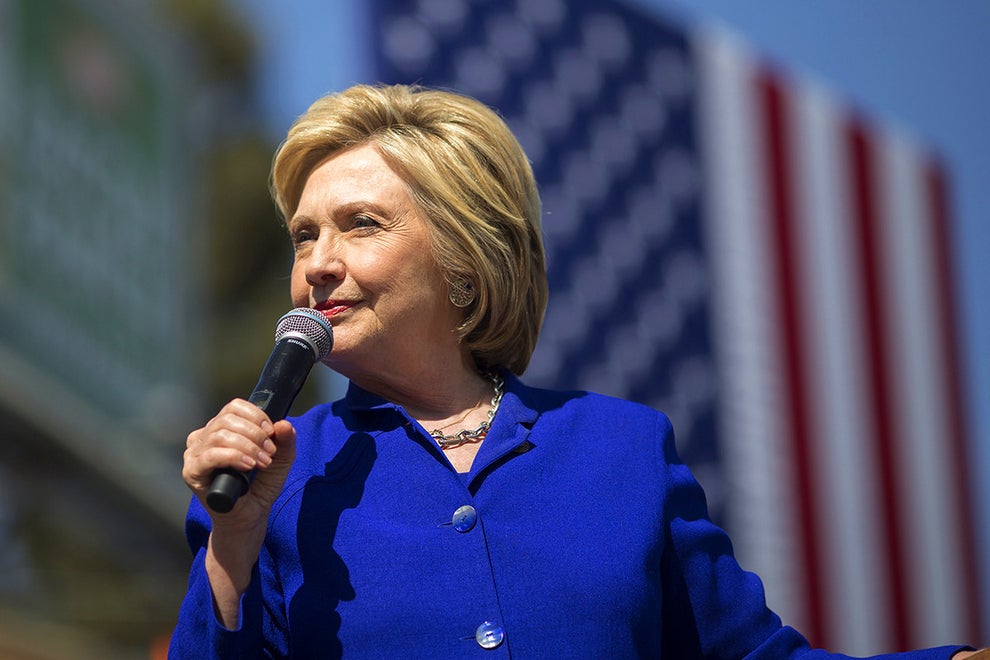
31. Hillary Clinton, the first female candidate to be nominated for president by a major US political party (2016).
David Mcnew / Getty Images
Following a robust political career, the former first lady made US history on July 28, 2016, by formally accepting the Democratic Party’s nomination for president of the United States.
This is an informative piece about some of the women who helped to change the world for the better. It is an auspicious list. A list that should be an inspiration to all of us. We all in possession of what it makes to make people who stand out and who shine in their lives. We can all shine as resistors, comforters, angry protesters, and volunteers in the rebellion against hate and pain to peoples lives.
WASHINGTON — A Republican bill to replace Obamacare would lead to 14 million fewer Americans with health insurance by 2018 and 24 million fewer by 2026, the non-partisan Congressional Budget Office said Monday in an analysis that could make the controversial legislation even tougher for GOP leaders to push through Congress.
Health and Human Services Secretary Tom Price said the projections of uninsured were too high and called them “just not believable.”
Most of the initial increase in uninsured people in 2018 would come from consumers deciding not to buy insurance because they would no longer have to pay a penalty for failing to do so, the CBO said in an analysis done with the Joint Committee on Taxation. However, others would stop buying insurance because premiums will go up over the next two years, the report said.
The bill is expected to raise the average premiums that Americans would have to pay before 2020, and then lower them after that, the CBO projected. In 2018 and 2019, the average premiums for single policyholders who do not get insurance from their employers would be 15% to 20% higher than under Obamacare, the analysis said. Starting in 2020, those premiums would begin to go down. By 2026, average premiums would be roughly 10% lower than under the existing Affordable Care Act, the CBO projected.
However, younger Americans would benefit more than older ones. The GOP bill would allow insurers to charge five times more for older patients than younger ones — rather than three times more as allowed under Obamacare, the report said. The effect, the report said, would be “substantially reducing premiums for young adults and substantially raising premiums for older people.”
“If ever there was a war on seniors, Trumpcare — this bill — is it,” said Senate Minority Leader Chuck Schumer, D-N.Y.
The number of uninsured Americans would rise dramatically during that same period as the Republican replacement plan phases out Obamacare’s Medicaid expansion, the CBO said.
“In 2026, an estimated 52 million people would be uninsured, compared with 28 million who would lack insurance that year under current law,” the analysis said.
The Republican bill would reduce federal deficits by $337 billion over the 2017-2026 period, according to the CBO. The biggest savings would come from reductions in outlays for Medicaid and from the elimination of the Affordable Care Act’s subsidies for low-income Americans to buy insurance.
Administration officials said the CBO overestimated the number of people who would lose insurance and did not take into account future phases of the Republican proposal. However, unlike the current GOP bill under consideration, any subsequent legislation would have to attract support from Democratic senators, who are unlikely to provide it.
One of the subsequent steps that Republicans are pushing is for Price to use his administrative power to reduce regulations to inspire more insurance companies to participate, which Price said would give consumers more choices at competitive costs.
“They’re going to be able to buy a coverage policy that they want,” Price said.
The CBO report came as Republican leaders in Congress were already scrambling to keep their fractious caucus together on the bill. Some conservatives have denounced the plan as “Obamacare lite,” arguing that it does not go far enough in scrapping the Affordable Care Act and creates new entitlements by replacing the current law’s federal subsidies for low-income people with tax credits. At the same time, some moderate Republicans in the Senate fear their low-income constituents and seniors in nursing homes will lose coverage because the legislation phases out the expansion of Medicaid that Obamacare helped fund in many states.
Democrats, who were already fiercely opposed to the legislation, said the CBO score underscores that President Trump was wrong when he promised “insurance for everybody” under the GOP plan.
“The CBO score shows just how empty the president’s promises, that everyone will be covered and costs will go down, have been,” Schumer said. “This should be a looming stop sign for the Republicans’ repeal effort.”
House Speaker Paul Ryan, R-Wis., is leading the push for the bill, saying it is the best hope that Republicans have of ending Obamacare and passing a replacement bill under a fast-track budget procedure that cannot be blocked by Senate Democrats.
“This report confirms that the American Health Care Act will lower premiums and improve access to quality, affordable care,” Ryan said. “CBO also finds that this legislation will provide massive tax relief, dramatically reduce the deficit, and make the most fundamental entitlement reform in more than a generation. These are things we are achieving in just the first of a three-pronged approach.”
House Minority Leader Nancy Pelosi, D-Calif., said Ryan is wrong when he says Republicans want to kill Obamacare as “an act of mercy” because it is in a death spiral of rising costs and decreasing insurance choices for consumers.
She said that 24 million more uninsured Americans by 2026 is “a remarkable figure” that underscores the need for GOP leaders to scrap their bill.
“It speaks remarkably to the cruelty of a bill that the Speaker calls an act of mercy,” she told reporters Monday. “In terms of insurance coverage, it’s immoral.”
The Congressional Budget Office, which was created by Congress in 1974, is a non-partisan group of economists and analysts that produces hundreds of cost estimates for Congress on proposed legislation each year. The office has a reputation for being impartial and its cost estimates — or “scores” — of bills are taken seriously by lawmakers as they decide whether to support legislation.
Republican leaders unveiled the American Health Care Act last week, and it has already been approved by the House Ways and Means Committee and the House Energy and Commerce Committee. It is scheduled to be taken up by the House Budget Committee on Wednesday, unless an expected snowstorm forces the Capitol to close. The bill will then go to the House Rules Committee, followed by a vote on the House floor as soon as next week. If the House passes the bill, it will be sent to the Senate for approval.
The GOP bill would no longer require Americans to buy health insurance. It also would replace direct federal subsidies with tax credits to help low-income people buy insurance, phase out the expansion of Medicaid, and allow insurance companies to charge older Americans more for their coverage. It increases the amount of money people can contribute to Health Savings Accounts, which are tax-exempt accounts that can be used to pay medical expenses.
Trump promised not to cut Medicaid. His health bill will cut $880 billion from it.
As a candidate, Donald Trump promised that he wouldn’t cut Medicaid. He’d “save Medicare, Medicaid, and Social Security without cuts,” he pledged during his announcement speech. “Have to do it.”
The House Republican health care bill doesn’t just break that promise — it makes a mockery of it.
According to the Congressional Budget Office estimate released Monday, the American Health Care Act would slash $880 billion in federal funds from Medicaid in the next 10 years. As a result, 14 million fewer people would have Medicaid coverage in 2026, the agency estimates.
Trump’s promise not to cut Medicaid wasn’t a one-off — he used it specifically to argue that he was different from other Republicans. In May 2015 when he was preparing his campaign, he said, “I’m not going to cut Medicare or Medicaid. Every other Republican is going to cut.”
I was the first & only potential GOP candidate to state there will be no cuts to Social Security, Medicare & Medicaid. Huckabee copied me.
Trump has also repeatedly promised, even after his election, that his health care plan would provide insurance for everyone. “We’re going to have insurance for everybody,” he said in January. “There was a philosophy in some circles that if you can’t pay for it, you don’t get it. That’s not going to happen with us.”
The American Health Care Act utterly breaks that promise. Not only does it roll back Obamacare’s Medicaid expansion, it would overhaul the entire Medicaid program to cap how many federal dollars states would get per enrollee, as Dylan Matthews explains. As a result, it would cause millions of people to be tossed off Medicaid without offering them an affordable alternative.
I am continuing to bring you information on the activities of the GOP Congress and the White House. The possibility of of millions of Americans losing their health insurance after the Democrats and President Obama worked so hard to provide this important resource to them. Americans will die and suffer without the Affordable Care Act or Obamacare as people often refer to it. We need to be calling our representatives and Senators to vote No to this cruel and malice GOP health bill. Please let me know where you stand on this repressive bill.
U.S. civil liberties group ACLU seeks to tap anti-Trump energy
File photo: A member of the ACLU observes a polling station during voting in the 2016 presidential election at Desert Pines High School in Las Vegas, Nevada, U.S November 8, 2016. REUTERS/David Becker
The American Civil Liberties Union is launching what it bills as the first grassroots mobilization effort in its nearly 100-year history, as it seeks to harness a surge of energy among left-leaning activists since the November election of Republican Donald Trump as U.S. president.
The campaign, known as PeoplePower, kicks off on Saturday with a town hall-style event in Miami featuring “resistance training” that will be streamed live at more than 2,300 local gatherings nationwide.
It will focus on free speech, reproductive rights and immigration and include presentations from legal experts, ACLU Executive Director Anthony Romero and “Top Chef” television star Padma Lakshmi.
Membership in the civil rights organization, which was founded in 1920, has tripled to more than 1 million since Trump’s election, the group says.
As activists have marched in streets, demonstrated at airports and confronted U.S. lawmakers regularly since election day, progressive groups like MoveOn and the newly formed Indivisible have sought ways to translate that frustration into local action.
That is the idea behind PeoplePower, which represents a major strategic shift for an organization that has traditionally focused on courtroom litigation, Romero said in a phone interview on Friday. Approximately 135,000 people have signed up for the campaign.
“Before, our membership was largely older and much smaller,” he said. “Our members would provide us with money so we could file the cases and do the advocacy. What’s clear with the Trump election is that our new members are engaged and want to be deployed.”
For example, the Miami event will encourage individuals to engage local officials in conversations about immigrant policies in their town or city. The ACLU has prepared “model” ordinances ensuring the protection of immigrant rights that supporters can press legislators to adopt, part of a campaign to create “freedom cities,” according to ACLU political director Faiz Shakir.
Suggested tactics, like the use of text messages as a mass mobilization tool, will mirror some of those employed by the insurgent presidential campaign of U.S. Senator Bernie Sanders, who mounted a surprisingly robust challenge to Hillary Clinton for the Democratic nomination.
“It’s completely unprecedented,” Romero said of the response since Trump’s victory. “People are wide awake right now and have been since the night of the election.”
Yes the people are awake and I am sure that there are those who wish we weren’t. The ACLU is taking the reins on giving us, the resistors, the training and the legal support to guide us in our # resistance. If you haven’t joined the ACLU yet, do join on the local level so you and your family and friends will know what is going on and how you can be of assistance. It is a great way to be involved. Don’t sit at home angry, frustrated and unsure of what will happen next. Joining the ACLU will assist your local community and give you access to some of the finest minds locally.
In this op-ed, Char Adams, a black female writer who speaks about racial issues, discusses ways to be a better ally to marginalized people.
The morning after Election Day, I walked in to work devastated, afraid, and angry about the results. I would rather have stayed home in bed, but I put on my big-girl pants and went to the office — where I was met with tears from several of my white coworkers.
As the day progressed, I learned that I, one of the few black women in the office, became the go-to source for my colleagues’ comfort in the wake of the election results. In my eyes, it seemed that they assumed I was used to the oppression they anticipated would come with Trump’s presidency. Thus, they seemed to think I was the perfect person from whom they could draw strength and advice.
“What can we do?” they asked. “I can’t believe this happened.” They’d go on to tell me about their family members and friends who had voted for Donald Trump, saying, “I had no idea they were like that!” Although angry, I was incredulous at neither the outcome nor the fact that their white friends had voted for him — 62% of white male voters cast their ballots for Trump and 52% of white women voters did the same, according to CNN exit polls.
I wanted to tell them that, yes, white men and women will be affected by Trump’s presidency. But for people of color, there is a lot more at stake. I wanted to tell them that because of Trump’s promised “law and order administration,” I am even more afraid to simply walk by a police officer — for fear that I might unjustly join the disproportionately high number of black women being imprisoned.
I wanted to tell them that sustaining a career is already difficult enough with my disability — I have a severe stutter — and the fact that Trump’s administration may weaken enforcement of the Americans With Disabilities Act that I depend on each day causes me to fear for my future. Trump’s properties have been sued for violating the ADA several times, according to MSNBC. If he has not respected that law within his own businesses, I shudder to think of what will become of it over the next four years.
I did not tell my distraught white coworkers these things, though. I was too tired the morning after Election Day to take on the role of educator, and the pain of Trump’s win was still too raw. Instead, I fed them a line I did not even believe: “It will all be okay.”
Last year was difficult for the nation. As 2016 progressed, we saw the deep-rooted oppressive nature of our nation rear its head in a violent way. Trump is now president. And as we’ve spent the last few weeks settling into that reality, my friends, family, and associates have repeatedly asked me the same question my coworkers did: What can we do?
I, as a black, disabled woman, panicked as I watched it all happen. I panicked as I wondered what would happen to my black, 13-year-old sister surrounded by Trump supporters at school in her rural central Pennsylvania hometown. I panicked as I rooted for Bernie Sanders and then Hillary Clinton, hoping either would be victorious. I panicked as I spoke out about why Trump is dangerous and not a joke to be laughed at — and I panicked as the white people around me (supposed allies) continued to write him off.
Trump built his platform on bigotry, intellectual cowardice, and red herrings. His rise to power coincided with a rise in public acts of hate, harassment, and the further normalization of bigotry. In fact, a study from the Southern Poverty Law Center, a civil rights advocacy organization, found that more than 800 incidents, some involving harassment and intimidation against black people, immigrants, and members of the LGBTQ community had occurred in the 10 days following the election.
However, Trump’s rise has proven to be eye-opening for many privileged people, particularly white Americans who had not fully realized the racism embedded in the nation’s foundation. I would love to jump for joy, praising the fact that white people may start to “get it.” But it is concerning that it has taken a political climate as dire as this for people to see the injustice that has been front and center in the nation for centuries. Still, in the wake of Trump’s election, we have seen white men and women donning safety pins to show their loyalty to those discriminated against and to visually announce their status as allies to the oppressed. We have seen hundreds of thousands of white women across the country protest at the recent Women’s March. Much like my coworkers, many of my white peers have begun to take on the title of “ally.”
We’ve seen activists, journalists, and fed-up citizens of many races, sexual orientations, and religions fighting back against Trump’s harmful rhetoric in the face of forceful bigotry.
Well, white allies. You’re up.
I have tried to hold intelligent conversations and debates with many who claimed they “don’t benefit from white privilege.” And one thing I’ve learned, as a black, disabled woman, is this: Oppressors are most receptive to those who share their privilege. Even the most well-meaning white men and women I’ve encountered could not help but, in a way, dismiss my criticisms of inherently racist social, political, and economic culture as irrelevant to their personal experiences. I’d catch some of my dearest friends rolling their eyes when I’d criticize their favorite white feminists for appropriating black culture, and I’ve often been asked by some of my white coworkers why “everything has to be about race.”
I’ve learned that my experiences being slighted as a black woman often have no effect on the everyday lives of white men and women except that it empowers and contributes to the white supremacy from which they benefit.
Now I am hoping that we see action from these newfound allies. I am hoping that the experiences of the oppressed will be heard and considered.
Marginalized groups have fought and battled hard for centuries to secure equality in our nation built on white supremacy. Although we have made great strides, we have also been silenced, erased, and degraded. And as our battle intensifies in this Trump era, our white allies have a very important job to do: Advocate for us and engage your peers.
Engaging with your fellow privileged white men and women who may find themselves on the wrong side of history is one of the most important ways white people can be active allies to the oppressed. (This is not to say that intersecting oppressions do not include white people.)
There are myriad ways you can actively stand in solidarity with those discriminated against:
Educate yourself.
As the saying goes, knowledge is power. A basic understanding of the intersecting oppressions that the marginalized face in America is key to standing with us. For centuries, intellectuals of many races, religions, and sexual orientations have done great work. For example, legendary novelist Toni Morrison recently wrote about race relations and the dangerous perception of white superiority for The New Yorker. And for Remezcla, Veronica Bayetti Flores wrote about the impact the Pulse nightclub shooting had on the queer Latin community. Those are just two of many great works written by members of marginalized groups. Countless books have been written on the pursuit of justice. Read. Absorb. Understand. Rinse and repeat.
Get involved locally.
Getting involved doesn’t necessarily mean you need to venture too far outside of your own backyard. There are many great justice-seeking organizations. Contact your local chapter of the American Civil Liberties Union (ACLU), Council on American-Islamic Relations (CAIR), Black Lives Matter, etc. These groups need your support. More hands and feet aiding in social justice work only strengthens the cause. Local organizations do the work necessary to influence larger ones. And every person counts in the march toward equality.
Call out your friends, family, and peers on oppressive comments and behavior.
Do not let microaggressions go. A microaggression is a verbal, nonverbal, or environmental — usually racial — slight done either intentionally or unintentionally in daily behavior. For example, asking a multiracial person, “What are you?” in regard to their ethnicity is a microaggression — whether you mean well or not. Calling your peers out on oppressive behavior is a necessary way to interrupt the normalization of racism, sexism, xenophobia, and homophobia. Oppressive behavior usually comes by knowingly or even inadvertently asserting your superiority and the inferiority of someone different from you. Or, as feminist scholar and activist bell hooks said in her 1984 book, Feminist Theory, “Being oppressed means the absence of choices.” When you make it known that offensive comments are just that — offensive — your friend, although they may show resistance, will be forced to think about their behavior. As an ally, it must be made known that your company is a safe space for the oppressed and that you will defend the marginalized at all times. Do not tolerate discrimination in your inner circle, no matter how uncomfortable the ensuing confrontation may be. Those confronted may be stubborn, and likely will, but by condemning every act of discrimination, you make it known that acting in such a way is not okay or normal.
Constantly evaluate yourself.
We are all a work in progress. Most Americans hold some form of privilege, whether it be in terms of race, ability, religion, or sexual identity. We all have to evaluate our behavior — and evaluate it often — to make sure we are not being oppressive. Social conditioning has led all of us to hold some type of prejudice (as Gail Price-Wise, former president of the Harvard School of Public Health Alumni Council, has explained), and that means we must work that much harder to eradicate it. Evaluate your language, how you interact with people, and even your mannerisms. In other words, check yourself. Examine your behavior and make the necessary changes to be a promoter of equality.
We have a long, difficult road ahead of us. Each and every American has a responsibility to press toward equality. The fight is an individual one as much as it is collective. We all have a job to do: Live out and promote justice in our everyday lives. In our homes and our schools. On the streets and behind closed doors, it is our duty to pursue justice. For white self-proclaimed allies who have recently decided to join the movement: Welcome. It’s time to get to work.
How The Racist Backlash To Barack Obama Gave Us Donald Trump
The evidence was there all along, according to a top Democratic pollster.
WASHINGTON ― Remember when pundits hailed the election of Barack Obama as the beginning of a “post-racial” America?
After the election of Donald Trump to the presidency, it seems like a distant memory. But in 2008, it was the prevailing wisdom among political commentators.
Cornell Belcher, a long-time Democratic pollster who worked on both of Obama’s presidential campaigns, started seeing through the mirage of racial harmony well before Trump’s election made it obvious. In Belcher’s book, A Black Man in the White House: Barack Obama and the Triggering of America’s Racial-Aversion Crisis, released weeks ahead of Trump’s election, he presents years of research showing that white resentment grew steadily under Obama.
He too had hoped Obama’s presidency would usher in a period of post-racial politics. But in his public opinion research in the ensuing eight years, he told HuffPost on Thursday, he saw a “rise in racial aversion … which accumulated in a sort of perfect storm for a candidate like Donald Trump.”
To measure “racial aversion,” Belcher surveyed people’s responses to “a range of questions … from affirmative action questions to government doing too much for people of color, to people of color not being as patriotic.”
The answers, collected over the course of eight years, showed a hardening of white attitudes toward people of color. Belcher attributes that trend not just to Obama, but to the rising coalition of communities of color that elected Obama.
Obama won reelection with just 39 percent of the white vote nationwide, not just by turning out more people of color, but also by taking advantage of the fact that the country simply had more voting-age people of color to turn out, Belcher noted. The changes that made that victory possible scared many of the white voters who went on to vote for Trump, according to the pollster.
Trump “is a George Wallace-like historical figure. The difference is that George Wallace could not win the Republican primary. He couldn’t win the nomination and become president,” Belcher said.
“But Donald Trump could, because now, with the rise of really, not Obama, but the Obama coalition, the wolf is now at the door,” he continued. “And what I mean by the ‘wolf is at the door’ is, I mean America is going through dramatic shifts, demographic shifts.”
Now Belcher is warning against Democratic analysts who see a message of economic empowerment alone as the key to rebuilding the party.
“[The country is] only going to get browner, so we have to solve for this, or we lose the future,” he concluded. “And again, that’s not pointing fingers at so many working-class whites, who, you know what, their world has changed, and the changes that are happening in our country, in this country, are stark. And we shouldn’t be surprised that some people are uneasy about it. But we should have that conversation about that unease, and a prescription about that unease that doesn’t pit us against each other.”
It was after President Obama was elected to the White House that I realized that we were still a racist country. I thought it had eaten itself out like a bacteria. Wrong. It went underground. It hid in the shadows and it slinked around corners. I saw it and I was sickened by the pure evil racism. I talked to friends. I talked to black friends who were patient as I tried to explain why I thought it was over. They were good to me. Better than I probably deserved. now I look around with open eyes and I see discrimination and racism and sexism wherever they raise their filthy little heads. I wish I had been right but I wan’t and I can’t change the world unless I see it as it as it actually is. So I am here for the marginalized. I will stand with you. And if I have more to learn, and I am sure that I do, teach me. I am on this journey to learn and to be more like divinity.
For more than 80 years now, we—the residents of what some people like to call Blue America, but which I prefer to think of as the United States of We Pay Our Own Damn Way—have shelled out far more in federal tax monies than we took in. We have funded massive infrastructure projects in your rural counties, subsidized your schools and your power plants and your nursing homes, sent you entire industries, and simultaneously absorbed the most destitute, unskilled, and oppressed portions of your populations, white and black alike.
All of which, it turns out, only left you more bitter, white, and alt-right than ever.
Some folks here in self-supporting America like to believe that there must be a way to bring you back to your senses and to restore rational government, if not liberal ideals, sometime in the foreseeable future. Everyone seems to have an answer for how to do this. Every day another earnest little homily finds its way to me over my internet transom: “Think locally, act globally,” or “Make art and fight the power,” or the old Joe Hill standby—“Don’t mourn. Organize.”
To which I say: Don’t organize. Pack.
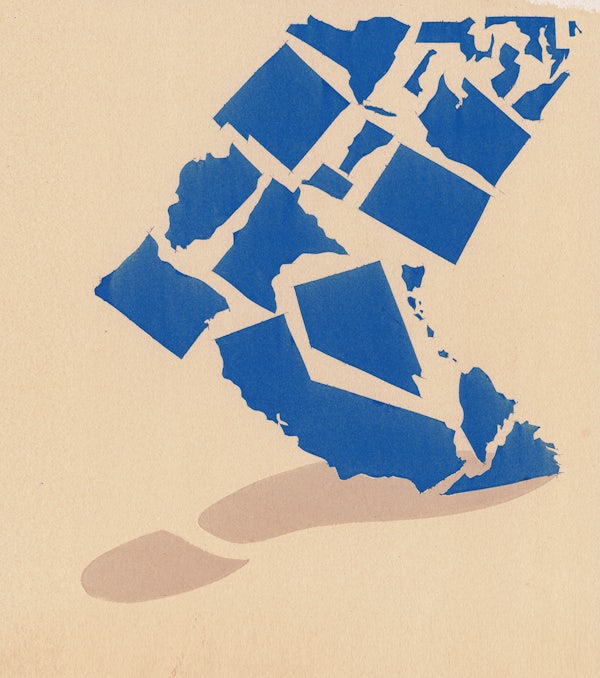
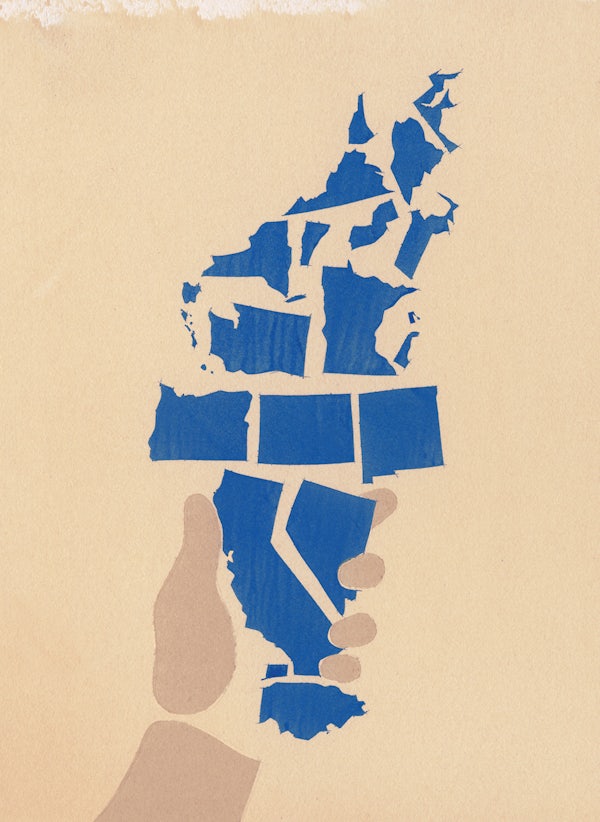
Not literally, of course. Not even the good people of Canada should have to stomach a mass migration of moping American liberals mumbling, “Live locally … make art.” What I mean is that it’s time for blue states and cities to effectively abandon the American national enterprise, as it is currently constituted. Call it the New Federalism. Or Virtual Secession. Or Conscious Uncoupling—though that’s already been used. Or maybe Bluexit.
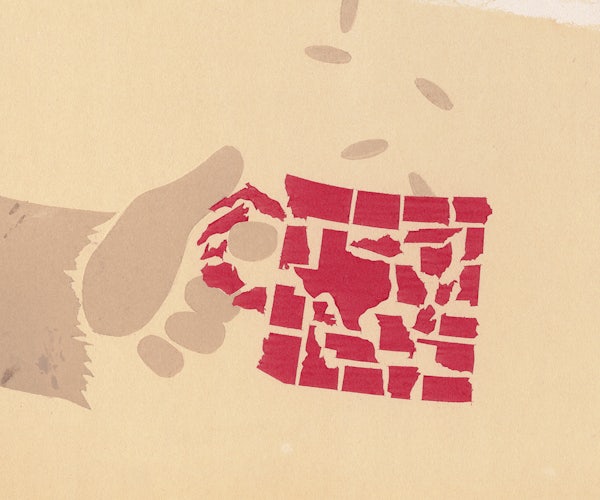
Truth is, you red states just haven’t been pulling your weight. Not for, well, forever. Red states are nearly twice as dependent on the federal government as blue states. Of the twelve states that received the least federal aid in return for each tax dollar they contribute to the U.S. Treasury, ten of them voted for Hillary Clinton—and the other two were Michigan and Wisconsin, your newest recruits. By the same count, 20 of the 26 states most dependent on federal aid went to Trump.
Take Mississippi (please!), famous for being 49th or 50th in just about everything that matters. When it comes to sucking at the federal teat, the Magnolia State is the undisputed champ. More than 40 percent of Mississippi’s state revenue comes from federal funding; one-third of its GDP comes from federal spending; for every dollar it pays out in federal taxes, it takes in $4.70 in federal aid; one in five residents are on food stamps—all national highs. You people—your phrase, not mine—liked to bash Obama for turning America into what you derisively referred to as “Food Stamp Nation.” In reality, it’s more like Food Stamp Red America—something your Trump-loving congressmen will discover if and when they fulfill their vow to gut the program.
Trump’s characterization of “American carnage” in our urban centers aside, cities now generate the vast majority of America’s wealth—the cities, that is, where blue folks live. It’s true that Hillary Clinton carried just 487 counties in 2016. It’s also true that those 487 counties generate almost two-thirds of the nation’s economic activity.
More than a century ago, William Jennings Bryan—a real populist—assured angry rural citizens that if we burned down our cities, they would spring up again as if by magic, fueled by the prosperity and providence of the nation’s farmers. Today, if we were to burn down our cities, the rest of the country would likely become a wholly owned province of the People’s Republic of China.
So here’s my modest proposal:
You go your way, we go ours.
We give up. You win. From now on, we’ll treat the animating ideal on which the United States was founded—out of many, one—as dead and buried. Federalism, true federalism, which you have vilified for the past century, is officially over, at least in spirit. You want to organize the nation around your cherished principle of states’ rights—the idea that pretty much everything except the U.S. military and paper currency and the national anthem should be decided at the local level? Fine. We won’t formally secede, in the Civil War sense of the word. We’ll still be a part of the United States, at least on paper. But we’ll turn our back on the federal government in every way we can, just like you’ve been urging everyone to do for years, and devote our hard-earned resources to building up our own cities and states. We’ll turn Blue America into a world-class incubator for progressive programs and policies, a laboratory for a guaranteed income and a high-speed public rail system and free public universities. We’ll focus on getting our own house in order, while yours falls into disrepair and ruin.
In short, we’ll take our arrogant, cosmopolitan, liberal-elite football—wait, make that soccer ball—and go home.
Shocking as your electoral victory felt to us in Blue America, we should have seen it coming. To paraphrase Virgil “the Turk” Sollozzo from The Godfather, the Democrats, with all due respect, had been slipping. Twenty years ago, could any organization as stone-cold crazy as the Tea Party have gotten to them? The staggering defeats that Democrats sustained, at every level of government, in the midterm elections of 1994, 2010, and 2014 have now reduced them to the largely impotent, makeshift, regional party they were from the Civil War all the way to the Great Depression.
That string of unrelenting electoral catastrophes should have tipped us off that there was something deeply, alarmingly wrong at the core of the party. Losses of that magnitude, over that period of time, are like a bright red dashboard light you’ve never noticed before that suddenly starts flashing insistently. Accompanied by a shrill beeping sound. And a voice repeating, “Warning, warning!” And a plume of smoke pouring from under your hood.
Yet the party elites drove blithely on, chatting on their cell phones about their demographic advantages and the imminent demise of the Republican Party, until the air bags had deployed, the steering wheel had come off in their hands, and the rims of their tireless wheels were grinding sparks off the curbside. At this point, there’s no retooling this burnt-out Chevy Cruze into a vehicle still capable of going coast-to-coast.
This letter is not intended as one more postmortem on what went wrong: on how the media should have done a better job, or how Hillary Clinton was a bad, bad, terribly bad candidate, the worstest candidate that ever was. Granted, it was Clintonism as a political philosophy, as practiced not only by both Clintons but also by President Obama and many others, that put the final stake in the heart of the Democratic Party as a national entity. The Clintonist project of taking the oldest and most diverse political coalition on earth—one organized around liberal economic principles that had held it together for generations—and re-centering it around conservative economic ideas and a hodgepodge of social ideas that nobody could agree on, was probably the worst political move since the Republicans tried to pretend in 1932 that the Great Depression was already over. (WASN’T THE DEPRESSION TERRIBLE? read their billboards lining the rail tracks between New York City and Washington, D.C.) It seems clear now that only the personal integrity, wit, eloquence, and thoroughly lovable family of Barack Obama kept the Democratic Party stumbling along, gut-shot, for this long.
Throughout much of the country, particularly anywhere outside a city in your Trump States, the Democratic Party barely exists anymore—and there’s not a damned thing we can do about it, at least for the moment. It will take decades of patient work and deep investment to rebuild the party and reassert its dominance in state legislatures. Richard Mellon Scaife and the Koch brothers and ALEC and other right-wing pioneers spent years in the conservative wilderness before they were able to cement their control of the nation’s political apparatus. And the demographic shifts that Democrats so patiently—and foolishly—counted on to change everything will now be stalled and undermined at every turn. A few years of Republican border and refugee policies, and we’ll be headed back to the ever-whiter America that preceded Lyndon Johnson’s 1965 immigration reforms. The federal and state judiciaries—which, thanks to this election, Republicans will now fill with far-right ideologues—will rubber-stamp every one of the voter suppression tactics the GOP currently employs, along with any new devilry that Trump and his insurgents dream up. And once the president delivers on his campaign promise to Jerry Falwell Jr. and other evangelical leaders by making it legal for churches and other nonprofit organizations to funnel tax-deductible donations directly to political candidates, we can expect a fresh Niagara of cash to pour into our elections, one that will make Citizens United look like a dry crick during climate change.
As it stands, your empire of Trump States now extends from Brownsville, Texas, to the Upper Peninsula of Michigan; from Coeur d’Alene to Key West. Future historians, if there are any, will be amazed to learn that just eight years after President Obama’s bailout of the auto industry—against the united and adamant opposition of the Republican Party—saved Michigan, Ohio, and maybe Pennsylvania from being reduced to large, smoking holes in the ground, all three of those once-blue holdouts voted to join Trump territory. Most of our country, at least as measured by physical terrain, has adopted your worldview. Your incessant self-pity and sense of injury on behalf of white people, and white people only. Your insistence that you remain the stronghold of “traditional values,” even as you adopt the most radical of ideas, and elect the most openly irreligious and irreverent president in our history. Your penchant for flushing any and every inconvenient truth down the memory hole of your favorite media complex, run by a gaggle of foreigners and cynics up in your hated New York.
But let’s be clear: The problem isn’t that your guy won. It’s that he has made it obvious he intends to rule without any regard for the Constitution, let alone the majority of Americans who voted against him. When a sitting U.S. senator like Cory Booker can show up at Dulles Airport armed with an order from a federal judge to defend the rights of detained U.S. residents and be met with the equivalent of an airline flight attendant “buh-bye” from Customs officials, who now seem to consider themselves part of The Donald’s Praetorian Guard—well, it’s time to rethink our role in the government the president is creating in our name.
So: What are we in Blue America going to do about it? What would it mean to remove ourselves as far as possible from the federal government?
For starters, we now endorse cutting the federal income tax to the bone—maybe even doing the full Wesley Snipes and abolishing it altogether. We will raise our state and local taxes accordingly to pay for anything we might need or want. We ask nothing more from you and your federal government. Nothing for infrastructure, or housing, or the care of the poor and sick—not that you gave us much, anyway. All we want is our money, and you can keep yours, dollar for dollar.
No more Obamacare? Hey, that hot mess was tricked out the way it was mostly to appease you in the first place. Since we have nearly all of the country’s leading hospitals, medical schools, and medical research institutes—and a much healthier population, one that’s happily short on automatic weapons—I’m sure we’ll come up with something better.
Go ahead, keep on voting against your own economic interests to satisfy your need to control other people’s bodies, sex lives, and recreational habits. We’ll be creating cities and states that will defend gay marriage, a woman’s right to choose, and sensible gun control against your intrusive federal judiciary.
Still think FEMA is some kind of liberal welfare scam? Poof—it’s gone! We will never again beg the people you elected to office to help us in the wake of what should have been considered national tragedies, such as September 11 and Hurricane Sandy. Meanwhile, best of luck with all those tornadoes, floods, hurricanes, forest fires, and—all new!—Oklahoma fracking-earthquakes you always seem to be having.
What’s the matter with Kansas? Who cares! This is the good thing about a divorce—the chance to get all of your crazy, deadbeat in-laws out of the house. How can we save Detroit? Hey, she’s your baby now. Didn’t you say something about the private sector, or maybe casinos, or that mortgage loans guy who owns the Cleveland Cavaliers? I’m sure that’ll work out just fine for you.
With all the extra money we’ll have, we can set up our own Social Security, Medicare, and Medicaid systems once Paul Ryan manages to “privatize” them for you Trump Staters. And what city is all that privatized money likely to come to, on its way to the markets? Oh, right, New York, which you hate so much! All those extra Wall Street bonuses and dividends will really help the local economy.
What’s more, as a quick glance at the electoral map will tell you, almost all of blue-state America is now concentrated in three contiguous clusters: the East Coast from Maine down through Virginia; the West Coast, along with Nevada and Hawaii; and the Rocky Mountain zone of Colorado and New Mexico. Disastrous as this allocation is when it comes to winning our country’s fatally antiquated Electoral College (is there another republic in the world, or indeed the history of the world, where a party has won a national election by nearly three million votes and still lost everything?), it’s perfect for developing highly efficient, cutting-edge regional networks in everything from transportation to clean energy to health care.
Under the New Federalism, you won’t have to engage in political convolutions to try and reconcile your conservative ideology with your extortionate demands for yet another federal handout. Take Amtrak’s “Acela corridor,” which your commentators like to deride as the route along which we elitist liberals all supposedly live. Fact is, the Northeast Corridor is the only part of our national train system that makes an operating profit. But every year, your Trump State congressmen threaten to pull the plug on Amtrak unless it continues to guarantee daily, money-losing service to all the little towns out on the prairie, in empty, SUV-loving red states like Montana, Idaho, Nebraska, and Kansas. Then you go right back to fulminating about how much Amtrak costs. This is the legislative equivalent of Cleavon Little in Blazing Saddles holding himself hostage at gunpoint to fend off a lynch mob.
Go ahead, end your federal Amtrak subsidies. In their place, we will build fantastic, new high-speed rail systems of our own. They’ll run past our state-of-the-art wind farms, fiber-optic networks, and highways that recharge our self-driving cars as we travel. We also don’t want you to bother us about money to repair your Trump State airports since, as you always claim, we will just be flying over them anyway.
There are still a few kinks to work out, of course. What to do, for instance, about the likes of Illinois and Minnesota, blue states adrift in a red sea? Or all those individual “blue cities” trapped in red states, like Philadelphia and Pittsburgh, or Cleveland and Columbus? We’ll need to reach cooperative agreements with them to exchange goods and services as needed. They will become stops on our new information superhighways, or on our superfast rail networks, or self-driving highways. Our cool new trains and cars will glide past you all the faster, now that we don’t have to stop in between. Be sure to wave!
A much weightier problem will be ridding ourselves of the Trump States within, our own rural counties full of angry right-wing voters, convinced that their money goes to support welfare queens in the cities even as their last, visible means of support crumble away. Considering how susceptible they are to fake news, one strategy might be to recruit those Russian hackers to create shiny new web sites extolling how wonderful things are in, say, West Virginia, or rural Arkansas. Perhaps, in a historic reversal, it’s time for a mass migration from urban North to rural South, of Trump voters flocking to Red America in search of a better life for themselves and their families.
Whether you stay or go, we’ll be reaching out around the globe to recruit the most talented, intelligent, and ambitious individuals we can find to come to our America. Actually, we already do this, thanks to institutions from Silicon Valley to the University of Chicago, MIT to Wall Street, Hollywood to Broadway. Oh, and be forewarned: We will also be coming for your best and brightest in Red America, offering them free rides at many of the finest universities and research centers in the world. But don’t worry: You’ll still dominate college football!
Your own Trump State secession from reality is likely to hurt us most in foreign policy, where reality has a way of coming back to bite you in the ass very quickly. Your avowed policies will not only fail to contain global climate change but will accelerate it irrevocably, which will be catastrophic. Under the New Federalism, our blue regions will at least be able to make their own preparations for the deluge. But separating ourselves from the rest of your dealings with the world will be more difficult.
Since you want to quit policing the world and make everyone in Europe go back to defending themselves, we could easily cut the army to, say, the 125,000 soldiers we had just before the start of World War I, along with a much reduced air force and navy. And with a president who doesn’t feel he needs to take security briefings, and who genuinely does not seem to know why we don’t just go ahead and use our nuclear missiles, I think it’s safest to say, Ix-nay on the eapons-way.
But since your Trump administration now boasts more generals than Pinochet’s junta, it’s likely that, isolationist noises aside, the White House will soon be up to its usual shenanigans around the globe. Who can say what these might be, in light of our new president’s one-man alliances with assorted global strongmen, autocrats, and wing nuts? Blue states and cities will do our best to publicly disassociate our America-within-America from whatever new international follies you people may be persuaded to embark upon. And we will continue to take to the streets to defend the rights of immigrants and refugees and anyone else threatened by your saber rattling and isolationism. To quote St. Augustine, “When there is no justice, what is the state but a robber band enlarged?” We respectfully decline to join the Trump-Putin robber band.
I realize that this all sounds like a terribly pessimistic view of the future. It will leave behind millions of our fellow Americans most in need of the kind of assistance that only the federal government can provide—Americans whose only crime was to have the misfortune of resid-ing in a Trump State. I actually love Mississippi, an incredible place that, along with so much else, gave us Medgar Evers, William Faulkner, and Robert Johnson. I would love nothing better than to see Detroit, one of our greatest cities, restored to its former glory. But such hopes and dreams mean little now. The moment requires us to put aside, for now, the liberal ideal, which at its core was always about nurturing new shoots of enlightenment—which are as likely to spring up in a lonely farmhouse, or on a ghetto block, as at some great center of power or finance. The promise of liberalism was that we would never stop reaching out toward one another, always building and connecting, until all of America and the world was covered with diverse, democratic, and yes, brilliant societies, “the broad, sunlit uplands” that Churchill envisioned, or Dr. King’s “nation that will rise up and live out the true meaning of its creed.”
Many of my fellow blue staters, of course, would prefer to persuade you to come around to our way of thinking. That is, after all, what elections are supposed to be about—instead of, say, suborning the head of the FBI, or getting foreigners to commit felonies on your behalf. It’s true that even the most dominant powers can be dissolved by the right idea, carried forward by enough people who believe in it. The national majority that Democrats enjoyed before the Civil War collapsed in the face of the demand for “Free Soil, Free Speech, Free Land, and Free Men.” The Republican landslides of the 1920s were reversed nearly overnight when they ran up against the liberal program of the New Deal.
Unfortunately, nothing like that is going to happen now. A political sea change takes place only when you can get people on the other side to come over. But you can only get them to switch if you can get them to listen to what you have to say, and you can only get them to listen if you share something resembling the same idea of objective reality. This is the bleakest new reality of all: That common ground is gone. You Trump Staters don’t read or listen to the same news sources we do. You don’t even care what a legitimate news source is, as the rise of all those fake news sites has demonstrated. Two-thirds of you believe that unemployment rose under Obama, even though he actually cut it by more than half; just 17 percent of you acknowledge that Obamacare has driven the percentage of Americans without health insurance to a record low. Exactly what is the messaging strategy to win over those of you willing to believe that Hillary Clinton and John Podesta are running a secret child-sex-slave ring out of a Washington pizza parlor? Or that President Obama is a secret Kenyan? Or that a routine military training exercise is a UN attempt to conquer Texas? Or any of the other bizarre and inane conspiracy theories that are now promulgated daily as the gospel truth not just by a few, fringe elements but by leading members of our new government’s security apparatus?
This, sadly, is not a time for connecting or reaching out. It is a time for retrenchment and rebuilding. If we in the blue states want to make America great again, we must first demonstrate that we can make our own states into models of civic participation and economic equality.
America’s original liberal, Louis Brandeis, famously advocated for the role of the individual states as “laboratories of democracy.” And so they have proven to be, with nearly all of our great reforms first attempted on the state or local level: the abolition of slavery (Massachusetts, 1783); the right of women to vote (Wyoming Territory, 1869); the regulation of workplace safety (Illinois in the 1890s and New York in the 1910s). A ban on monopolies was written into the constitution of Texas when it was still an independent republic in 1845, and converted into one of the first state antitrust acts in 1889—a statute that checked the power of that rapacious Eastern corporation Standard Oil, and helped set off a Texas oil boom. “The Wisconsin idea,” advocated by Robert La Follette in the first decades of the twentieth century, was that public universities should devote themselves to research improving the lives of the people in the states that sponsor them. New York State’s seminal Ives-Quinn Act of 1945 banned discrimination in employment on the basis of race, creed, color, or national origin. And so it goes, all the way down to the health care reform law in Massachusetts in 2006, which was the model for Obamacare whether Mitt Romney wants to admit it or not.
Originally, all of these great steps forward were seen as outliers, as dangerous or risky, as harebrained social experiments. All wound up transforming our nation for the better—and all are models for the hard work we must do, in countless places, and in the face of massive opposition. Every time and place in our nation’s history has known people of noble mind, with advanced ideas and dreams. This is a good thing, but it availed us nothing if they could not bring those ideas and dreams to practical application.
Brandeis himself formulated what should become the catchphrase for our own time. Appropriately unimpressed during a previous mania for a certain corrupt eastern empire, he asked: “Why visit Russia when you can go to Denmark?” Brandeis knew something about the challenges of putting liberal ideals into practice. In his time, he faced combinations of the money power and the political machines that were just as puffed up with their own arrogance and ignorance as so many of you are in the Trump States today. They would not hear him then, just as you will not hear us now. What Brandeis devised, along with Florence Kelley, a leader of the National Consumers League, was “the Brandeis Brief,” a revolutionary legal instrument that opened up the courtroom to the real world. It stressed actual social conditions and proven scientific realities over detached and absolute legal theories. Employed first to limit how many hours a day women could be forced to work in a laundry, it would eventually be used as a legal foundation for Brown v. Board of Education, along with countless other groundbreaking cases through the years. But that was the past.
It is a tragedy that so much of the work that so many men and women toiled at for so long to make this a better country, and a better world, has been thrown away, leaving us all in such needless peril. To fall to this place, with this hollow man assuming the leadership of the world’s greatest republic, may be in itself a refutation of the greater liberal hope that sustained human progress is possible and will prevail. But all that remains for us is to regroup, to salvage what we might, and to begin again where we can.
This is why our separation in all but name is necessary. There is only one way that we can counter all of your fantasies about what this man you have elected is, and what he—or the assorted moneyed interests, ideological fanatics, and foreign dictators he so fecklessly shields—will do for you. Since those of you in the Trump States will not listen to us, or to anything that smacks of rationality, we will have to create new facts on the ground—“alternative facts,” as you folks have taken to saying. Since you will not hear our words, we will need to convince you by our actions. We will need to run our states and our cities so well, in such an effective and enlightened manner, that we can make you understand all over again what every page of our history should already tell you. Through our own example, we must win you over, American by American, town by town, state by state, until we are once more in a position to mitigate all of the foolish, cruel, and wasteful things you are about to inflict on the rest of us, and to move forward once again, as American states united.
Yours,
A Blue State Patriot
This was not what I was going to post today but life happens. How many times have you seen on social media, or in an article, or heard a GOP conservative say…if liberals don’t like it they can go to Canada or wherever they want. We won’t notice they are gone. Well, keep this in your mind and read this. It is a good subject to ponder.
Mensen maken de samenleving en nemen daarin een positie in. Deze website geeft toegang tot een diversiteit aan artikelen die gaan over 'samenleven', belicht vanuit verschillende perspectieven. De artikelen hebben gemeen dat er gezocht wordt naar wat 'mensen bindt, in plaats van wat hen scheidt'.








/cdn0.vox-cdn.com/uploads/chorus_image/image/53681575/GettyImages_477342410.0.jpg)


 idealisticrebel