Three people are in custody Monday awaiting formal charges after two Dakota Access pipeline protesters rappelled from the roof of the U.S. Bank Stadium in Minneapolis to hang a banner during the Minnesota Vikings‘ season finale against the Chicago Bears.
The game was not interrupted by the protest Sunday, but eight rows of fans seated below the banner were cleared as a precaution. The Vikings beat the Bears 38-10.
The banner urged Minneapolis-based U.S. Bank to divest from the four-state, $3.8 billion pipeline. Opponents contend the pipeline could affect drinking water and Native American artifacts. Texas-based developer Energy Transfer Partners says the pipeline will be safe.
Minneapolis police spokesman Officer Corey Schmidt said a 32-year-old man and 26-year-old woman were arrested Sunday on misdemeanor burglary and trespass charges for the high-flying stunt.
Police also arrested a 27-year-old woman at the stadium Sunday whom they accused of obstructing the legal process. Schmidt said Monday that accusations against the woman have been upgraded to include burglary. He declined to discuss her alleged role in the incident, citing the ongoing investigation.
He said a complaint with formal charges is expected to be filed Tuesday.
The Hennepin County Jail roster shows all three suspects still in custody on Monday.
Minnesota’s burglary law includes entering a building without consent and with the intent to commit a crime. Schmidt said the manner in which the suspects got inside the stadium was part of the ongoing probe.
The protesters rappelled into place during the second quarter, and hung in a seated position about 100 feet above the seats that were evacuated for safety. The pair watched the rest of the game, occasionally shifting positions or waving at spectators. One wore a purple Brett Favre Vikings jersey.
U.S. Bank Stadium operator SMG said in a statement that they apparently climbed over a guard rail to access the ridge truss. Police spoke with them from a catwalk in attempt to get them to stop, and by the fourth quarter about a half-dozen police and firefighters in rappelling gear were on the truss waiting to remove the pair.
The protesters willingly climbed up their ropes when the game ended, as fans booed them from below.
Vikings spokesman Lester Bagley said the team’s only concern was for the “safety of our fans and guests.”
Protesters say U.S. Bank has extended a large credit line to Energy Transfer Partners. U.S. Bank spokesman Dana Ripley declined comment.
The pipeline would carry oil from western North Dakota through South Dakota and Iowa to a shipping point in Illinois. Protesters camped in North Dakota for months to try to stop completion of the project.
———
Associated Press reporters Blake Nicholson in Bismarck, North Dakota, and Jeff Baenen in Minneapolis contributed to this report.
I am following up with news about the native people. A protest was conducted and three protesters were arrested. They are still in custody. The US Bank, according to protesters explained that US Bank made a large credit line available to Energy Transfer Partners. This is the company that is attempting to build the North Dakota Pipeline.
My personal opinion is that putting the banner up at the game was non-violent and creative. They are trying to call attention to the part US Bank is playing in this whole tragedy. I am still in support of the water protectors and the native people protesting to save their sacred land.
I will continue to bring you news of the native people as it develops. To me they are American heroes.
I am starting the New Year with photographs of the American capital, Washington, D.C. I have always thought Washington to be a beautiful city. I have been there many times for marches, art exhibits, and for treks through the government agencies. The FBI, the US Mint, the Ford Theatre — where Lincoln was assassinated — were some of them. I wanted to begin 2017 with a bit of beauty and a feeling for our Capital City before the upcoming change of government. I hope you enjoy Washington.
Namaste,
Barbara
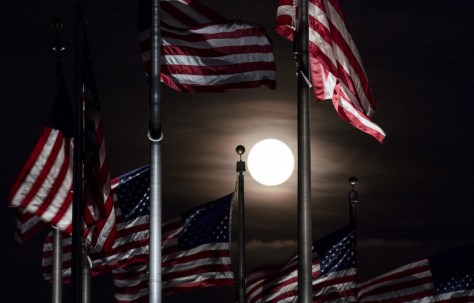
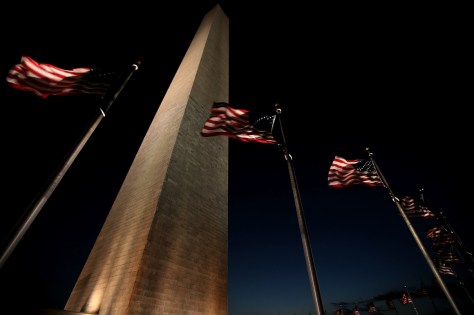
The full moon rises above the flags at the Washington Monument on Monday, June 20. June’s full moon, also known as the Strawberry Moon, coincided with the summer solstice for the first time since the Summer of Love in 1967. Getty
The U.S. Capitol dome can be seen behind piles of snow removed from parking areas and walkways around the Capitol grounds on January 26. The Washington area was resuming partial business on Tuesday as trains and buses restarted near-normal service, while federal offices remained closed following the massive blizzard that hammered the U.S. East Coast. REUTERS
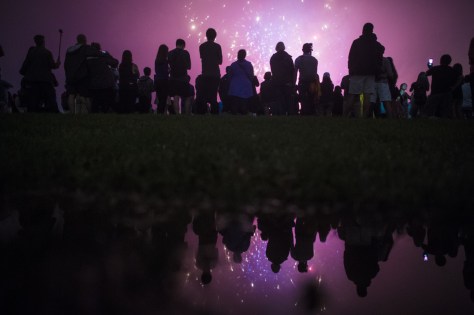
Patrons, reflected in a rain puddle, watch near the Washington Monument as the Independence Day fireworks go off on the National Mall on Monday, July 04. Getty
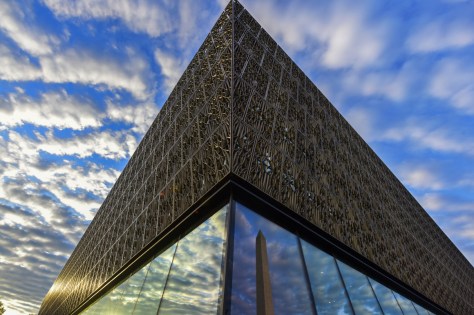
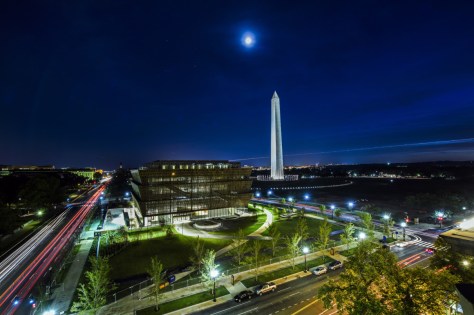
The Smithsonian Institute’s National Museum of African American History and Culture, NMAAHC, sits near the Washington Monument on Tuesday, August 9. The Museum would open to the public on September 24 in a ceremony attended by President Obama and many other dignitaries. Getty
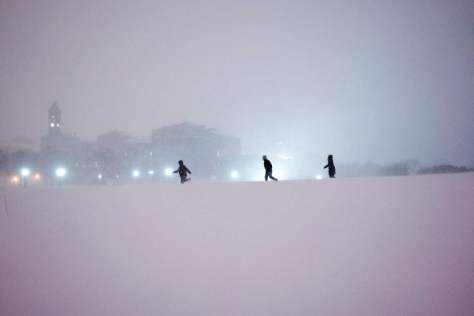
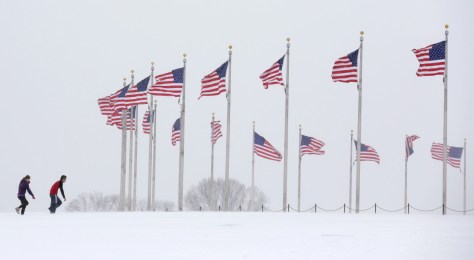
Children play in the snow on the National Mall after a snowstorm on January 23. Getty
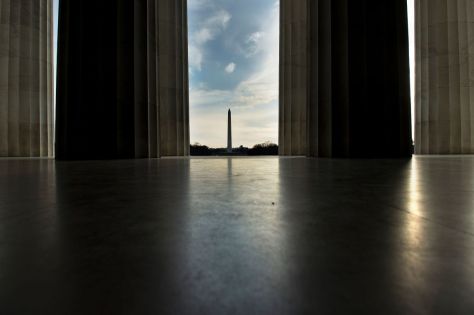
The Washington Monument is seen from the Lincoln Memorial on February 12. When it was completed in 1884, the Washington Monument was the tallest structure in the world, and it remains the tallest structure in Washington, D.C. Getty
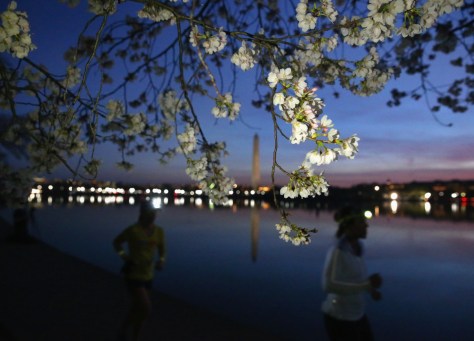
Joggers run past blooming cherry blossoms that surround the Tidal Basin on March 24. The National Park Service had predicted that the cherry blossom trees would reach peak bloom later that day. Getty
Construction Manager Shane Gallagher leads members of the media on a tour of the rebuilt cast-iron dome of the U.S. Capitol, which was formally completed on Tuesday, November 15, on time for the inauguration of President-elect Donald Trump. REUTERS
From the top of the Department of Commerce building looking south across Constitution Avenue NW, the NMAAHC sits between 14th Street, left, and 15th Street, right, near the Washington Monument. Getty
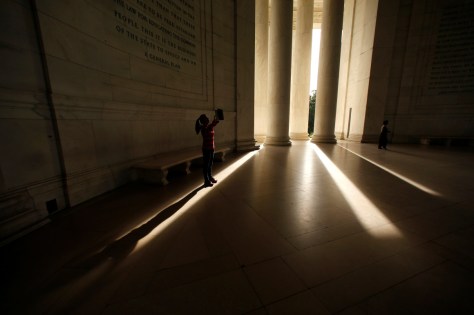
A visitor to the Jefferson Memorial casts a long shadow as she holds up her tablet to take a photo on October 12. REUTERS
People frolic in the snow near the Washington Monument during a winter storm on January 23. A deadly blizzard blanketed the eastern United States in near-record amounts of snow, shutting down New York and Washington in a colossal storm expected to affect more than 85 million people. More than 4,400 flights were cancelled as the mega-storm brought airports in New York, Philadelphia, Washington and Baltimore to a halt, shuttered transport in the US capital and prompted New York officials to issue a sweeping travel ban. REUTERS
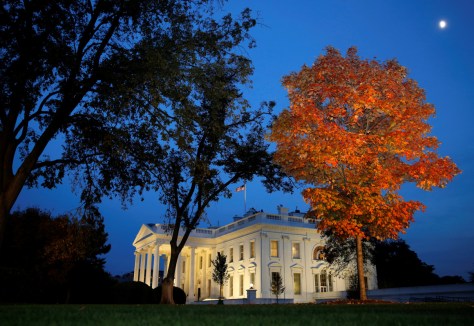
A tree is awash in autumn color as the moon rises over the White House on election night, November 08. REUTERS
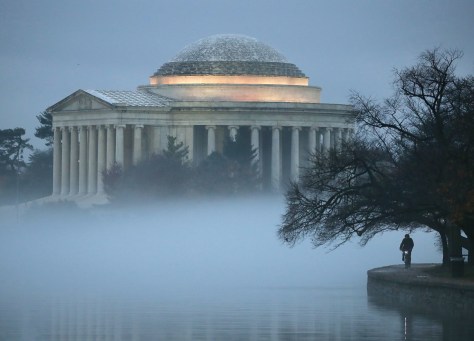
The Jefferson Memorial is surrounded in fog as a man rides a bicycle along the Tidal Basin, on November 30. Getty
The Washington Monument stands at the National Mall on December 02. The National Park Service announced that day that the monument will remain closed until 2019 for updating the elevator system in the structure. Getty
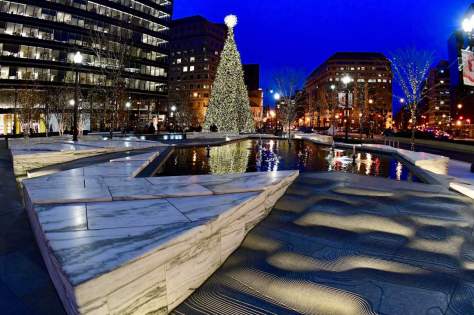
People look at a Christmas tree at CityCenterDC in downtown Washington on December 04. Getty
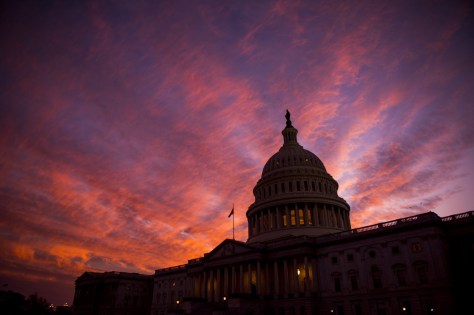
The sun sets at the U.S. Capitol as the 114th session of Congress comes to a close on Thursday, December 08. The House passed a spending bill to fund the government through April before heading home for the holiday recess. Getty
Happy New Year everyone! I wish you all the happiest and the most prosperous of new years. 2017 has arrived!
Namaste,
Barbara
How One Elderly Woman Took on Jim Crow in Washington—And Woman
Library of Congress / Getty ImagesPortrait of a young Mary Church Terrell circa 1890
She launched her case almost six years before Rosa Parks helped start the Montgomery bus boycott and a decade before sit-ins rocked lunch counters across the South
In a city known for iconic buildings, Thompson’s Restaurant was unremarkable. Located a few blocks from the White House, it sat on a commercial corridor: banks, storefronts, streetcar tracks. Inside, it was the kind of place where customers stood in line with their trays, grabbed a slice of cake, and sat down at a table. If they were white, that is.
Mary Church Terrell, an 86-year-old charter member of the National Association for the Advancement of Colored People, was not white. Born in 1863, the year of the Emancipation Proclamation, she was the daughter of former slaves. She was also an 1884 graduate of Oberlin College, a suffragist, and a veteran activist for civil rights. On January 27, 1950, she had lived in Washington, D.C. for sixty years.
At roughly 2:45 p.m., Terrell walked through Thompson’s double glass doors. With her were three hand-picked compatriots: Geneva Brown and the Rev. William H. Jernagin, who were African American activists, and David H. Scull, a white Quaker. Collectively, none of them made it to the dining area. The manager, Levin Ange, stepped in front of Jernagin and refused to serve him because he was “colored.”
Elsewhere in Washington, President Harry S. Truman was leading a worldwide crusade for democracy. The manager of Thompson’s, however, was invoking the decades-old logic of Jim Crow, with its architecture of racial inferiority. That outlook, Terrell knew, was a liability in foreign affairs, especially when Washington restaurants refused to serve dark-skinned diplomatic envoys, treating them as if they were American blacks. She had no intention of backing down.
“Do you mean to tell me that you are not going to serve me?”
The manager apologized, saying it was not his fault; it was his company’s policy not to serve Negroes. Terrell, who had once considered training as an attorney, flipped into cross-examination. Was Washington in the United States? she asked the manager. Did the Constitution apply there?
“We don’t vote here,” replied Ange.
Though refused entry, Terrell had gotten what she came for. Thompson’s had violated Reconstruction-era ordinances barring Washington restaurants from discriminating by race. Now she could go to court. And by challenging Thompson’s in the capital, she could upend the edifice of separate-but-equal. That’s because the Supreme Court’s 1896 decision in Plessy v. Ferguson, which upheld Louisiana’s segregated railway cars, used as a rationale congressional mandates requiring segregated Washington schools: if Congress, which had jurisdiction over Washington, could require segregated schools in the capital, Louisiana could segregate train passengers. Terrell had her cause and her fight.
When I first read about Mary Church Terrell and her battle against Thompson’s Restaurant, I wondered why they were not better known. She launched her test case against Thompson’s almost six years before Rosa Parks helped start the Montgomery, Alabama bus boycott and a decade before sit-ins rocked lunch counters across the South. On June 8, 1953, three years after she had been refused service at Thompson’s, Terrell went on to win a unanimous decision from the U.S. Supreme Court. District of Columbia v. John R. Thompson Co., Inc. invalidated Washington’s segregated restaurants a year before Brown v. Board of Education, the Court’s landmark school desegregation ruling in 1954. Yet Terrell and Thompson have been largely overlooked in the history of the civil rights movement, eclipsed by Brown and the unrest that followed, especially in the South.
It was no coincidence, however, that Thompson unfolded in the nation’s capital, with its tangled history on race, or that the Court used Thompson to relay a signal about the demise of separate-but-equal. Carved from the slaveholding states of Maryland and Virginia, Washington coexisted with the slave trade until 1850. Only on April 16, 1862, when President Abraham Lincoln emancipated Washington’s 3,100 slaves (nine months before the Emancipation Proclamation liberated them in the Confederacy) did the capital rid itself of slavery. Racial prejudice was another matter.
Still, Washington was not always a Jim Crow town. During Reconstruction, black men in Washington enjoyed full citizenship and voting rights, like white men. Beginning in 1869, the capital’s lawmakers enacted antidiscrimination laws, banning restaurants from discrimination based on race or color, ordinances that were still on the books when Terrell had tried to eat at Thompson’s. By 1878, though, as Reconstruction ended, Congress had dismantled Washington’s local representative government and stripped all residents – black and white – of voting rights. Washington became the equivalent of a federal possession, ruled by presidentially appointed commissioners.
Over time, the Reconstruction-era ordinances fell out of fashion and into disuse, especially after 1913, when President Woodrow Wilson’s administration segregated the federal workforce. In 1950, black and white Washingtonians had long gone to separate playgrounds, restaurants and movie theaters. With the NAACP mainly focused on school desegregation, the capital might have stayed that way.
But it didn’t, because of Mary Church Terrell. What she started inside Thompson’s on January 27, 1950 was a conflict more than a century in the making. It was a challenge to the central hypocrisy in American democracy: the clash between the nation’s professed belief in equality and its practice of subjugating blacks. As postwar activists like Terrell knew, that tension resonated in the nation’s capital, the symbolic headquarters of American democracy.
Terrell’s battle would engage the nation’s attention in the years ahead, when legal proceedings in the Supreme Court would alter the country profoundly. It was both a local affair—a particular cafeteria on a downtown Washington street refusing to serve an elderly black woman—and a national one, with repercussions outside the capital, across the South, and beyond. After World War II, Washington was not just another southern town; it had become the focus of the world.
Mary Church Terrell’s story had roots in slavery and spanned civil rights from the Emancipation Proclamation to Brown. Her case against Thompson’s helped usher in Brown and school integration, impelling a fractured Court to confront segregation at its threshold. An almost ninety-year-old African American woman had brought change to the nation’s capital, and it was irreversible.
It was a journey they had waited nearly three long years to take.
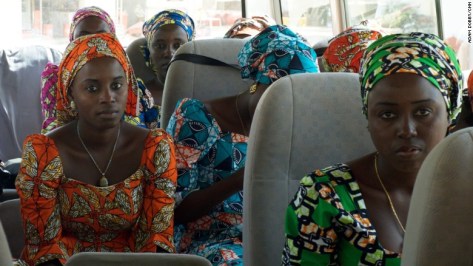
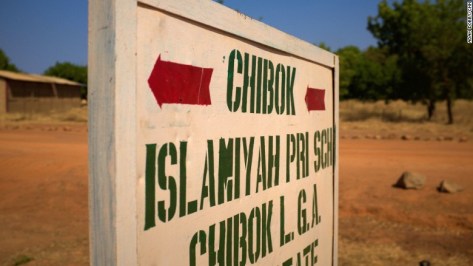
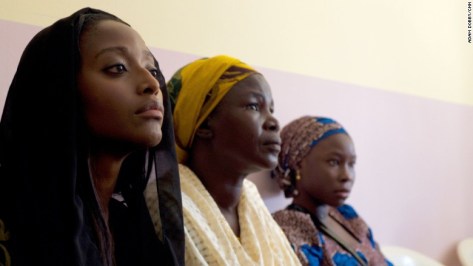
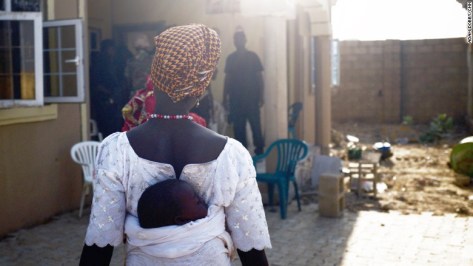
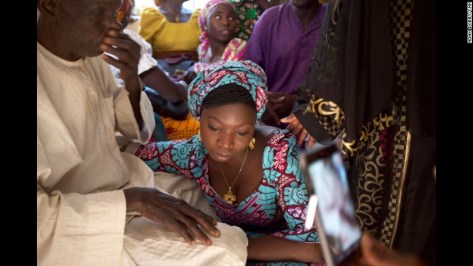
Ten weeks after being released by Boko Haram, 21 freed Chibok schoolgirls and a baby returned home this month to celebrate Christmas with their families for the first time since they were snatched by the terror group.
The April 2014 kidnapping of nearly 300 girls from a boarding school in Chibok sparked global outrage a #BringBackOurGirls campaign on social media.
CNN accompanied the 21 girls as they made the journey from the capital Abuja, where they have been undergoing medical and psychological assessments since they were released by Boko Haram nearly two months ago in a deal brokered by an unnamed Swiss contingent and the Nigerian authorities.
On Thursday, CNN’s Isha Sesay boarded a flight with the girls from Abuja to Yola in eastern Nigeria, where the girls would make a six-hour road trip north to Chibok.
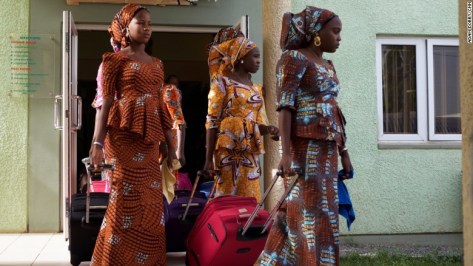
The change in the Chibok girls from 10 weeks earlier was remarkable. Their tattered clothes were gone and they were clearly better fed after surviving for two and a half years on meager or non-existent meals.
After their release in October, one of them, Glory Dama, told the assembled media that they once went without food for 40 days in the bush.
“I did not know that a day like this will come, that we will be dancing and giving thanks to God among people,” she said. “For one month and 10 days we stayed without food. I narrowly escaped a bomb blast in the forest.”
‘Beautiful and grateful’
Kidnapped as teenagers, the girls were now returning home as young women.
They have been taking English classes and playing outdoors, their caretakers told CNN. One girl, Agnes, added that they have been learning how to knit. Several have had surgery to remove shrapnel.
One of the girls, Rebecca Mallam, said they felt “beautiful and grateful.”
The girls, Christians who were forcibly converted to Islam by their captors, prayed together before leaving Abuja Friday morning on the first leg of their journey home.
The girls’ names
The Nigerian government also released the names of the 21 freed girls:
1. Mary Usman Bulama
2. Jummai John
3. Blessing Abana
4. Luggwa Sanda
5. Comfort Habila
6. Maryam Basheer
7. Comfort Amos
8. Glory Mainta
9. Saratu Emmanuel
10. Deborah Ja’afaru
11. Rahab Ibrahim
12. Helin Musa
13. Mayamu Lawan
14. Rebecca Ibrahim
15. Asabe Goni
16. Deborah Andrawus
17. Agnes Gapani
18. Saratu Markus
19. Glory Dama
20. Pindah Nuhu
21. Rebecca Mallam
Source: Nigeria federal government
As they waited to board the flight to Yola they appeared tense. Their colorful clothes and bright smiles did little to mask the pain and anxiety behind their eyes. Some of the girls had confided in their Abuja caretakers that they were worried about how they would be received by the wider community due to the stigma of being held by Boko Haram.
Memories of that fateful April night were surely not far from their minds and one could only imagine the trauma they endured at the hands of their Boko Haram captors — one of the world’s deadliest terrorist groups.
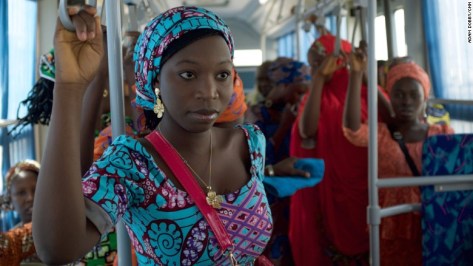
However, there was a palpable sense of growing excitement Friday once they were on the move. They smiled more readily, giggling and chattering freely among themselves.
When asked how they were feeling about reuniting with family and friends in their hometown, they answered in unison: “We are happy!”
After landing in Yola, they were welcomed by the governor and local community leaders. But the second half of their reunion journey was delayed as the road to Chibok was deemed too dangerous to travel at night.
So the girls gathered Friday night in their Yola hotel — surrounded by military guards — to pray and sing Christian hymns and songs. Their captors would have certainly not approved.
frequently
Watching them during these solemn acts of worship, it was not hard to see how they kept going through the worst moments of their ordeal with Boko Haram.
Home at last
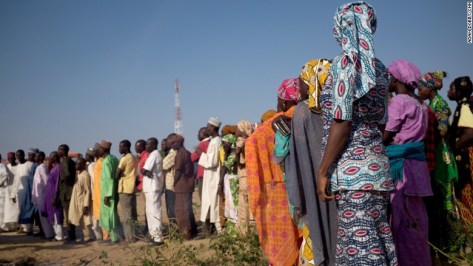
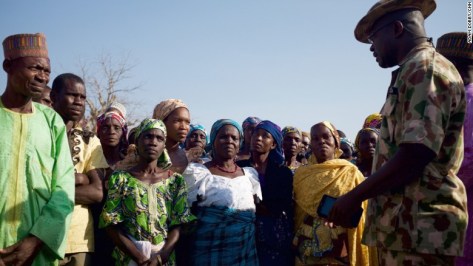
At the crack of dawn Friday, the girls hit the road, accompanied by a military convoy that escorted them to Chibok. As we entered the town six hours later, we were greeted by a crowd of locals, many waving excitedly.
Parents and other family members were waiting anxiously to see their daughters again.
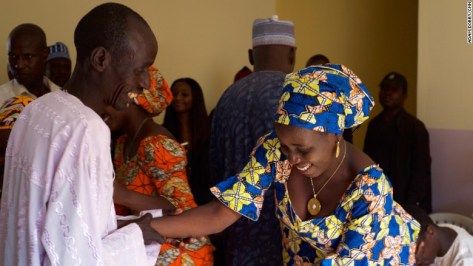
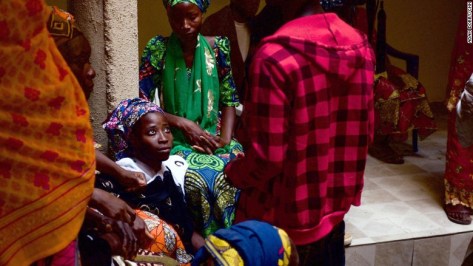
The moment of reunion finally arrived amid scenes of unbridled joy. Parents and daughters embraced, the pain and relief of the past two and a half years etched on their faces.
But then, suddenly we could hear wailing and heart-rending screams. Some mothers had come expecting to see their daughters, only to learn they were still being held by Boko Haram.
These women had thought their girls would be among the group coming home for Christmas. Their moment of hope gone, they remained inconsolable.
There are 197 Chibok girls still in captivity, and talks are ongoing to free them. Sources tell CNN that negotiations only involve 83 of the girls.
More joyful reunions like the ones we witnessed here may soon follow. But they may also be tempered by the grief of parents whose daughters are never coming home.
I am happy to tell you that after a great deal of time and much suffering on the part of the girls, 21 of the kidnapped girls came home. These girls stolen by Boko Haram have been returned to their parents and other family members. What an amazing outcome to the terrible tale of families robbed of their daughters. The fear and grief had to have been almost paralyzing. With prayer and hope they faced each day with hope that they would see their beloved girls again.
Prayers will still be needed as the girls attempt to fit back into their families, and for those still remaining with Boko Haram. After all that they have been put through, including being “married” to soldiers, raped, and forced into slavery, they are not the same young women who were carried away. The fear and violence will have taken its toll. For those who were impregnated, this will stress the girls, families and for the children themselves. In my opinion, this qualifies as a real Christmas miracle.
Sending all my readers and friends around the world
greetings and best wishes for the Holidays.
Chanukah celebrations begin this evening around the world.
Children will play the Dreidel game
Menorahs will be lit with candles in remembrance
of the time when Jews regained the Temple
to find that they had only one day’s worth of oil left in the Temple
for the Eternal Flame
And a miracle let the oil last for eight days
long enough to make more oil
Presents are given to children for the eight nights the holiday lasts
Christmas Eve is also tonight and is frequently when families go to candle light
services as a family.
Some open presents on the eve and some on Christmas morn.This
is the celebration of the birth of Jesus.
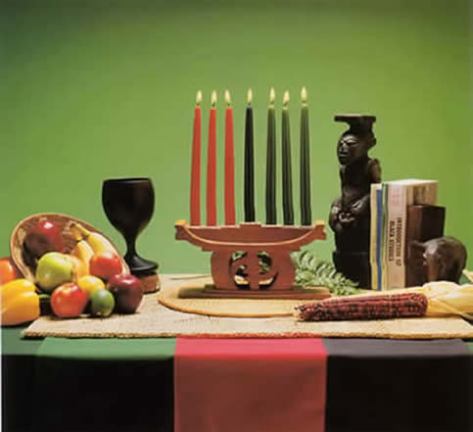
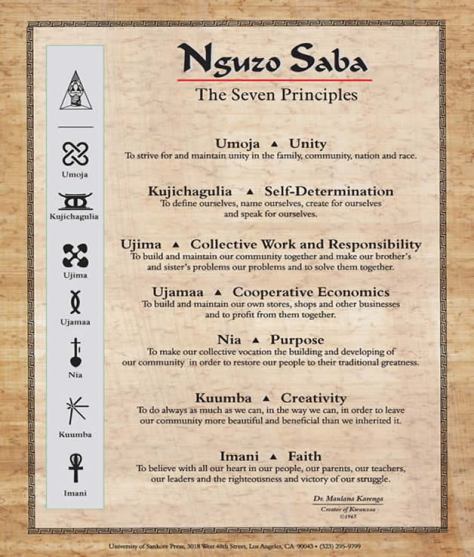
Kwanzaa begins December 26 and runs through January 1
The greetings during Kwanzaa are in Swahili. Swahili is a Pan-African language and is chosen to reflect African Americans’ commitment to the whole of Africa and African culture rather than to a specific ethnic or national group or culture. The greetings are to reinforce awareness of and commitment to the Seven Principles. It is: “Habari gani?” and the answer is each of the principles for each of the days of Kwanzaa, i.e., “Umoja”, on the first day, “Kujichagulia”, on the second dayand so on.
Gifts are given mainly to children, but must always include a book and a heritage symbol. The book is to emphasize the African value and tradition of learning stressed since ancient Egypt, and the heritage symbol to reaffirm and reinforce the African commitment to tradition and history.
x
x
X
The colors of Kwanzaa are black, red and green as noted above and can be utilized in decorations for Kwanzaa. Also decorations should include traditional African items, i.e., African baskets, cloth patterns, art objects, harvest symbols, etc.
However you celebrate your holiday be blessed
and know you are a part of the family of Man and of God.
We honor all cultures and all paths
Put positive energy into the Universe and the entire World
will Shine with the Light of being connected to each other in Love and Acceptance.
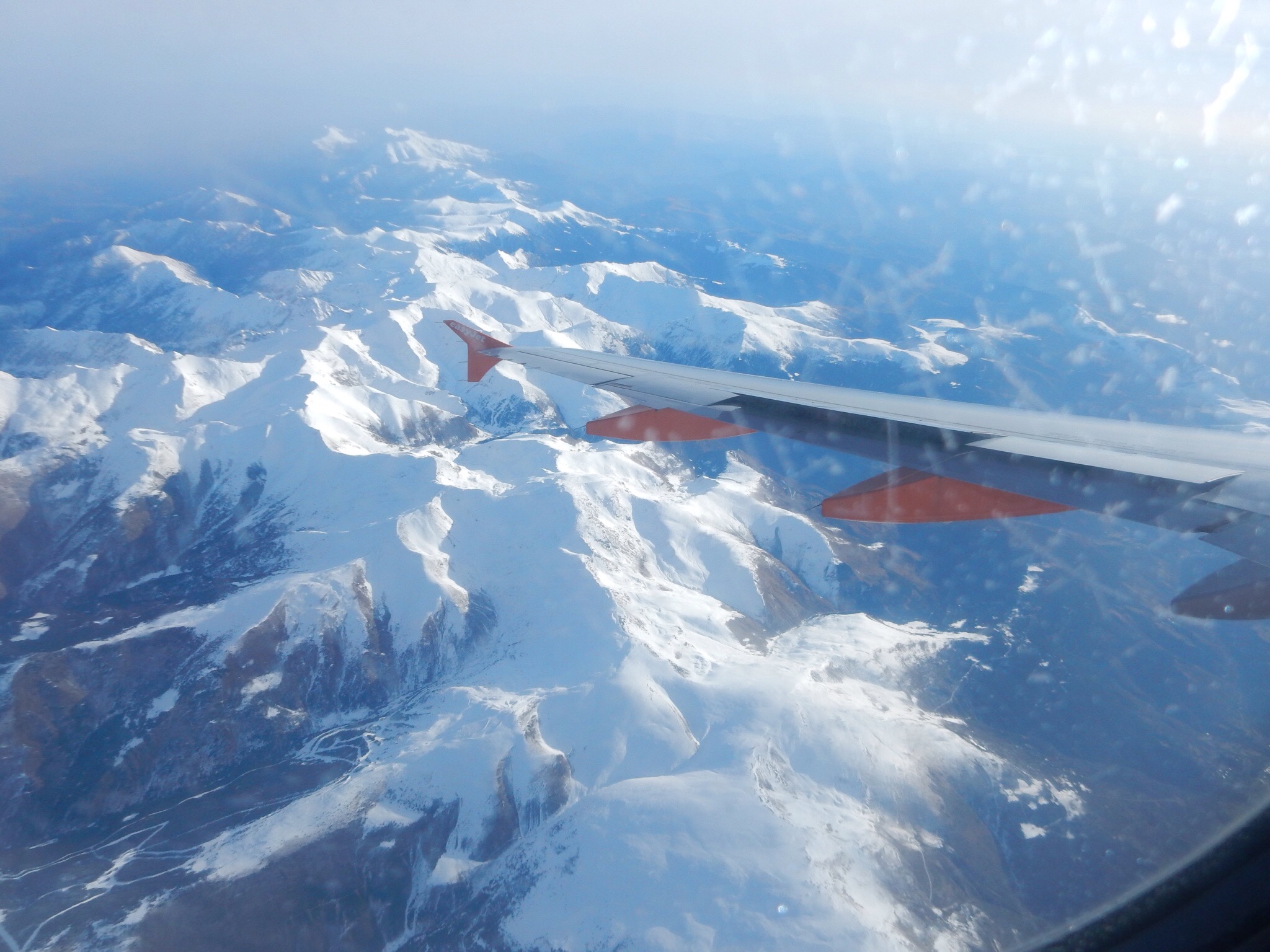
What a delight to fly into the dawn, a compensation for getting up at 4.30am!
Flying over The Pyrenees was very beautiful.
And now we are in Canovelles with the family, enjoying warm sunshine and getting ready for Christmas. On a stroll around the area we came across some planters full of marigolds where bees were busy collecting nectar.
The snow-scoured hills and buttes of the Missouri Breaks are dotted with isolated houses, until the sudden appearance of the Oceti Sakowin encampment on the Standing Rock Sioux Reservation. The presence of so many people catches at the heart. Snow-dusted tepees, neon pup tents, dark-olive military tents, brightly painted metal campers, and round solid yurts shelter hundreds on the floodplain where the Cannonball River meets the Missouri. Flags of Native Nations whip in the cutting wind, each speaking of solidarity with the Standing Rock tribe’s opposition to the Dakota Access Pipeline, or D.A.P.L., owned by Energy Transfer Partners and Sunoco Logistics. This pipeline would pass beneath the Missouri River and imperil drinking water not only for the tribe but for farmers, ranchers, and townspeople all along the river’s course.
Oceti Sakowin, or Seven Fires, refers to the seven divisions of the Lakota, Dakota, and Nakota, people who are perhaps best known for their resistance to colonization (Little Big Horn, 1876), their suffering (Wounded Knee, 1890), and their activism (Wounded Knee, 1973). One of their most famous leaders, Sitting Bull, was murdered in the town that is now their tribal headquarters, Fort Yates. Down the road from Fort Yates is the town of Cannonball, named for the large round stones polished by the whirlpool that marked the convergence of the two rivers, just outside the Oceti Sakowin camp. The round stones disappeared when the Army Corps of Engineers dammed the Missouri, in a giant project that lasted from 1948 to 1962. The result of that project, Lake Oahe, flooded Standing Rock’s most life-giving land. The Lakota were forced onto the harshly exposed grazing uplands, and they haven’t forgotten that, or much else. History is a living force in the Lakota way of life. Each of the great events in their common destiny includes the direct experience of ancestors, whose names live on in their descendants. It is impossible to speak of what is now happening at Standing Rock without taking into account the history, as well as the intense spirituality, that underlies Seven Fires resistance.
On December 3rd, veterans from all over the country began to arrive at Standing Rock. Jack Dalrymple, the governor of North Dakota, and the Army Corps of Engineers had called for the camp to be cleared of protesters, who from the beginning have preferred the term “water protectors,” on the 5th. Vehicles were lined up for nearly a mile to get into the camp. It did not seem possible that many more people could fit onto the space, but somehow the camp seemed to morph to hold envoys from all over the globe. To name a few: Maori, Muslims, delegations of priests and ministers, people from more than ninety Native Nations, plus any number of Europeans, and various rock stars. The curious came, the bold, the devoted, not to mention the Water Wookie Warriors, whose pop-up camper had a “Star Wars” theme; passionate young Native people as well as seasoned elders joined the resistance camp. The arrival of veterans adept at winter survival and ready to join the fight against the pipeline was yet another influx.
A small group of veterans in various patterns of camouflage gathered before their first briefing, standing in the sun outside the tiny plywood and thermal-sheathed headquarters at the eastern edge of Oceti Sakowin. There had been rumors that supply stores in the area were not serving anti-D.A.P.L. customers, and that police were blocking or fining anyone who attempted to bring building supplies to Standing Rock. But, a few feet away, supplies were being unloaded and a barracks was quickly taking shape. A tall, rugged National Guardsman wearing a wool stocking hat and a tactical desert scarf talked to me before the briefing began.
“I have been on the front lines of other protests, but I’m here because of the brutality of this police response,” he said. “They thought they were way out here and could do anything.”
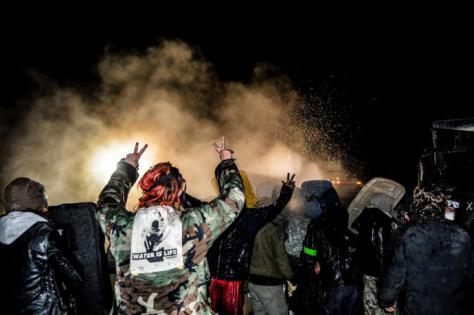
On October 7th, Dalrymple had requested backup for the Morton County police under the Emergency Management Assistance Compact, which is normally used for natural disasters. Officers from twenty-four counties and sixteen cities in ten different states responded, bringing military-grade equipment, including Stingrays (cell-site simulators) and armored personnel carriers purchased under recent federal grants. On the night of November 20th, police weaponized water against the water protectors, causing seizures and hypothermia. The next day, the county sheriff, Kyle Kirchmeier, said, at a press conference, “It was sprayed more as a mist, and we didn’t want to get it directly on them, but we wanted to make sure to use it as a measure to help keep everybody safe.”
As we waited at the camp, in warm sun, I asked veterans at what moment they had decided to meet here. Most of them talked first about online videos of riot-gear-clad police using water cannons in subfreezing weather, of masked police tear-gassing water protectors, of Native people being maced as they held their hands up, and of the use of attack dogs. The disturbing scenes initiated by the Morton County police and other police units were instrumental in activating increased support for Oceti Sakowin.
“I am here because of state violence on behalf of a corporation,” Matthew, a genial, lightly dressed man, said. He’d put nineteen hundred and ninety miles on his modest sedan driving from Florida with a group of veterans. Some said that they regarded maintaining a clean water supply as a homeland-security issue, and corporate greed as the enemy. Other veterans talked about the oath they had taken to defend their country from “enemies, foreign and domestic.”
Brandee Paisano, a cheerful, fit, and forthright Navy veteran from the Laguna Pueblo tribe, said that she was there to keep the oath she had taken on enlistment. “I signed up to be of service, foreign and domestic. As a Native woman, it’s even more important for me to be strong and support my people.” She was also there to uphold the Constitution, she said. Many of the veterans recited parts of the Constitution–the First Amendment was mentioned most often.
Native Americans serve in the military at a higher rate than any other ethnic group. More non-Native people probably get to know American Indians via the military than any other way, except perhaps living in a city. (Urban Natives constitute more than half of the over-all U.S. Native population.) People in the military quickly become bound by mutual need, if not extreme duress. These are lasting friendships.
A veteran sporting reflective sunglasses and an undercut man-bun hopped up on a tree stump and began explaining that the mission many of them had in mind—to link arms in front of the water protectors while wearing their uniforms, walk forward, and take whatever punishment the Morton County police cared to deal them—was probably not on the Standing Rock tribe’s agenda.
“So if you hear a battle buddy talking about charging the fence, reel him in. This isn’t our mission. We’re here as an asset,” he said. “And if you come across a ceremony or hear singing, take off your hat, lock it up, and stand there.”
Later that day, tribal leaders held a meeting at Sitting Bull College. Two local veterans, Loreal Black Shawl and Brenda White Bull, took charge.
“The highest weapon of them all is prayer,” White Bull said. She explained that her Lakota name meant “Compassionate Woman.” Like so many Lakota, she was the granddaughter of a Second World War code talker, one of the Native soldiers who, using their own language, communicated in a code that was never broken. “The world is watching. Our ancestors are watching,” she said. “We are fighting for the human race.”
David Archambault II, the tribal chair, who from the beginning has led the resistance to the D.A.P.L. pipelines, told the veterans, “What you are doing is precious to us. I can’t describe the feelings that move over me. It is wakan, sacred. You all are sacred.”
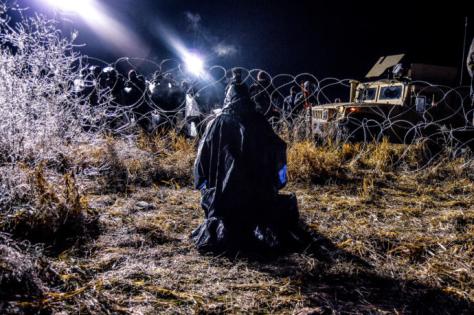
Along with many other members of the Standing Rock community, Archambault has steered the encampment in a nonviolent direction. The camp’s direct-action group, Red Warrior, has maintained a discipline and humility that still speaks powerfully to people all over the world. A recently published photo of a person from that night of November 20th, covered in ice and praying, illustrates the deep resolve that comes from a philosophy based on generosity of spirit.
“People said, ‘I am ready to die for this,’ ” Archambault told the assembly. “But I want you to live. To be a good father, mother, uncle, sister, brother. I want you to live for my people.”
On the afternoon of December 4th, the Army Corps of Engineers made the stunning announcement that it had denied Energy Transfer Partners an easement to cross under the Missouri River. In the end, though, the veterans did take on a lifesaving mission. In every way that they could, they helped secure the camp against what turned out to be a blizzard of unexpected intensity. The blizzard arrived on December 5th, and, in the deep cold that followed, veterans reinforced shelters and helped maintain a spirit of coöperation that enabled the thousands of new camp members to survive their experience on Standing Rock.
Besides frostbite, what did people take away from there? This was probably the first time many non-Native people had been on a reservation, or in the presence of Native ceremonies. That’s a positive. The more people understand that Native Americans have their own religious rituals and objects of veneration—which to many non-Native people are simply features of the landscape—as well as cathedrals and churches, the better. Understanding the natural world as more than just a resource for energy, or a recreational opportunity, or even a food resource, gives moral weight to the effort to contain catastrophic climate change. Imagine if Energy Transfer Partners planned to drill underneath Jerusalem. Of course, the company wouldn’t consider such a route. Yet it would be safer than drilling beneath the Missouri River.
Most visitors and supporters who came to Standing Rock encountered a portrait of sacred humility. As in any large decentralized gathering, there were conflicts, but the over-all unity was remarkable. Tara Cook, an African-American veteran from Charlotte, North Carolina, told the Bismarck Tribune that she planned on taking exactly that message home to use in organizing for Black Lives Matter. Other Americans, disheartened after the election, threw their hearts into chopping wood for the camp, and left with the sense that the next four years will require just the sort of toughness and resolve they had experienced at Standing Rock. Every time the water protectors showed the fortitude of staying on message and advancing through prayer and ceremony, they gave the rest of the world a template for resistance.
I am a grudge-holder, so, when leaders practiced radical forgiveness, there were times I had trouble living in the moment. In most prayers that I heard, the police, the sheriff, and the pipeline workers were included. The U.S. government was forgiven for all it had done to the Great Sioux Nation, and, later on, the military also. But there is something extremely compelling about surprise compassion. A friend of mine, Marian Moore, who spent time at the camp in support of the water protectors, told me that, one day, members of the Indigenous Youth Council took water up to the barricade that prevented access to pipeline construction. The young people offered the water to the police who stood on the other side. Two of the officers refused, but one took some water and spilled it onto his shirt, over his heart. Then, across the barricade, the police officer and the water protector bowed their heads and prayed, together.
I like the concept of surprise compassion. I wonder if there might not be more compassion in the world if we didn’t find ourselves posturing for the cameras, looking for the right angle, or trying to find the best spin.
If the eyes of the our communities were not on us, if the media would not interpret our actions as weakness, would we act different? That is my question for this eve of the eve of Chanukah and the eve of Christmas eve.
The knowledge gained by the non-native people after observing the native people celebrating their spiritual rights is important. The experience is invaluable. The knowledge that our native people have kept to their own spiritual path and have found nurture and guidance is amazing to me. We, the white supremacists, thought we had gotten rid of the pagan worship they had practiced before our landing. We made a wonderful attempt with genocide. I am happy to know that we failed.
The phrase “a template for resistance” also caught my eye and my heart. So after hundreds of years, the native people have given to the whites a plan, a diagram if you will, on how to survive all that we must survive over the next four years. Actually, not just survive because that isn’t enough, we must thrive. We must thrive to protect and be compassionate to the marginalized around us. There are many and our work is sacred and vital to those lives. Perhaps we are on the path to finding out that though we may look different, we are all the same. We, humans, are brother and sister, cut from the same cloth, children of the same Universe. We are all called to walk in respect, love and kindness for one another. While our paths are called by different names, they are all the same path.
The Sacred Pipe
With this pipe you will bebound to all your relatives:
your Grandfather and Father,
your Grandmother and Mother.
This round rock,
which is made of the same red stone in the bowl of the pipe,
your Father Wakan-Tanka has also given to you.
It is the earth,your Grandmother and Mother,
and it is there where you will live and increase.
This Earth which He has given to you is red,
and the two-leggeds who live upon the earth are red;
and the Great Spirit has also given to you a red day,
and a red road.
All of this is sacred and so do not forget!
Every dawn as it comes is a holy event,
and every day is holy,
for the light comes from your Father Waken-tanka;
and also you must remember that the two-leggeds and all the other peoples who stand upon this earth are sacred and
2016 has been a rough year. A lot of death, a lot of loss — not just of people, but also of civility, decency and, in many cases, Hope.
But not for all of us; not for all of you.
There are so many on WordPress who are sharing Light. They share decency, civility and respect. They share Ideas and Passion and Compassion and, yes, Hope.
Emily Dickinson said “Hope is the thing with feathers That perches in the soul, And sings the tune without the words, And never stops at all,” and I believe this gentle bird is chirping it’s beautiful song here and I wanted to take the chance to thank my readers and my friends and my fellow bloggers for helping to keep that beauty alive and fluttering, like a butterfly, from heart to heart and from mind to mind.
Please, take this award and share it with those you find worthy, those who give you the most hope. Share this award with the bloggers who have kept you inspired this past year.
The people who have made me hopeful in the darkness that has covered so much of this year are:
Advice From 10 Iconic Feminists To Get You Through 2017
Jenavieve HatchAssociate Women’s Editor, The Huffington Post
GETTY IMAGES
”Your opponents would love you to believe that it’s hopeless.”
Activist and writer Rebecca Solnit said this in the foreword to her book, “Hope in the Dark” ― a book originally written during the Bush Administration about avoiding the pitfalls of cynicism in the face of injustice and fear. This year, shortly after Donald Trump won the presidential election, “Hope in the Dark” sold out.
For many women, 2016 was a wildly difficult year, and “hope” often felt like a difficult thing to come by.
After all, we didn’t just watch a man accused of sexual assault win the 2016 presidential election ― we watched him win against a significantly more qualified candidate, who happened to be a woman. We watched him win with a running mate who has spent his career trying to diminish the rights of women. We’ve watched him fill his cabinet with men who have been accused of domestic violence.
But in moments of despair and uncertainty, we can, and should, look to the women who have spent much of their lives fighting the relentless fight against injustice of all kinds.
In the words of 10 trailblazing women, from Angela Davis to Cecile Richards, we can find the comfort, shared rage, and motivation necessary to move forward.
bell hooks
GETTY
”Cultivating the mind of love is so crucial. When love is the ground of our being, a love ethic shapes our participation in politics. To work for peace and justice we begin with the individual practice of love, because it is there that we can experience firsthand love’s transformative power.” ― bell hooks, Lion’s Roar, November 2016
Gloria Steinem
GETTY
”We have to stop looking up, especially with Trump now, and start instead looking at each other.” ― Gloria Steinem, in a speech at the Make Equality Reality Gala, December 2016
Angela Davis
GETTY
”How do we begin to recover from this shock? By experiencing and building and rebuilding and consolidating community. Community is the answer…Whatever we are already doing, we need to do more. We need to accelerate our activism.” ― Angela Davis, in a speech at the University of Chicago, November 2016
Cecile Richards
GETTY
“We’ve got work to do, and not a minute to waste. Those of us with privilege have a responsibility to use it as allies in the fight for justice and opportunity for all. And every one of us has a responsibility to stand up for what we believe. Don’t wait for permission or an invitation to get involved ― reach out, start organizing, send a message to anyone who will listen. The election doesn’t define our country ― what we do next does.” ― Cecile Richards, to The Huffington Post, December 2016
Diane Von Furstenberg
GETTY
”We must believe in the values of tolerance and inclusiveness that are the fabric of our country. We must believe we can make a difference and use our influence by creating beauty, optimism and happiness. More than ever, we must embrace diversity, be open minded, be generous and have compassion.” ― Diane Von Furstenberg, post-election email to Council of Fashion Designers of America, November 2016
Lea DeLaria
THE HUFFINGTON POST
”In this heterosexist society every male is preferable for any position of power than the most qualified female in the world. Maybe I had forgotten this simple fact. Maybe I believed we as humans had moved forward. Maybe I was lying to myself. This concept has once again been made painfully clear to me. I am a radical butch dyke queer activist. I intend to keep my rage.” ― Lea DeLaria, to The Huffington Post, December 2016
Alice Walker
GETTY
”Real change is personal. The change within ourselves expressed in our willingness to hear, and have patience with, the “other.” Together we move forward. Anger, the pointing of fingers, the wishing that everyone had done exactly as you did, none of that will help relieve our pain.” ― Alice Walker, in a post on her personal website, November 2016
Dolores Huerta
GETTY
”It always gets better before it can get worse. But it will get better. Like everything else, and like our past struggles, at some point we win, but before that win, there’s always that loss that spurs us on.” ― Dolores Huerta, Santa Fe Reporter, August 2015
Rebecca Solnit
GETTY
”Your opponents would love you to believe that it’s hopeless, that you have no power, that there’s no reason to act, that you can’t win. Hope is a gift you don’t have to surrender, a power you don’t have to throw away.” ― Rebecca Solnit, Hope in the Dark, March 2016 (third edition)
Hillary Clinton
GETTY
”Believe in our country, fight for our values, and never give up.” ― Hillary Clinton, in a speech at the Children’s Defense Fund gala, November 2016
Things have been tough since election day. Now we look at a New Year and the the inauguration of a president most of us didn’t want. The “You are not my president” marches continue around the country. Boston is planning a large march. On the 21st there will be a million person march in Washington D.C.
It appears that Trump will keep some campaign promises and others he is no longer interested in. We have talked and discussed and worried about the people around us. 2017 will bring us the answers to all that is unknown presently. Women are facing a renewal of sexism and inequality as many other groups will also experience.
These women each hold up some hope and suggestions for the future. I encourage all of my readers to read and use anything that speaks to you. I think that as we learn how to respond to next year’s challenges and protect the marginalized around us, we will grow in kindness, compassion, and understanding. Will our words and actions be challenged by some other citizens? It is possible. But as we stand up and speak out, we will be showing our children and our children’s children that we lived our convictions and we cared about injustices that happened to the unfortunate. We care about racism, misogyny, deported immigrants, disabled people, anti-semitism, and Neo-Nazis. We will work to eliminate these hate groups and will protect their victims.
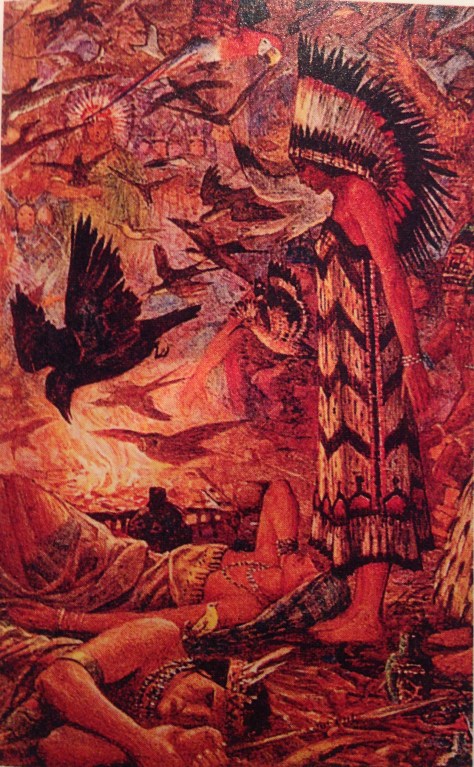
The Native American myth of Deganawidah has many astonishing parallels with the story of Christ
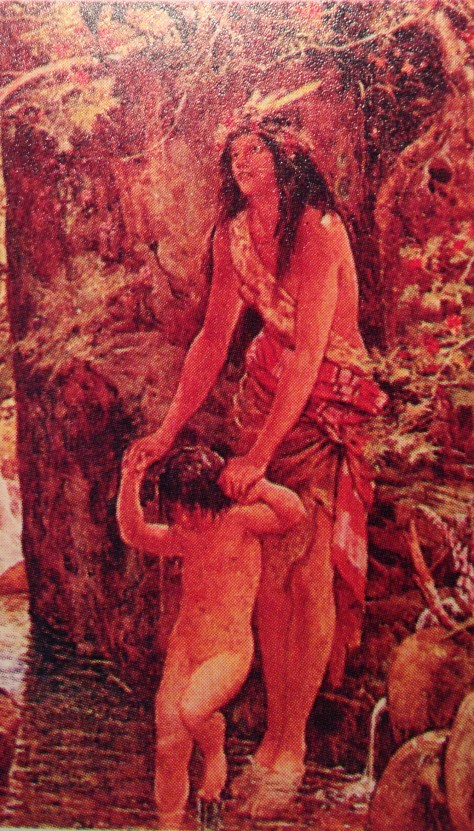
The influence of Christian myths may well have affected another story from Native American traditions — that of the Deganawidah the Pacemaker. This semi-mythical character, also known as the Man from the North, was born into the Wendot tribe, later known as the Huron, who lived along the northern shore of present day Lake Ontario. According to tradition, Deganawidah was born of a virgin who, when she confessed to her mother that she was pregnant but had never known a man, was revealed to have been visited by a messenger of the Great Spirit Tarenyawagon, who was sending a messenger to bring lasting peace to humankind. At first there was much doubt among the tribes-people, and it is even told that Deganawidah’s grandmother tried three times to kill the child after prophecies that he would bring no good to the tribe. Yet Deganawidah survived, and grew imbued with wisdom, intelligence, and kindness. He spoke with animals and birds, and began to teach a message of peace among his fellows. The walking Huron found this distasteful and strange and tried to drive Deganawidah away. On reaching manhood he wandered in the wilderness for a time and then set forth in a white canoe said to have been made, astonishing, of stone, to visit other tribes. In the years that followed he traveled amongst the tribes and eventually founded the great Iroquois Confederacy, a democratic union of five tribes from amongst the northeastern woodlands, the concept that influenced not only the founding got of the United States constitution, but also that of the United Nations.
Deganawidah’s death remains mysterious, and like King Arthur, it is believed that he will return at the time of the his country’s need. Remembered still as the Peacemaker, he is seen as a harbinger of peace and as messenger of God. His life parallels that of Christ in many ways, especially in his birth and youthful deeds. He is a perfect example of the Children of Wonder, who come in the dark heart of Winter to bring light and a message of peace to the world.
Deganawidah, the PeaceMaker, was brought up with intelligence and kindness and, like Jesus, went on to spread a message of peace and democracy
–From The Winter Solstice: The Sacred Traditions of Christmas by John Matthews
Mensen maken de samenleving en nemen daarin een positie in. Deze website geeft toegang tot een diversiteit aan artikelen die gaan over 'samenleven', belicht vanuit verschillende perspectieven. De artikelen hebben gemeen dat er gezocht wordt naar wat 'mensen bindt, in plaats van wat hen scheidt'.




















 idealisticrebel