
http://www.esquire.com/news-politics/politics/news/a55000/census-director-resigns/
Author Archives
By firing James Comey, Trump has put impeachment on the table
Senate Intel Committee Subpoenas Michael Flynn in Russia Probe – NBC News
Source close to Comey says there were 2 reasons the FBI director was fired – CNNPolitics.com
Protecting Girls from Child Marriage
Nepal | The Lost Girls: One woman’s battle to end child marriage
NEPAL — Each year, 15 million girls are married before the age of 18. That’s 28 girls every minute, and one girl every two seconds. In Nepal, one in three girls under the age of 18 are married. One in 10 girls under the age of 15 are married.
The culture of child marriage is accepted in this country. In some cases it’s forced, but in others it’s consensual. The act of child marriage, which is punishable by jail time, has been illegal in Nepal since 1963.
CBSN’s Reena Ninan traveled to a rural village to witness an illegal wedding firsthand.
“How do you feel?,” Ninan asked the young girl. “Do you feel nervous? Do you think you should have waited a little bit longer to get married?”
“Yes,” the 17-year-old girl replied.
In 2014, Nepal pledged to end child marriage by 2020. But just two years later, it pushed back its goal to 2030.
Importance of education
According to the U.N., child marriage only perpetuates the cycle of poverty. When parents force their daughters to marry young, they drop out of school, face domestic violence and are more likely to die from pregnancy complications.
Rachana Sunar, 22, lives in a village in Western Nepal. Her mission is to stop the age-old practice of child marriage, which is no easy feat.
In another life, she would have been forced into marriage by now. She’d have a few kids and would be silenced at home. But she begged, pleaded and managed to get a scholarship to study abroad, which in turn changed her fate for the better.
Now, Rachana is going door-to-door to spread her message to prevent child marriage. She’s phased by little and willingly resorts to extreme measures like going to the police to report and forcibly stop marriages, sometimes right on the wedding day. To locals, those actions are seen as provocative. Many people believe she should quiet down and lower her profile, including her own mother.
“She’s in the limelight now, but that makes me worry,” her mother said. “She has enemies. A lot of the villagers don’t like her. I fear that she may be raped, or that someone might knock her off the road.”
During Ninan’s stay, Rachana stopped a wedding by calling the police. And overnight, her mother’s worst fear came true — an angry mob confronted Rachana at her home. But she didn’t let the incident prevent her from losing sight of her main goal.
“If a girl hears my story, and how I started my journey, at least I’m giving hope to them,” she added. “There are some people who don’t like the work I am doing. If I die for this reason, I know my sisters will be inspired and they will carry on.”
“If I lose hope, if I give up, nobody will dare to take this issue ahead,” she continued. “I’m happy to put my life at risk.”
Shortly after filming, Rachana stopped another three weddings. Her work has spurred a movement to end child marriage in her home district of Surkhet by 2020, ahead of the government’s 2030 target to wipe out the practice nationally.
She recently started an NGO called Sambad, which means “dialogue” in Nepalese, to help boys and girls alike discover their self-worth. She’s been fighting to empower the youth to focus on the importance of education. But in this conservative society, change isn’t easy. For some, this is the only education they will ever receive. For others, it’s the only place they’ll ever feel loved.
© 2017 CBS Interactive Inc. All Rights Reserved.

It should not be legal for a child to wed, just because she is female, at a younger age than most countries allow men to vote.
It should not be legal for a child to wed, just because she is female, at a younger age than it consider proper for a man to fight.
Child marriage is little more than slavery and should be abolished the world over.
Namaste,
Barbara
82 More of Our Girls are Free
82 Freed Chibok Schoolgirls Arrive in Nigeria’s Capital 3 Years After Abduction
9:19 AM ET
(ABUJA, Nigeria) — The 82 freed Chibok schoolgirls arrived in Nigeria’s capital on Sunday to meet President Muhammadu Buhari as anxious families awaited an official list of names and looked forward to reuniting three years after the mass abduction.
The newly released girls arrived at the Abuja airport and were met by the Buhari’s chief of staff, presidential adviser Femi Adesina said. The president was expected to meet with the schoolgirls at 4 p.m. local time.
The 82 girls were freed Saturday in exchange for an unspecified number of detained suspected Boko Haram extremists, Buhari’s office said in a statement.
This is the largest negotiated release so far of the nearly 300 girls whose abduction in 2014 highlighted the threat of Nigeria’s homegrown extremists who are linked to the Islamic State group. Before Saturday’s release, 195 of the girls had been captive. Now 113 of the girls remain unaccounted for.
A first group of 21 girls were released in October as Nigeria announced it had begun negotiations with the extremist group. At the time, the government denied making an exchange for Boko Haram suspects or paying ransom.
The girls released in October have been reported to be in government care in Abuja for medical attention, trauma counseling and rehabilitation, according to the government. Human rights groups have criticized the decision to keep the girls in custody in Abuja, nearly 900 kilometers (560 miles) from Chibok.
The International Committee of the Red Cross, which along with the Swiss government mediated months of negotiations between Nigeria’s government and Boko Haram, said the newly released girls soon would meet with their families.
The ICRC also tweeted what might be the first public image of the freed schoolgirls on Sunday, showing a line of young women wearing shirts with the ICRC logo waiting to board a helicopter.
The ICRC said it had acted as a neutral intermediary to transport the freed girls into Nigerian government custody.
Long-suffering family members said they were eagerly awaiting a list of names and their “hopes and expectations are high.”
The Bring Back Our Girls campaign said Sunday it was happy that Nigeria’s government had committed to rescuing the 113 remaining schoolgirls. “We urge the president and his government to earnestly pursue the release of all our Chibok girls and other abducted citizens of Nigeria,” the group said in a statement.
The 276 schoolgirls kidnapped from Chibok in 2014 are among thousands of people abducted by Boko Haram over the years.
The mass abduction brought the extremist group’s rampage in northern Nigeria to world attention and began years of heartbreak for the families of the missing schoolgirls.
Some relatives did not live to see their daughters released. Many of the captive girls, most of them Christians, were forced to marry their captors and give birth to children in remote forest hideouts without knowing if they would see their parents again. It is feared that other girls were strapped with explosives and sent on missions as suicide bombers.
A Nigerian military official with direct knowledge of the rescue operation said the freed girls were found near the town of Banki in Borno state near Cameroon.
Boko Haram remains active in that area. On Friday, the United States and Britain issued warnings that the extremist group was actively planning to kidnap foreigners in an area of Borno state “along the Kumshe-Banki axis.”
Buhari late last year announced Boko Haram had been “crushed,” but the group continues to carry out attacks in northern Nigeria and neighboring countries. Its insurgency has killed more than 20,000 people and driven 2.6 million from their homes, with millions facing starvation.
It’s been a long time since these girls were taken from their homes and their village. I am sure it seems much, much longer to them. I don’t know exactly what tragedies they have survived, but I know that they have survived because they are courageous, and because they love life. I honor them and their survival and now I ask for prayers for their continued healing, that they are able to make whole lives for themselves, and to move on from this terrible experience they have lived through.
It is my solemn hope that this kind of experience will never happen to a group of young girls ever again. That they will not be kidnapped, taken from their homes, lives and families; that their lives will not be reduced to be owned and controlled by terrorists or warriors again.
History must never be allowed to repeated itself.
Trumpcare opposed by the healthcare industry, including insurance companies
In Rare Unity, Hospitals, Doctors and Insurers Criticize Health Bill

Seema Verma, the administrator of the Centers for Medicare and Medicaid Services, with the health and human services secretary, Tom Price, on Thursday. CreditStephen Crowley/The New York Times
It is a rare unifying moment. Hospitals, doctors, health insurers and some consumer groups, with few exceptions, are speaking with one voice and urging significant changes to the Republican health care legislation that passed the Houseon Thursday.
The bill’s impact is wide-ranging, potentially affecting not only the millions who could lose coverage through deep cuts in Medicaid or no longer be able to afford to buy coverage in the state marketplaces. With states allowed to seek waivers from providing certain benefits, employers big and small could scale back what they pay for each year or reimpose lifetime limits on coverage. In particular, small businesses, some of which were strongly opposed to the Affordable Care Act, could be free to drop coverage with no penalty.
The prospect of millions of people unable to afford coverage led to an outcry from the health care industry as well as consumer groups. They found an uncommon ally in some insurers, who rely heavily on Medicaid and Medicare as mainstays of their business and hope the Senate will be more receptive to their concerns.
“The American Health Care Act needs important improvements to better protect low- and moderate-income families who rely on Medicaid or buy their own coverage,” Marilyn B. Tavenner, the chief executive of America’s Health Insurance Plans, the industry’s trade group, said in a strongly worded statement.
Others were even more direct about the effects the bill would have, not only on patients but also on the industry. “To me, this is not a reform,” said Michael J. Dowling, the chief executive of Northwell Health, a large health system in New York. “This is just a debacle.”
Hospitals that serve low-income patients “will just be drowning completely when this happens,” Mr. Dowling said, noting that more people would become uninsured at the same time that government payments to cover their costs were reduced.
In contrast to hospital and doctor groups, insurers had largely remained silent about their reservations, perhaps in the hopes of bartering their low profile in exchange for assurances that billions of dollars in subsidies for low-income coverage would continue. The White House and Congress have gone back and forth about their willingness to pay for the subsidies, prompting anxiety among some companies. Several, including Anthem, have threatened to sharply raise their prices or leave markets altogether without the funding.
But a few, including Blue Shield of California, came out in opposition to the bill before the vote. “We feel compelled to oppose it,” said Paul Markovich, the company’s chief executive. “It raises the specter that the sickest and neediest among us will be disproportionately hit in losing access.”
After the House passed the bill on Thursday, the industry’s two major trade groups urged lawmakers to increase the tax credits available to help people pay for coverage, and to adjust them to assist those who are older, live in high-cost areas or have lower incomes.
But the overriding concern — for insurers, many workers and officials throughout the health care systems in many states — is the broad reductions proposed for Medicaid. Even for insurers that have largely abandoned the individual market, like UnitedHealth Group and Aetna, a substantial portion of their business is providing coverage under Medicaid. The same is true for many local nonprofit plans, said Ceci Connolly, the chief executive of the Alliance of Community Health Plans.
Employers and others said they were also concerned about the effects on freelancers, who do not have a traditional employer but are self-employed or contract workers in the so-called gig economy.
Depending on their income, those workers have shuttled between Medicaid and the individual insurance market under the federal health care law, which offered a greater level of stability, said Nell Abernathy, vice president for research and policy at the Roosevelt Institute, a left-leaning economic research organization.
“A huge swath of Americans are in insecure work arrangements,” she said. “This repeals that level of security, which was not perfect, but it was a step in the right direction.”
Small businesses, which were sharply divided over the original law, remained mixed in their response to the Republican bill, and there seemed little doubt that some companies would drop coverage in the absence of any penalty. The National Federation of Independent Business, which opposed the Affordable Care Act, said the House legislation was “a crucial first step toward health care reform.”
In other people’s view, employees of small businesses would lose out if Medicaid were rolled back or the exchanges became threadbare, because many smaller companies rely on employees’ ability to obtain coverage through the government program or individual market.
The Main Street Alliance, a group of small-business owners that supported the Affordable Care Act, said four million small-business owners, employees and self-employed entrepreneurs had gained insurance under the law, and that an additional six million small-business workers had signed up for Medicaid through the law’s expansion.
“This bill leaves small-business owners in a terrible position, one they were all too familiar with before the A.C.A.: unable to afford premium hikes year to year, unsure their employees will be healthy and able to work, and uncertain of the future of their businesses,” said Amanda Ballantyne, national director of the Main Street Alliance.
The recent amendments to the bill also raised questions about coverage for people with pre-existing medical conditions, which has become an emotional flash point for opposition. The bill would allow states to waive some of the current rules banning insurers from charging sick people more or excluding certain benefits, and those waivers could have broad effects if employers are no longer required to provide comprehensive coverage. Before the Affordable Care Act, many employers capped how much they would pay for care over a person’s lifetime at $2 million, said Tracy Watts, a senior partner at Mercer, a benefits consultant.
While it is unclear what states would allow under a waiver or when such waivers would go into effect, employers could revisit the limits and drop types of benefits if a state deemed them nonessential.
A January survey of 666 employers by Willis Towers Watson, a benefits consultant, found that while many employers planned to keep most of the mandatory benefits, a significant minority were already mulling changes. While half indicated that they were unlikely to reinstate lifetime limits, 15 percent said they would consider doing that.
And employer groups generally favored provisions of the bill that would reduce taxes, particularly the so-called Cadillac tax on high-cost health plans, which was delayed for several years. Employers favor its overall repeal.
Some health care groups, like medical device manufacturers, supported the bill because of specific provisions like the repeal of a 2.3 percent device tax under the Affordable Care Act. That tax was suspended for two years in 2015, but the industry wants a permanent repeal. The Pharmaceutical Research and Manufacturers of America, the drug industry’s largest trade group, said it had not taken a position on the bill.
Unlike doctors and hospitals, which would most likely experience an immediate hit if millions of Americans lost insurance, medical device manufacturers and the drug industry would probably feel a more muted effect. The drug industry, for example, might sell fewer products and lose revenue.
“Fewer patients are treated, so it’s bad for them, but it’s a lot worse for hospitals and the impact on physicians,” said Ronny Gal, an analyst for Bernstein who covers the drug industry. “They’re a little bit on the tail end of this.”
The new Republican Healthcare Bill has passed the House of Representatives. Next, it goes to the Senate.
But the Resistance continues. It must, because it is clear that the Republicans on the Hill and in the White House are prioritizing removing former President Obama from the history books as much as possible, instead of prioritizing the health, well-being and safety of their constituents.
With this new bill rape and domestic violence can be considered pre-existing conditions. So can pregnancy. Worse, there is a provision to allow states to remove protections for pre-existing conditions. The Republicans in Congress voted for this, against everything that morally right and decent.
A note I saw on Facebook yesterday puts it best: With this new law, the mentally ill will not have access to healthcare, but will still have access to guns.
Think about that.
Doctors, Hospitals and even the Insurance companies find this to be a bad bill. It will increase healthcare costs and lower the level of coverage for thousands, if not millions, of people. Many small businesses dislike this, as well, as it makes it more difficult for them to provide decent healthcare to their employees.
There were many things wrong with the Affordable Care Act, it must be admitted.
This bill fixes none of them and makes much of it worse.
Call your Senator, and hold your Representative accountable for their vote. Go to Town Hall meetings, mail postcards, keep the pressure up.
This must not pass the Senate, and we CAN make a difference. We did the first time they tried this horrible bill, we must do so again.
Namaste,
Barbara
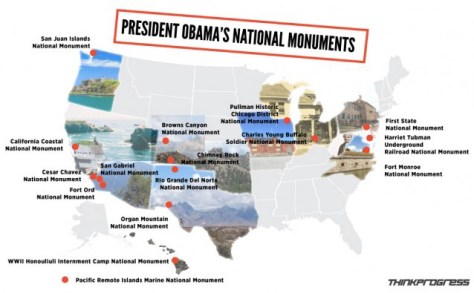
Trump is now threatening our National Monuments

► Grand Staircase-Escalante National Monument in Utah, proclaimed by President Clinton in 1996. (1.7 million acres).
► Grand Canyon-Parashant National Monument in Arizona, proclaimed by Clinton in 2000 (1 million acres).
► Giant Sequoia National Monument in California, proclaimed by Clinton in 2000 (327,769 acres).
► Vermilion Cliffs National Monument in Arizona, proclaimed by Clinton in 2000 (279,568 acres).
► Hanford Reach National Monument in Washington, proclaimed by Clinton in 2000 (194,450 acres).
► Canyons of the Ancients National Monument in Colorado, proclaimed by Clinton in 2000 (175,160 acres).
► Ironwood Forest National Monument in Arizona, proclaimed by Clinton in 2000 (128,917 acres).
► Sonoran Desert National Monument in Arizona, proclaimed by Clinton in 2001 (486,149 acres).
► Upper Missouri River Breaks National Monument in Montana, proclaimed by Clinton in 2001 (377,346 acres).
► Carrizo Plain National Monument in California, proclaimed by Clinton in 2001 (204,107 acres).
► Papahanaumokuakea Marine National Monument in the Pacific Ocean, proclaimed by President George W. Bush in 2006 and expanded by President Barack Obama in 2016, (89.6 million acres).
► Marianas Trench Marine National Monument in the Pacific Ocean, proclaimed by Bush in 2009 (60.9 million acres).
► Pacific Remote Islands Marine National Monument in the Pacific Ocean, proclaimed by Bush in 2009 and enlarged by Obama in 2014. (55.6 million acres).
► Rose Atoll Marine National Monument in American Samoa, proclaimed by Bush in 2009 (8.6 million acres).
► Rio Grande del Norte National Monument in New Mexico, proclaimed by Obama in 2013. (242,555 acres).
► Organ Mountains-Desert Peaks National Monument in New Mexico, proclaimed by Obama in 2014 (496,330 acres).
► Basin and Range National Monument in Nevada, proclaimed by Obama in 2015 (703,585 acres).
► Berryessa Snow Mountain in California, proclaimed by Obama in 2015 (330,780 acres).
► Northeast Canyons & Seamounts Marine National Monument in the Atlantic Ocean, proclaimed by Obama in 2016 (3.1 million acres).
► Mojave Trails National Monument in California, proclaimed by Obama in 2016 (1.6 million acres).
► Bears Ears National Monument in Utah, proclaimed by Obama in 2016 (1.4 million acres).
► Gold Butte National Monument in Nevada, proclaimed by Obama in 2016 (296,937 acres).
► Sand to Snow National Monument in California, proclaimed by Obama in 2016 (154,000 acres).
One other national monument meets the 100,000-acre threshold but was not included on the White House list:
► The San Gabriel Mountains National Monument in California, proclaimed by Obama in 2014 (346,177 acres).
Unlike the other monuments, which are managed by the Interior Department, San Gabriel is managed by the Forest Service, part of the U.S. Department of Agriculture. Zinke spokeswoman Heather Swift said she could not rule out action on San Gabriel. The Department of Agriculture did not respond to an inquiry about the status of the monument.
The executive order also allows for a review of sites smaller than 100,000 acres “where the Secretary determines that the designation or expansion was made without adequate public outreach and coordination with relevant stakeholders.”
I thought it was important for all of us to know which public monuments Trump is planning to rob us of. They may be destroyed or drastically changed due to mining or excavation. I am sad for all of us. Especially I am sad for all of our grandchildren and the grandchildren from around the world who might have wanted to visit and see these natural wonders. Once again big corporations wins.
Namaste
Barbara
What is Consent?

Everything You Need to Know About Consent That You Never Learned in Sex Ed
What it looks like, what it sounds like, how to give it, and how to get it
Dr. Zhana is an NYC-based sex researcher, writer, and educator who teaches Human Sexuality at NYU. She has a PhD in Developmental Psychology from Cornell University, where she studied how different aspects of sexuality are linked to health and well-being.
Over the past couple of years, we have started emphasizing the importance of sexual consent more than ever before in U.S. history. But what often gets left out of these discussions is how exactly you go about the business of obtaining and providing consent in real-life sexual situations. And especially, how to do it without the much-feared “ruining of the mood.”
There’s more than one way to approach consensual sex. The debate is still raging over where exactly the line of consensual sex versus sexual assault should be drawn: Some insist that the old “only no means no” approach is adequate, which is the idea that unless you explicitly say “no,” you are implicitly consenting to whatever is being done to your body. Others argue that we need a new standard of “only yes means yes,” which is the idea that unless you explicitly say “yes,” you are not giving consent. But regardless of where you think the legal lines should be drawn, we can all agree that we want both ourselves and our partners to be enthusiastic about any sexual encounter. That is to say that every sexual encounter is ideally met with enthusiastic consent, rather than a situation where someone feels obligated or pressured to say yes, despite not being totally excited about participating.
There is no single approach for negotiating enthusiastic consent that will work for every person in every situation, but here are some things you can do to ensure that both you and your partner will be happy and comfortable with the physical activity you engage in.
Obtaining Enthusiastic Consent
The person initiating the sexual encounter, or initiating the escalation of sexual intimacy in the sexual encounter has a lot of responsibility in making sure the other person feels safe, comfortable, and is truly enjoying themselves. Here’s what you need to know about obtaining enthusiastic consent.
Avoid partners who are vulnerable
When people are intoxicated, sexually inexperienced, in a new situation, or acting recklessly or immature, their physical and/or mental capacity to make informed sexual decisions is impaired or limited. The more vulnerable they are — and the more vulnerable than you they are — the greater the risk they will feel coerced or regretful the next day. If they are particularly vulnerable (like heavily intoxicated, asleep, unconscious, or not of legal age), they are not legally capable of providing consent, and sex with them is by default sexual assault, no matter how eager they seem.
Establish reciprocal interest before you start thinking about physical touch.
Part of this is the good old art of flirting and building erotic tension: Are they making eye contact, smiling at you, leaning in, chatting excitedly… Don’t just come up to someone out of nowhere and ask them if you can kiss them, or worse, touch them. The other part of this has to do with trying to ensure your partner’s intentions and expectations of the sexual encounter are in line with yours. If you just want a casual hookup, but they are hoping for a relationship, try to find out if they’d be OK with it.
Negotiate consent verbally.
Explicitly asking for permission is the most obvious way to escalate to physical touch, and the one most commonly discussed when enthusiastic consent is brought up: “May I kiss/touch/take your shirt off…” “Is it OK if I ____?” For safest results, it’s good to ask permission for any escalation in intimacy, so a permission to kiss someone is not an automatic permission to touch them below the belt. This is an effective method that is preferred by some people, but it is also the one many people feel is a potential mood-killer.
Luckily, there are other ways to verbally obtain consent. Instead of asking for permission, you can offer your partner something you’d like to do for them. “I would love to kiss you/give you a massage/take your shirt off… Would you like that?” Or, alternatively, you could invite them to do something to/for you: “I’d love a massage. Would you like to give me a back rub?”
Another way to do this is to tell your partner what you plan on doing for/with/to them before you actually do it, an approach known as safe-porting. That gives them a chance to process that info and decide whether they are on board with your ideas. For example, if you’re making out with your clothes on, you can say “I’m gonna slide my hand underneath your shirt…,” then wait for their reaction — verbal or nonverbal — before you decide whether you should actually do it or not.
Establish “blanket consent” ahead of time.
One strategy for people who are more experienced is what sex educator Kenneth Play calls “blanket consent:” Explicitly agreeing on a “only no means no” policy. At some point — either before you start anything physical or after you’ve already obtained consent for a few individual acts — tell your partner something like, “I’d like the freedom to hook up without continually asking permission for each individual act. But consent is really important to me, so I’d like you to tell me if something doesn’t feel good, if you want me to slow down or stop. Does this work for you? Do you feel comfortable saying ‘no’ when you want to say ‘no’? Or would you rather me check in with you more regularly? Totally cool either way.”
This is for people who are more sexually experienced, because it assumes that both partners know exactly what they (don’t) want and are assertive enough to communicate that. While this is an ideal we should all strive to, in reality, many people are not ready for an agreement like this. I would caution against taking a blanket consent approach with partners who are in any way vulnerable (see point #1). Remember that at any point, no matter what you agreed to, you or your partner can say no or change your mind about what you already established.
Negotiate consent nonverbally.
Some people argue that consent must always be verbal, that trying to decipher body language is just too uncertain, too much room for error. Indeed, trying to negotiate consent without any words is riskier: Unlike spoken language, not everybody is good at reading body language, and not everyone is good at “speaking” body language.
That said, there are some partners and some situations where you can successfully negotiate consent nonverbally, but it requires a lot more experience, carefulness, and perceptiveness.
The basic rule is build it up slowly, and get continued, reciprocated, and enthusiastic responses before you escalate to each subsequent intimate act. Like, don’t just grab someone’s butt or thigh right away; start with touch that is noninvasive, like briefly touching their hand, patting their back or arm, lightly grazing their knee with yours (and all of these should come only after you’ve already established basic mutual interest, see point #2). Then, and this is absolutely critical, read their body language (or verbal response) very carefully. Are they responding with a smile, leaning in closer, letting out a little sigh, reciprocating with a similar touch, saying “your hand feels so soft”? If so, that usually means “yes, continue.”
Are they pulling away, freezing in fear, do they seem uncomfortable, or do they not respond in any sort of way? Those are all the nonverbal equivalent of a “no” and you should stop touching them. If their body language is ambiguous, or if you’re not quite sure what it is saying, don’t assume it’s saying what you want it to be saying! Defer to one of the verbal consent options instead. And in general, for best and safest results, combine nonverbal consent with verbal consent options.
Encourage your partner to say “no” (as well as “yes”) at any point.
Regardless of the primary method of obtaining consent you choose to take, you can always add this to the mix. Some time early in the physical encounter, pause for a moment and say something like what author Michael Ellsberg says: “I want you badly, but I’m also committed to you feeling totally safe and comfortable with me. So if anything I do with you makes you feel even slightly uncomfortable, I want you to say ‘Stop’ or ‘Slow down’ immediately and I’ll stop or slow down.”
Err on the side of caution.
If you’re not sure whether your partner is providing enthusiastic consent, err on the side of caution — especially if you’re hooking up with a new partner, or someone more vulnerable than you. General rules of thumb: Only take enthusiastic “yes” (either verbal or nonverbal) as “yes.” Take “no,” “maybe,” and doing nothing all as no; even take a hesitant “yes” as no. If they seem hesitant, give them time and space to make a decision without pressure. Say something like, “You seem hesitant right now, why don’t you think it over and maybe we’ll do that next/some other time.” There will be other opportunities.
Providing Enthusiastic Consent
Most of the conversations around consent revolve around obtaining consent, placing all the responsibility in the hands of the person initiating the action. But in every sexual encounter, each of us has just as much responsibility to provide continuous enthusiastic consent as we have to obtain it. It is important to let your partner know you are really into it — and you have to be completely honest about it. You must own your “yes” as well as your “no.”
Share your intentions and limitations.
What are you looking for in this scenario? If you wouldn’t be hooking up unless this had potential to be more than a hookup, let your partner know. If you wouldn’t be doing this if they had another partner, ask them whether they’re single. Don’t assume that just because you want or don’t want something that the other person is on the same page.
Let your partner know what kind of consent works for you.
And do this before or as soon as things start turning sexual. Are you the kind of person who likes to take things slow, be asked verbally before any escalation of physical closeness, and checked in with often? Tell them that. If you’re new to sex, or with a new partner, this might be the way to go. Or do you prefer the more traditional “only no means no” approach? Say “Feel free to explore my body without asking. I’ll let you know if something is uncomfortable.” But keep in mind, giving people this type of blanket consent carries the responsibility of actually saying “no” when you want them to stop.
Provide continuous positive feedback.
Provide continued “yes” feedback. You can do this verbally, by saying things like “yes,” “that feels good,” “I like that,” and by telling your partner how and where to touch you. Or you can do it nonverbally, by touching your partner, returning their kisses, taking their clothes off, and showing them how and where to touch you.
Learn how to convey “no” effectively and get comfortable doing it.
Saying “no” is not easy; it can be awkward, uncomfortable, anxiety-provoking. But you are your own first line of defense: Research shows there are far more people out there willing to disregard a lack of enthusiastic “yes” than there are people willing to push through a strong “no.” You can say “no” gently (but firmly), either nonverbally (by moving away, moving their hand away) or verbally (e.g., “I’m not interested, thanks for asking,” “I don’t like ______,”). If people aren’t getting more subtle signs, you can move on to saying “no” more forcefully. Doing nothing is NOT a very clear “no.”
Err on the side of caution.
If you’re not sure what you want, err on the side of caution and say “no.” Especially with new partners you don’t know well or when you’re feeling vulnerable. You can always change your mind to a “yes” later.
Keep in mind, there is no one type or form of consent that works for everyone in every situation. Which approach you take will depend on who you are, who your partners are, and what the situation is. Also keep in mind that no one was born knowing how to negotiate these situations. We’re all always learning and improving, and making mistakes. When you screw up, make amends (as much as possible), then learn from your mistakes and don’t repeat them. And remember, like with many things in life, practice makes perfect.
If you or someone you know has been sexually assaulted, you can seek help by calling the National Sexual Assault Hotline at 800-656-HOPE (4673).For more resources on sexual assault, visit RAINN, End Rape on Campus, Know Your IX, and the National Sexual Violence Resource Center.
rape, sexual assault, c
Stealthing: A new sex trend that may be rape

New Study Documents the Rise of Sex “Trend” Called “Stealthing”
Men are reportedly removing condoms during sex without their partner’s consent.
A new study documents the rise of a particularly disturbing sex trend called “stealthing,” or when a man removes a condom during sex without his partner’s consent. The Huffington Post reports that this study, conducted by Alexandra Brodsky for the Columbia Journal of Gender and Law, contains interviews with victims of this method, as well as a investigation into the corners of the internet that encourage men to do this to their partners.
Brodsky explained to The HuffPost that she began the study after realizing that several of her friends were “struggling with forms of mistreatment by sexual partners.” The victims in her research all felt violated after having been “stealthed,” but many were unsure of how to report such behavior, or if it constituted as rape. One particular victim in her study described being “stealthed” as “rape-adjacent.”
Incidentally, a man in Switzerland was convicted of rape earlier this year for removing his condom mid-intercourse without the consent of his partner. Dr. Sinead Ring of the University of Kent explained to Broadly that this type of act violates “conditional consent,” meaning: just because someone consents to sex with a condom does not mean they are consenting to sex without a condom. It is so important to know that consent is not a one-time transaction; enthusiastic consent should be clear throughout every step of a sexual encounter.
What’s even more disturbing is the fact that “stealthing” is widely discussed online in some internet circles, and, as Brodsky learned through her research, some men actually encourage one another to practice this behavior. According to the study, there are men who believe they are entitled to “spreading their seed,” and see “stealthing” as a tactic that is within their rights. Brodsky notes that there are message boards online where men give one another “tips” for removing condoms during sex without their partner’s knowledge. “Proponents of ‘stealthing’ root their support in an ideology of male supremacy in which violence is a man’s natural right,” she added.
Brodsky explained that she hopes to provide people with the tools they need to talk about sexual violence more openly, and to seek help when they need it. She explained: “One of my goals with the article, and in proposing a new statute, is to provide a vocabulary and create ways for people to talk about what is a really common experience that just is too often dismissed as just ‘bad sex’ instead of ‘violence.'” The bottom line is that you should never be forced to do something that makes you uncomfortable, and no one should ever make you feel as though you don’t have agency or control of your own body.
If you or someone you know has been sexually assaulted, you can seek help by calling the National Sexual Assault Hotline at 800-656-HOPE (4673). For more resources on sexual assault, visit RAINN, End Rape on Campus, Know Your IX, and the National Sexual Violence Resource Center.
This is yet another case of men believing they have all the rights, and that women’s lives, rights and opinions are “naturally” subordinate to the man’s — if, indeed, women’s rights exist at all.
THIS is what is meant by “rape culture” – the pervasive, accepted view that men can do anything they want; that women who do not want sex, or unprotected sex, are “teases”; the idea that “boys will be boys” and all women “want it” and that “no” means “maybe” or “yes”.
NO means NO. Yes means yes AT THAT MOMENT, but does not give a man the right to change the rules part way through, and does not mean that the woman doesn’t have the complete, unconditional right to change her mind at any time for any reason from Yes to NO.
We need to break the rape culture. To make women as important as men, to ensure that women can say NO and have it honored, every time, without exception, and that, if it is not, the man will face legal consequences, every time without exception.
Overriding the woman’s conditional consent is nothing new. Back in the 80’s, when HIV was first being discovered, and shortly after it was determined to be sexual transmitted, some men were diagnosed as HIV positive. Because they were angry, bitter and resentful because of this disease, regardless of the source of the infection, some infected men decided to act out their anger and resentment by not telling their partner they were HIV positive, and deciding not to use a condom. Many women became HIV positive in this way, and the men who did this were found guilty of attempted murder, even in those cases where the partner was not infected. This “stealthing” is a similar phenomenon — men deciding to extend a woman’s conditional consent into unconditional consent. It is immoral and should every bit as illegal as traditional rape.
Namaste,
Barbara
 idealisticrebel