Black Heroes


14 People Who Broke Barriers to Make Black History

In honor of Black History Month, here’s a look at 14 people who broke color barriers to become the first Black Americans to achieve historic accomplishments in politics, academics, aviation, entertainment and more.

Alain Leroy Locke
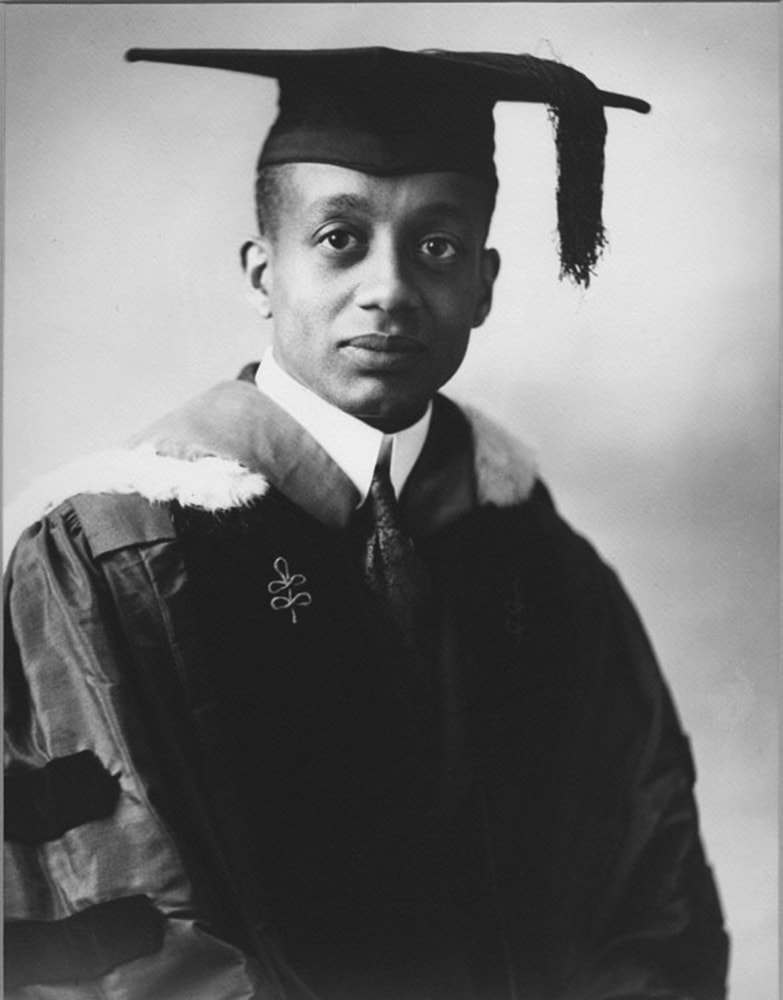
Image: Alain Leroy Locke is pictured circa 1918 in his doctoral cap and gown from Harvard University.
Alain Leroy Locke circa 1918 in his doctoral cap and gown from Harvard University. National Museum of American History

First Black Rhodes Scholar

Alain LeRoy Locke was an American philosopher, educator and writer. After obtaining an undergraduate degree from Harvard University, Locke became the first Black Rhodes Scholar. He later returned to the U.S. to complete his doctoral studies at Harvard where he got a PhD in philosophy in 1918.

Locke later earned the title “Father of the Harlem Renaissance,” the period of social, cultural and artistic rebirth that took place in Harlem, New York, throughout the 1920s to the mid-1930s.

Locke continued to mold minds at Howard University as the Philosophy department chair, a role he would keep until his retirement in 1953. In fact, there is a New York City school, Alain L. Locke Magnet School for Environmental Stewardship, named after the educator.

Alexander L. Twilight
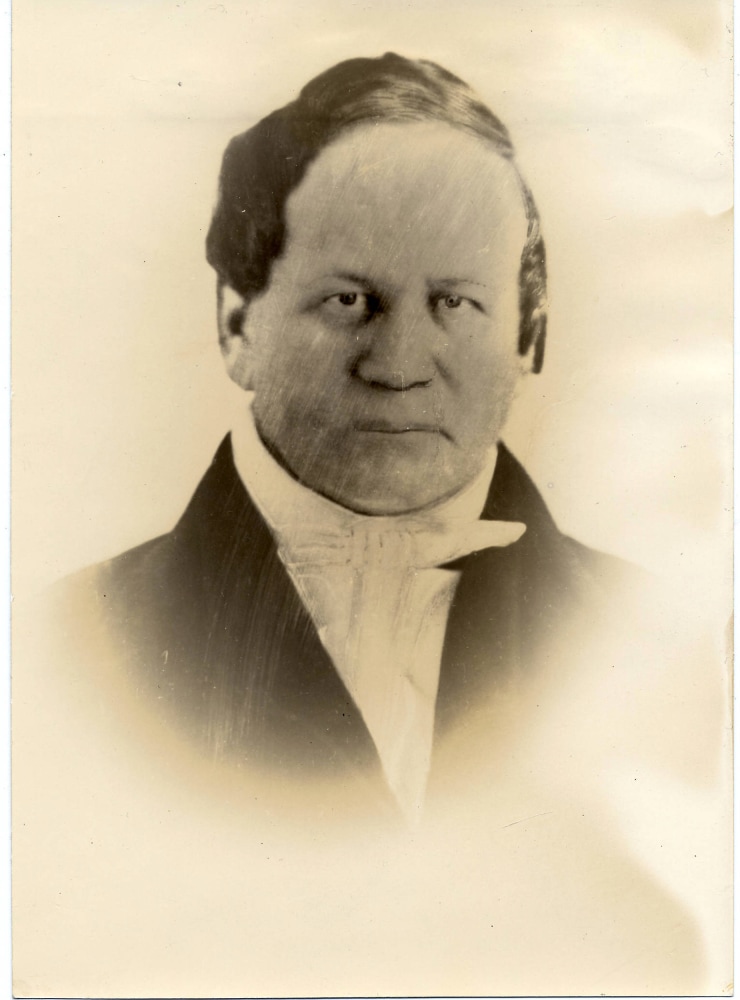
Image: Alexander L. Twilight, Middlebury College Alumnus, Class of 1823.
Alexander L. Twilight, Middlebury College Alumnus, Class of 1823. Middlebury College Archives

First Black person to graduate from a U.S. college

Alexander Twilight grew up in Corinth, Vermont during the turn of the 18th century where he worked on a neighbor’s farm while learning to read and write. He was able to finally put himself through school at Randolph’s Orange County Grammar School at the age of 20. Six years later he transferred as a junior to Vermont’s Middlebury College, where he graduated from in 1823, becoming the first Black person to earn a bachelor’s degree from a U.S. college.

Twilight went on to become a teacher, molding the minds of students for generations to come. In 1836, during a stint teaching in Brownington, Vermont, he became part of the state legislature.

Bessie Coleman
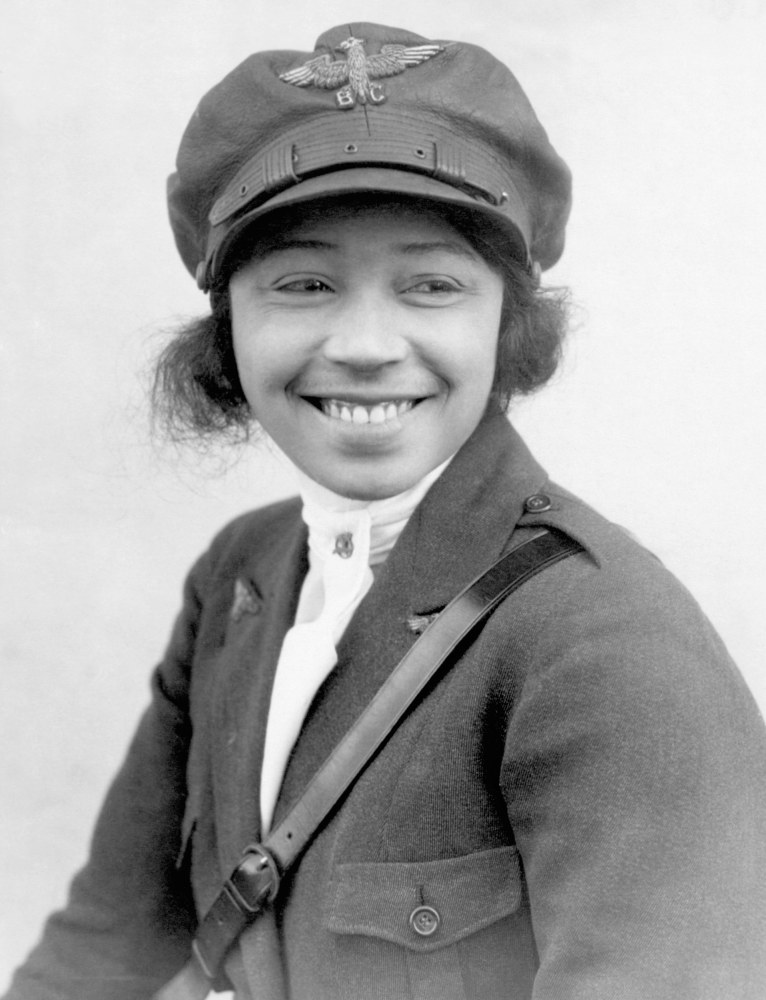
Image: Bessie Coleman is pictured on Jan. 24, 1923.
Bessie Coleman is pictured on Jan. 24, 1923. George Rinhart / Corbis via Getty Images

First Black civilian to become a licensed pilot

Bessie Coleman was born in Atlanta, Texas, in 1892 and grew up in a family of 13 children. Coleman had dreams of soaring through the air, so she went to France in 1919 to find a flight school willing to teach her.

When she returned to the U.S. in 1921 — as the first Black civilian to be a licensed pilot in the world — Coleman was met with press coverage and attention. She used her platform to do events, like parachute jumps, and give lectures, all with the aim of opening an African-American flying school. Coleman would only perform for desegregated crowds. She died in 1926 during a test flight.

Dr. Charles Hamilton Houston
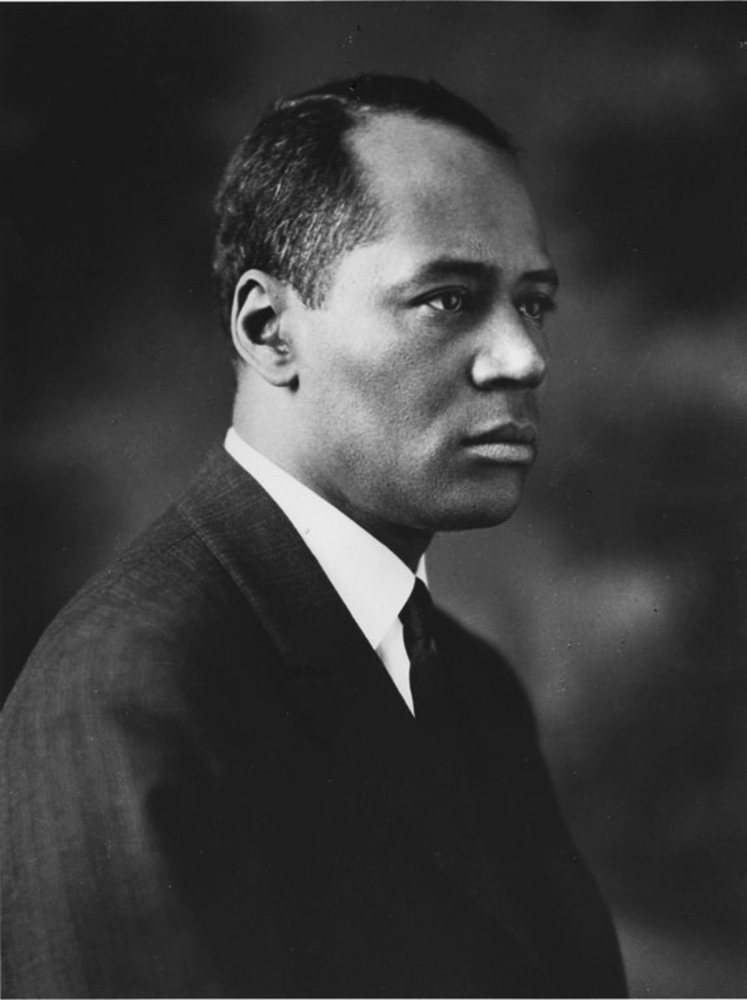
Image: Dr. Charles Hamilton Houston ca. 1931.
Dr. Charles Hamilton Houston ca. 1931. Addison N. Scurlock, ca. 1931. Scurlock Studio Records, ca. 1905-1994, Archives Center / National Museum of American History

First Black editor of Harvard Law Review

Charles Hamilton Houston went to Amherst and taught English at Howard University before attending Harvard Law School, where he would make history. Houston started law school in the fall of 1919 and in 1922 he became the first Black editor of the Harvard Law Review.

As a lawyer he went on to play a role in a majority of the civil rights cases before the Supreme Court between 1930 and the Brown v. Board of Education case in 1954. In fact his work working to dismantling the Jim Crow laws earned him the name “The Man Who Killed Jim Crow.”

RELATED: The ‘Green Book’ Was a Travel Guide Just for Black Motorists

Constance Baker Motley
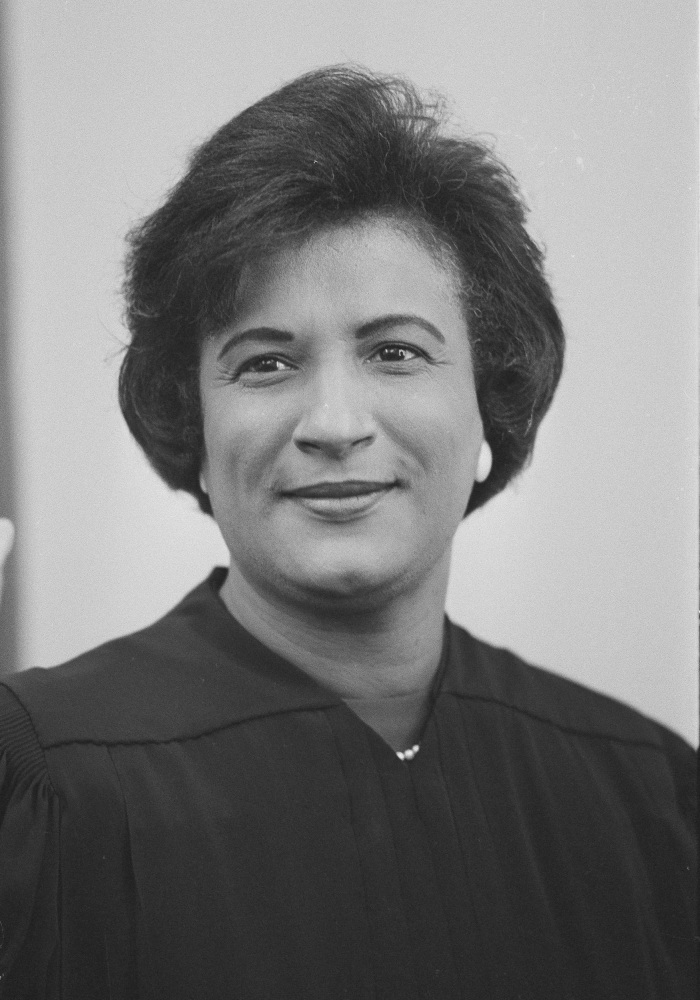
Image: Federal Judge Constance Baker Motley is seen at the U.S. Courthouse in New York on Sept. 9, 1966.
Federal Judge Constance Baker Motley on Sept. 9, 1966. Eddie Adams / AP

First Black women to become a federal judge

When Constance Baker Motley was 15 she was turned away from a public beach because she was Black and it sparked her interest in civil rights. After obtaining her law degree from Columbia Law School, Motley went on to represent Martin Luther King Jr. as a young lawyer and become a law clerk for Thurgood Marshall.

She took an interest in politics and because the first Black woman to serve in the New York Senate, but her political career was cut short when she became the first Black woman to be appointed a federal judge in 1966.

Eugene Jacques Bullard
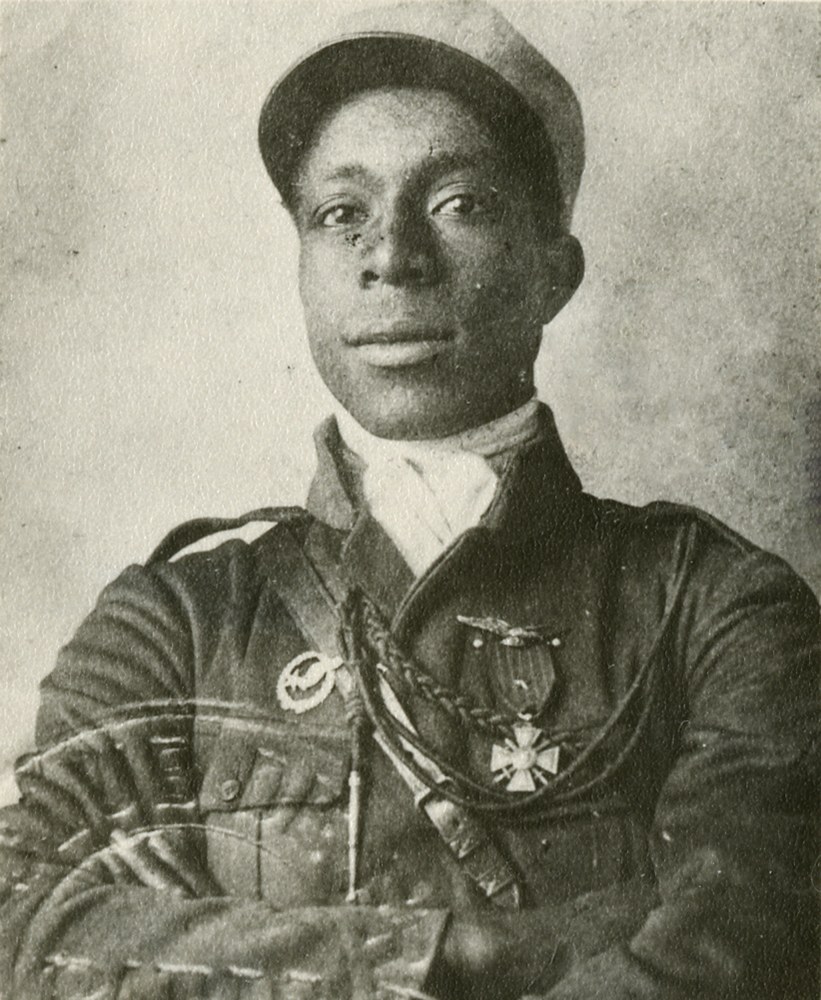
Image: Eugene Jacques Bullard during his flight training.
Eugene Jacques Bullard during his flight training. Courtesy of the National Museum of the U.S. Air Force

First Black combat pilot

Georgia native Eugene Jacques Bullard, born in 1895, was unhappy with his life in the U.S. and fled to Europe in 1912. Bullard joined the French Foreign Legion after the start of World War I and enlisted in the French flying service after betting a friend on leave he could despite being Black.

In 1916, Bullard entered Aeronautique Militaire, French Air Force where he became the first Black military pilot to fly in combat. He was also only Black American pilot in World War I, although he never flew for the U.S.

Fritz Pollard
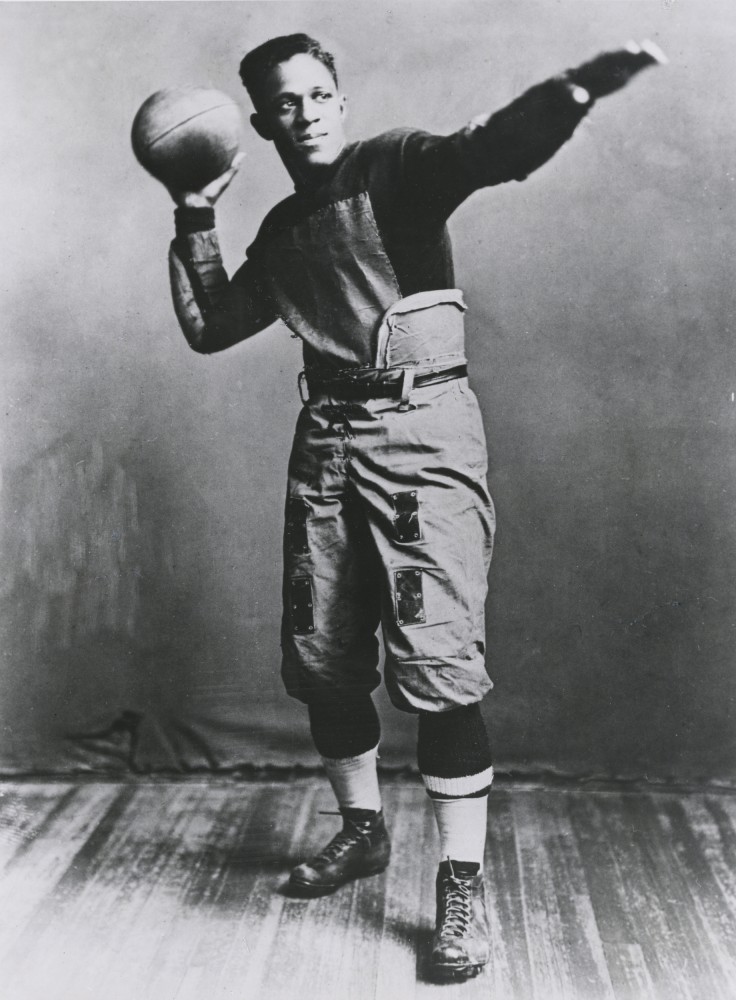
Image: Brown University halfback Fritz Pollard is seen in 1916.
Brown University halfback Fritz Pollard is seen in 1916. Pro Football Hall Of Fame/NFL / AP

First Black NFL coach

Fritz Pollard was small, but he loved football and went on to have a historic football career at Brown University. Pollard played before attending the Ivy League school, but being on the university’s team put him on the map. Many firsts were ahead of him, starting with being the first Black player to be selected for the Walter Camp All-America team and play in the Rose Bowl.

He went on to join the American Professional Football League — which later became the NFL — as a member of the Akron Pros in 1920. Pollard faced adversity and racism at every turn, but he persevered and became the first Black coach when he took the reins of the Pros a year after the team won their first title.

Gwendolyn Brooks

Image: American writer Gwendolyn Brooks poses with her first book of poems titled "A Street in Bronzeville," 1945, in this undated photo.
American writer Gwendolyn Brooks poses with her first book of poems titled “A Street in Bronzeville,” 1945, in this undated photo. AP

First Black author to win Pulitzer Prize

Gwendolyn Brooks was a writer who was recognized for her work in poetry. Her poems, like those in her book “A Street in Bronzeville,” were about the black experience in America at the time. In 1950, Brooks won a Pulitzer Prize for her book of poetry “Annie Allen.” The award made her the first Black author to win the prestige prize.

Brooks wrote several other works before passing away in 2000, “Maud Martha,” “We Real Cool” and “Blacks. She is one of the most highly regarded poets of 20th-century American poetry.

Gordon Parks
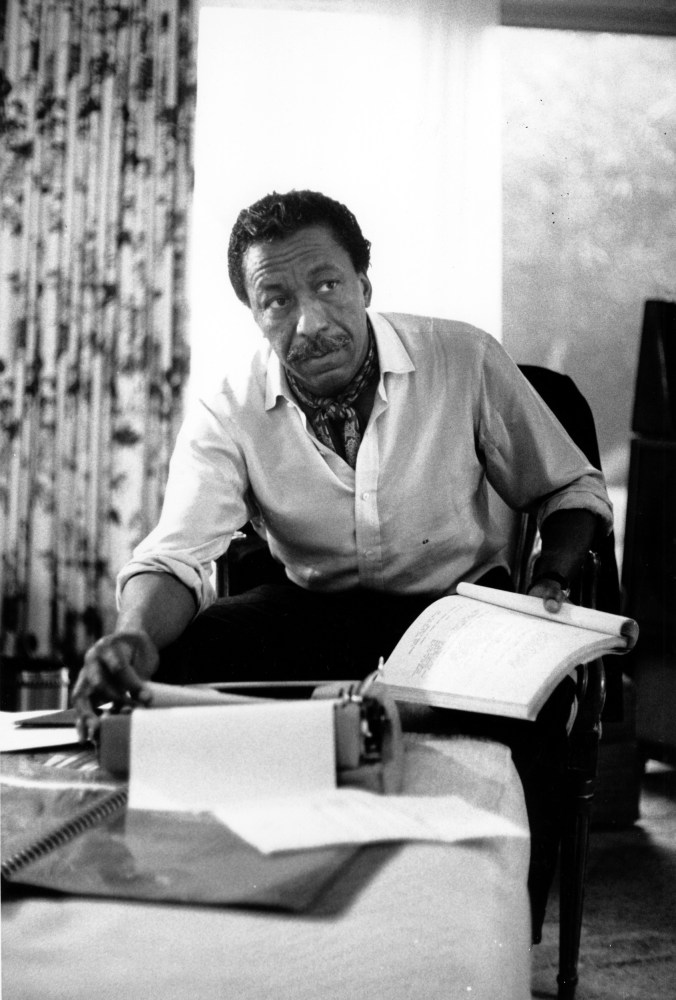
Image: Gordon Parks, a professional photographer, author, poet and composer, is seen in Hollywood, California on April 4, 1968.
Gordon Parks in Hollywood on April 4, 1968. Associated Press

First Black director of Hollywood studio film

Gordon Parks did not begin his career as a filmmaker until he was 55, after a long career as a photographer and writer. In fact, he was the first Black staff photographer at Life Magazine. Parks signed a contract to make 1969’s “The Learning Tree,” earning him a place in history as the first Black director of a Hollywood studio film.

Park followed the film up with movies including 1971’s “Shaft,” one of the first Blaxploitation films. Famous filmmakers like Spike Lee and John Singleton have referred to Park’s achievement as inspiration for their own careers. Singleton directed the 2000 remake of “Shaft,” starring Samuel L. Jackson.

RELATED: Today in History: Earl Lloyd Became First Black NBA Player

Joseph Rainey
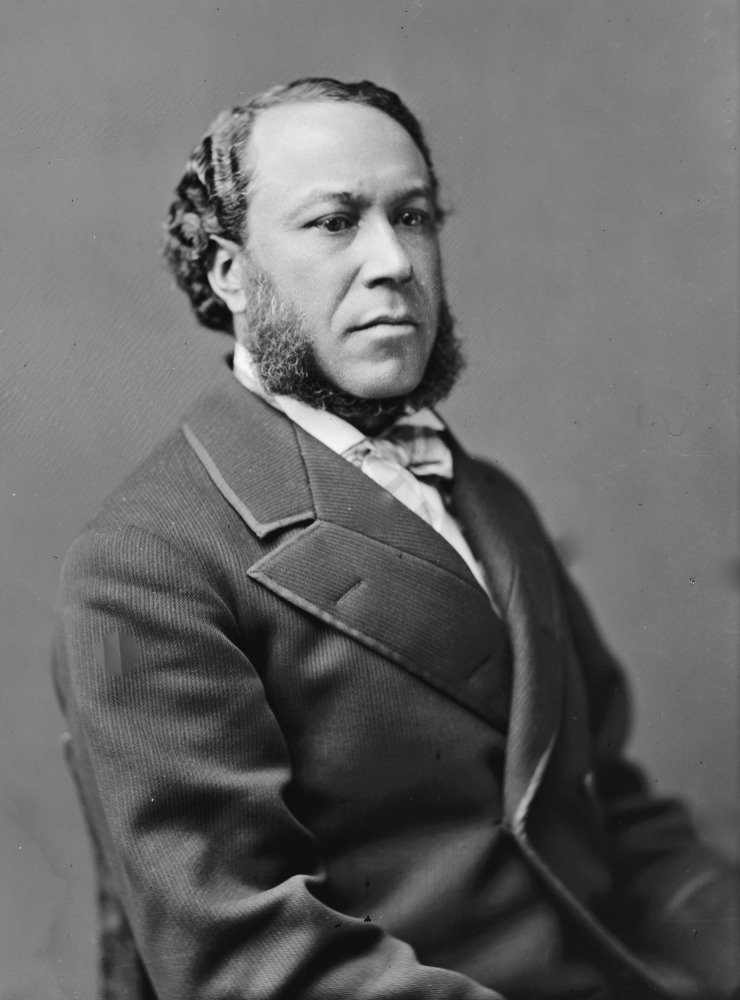
Image: Joseph Rainey of South Carolina is pictured ca. 1865.
Joseph Rainey of South Carolina is pictured ca. 1865. Buyenlarge / Getty Images

First Black person to win seat in U.S. House of Representatives

Joseph Rainey, a South Carolina native, was called to serve the Confederate Army during the Civil War. In 1862, he fled the United States with his wife and went to Bermuda, where the couple accumulated a notable amount of wealth.

When he returned to the U.S. years later, Rainey utilized his new status to become an active participant in the Republican Party. He won a seat in the North Carolina state senate in 1870 and went on to become the first Black person to serve in the U.S. House of Representatives.

William Carney

Image: Sgt. William Carney is seen circa 1900.
Sgt. William Carney is seen circa 1900. Library of Congress

First Black Medal of Honor recipient

William Carney was a member of the 54th Massachusetts Colored Infantry during the Civil War. Carney and his fellow soldiers were in the Battle of Fort Wagner in July of 1863. When his regiment’s color bearer was shot down during the battle, an already wounded Carney struggled to retrieve the banner himself. As he brought the flag back to his fellow soldiers, Carney was shot several more times. For his heroic actions the soldier received a Medal of Honor, making him the first Black soldier to receive the honor.

Marian Anderson
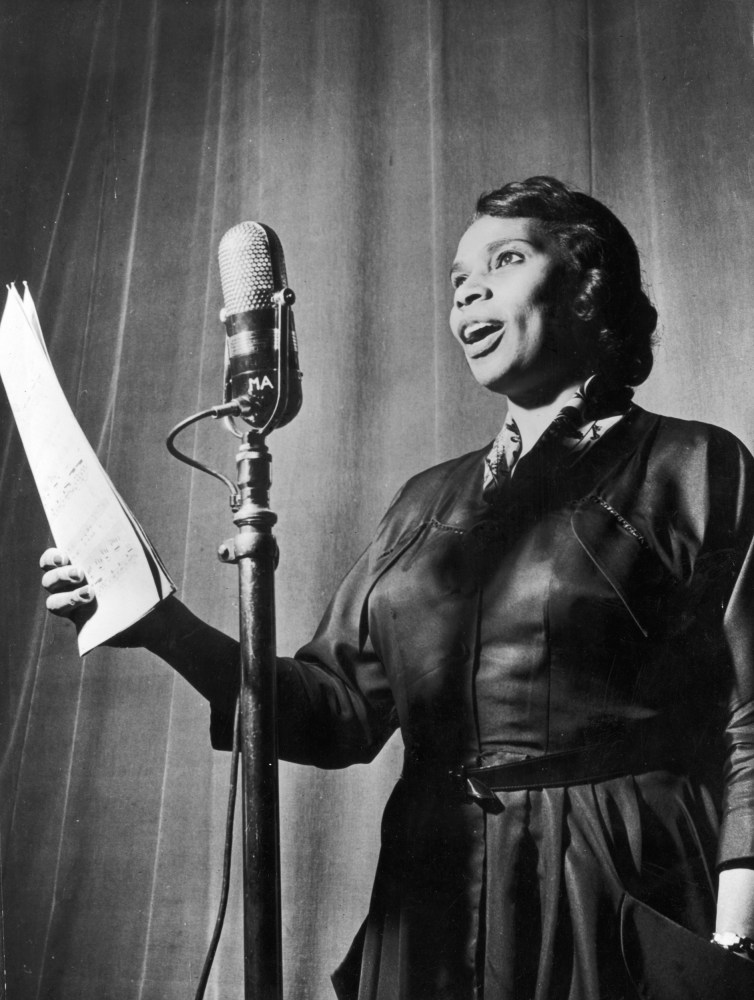
Image: American contralto Marian Anderson performs circa 1945.
American contralto Marian Anderson performs circa 1945. Hulton Archive / Getty Images

First Black artist to join the Metropolitan Opera

Born in Philadelphia, Marian Anderson was a staple at her church’s choir starting at a very young age. She traveled around with her choir performing, which led to increased notary in the community. Other churches asked her to sing at their events, including the National Baptist Convention in 1919. When Anderson was unable to afford formal training, her church held a fundraiser to get the necessary funds.

Anderson gained national notoriety in 1939 when she performed to an audience of 75,000 from the Lincoln Memorial on Easter Sunday. The performance came after she had been denied a stage at D.C.’s Constitution Hall by the Daughters of the American Revolution because of the color of her skin, a decision that led to first lady Eleanor Roosevelt resigning from the group.

In 1955, Anderson joined the Metropolitan Opera, the first Black artist join the company.

Ruth Simmons
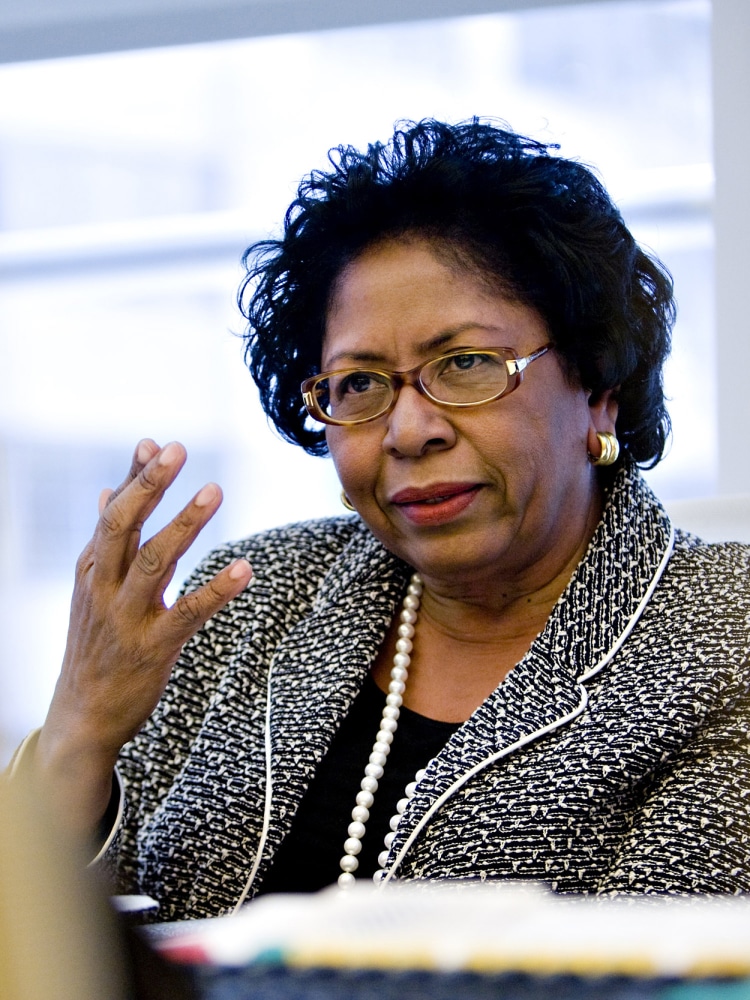
Image: Ruth Simmons, president of Brown University, speaks during an interview in New York on March 26, 2010.
Ruth Simmons, president of Brown University, speaks during an interview in New York on March 26, 2010. Daniel Acker / Bloomberg via Getty Images

First Black Ivy League president

During her undergraduate education at Wellesley College, Ruth Simmons viewed the institution’s president Margaret Clapp as proof that women could obtain leadership positions. After continuing her education in France on a Fulbright fellowship and later at Harvard where she received her PhD, Simmons continued to work in education.

Starting in 1983, Simmons worked at universities across the country, including University of Southern California, Spelman and Princeton. Simmons became the first Black woman to be president of an Ivy League institution when she became president of Brown in 2001. She stepped down in 2012, but is still a professor at the university.

Dr. Ralph J. Bunche
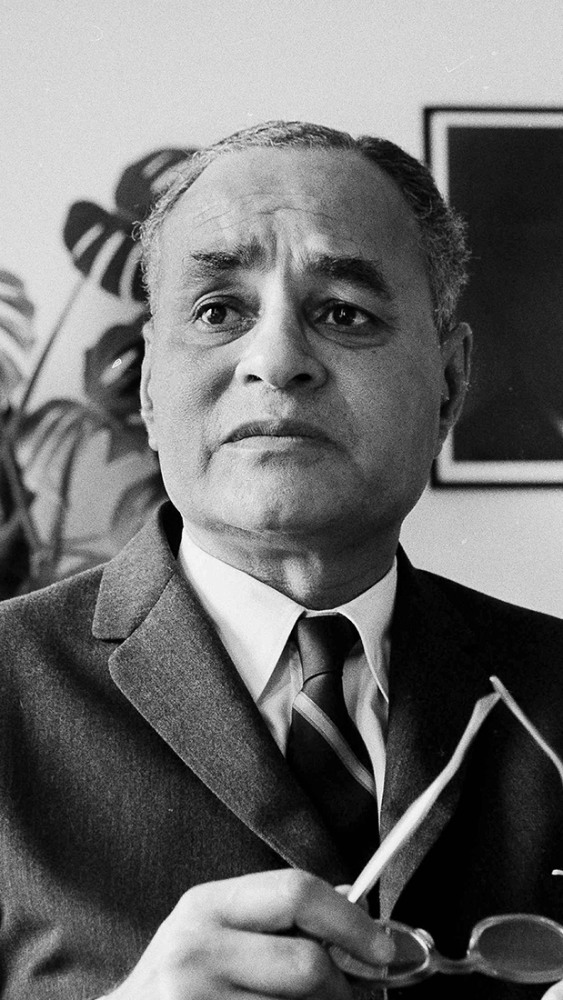
Image: Dr. Ralph J. Bunche is pictured during an interview in New York on June 6, 1963.
Dr. Ralph J. Bunche is pictured during an interview in New York on June 6, 1963. Harry Harris / AP

First Black Nobel Peace Prize winner

Ralph Bunche was a social science graduate who had studied colonial policy in West Africa before going into service with the United Nations. The diplomat went to the Middle East to develop a plan for the divisive situation between Arabic and Jewish communities. Unfortunately the U.N. resolution was rejected and a conflict began, which included the murder of the U.N.’s chief negotiator Folke Bernadotte in 1948. Bunche was named as Bernadotte’s replacement and succeeded in achieving a ceasefire with the signing of the Armistice Agreements in 1949.

He was awarded the Nobel Peace Prize the following year, becoming the first Black person to receive the prestigious award.

Lady Liberty Talks about the Wall and other happenings


Lady Liberty has her say about The Wall: Mitch Albom

“You know, for centuries, I’ve been the image of our nation’s borders. You thought of coming here? You thought of me.”


I went to visit the Statue of Liberty. I missed the last boat back. As I gazed at the American shoreline, I heard a voice.

“So, what do you think?”

I turned. Lady Liberty was talking to me.

“I think I’m hallucinating,” I said.

“Don’t be shy. I don’t often get to speak. It’s hard to talk with people crawling up your robe.”

“Well …” I said. “What’s on your mind?”

“What do you think? About the symbol?”

“You? I think you’re amazing. Inspiring. Incred–”

“Not me. The new symbol. The Wall.”

“Oh.”

Lady Liberty sighed. “You know, for more than a century, I’ve been the image of our nation’s borders. You thought of coming here? You thought of me.

“But now? Now when people around the world think of America, they’re going to picture a wall — a really long, ugly wall.”

She shook her crown. “It won’t even be green.”

“No, no,” I insisted. “We’re much more than that. We’re a huge nation. Rich. Diverse.”

“So is China,” she said. “But what’s the first structure you think of with that country?”

She had me there.

“What’s the purpose of this wall?” she asked.

“To keep people out.”

“Hmm.” She pointed her torch down to her base.

“See those?”

“Your really big feet?”

“No. The broken chains I’m stepping out of. They stand for freedom from oppression. Aren’t people coming here seeking freedom from oppression?”

“Some,” I said. “Some just want jobs.”

“So they’re poor?”

“Many of them, yes.”

“See that?” She pointed down with her tablet.

“Your toenails?”

“Lower. On the base. The sonnet. Read it.”

“Give me your tired, your poor, your huddled masses yearning to breathe free. The wretched refuse of your teeming shore. Send these, the homeless, tempest-tost to me, I lift my lamp beside the golden door!”

“Pretty good, huh?” she said.

“Pretty good,” I replied.

“I’ll bet The Wall doesn’t have a golden door.”

She had me there.

“It’s complicated,” I tried to explain. “Back when you were built, people came to follow their dreams.”

“Aren’t today’s immigrants doing that?”

“But they’re not going through proper channels.”

“How long do proper channels take?”

“Depends on the country. In some cases, 20 years.”

“Hmm.” She looked off to Ellis Island. “Did your family come through there?”

“Yes. Early last century.”

“Did they have to wait 20 years?”

“No.”

“Maybe the laws need more fixing than the borders.”

She stared at me. I think she raised an eyebrow.

“Some illegal immigrants commit crimes,” I said.

“More than citizens commit crimes?”

“Actually,” I mumbled, “most data show it’s less.”

“Hmm,” she said. She had a way of saying that.


“And when these ‘illegals’ come, do they work?”

“Yes. They work so cheap. They take our jobs.”

“Who’s hiring them?”

“Factories. Small business. Households.”

“Are you punishing the employers? Are you building a wall around the factories?”

“Don’t be silly,” I said.

“Hmm,” she said.

She adjusted her crown, with its seven spikes to symbolize seven seas and continents. “Do you know my original name? It was ‘Liberty Enlightening the World.’ ”

She looked south. “Will they say that about a wall?”

“The big fight now is who’s gonna pay for it.”

“I was paid for by foreigners.”

“Hey. That’s exactly what our president wants!”

“I was a gift.”

“Oh, yeah.”

The sun began to rise. “Well, bon voyage,” Lady Liberty said, lifting her arm. “I must get back to work.”

“Work?” I said. “But you’re a statue.”

“No,” she said, sternly, “I’m a symbol. I stand for something. And you know what? Standing for something, every day and night, is really hard work.”

“Hmm,” I said. And I thought I saw her smile.

Mitch Albom is a columnist for the Detroit Free Press, where this column first appeared. Follow him on Twitter @MitchAlbom.


bjwordpressdivider-1


Artist Captures Striking Portraits Of Refugee Children Trump Would Turn Away

Children make up more than half of the world’s refugee population.

President Donald Trump has painted refugees as “bad dudes” with “bad intentions.” In reality, they are largely women, children and families fleeing desperate situations in their home countries.

A new exhibit, titled “Refuge,” brings this juxtaposition to light by showcasing the refugee children who stand to lose the most from Trump’s policies.

Visual artist Claire Salvo conceptualized the project last fall as a way to de-politicize the conversation around refugee resettlement. In particular, she wanted to highlight the fact that more than half of the world’s refugees are children, and many of them have only known life inside a refugee camp.

CLAIRE SALVO
Ashe, an eleven year old refugee from Somalia, now living in Lancaster with her family.

“I wanted to remove the political aspect and just make it human,” Salvo told The Huffington Post. “There’s something about kids everyone can relate to. Everyone can agree it’s not a child’s choice ― it’s no one’s choice ― to be a refugee. They have no say in the matter.”

Salvo worked with her local branch of Church World Service, a refugee aid organization, to locate families that would be interested in participating. In Lancaster, Pennsylvania, where the artist lives, it wasn’t hard.

Lancaster is known for being “America’s refugee capital.” The city takes in roughly 20 times more refugees per capita than any other city in the U.S. In 2016, Church World Service Lancaster helped resettle more than 400 refugees, nearly half of whom were children under the age of 18.

“These are the people that President Trump wants to close our doors to. They are some of the world’s most vulnerable people,” Stephanie Gromek, community resource coordinator for Church World Service Lancaster, told HuffPost.

The organization connected Salvo with three families who expressed interest in participating, and the artist spent the last few months photographing, interviewing and sketching fifteen children from the families. Salvo shot the photographs on an iPhone and did the drawings with charcoal. She’ll be auctioning the pieces off starting in May, and a portion of the proceeds will be donated back to the participating families, the artist said.

All three of the families arrived in the U.S. speaking only their native language and “with little more than clothes on their back,” said Gromek.

One was a Muslim family from Somalia ― one of the banned countries included on Trump’s initial refugee order ― who just arrived in the U.S. in December. The other two families are related and living under one roof. They hail from Ethiopia and are members of the Anuak tribe, a persecuted ethnic minority.

The process of resettlement is an arduous one. Refugees recommended for resettlement in the U.S. by the U.N. undergo a stringent, two-year long vetting process that includes various security and medical clearances as well as cultural orientation.

Once they’re cleared for the journey, refugees have their tickets and travel booked through the International Organization for Migration on loan with no interest charged.

“It’s their first line of credit once they get into the U.S., and they’re expected to pay that travel loan back,” Gromek said. “It’s a way for them to establish themselves with credit.”

But Gromek added it can take years for refugees to pay back the loan, especially if they have a large family.

“Refugees are some of the hardest working people I’ve ever met,” Salvo said. “Many are supporting families of upwards of ten people on minimum wage, but they’re just so grateful to be here.”

During her interviews with the families, Salvo said she asked them: “What’s your greatest hope for life in America.” The language barrier made it difficult for her to get across the broader scope of the question, Salvo said. But one of the mothers, named Faduma, was able to communicate that what she wanted most was a washer and dryer.

One day, Salvo was leaving her house when she saw that a neighbor had left a washer out on the curb. The photographer said she called a friend to help her lift the washer into her car, and she drove it down to the CWS office with a note that it was for Faduma.

“The things many refugees want are so basic,” Salvo said, “and they’re things we take for granted, like not having to walk a mile to laundromat.”

Refugee children have their own basic tasks to attend to once they arrive in the U.S., Gromek said. These include learning English, getting various immunizations and enrolling in school. Within a month, most refugee children have started their classes and are on their way to becoming everyday American kids.

“Children are resilient in their own right, and refugee children are even more so I believe because they’ve been through so much,” Gromek told HuffPost. “They end up thriving.”

bjwordpressdivider-1

Like Many Americans, A Judge On The Court Weighing Trump’s Refugee Ban Was A Refugee

Judge Alex Kozinski’s family fled communism when he was a child.

GINA FERAZZI VIA GETTY IMAGES
Judge Alex Kozinski isn’t assigned to the three-judge panel considering a federal court’s halt of the travel ban.

LOS ANGELES ― A federal judge who sits on the U.S. 9th Circuit Court of Appeals, which is set to rule on a block of President Donald Trump’s refugee ban, came to the United States as a refugee when he was a boy.

Alex Kozinski, one of the most well-respected judges on the 9th Circuit, based in San Francisco, fled with his parents, Moses and Sabine, from communist Romania in 1962. Kozinski has spoken publicly about his immigration experience for years, even joking that he went from being a committed communist as a boy to an “instant capitalist” after his first trip outside of the Iron Curtain to Vienna ― on his way to the United States ― where he was introduced to “bubble gum, chocolate and bananas.

COURTESY OF ALEX KOZINSKI
Alex with his father, Moses, and his mother, Sabine, about a year before the Kozinskis left Romania.

But his journey came full circle on Monday when HIAS ― a refugee agency that has been assisting Jews and others fleeing persecution since 1881 ― filed a legal brief with the 9th Circuit in strong opposition to Trump’s travel ban. HIAS was the same group that helped to resettle the Kozinski family, eventually helping them get all the way to the United States.

Until contacted by The Huffington Post, HIAS officials were unaware that one of the children it helped decades ago was now serving on the court to which it was appealing.

Officials at HIAS searched their records and found official documentation of arrival for the Kozinski family. HIAS provided it to The Huffington Post, and it is printed here with the permission of Judge Kozinski.

The Kozinski family arrived in Baltimore in late October 1962. Alex was just 12, Moses was 47 and Sabine 43.

HIAS

“[HIAS] was very generous and kind to us in all respects,” Kozinski told The Huffington Post of his journey to America. Kozinski recalled that the paperwork, all arranged and prepared by HIAS, was completed in Vienna around 1962. The agency then supported the Kozinskis while Moses and Sabine sought employment.

“Then we came to the U.S. on a Sabena four-propeller airliner ― it took about 18 hours to cross the Atlantic, with one stop somewhere in Newfoundland,” Kozinski said. The Kozinskis landed in New York, where they passed through customs, like so many immigrants before them and after them. They briefly settled in Baltimore, where HIAS continued to support the family until Moses and Sabine found steady work.

“Our caseworker was named Mrs. Friedman,” Kozinski said. “I remember her quite well. She smoked Parliaments.”

After about five years in Baltimore, the Kozinskis moved to California in search of warmer weather. They’d settle in the Los Angeles area, where Moses would open a grocery store and Alex would eventually graduate from UCLA’s law school. After several years of private practice and then clerking for Supreme Court Justices Warren Burger and Anthony Kennedy (while Kennedy was appointed to the 9th Circuit), President Ronald Reagan appointed Kozinski first to U.S. Claims Court and then, in 1985, to the 9th Circuit.

That HIAS helped Kozinski’s family escape totalitarianism doesn’t disqualify him from ruling on the case. “They’re an amicus, not a party, and any association I had with them ended half a century ago,” Kozinski said. (Indeed, judges routinely rule on cases that involve organizations they previously had involvement with. But Kozinski isn’t assigned to the 9th Circuit motions panel of three judges who will hear the case. The panel consists of William C. Canby Jr., Michelle Friedland and Richard Clifton. As the case progresses, the court may grant a hearing before an 11-judge panel.)

Along the way, Kozinski may or may not get to express his views on the ultimate legality of Trump’s travel ban. But even if he doesn’t, the judge has already given the public a taste of how he feels about the federal government’s power over immigration ― and how it can have a profound effect no matter who is in power.

“We may soon find ourselves with new conflicts between the President and the states,” Kozinski wrote last week in an impassioned dissent to an order by the full 9th Circuit declining to hear a challenge by the state of Arizona to President Barack Obama’s policy aimed at helping young undocumented immigrants. His colleagues had declined to take up the case again, leaving in place a ruling that more or less forces Arizona to grant driver’s licenses to those covered by the policy.

But that result, under the Constitution, left Kozinski uneasy ― perhaps because of who is now the nation’s chief executive.

“Executive power favors the party, or perhaps simply the person, who wields it,” Kozinski warned his own court. “That power is the forbidden fruit of our politics, irresistible to those who possess it and reviled by those who don’t. Clear and stable structural rules are the bulwark against that power, which shifts with the sudden vagaries of our politics. In its haste to find a doctrine that can protect the policies of the present, our circuit should remember the old warning: May all your dreams come true.”

COURTESY OF ALEX KOZINSKI
Moses Kozinski and his son, Alex, at age 10.

Trump’s controversial executive order temporarily bans all refugees and indefinitely bars Syrian refugees from entering the U.S. The order also suspends travel to the U.S. by citizens of seven countries: Iraq, Iran, Libya, Sudan, Somalia, Syria and Yemen. The policy, which covers 200 million people, sparked chaos and protests at many U.S. airports last week as travelers from the targeted countries were detained and lawyers were denied access to the detainees.

The order was soon challenged in court by multiple states. On Friday, a nationwide restraining order was issued by U.S. District Judge James Robart, who ruled that the order was likely to cause immediate and irreparable harm to the states of Washington and Minnesota to education, business, family relations and the freedom to travel. Over the weekend, the Justice Department filed an appeal to immediately restore the ban, but the U.S. Court of Appeals for the 9th Circuit denied that request. The appeals court is now preparing to hear full arguments in the case.

On Monday, HIAS filed in support of the stay of the executive order. HIAS argued that Trump’s executive order has “fractured many refugee families” and “risks the lives of many who relied on the promises of the United States when they received their visas.” The order, HIAS argues, closes the door to avoiding “immense dangers” they currently face in their home countries.

Trump has made a habit of smearing the judicial system and specifically attacking judges who challenge his authority or who issue rulings that unravel his plans. Over the weekend Trump blasted U.S. District Judge James Robart after he issued a temporary restraining order in Seattle last week, blocking Trump’s immigration order for the time being.

Just cannot believe a judge would put our country in such peril. If something happens blame him and court system. People pouring in. Bad!

As a candidate, Trump also attacked Gonzalo Curiel, a federal judge who presided over lawsuits against Trump University. Trump accused the judge of an “absolute conflict” in the case because of the judge’s Mexican heritage. He repeatedly referred to Curiel as “Mexican” and said he couldn’t be an impartial judge because of Trump’s proposal to build a wall along the Mexican border. Curiel is a U.S. citizen, born in Indiana.

Kozinski is American, too.

ALEX KOZINSKI
Moses Kozinski at his store in Hollywood in 1971. His son went to UCLA and became a lawyer, then a judge.

CORRECTION: This article previously suggested that Kozinski was the only former refugee on the 9th Circuit. Judge Jacqueline Nguyen is also a former refugee.

bjwordpressdivider-1

Harvard Law Prof: Trump’s Handling of Immigration Order Could be Grounds for Impeachment

The Resistance Continues, but only so long as we do.  One good resource is the Women’s March Movement on Facebook (another march is reportedly being planned); and I, of course, will continue the fight here as best I can.

Namaste,

Barbara

Mensensamenleving.me

Mensen maken de samenleving en nemen daarin een positie in. Deze website geeft toegang tot een diversiteit aan artikelen die gaan over 'samenleven', belicht vanuit verschillende perspectieven. De artikelen hebben gemeen dat er gezocht wordt naar wat 'mensen bindt, in plaats van wat hen scheidt'.

Best Photo Editing Service Provider

Enhance your photos with professional precision using our top-notch photo editing services

The Bee Writes...

🍀 “Be careful of what you know. That’s where your troubles begin” 🌷 Wade in The 3 Body Problem ~ Cixin Liu

John Oliver Mason

Observations about my life and the world around me.

Opalescence

The Middle Miocene Play of Color

Elicafrank's Blog

We didn’t end when we said goodbye maybe because the promise was ETERNITY

Ranjith's shortreads

Wanderers in the world

The Wallager

The news. The dog. Dialectics.

The Lewis Mix

Husband from Utah, Wife from Hong Kong, Two Mix Babies

Walter Singleton

Walter Singleton's blog, dedicated to Aiden Singleton and Seth Singleton living near Chattanooga, TN.

Gentle Joss / Wisdom of the Crone

Mentor and Writing assistance for women

Pax Et Dolor Magazine

Peace and Pain

SurveyStud, LLC

SurveyStud: https://appsto.re/us/Ddj18.i

Levi House

Speak out, judge righteously, defend the rights of the poor and the needy

Present Minded

A MODERN PERSPECTIVE ON COGNITIVE SCIENCE AND MENTAL HEALTH

oats

welcome!