A trip through the mountains to Art


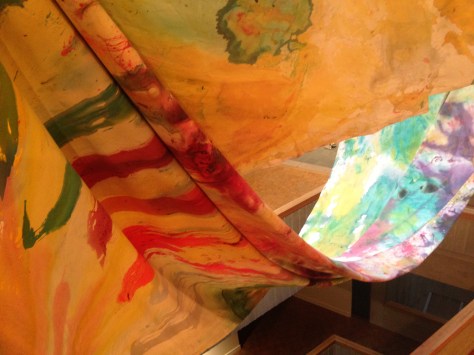
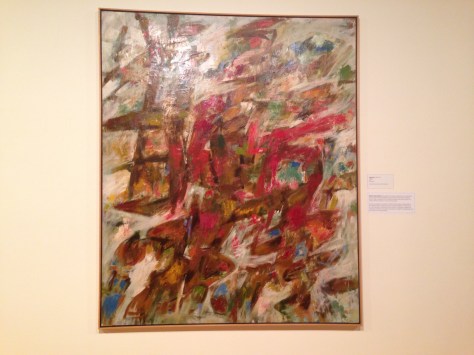
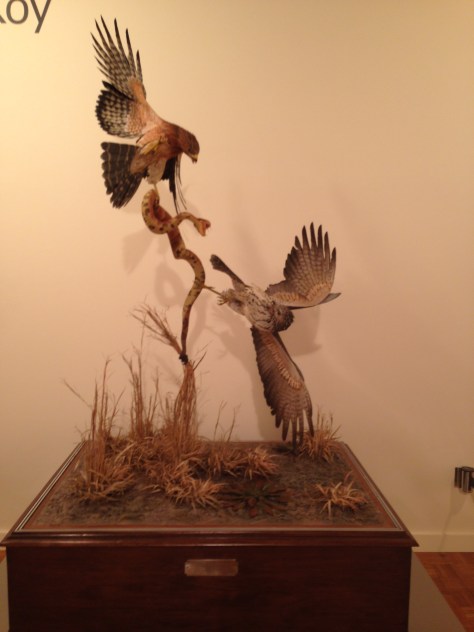
Yesterday we drove to SC to visit friends and the Greenville Museum of Art and the History Museum  It was a beautiful warm day and we had a lot of fun. The Art Museum allow photographs so I got a few of those also.

I hope you enjoy the journey.  The art phot0graphs were taken with my phone camera not my regular camera.

Neil Diamond, Sweet Caroline, is dedicated to my late husband. RIP


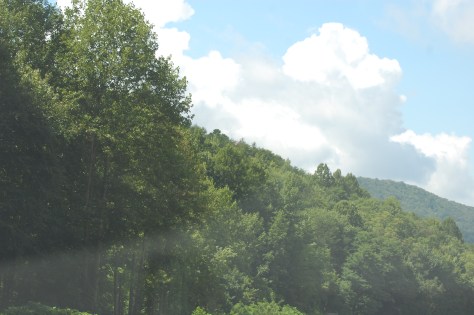
This was from the trip down to Greeneville. Photograph and copyright by Barbara Mattio 2016

This was from the trip down to Greenville. Photograph and copyright by Barbara Mattio 2016


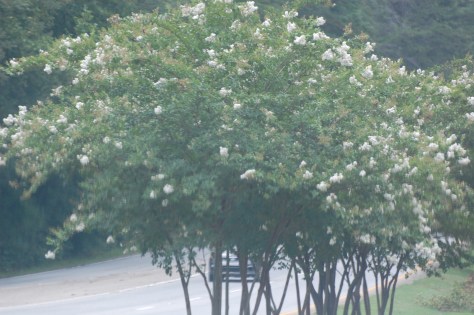
White Crepe Myrtle Photograph and Copyright by Barbara Mattio 2016

White Crepe Myrtle
Photograph and Copyright by Barbara Mattio 2016


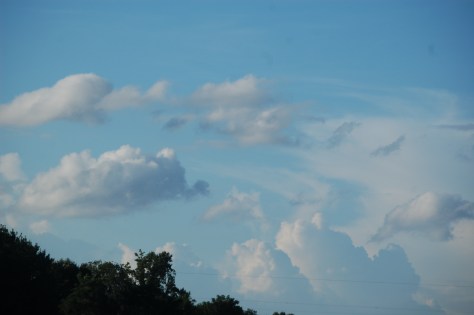
fluffy breezy clouds Photograph and copyright by Barbara Mattio 2016

Fluffy breezy clouds
Photograph and copyright by Barbara Mattio 201


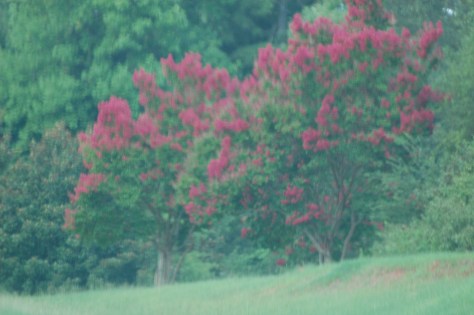
Purple crepe myrtle photograph and copyright by Barbara Mattio 2016

Purple crepe myrtle
photograph and copyright by Barbara Mattio 2016


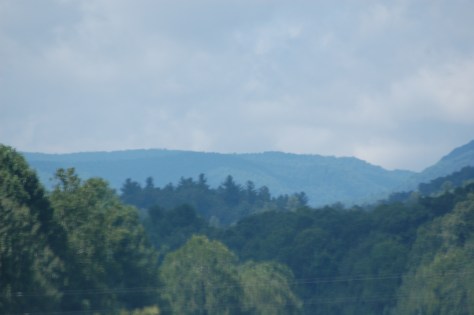
Lovely landscape Photograph and copyright by Barbara Mattio 2016

Lovely landscape
Photograph and copyright by Barbara Mattio 2016


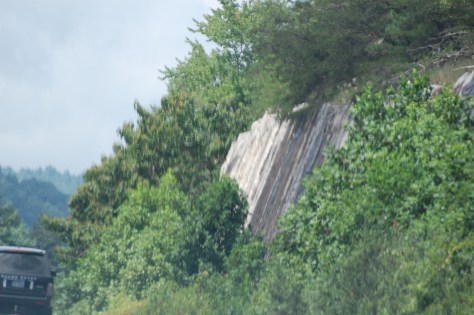
side of mountain Photograph and copyright by Barbara Mattio 2016

Side of mountain
Photograph and copyright by Barbara Mattio 2016


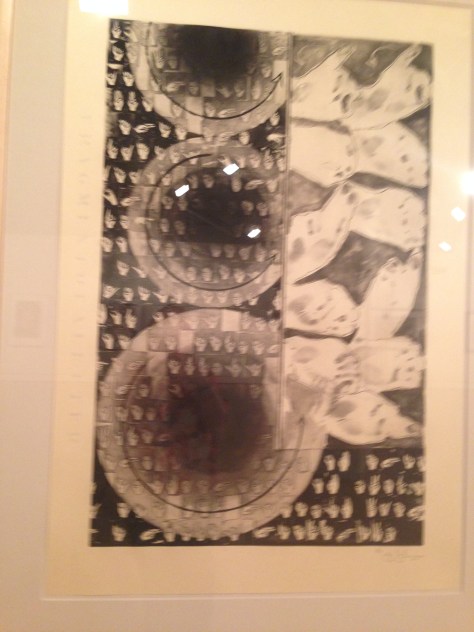
Art by Jasper Jphns Photograph and copyright by Barbara Mattio 2016

Art by Jasper Johns
Photograph and copyright by Barbara Mattio 2016

Photograph and copyright by Barbara Mattio 2016

Photograph and copyright by Barbara Mattio 2016


Photograph and copyright by Barbara Mattio 2016

Photograph and copyright by Barbara Mattio 2016


Photograph and copyright by Barbara Mattio 2016

Photograph and copyright by Barbara Mattio 2016


Art work by Yoko Ono. Photograph and copyright by Barbara Mattio 2016

Art work by Yoko Ono. Photograph and copyright by Barbara Mattio 2016


Sculpture. Photograph and copyright by Barbara Mattio 2016

Sculpture. Photograph and copyright by Barbara Mattio 2016


Sun getting lower in the sky and early evening arrives. Photograph and copyright by Barbara Matttio 2016

Sun getting lower in the sky and early evening arrives. Photograph and copyright by Barbara Matttio 2016


I love watching the clouds float across the blue skies. Photograph and copyright by Barbara Mattio 2016

I love watching the clouds float across the blue skies. Photograph and copyright by Barbara Mattio 2016


bjwordpressdivider (1)

Convicted Rapist receives no time


 Convicted Rapist Austin Wilkerson Receives No Prison Time — Even Less Than Stanford Rapist

bjwordpressdivider (1)

If you are a regular reader, you will notice that this is the second rapist who has been found guilty yet has not been required to do any prison time. Speaking as a woman, community service and/or probation is not justice for having someone putting himself inside your body and using you and discarding you as if you were yesterday’s newspaper. Rape is a horrible crime of power and control. There should be a long prison sentence for the perpetrator. I hope we don’t see more of this trend.

Namaste,

Barbara

” I, too, am America.” – Langston Hughes


I have been thinking about Black Lives Matter.


First of all, I am totally behind this movement. In fact, I hope it grows by leaps and bounds. I also wish it started a couple of hundred years ago. This is not realistic, I know, but I wish it were.


I have been writing at different times about Black Americans  who, through luck or circumstance, have made a difference in the world;  enough of a difference that history records their deeds and contributions to civilizations. Inventors, freedom fighters, writers, fighters for freedom, poets, doctors and others.


Because every black life matters, I want to take the time to honor every black person who survived every day of their life in slavery. They all matter. Every black person who lived through segregation matters; From the domestics who worked for white people, to those who drank at the black water fountain to those who rode at the back of buses. Black men who were referred to as “boy”;  any black person who was referred to as “nigger”: You all shine to me. Your courage and strength of character is amazing. You were brave and tread where angels feared to go.


Since there has been integration — at the cost of hundreds of black lives and Martin Luther King Jr. , JFK and Bobby Kennedy — there have been some improvements. My children and grandchildren went to school with and are friends with black people and other minorities, including Native Americans.


Today, there should be no more racism. In America alone, there are millions of black people who have so much to give. What they need is for us white, Caucasian, people to let go of racism and give them a chance at educations equal to what our children receive.


Black parents need to tell your children that they are wonderful and smart and will be successful in life. However to do this, they need to be able to stop spending time teaching their children what to do when the inevitable cop stops them because of the color of their skin. How to answer their questions, where their hands should be, the tone of voice they should use: the type of training white children never receive because no cop will stop and frisk them for being white.


In another life, I marched and picketed in many cities in different states including Washington DC. I never got arrested. I believe my whiteness had a lot to do with that. I can have a sarcastic voice, so I doubt it was because I was so sweet.


American society has pushed the black portion of our society about as far as they are willing to go. I don’t blame them. Would your white friends take what black people are expected to swallow? Mine wouldn’t and neither would I.


America has come to yet another fork in the road that makes up our society. There have been enough black lives taken, like Tamir Rice, and Michael Brown and so many others. What could they have accomplished had they not been treated as “other” all of their lives? What if they had been told how well they were doing in school, if college had been talked about as a natural step in their growing up? What if their teachers had told them to keep working, they were going to make it? What if one or two had graduated as Valedictorian?


What if every child in America, no matter what color they were, or what disabilities they had, would have an equal chance in their life?


Well, I am going to say it to any one who wants to hear it:

You, too, are America.

You are a unique child of God/Goddess and you can accomplish whatever you want to.

You are good, smart, strong and people believe in you.

You can ignore those around you who don’t want you to succeed.

You were made to accomplish big things and you can.

Believe in yourself,

I believe in you. I believe in every black person in America.


Black Lives Do Indeed Matter.


Namaste

Barbara


bjwordpressdivider (1)


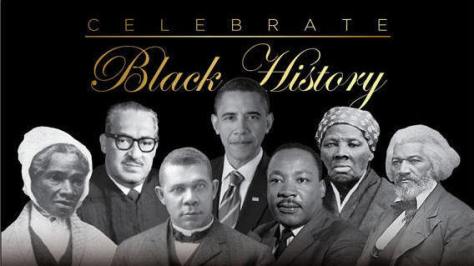
Some of the great black Back Americans who have made America stronger.

Some of the great  Back Americans who have made America stronger.

Jews plan Global Shabbat to Protest Demolitions of Palestinian Villages


Jewish activists plan global Shabbat protest against demolitions


Sussiya


Jewish activists around the  world are preparing to take part this weekend in a “global Shabbat against demolition” of  Palestinian villages.

Event organizers say the initiative is a response to a plea by residents of four Palestinian communities – Al Arqib, Umm el-Hiran, Umm al-Khair and Sussiya – who say the demolition of their villages is imminent.

Last week, the High Court of Justice ordered Defense Minister Avigdor Liberman to issue an opinion on the demolition of Sussiya within two weeks.

People from Israel, the UK, the US, Canada and Australia are taking part in the Shabbat initiative.

“As Jews, we say emphatically that forced displacement, dislocation and demolition do not represent our values,” said a joint call to action put out by the anti-occupation collective All That’s Left, the Center for Jewish Nonviolence (CJNV) and the T’ruah organization.

“These demolitions represent a continued policy of systematic discrimination. As members of a people who have experienced expulsion, persecution and dispossession, we stand with all Palestinian communities facing eviction,” their statement said.

Israeli activists are planning to spend Shabbat at Sussiya, as they did a month ago.

“It’s important for me as a member of an international anti-occupation organization to stand with them. They know [that] international pressure, Jewish and non-Jewish, is a key component of their ability to continue to thrive and exist,” Israeli organizer Erez Bleicher of All That’s Left and CJNV told The Jerusalem Post.

“This global response really represents a movement for justice that will continue to advocate non-violently for a more sustainable reality in which Palestinians can live with dignity and full rights,” Bleicher added.

The event is expected to take different forms from community to community, with some resembling more traditional demonstrations and others comprising Jewish study sessions.

In Melbourne, organizers will shape their Shabbat around the “social-justice lens of Judaism.”

Participants will bring in Shabbat together, share a potluck dinner and take a group photo to upload to social media with the hashtag #Shabbat Against Demolition.They will also hold discussions about the demolitions.

The groups involved include Hashomer Hatza’ir and the Australian Jewish Democratic Society.

Australian organizer Carly Rosenthal, who visited Sussiya and other Palestinian villages last month with CJNV, will share her experiences with the group.

“This Shabbat is all about exemplifying the values of equality, peace, justice and morality. With the Shabbat, we hope to engage the Jewish community around the demolitions happening in these Palestinian communities, and rally together as Jews against the status quo of the occupation,” Rosenthal said.

Hearings on the demolition of Sussiya were halted last year, when villagers and the Civil Administration agreed to sit down and see if they could agree on a plan for the village, either in its current location or at a nearby site. But the process was halted when Liberman took over the Defense Ministry in June, and the Civil Administration waited for him to issue an opinion on the matter.

Liberman has in the past called for the demolition of Sussiya, which has been in a land battle with the state since the 1980s.

“Thus far, the court hasn’t decided to intervene, so we want to show solidarity and that we are representatives of the international audience that is watching what’s happening,” said American-Israeli activist Shifra Sered.

Tovah Lazaroff contributed to this report.

bjwordpressdivider (1)


There are Jews in Israel and around the world who feel that demolishing buildings in Palestine villages is wrong. I agree. This is a non-violent act of protest and I hope that many Jews around the world will participate and that the Israeli government will take heed of the wishes of the people. Mazel Tov.


Namaste

Barbara

Giraffes are being killed for their tails


I am sad to have to share this news. Giraffes are now being poached for their tails. When I read the title I thought I had read it wrong, but I had not. So I have always loved giraffes because they are so crazy looking and as a little girl I thought God had a sense of humor. He/she probably does but I am sure there is no laughter now. We need to know about this and the animal rangers who are trying to protect them along with all the other animals who are being poached for body parts with “mystical powers” or by rich people who will pay enormous amounts of money to be able to show off ivory tusks and brag how they brought the bull elephant down or whatever animal they shot.

The animals probably deserve to be here more than we do because they aren’t destroying Mother Earth. But some more people are beginning to listen and to care. They are donating money to the organizations who are fighting poaching on the ground. It must be a terribly hard job and I send them my gratitude and thanks for performing it day after day.


Namaste,

Barbara


bjwordpressdivider (1)


The killing of three rare Kordofan giraffes in the Democratic Republic of the Congo inspired a filmmaker to transform his anger into action.

Documentary filmmaker David Hamlin recalls the adrenalin rush when he was flying over the Democratic Republic of the Congo’s Garamba National Park in late June and spotted three giraffes standing in a small clearing. “Seeing these giraffes from the air was really exciting,” says Hamlin, who was on assignment for National Geographic. “Seeing them anywhere is really exciting.”

That’s because Garamba is huge, sprawling over nearly 2,000 square miles (5,180 square kilometers) of mostly forested land, and it’s a rare, lucky event to come across any of its 40 remaining giraffes.

But Hamlin’s exhilaration at seeing and photographing the giraffes didn’t last long. Twelve hours later rangers reported hearing gunshots, and they later discovered three bullet-riddled giraffe carcasses rotting in the sun. “It was horrible for me and the team,” Hamlin says—”the crushing realization that most likely it was these guys, the ones we’d seen.”

Hamlin decided to document the aftermath of the tragedy (watch the video above) to raise awareness about poaching in the park, which is managed by the nonprofit organization African Parks in association with the Congolese Institute for the Conservation of Nature, a government agency.

Garamba is Africa’s second oldest national park and has been hit hard by poaching in recent years as civil unrest has escalated in the region. Its rhinos have been wiped out, and elephants have suffered huge losses. The same goes for its Kordofan giraffes, one of Africa’s nine giraffe subspecies.

Picture of giraffes in Garamba National Park

View Images

A group of rare giraffes roam the Democratic Republic of the Congo’s Garamba National Park.
PHOTOGRAPH BY NIGEL PAVITT, JOHN WARBURTON-LEE PHOTOGRAPHY, ALAMY

Fewer than 2,000 now roam central Africa, according to Julian Fennessy, co-director of the Giraffe Conservation Foundation, a Namibia-based organization. Garamba’s Kordofans represent the last population in the Democratic Republic of the Congo. “If the number slips in half, then we’re in a real dire situation,” Fennessy says. “Every single giraffe is valuable.”

Congolese usually kill the giraffes for one body part: their tails, considered a status symbol in some communities. Meanwhile men from neighboring South Sudan target the giraffes for their meat to feed impoverished villagers. But the massive bodies (giraffes can grow to 18 feet and weigh up to 3,000 pounds) of the three giraffes were intact—only the ends of their tails were missing.

According to Leon Lamprecht, joint operations director for African Parks, men “use the tail as a dowry to the bride’s father if they want to ask for the hand of a bride.” The long black hairs are often turned into fly whisks.

One of the dead giraffes had a satellite collar and was being monitored by Garamba’s rangers. “What an absolute waste,” Lamprecht says.

This story was produced by National Geographic’s Special Investigations Unit, which focuses on wildlife crime and is made possible by grants from the BAND Foundation and the Woodtiger Fund. Read more stories from the SIU on Wildlife Watch. Send tips, feedback, and story ideas tongwildlife@ngs.org.

Asiatic Lions Making Comeback


Asia’s Lions Live in One Last Place on Earth—and They’re Thriving


01-asiatic-lion.adapt.1190.1

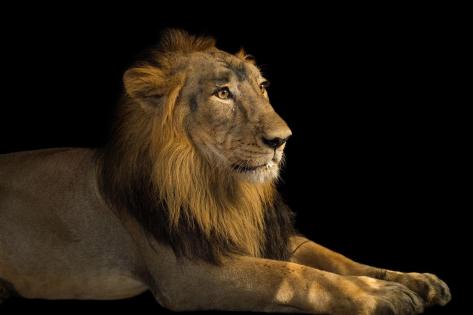
Picture of a male Asiatic lion A male Asiatic lion seems to pose at the Kamla Nehru Zoological Garden in Ahmedabad, India. PHOTOGRAPH BY JOEL SARTORE, NATIONAL GEOGRAPHIC PHOTO ARK

While Asiatic big cats are rare, their spiritual importance helped inspire their human neighbors to keep them safe.

By Kristin Hugo
PUBLISHED AUGUST 10, 2016
African lions get, well, the lion’s share of attention—but some would be surprised to learn there’s another subspecies of the big cat in Asia.

The Asiatic lion once roamed vast swaths of the Middle East and Asia, but indiscriminate hunting and killing to protect livestock led to their mass slaughter. By the late 1800s, as few as 10 of the animals remained on Earth.

Their last refuge became western India’s Gir National Park, a protected area where the number of these endangered animals is now on an upward trend. According to a 2015 census, a little more than 500 lions—the world’s total wild population—live in Gir, up from 411 in 2010. In comparison, about 20,000 African lions remain in the wild. (See a map of the lion’s decline worldwide.)

Like their African kin, Asiatic lions live in prides, and the females do most of the hunting, taking down prey like antelope. They look much like their cousins, too, though they tend to be slightly smaller than African lions and live in forests instead of open grasslands. They also have a distinctive fold of skin on their stomachs, and their manes are less plush.

“There’s so few conservation success stories when it comes to carnivores,” says Gitanjali Bhattacharya, program manager at the Zoological Society of London’s South and Central Asia programs, “and the Asiatic lion, for me, it’s really a story of hope. Because you’ve got a population that’s growing, a community that’s supportive, and the lion is taking back its former range.”

Lionhearted

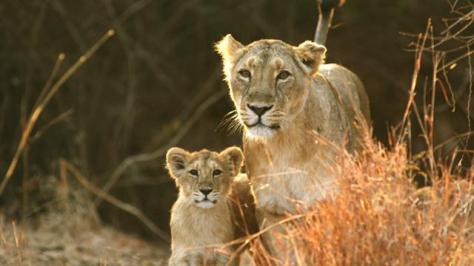
Asia’s Last Lions In India, rural communities are working with the government to create a haven for the last remaining Asiatic lions in the wild.
That success can be attributed to the effort of conservation groups and local communities’ dedication to protecting the animals. (Read more about National Geographic’s Big Cats Initiative.)

The people who live around Gir have a deep respect for the lions and patrol the jungle looking for poachers—though illegal hunting hasn’t been a problem for a long time, says Bhattacharya.

They’re “right on top of it, monitoring threats,” she says.

For them, “the lion is beyond an endangered species,” Bhushan Pandya, member of the Gujarat State Board for Wildlife and Asiatic lion conservationist, says by email. “Lion, the king of jungle, is the symbol of strength and power.”

The predator is also a religious icon in Hinduism; the goddess Durga rides a lion, and the god Narasimha is half lion. (See National Geographic’s most stunning pictures of big cats.)

Cats on the Move

Even so, scientists are concerned that disease or natural disaster could wipe out the entire Gir population in one fell swoop. Some Asiatic lions live in zoos worldwide, but there are no plans to release those animals to build a wild population. (Read: “Lions Approach Extinction in West Africa.”)

To avoid this fate, the Asiatic Lion Reintroduction Project, an Indian government initiative, plans to capture some Asiatic lions from Gir and relocate them to the Palpur-Kuno Wildlife Sanctuary, located in another state. That way, if anything happens to Gir, there will still be lions in Palpur-Kuno.

That plan has proven controversial, however. Though Pandya supports the idea of translocation, he doesn’t think that Palpur-Kuno is a good place for the lions. There isn’t enough prey, poaching gangs may be a threat, and tigers—potential competitors—already live in the region, he says. (Read: “Tiger Got Your Goat? Here’s Who to Call.”)

What’s more, the Gujarat State Wildlife Department has also objected to moving the animals outside the state, suggesting they would be better off living in two other parks within their state.

Despite such disputes, Bhattacharya hopes that other big cat conservation projects can learn from the Asiatic lion.

“There’s an inspiration there for carnivore conservation around the world.”
 

PRIDE_PosterFrame-1_640x360_366282819744

I am so excited we are making some progress with these beautiful lions. I hope it will continue and that they will not be poached.

Namaste

Barbara

We have used the Earth’s Resources for a Year


Humans Have Used All the Earth’s Resources for the Year

Written by

SARAH EMERSON

CONTRIBUTING EDITOR

August 9, 2016 // 01:19 PM EST

This year, “Earth Overshoot Day” fell on August 8, based on measurements of each nation’s withdrawal of natural capital. From carbon sinks to fisheries, humanity has taken more from nature than it’s been able to reproduce. Quite simply, we’re in environmental debt.

Since the 1970s, our global “ecological footprint,” or impact on Earth’s ability to generate renewable resources, has widened. Without fail, the Global Footprint Network says, Earth Overshoot Day has fallen earlier every year—between one to three days, on average, over the last four decades. Last year, it coincided with August 15.

Renewable resources such as crops, forests, and fishing grounds, as infinite as they might seem, are only as productive as we allow them to be. An ecosystem’s usefulness, also known as its “biocapacity,” is fatally interconnected with our ability to curb greenhouse gas emissions. If these environments can’t absorb our carbon and waste, they’ll take longer to regenerate.

According to national footprint measurements for 2016, if the entire world behaved like Australia, it would take 5.4 Earths to meet its annual natural resource needs. Here in the United States, we’d need 4.8 planets to meet our requirements. And Brazil, which recently came under fire for its poor environmental policies, would need 1.8 Earths to fulfill its consumption demands.

Two years ago, the World Wildlife Fund calculated that humanity’s ecological footprint in 2010 topped out at 18.1 billion global hectares, which is a common unit of measurement for comparing the productivity of one ecosystem to another. That year, however, Earth’s biocapacity was only 12 billion global hectares, meaning people used nearly 50 percent more natural resources than were able to be produced.

In that same report, climate scientists estimated that by 2030, more than two planets will be needed to support all of humanity if countries don’t become more sustainable.

An ecological footprint is, at its core, a supply and demand equation, and can theoretically be solved for a person, industry, community, and country. Yet, some researchers question whether this can, and should, be quantified at all.

One critic said the equation makes arbitrary assumptions about carbon emissions, national boundaries, and production levels, and “fails to satisfy simple economic principles.” Another author argued that a calculating a country’s ecological footprintdoesn’t offer meaningful information for shaping environmental policies. It’s even been suggested that placing such a high value on an ecosystem’s biocapacityultimately encourages agricultural monoculture, or the cultivation of a single resource in a given area.

The method’s most compelling criticism, however, is that it portrays smaller, rural populations as parasitic, consuming the resources of larger communities instead of producing their own. There’s a theory that if aliens were to visit our planet, they’d characterize our species as a lowly parasite, and not its most dominant lifeform. As perspective-bending as this may seem, even David Attenborough once referred to humans as “a plague on the Earth.”

Hopefully, instead of draining Earth of its life-giving sustenance, we’ll find a way to live sustainably. New climate policies, such as those outlined in the Paris Agreement, aim to make the fight against environmental demise a global one. Because if one thing’s for sure, it’s that soon, no one will be spared the effects of global warming.

“The good news is that it is possible with current technology, and financially advantageous with overall benefits exceeding costs,” said Mathis Wackernagel, co-founder and CEO of Global Footprint Network.

“The Paris climate agreement is the strongest statement yet about the need to reduce the carbon footprint drastically. Ultimately, collapse or stability is a choice.”

The Sunlight and the Silence


very well written and interesting. Hugs, Barbara

Michael's avatarEmbracing Forever

A cabin in the woods sounds infinitely better than a shack in the city, which is exactly why I went–to trade in the grime and the grind for the sunlight and the silence. I sold it to myself as two nights and three days. You get these big ideas. You get these big ideas and they carry you along. You move from one to the next like you’re hopping from stone to stone across a shallow pan of nothing at all. You don’t even know what the big deal would be if you stepped into that inch of water. Just that you’d have to hang your socks on the line or something. Just that you’d lose the game you were playing. Sometimes in the parking lot late at night when all the cars are gone you jump from sleeper to sleeper down one side of the lot, in and out…

View original post 943 more words

Muhammad


Today, there is a lot of confusion and fear about Islam. Muhammad feels rather mysterious to many people.  This is what we are going to look at today. Muslims believe that Muhammad was the final prophet of God to come to earth. His lineage can be traced back to Ishmael, the first born son of Abraham. God gave Abraham permission to have a child with his concubine, Hagar. He later had a son with his wife, Sarah and he was named Issac. Muslims believe that Muhammad’s teachings came after Moses and Jesus.


Muhammad was born in Mecca circa 570 CE. At that time, Mecca was a bustling, thriving city, centered around a temple called the Kaaba where idolatry was practiced.  Muhammad’s father died before he was born. I don’t know anything about his mother. He did travel around Arabia with his uncle, who was a merchant. As he grew up he followed in his uncle’s trade.


When Muhammad was around forty years old, he gained a reputation for being reflective and contemplative. He went to the cave of al-Hira, near Mecca,and he had a vision. In his vision, he was visited by the angel Gabriel, who spoke to him and commanded him to memorize and recite verses which later became the Quran. Gabriel visited him for the next twenty-three years, and Muhammad began to teach Gabriel’s teachings. Though Muhammad was illiterate, he used the spoken word to spread the angel Gabriel’s teachings to all he came across. He freely gave an oral recitation of the revelations to anyone who was interested.


A central tenet of Muhammad’s teachings was monotheism. Judaism and Christianity are the other monotheistic religions. When Muhammad began to teach about one God, or monotheism, it angered the leaders of Mecca, as their town thrived on the buying and selling of idols for the temple of Kaaba. Eventually, Muhammad and his followers were forced to flee to the city of Medina. In Medina, Islam quickly became the religion of the majority of the people. However, rather than banish the non-believers, Muhammad allowed them to pay a tax to continue to worship their old gods and to follow their own practices.


As Medina’s power increased, the city of Mecca became suspicious. Tensions between the two cities worsened and eventually the two cities fought a war. Muhammad and the people of Medina were outnumbered, however they were the victors of the war. Muhammad then went ahead fighting all of the Arabs until he was able to unite all of them under his new religion Islam.  He did not fight to convert, from what I have read; rather to unite the tribes, and found that Islam was a unifying force, something his new people could all respond to.


Muhammad died in Medina in 632 at the age of 63. According to oral tradition, at the time of Muhammad’s death, the angel Gabriel once again appeared before him. Gabriel took Muhammad on his horse from Mecca to Jerusalem. There, Muhammad met with Abraham, Moses and Jesus, the main prophets of Judaism and Christianity. Muhammad then rode the angel’s horse into heaven, achieving his final resting place. This final ascension occurred from the Temple Mount, now the third holiest site in Islam, after Mecca and Medina. All three of the monotheistic religions share many of the same holy sites and shrines, such as the Temple Mount.


The question of who Muhammad chose to be his successor is a controversial subject. It has led to a schism to form among Muslims. To this day they are divided into Sunni and Shiites. This division effects not only their religious life but also their political one also. Sunni Muslims chose abu Bakr as their religious leader, their caliph. Shiites, on the other hand, claim that Muhammad appointed Ali, his son in law, as the next caliph, and that Abu Bakr rose to power only by overthrowing him.


bjwordpressdivider (1)


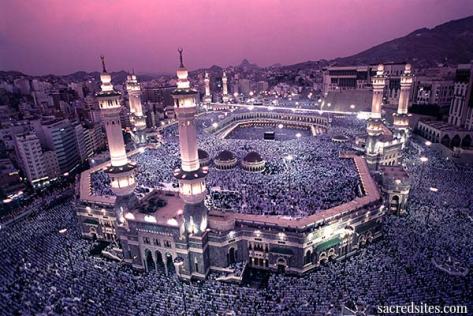
The city of Medda

The city of Mecca


medina

The city of Medina


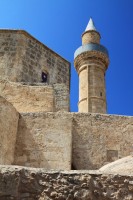
Mosque tower

Mosque tower

No Green


If you took the photo too it is beautiful! I really like the poem also. Hugs, Barbara

Pat Cegan's avatarSource of Inspiration

1379245_557619747644811_747644044_n

Born unable to see green
through it hangs from
every branch, I see
not a leaf of green.

Poets write sonnets about it
songs, quests, tales of heroes
who know green
that I’ve never seen.

How can one not see
what is all around?
Is my heart too closed
my eyes somehow
too full of other things?

View original post

Mensensamenleving.me

Mensen maken de samenleving en nemen daarin een positie in. Deze website geeft toegang tot een diversiteit aan artikelen die gaan over 'samenleven', belicht vanuit verschillende perspectieven. De artikelen hebben gemeen dat er gezocht wordt naar wat 'mensen bindt, in plaats van wat hen scheidt'.

Best Photo Editing Service Provider

Enhance your photos with professional precision using our top-notch photo editing services

John Oliver Mason

Observations about my life and the world around me.

Opalescence

The Middle Miocene Play of Color

Elicafrank's Blog

We didn’t end when we said goodbye maybe because the promise was ETERNITY

Ranjith's shortreads

Wanderers in the world

The Wallager

The news. The dog. Dialectics.

The Lewis Mix

Husband from Utah, Wife from Hong Kong, Two Mix Babies

Walter Singleton

Walter Singleton's blog, dedicated to Aiden Singleton and Seth Singleton living near Chattanooga, TN.

Gentle Joss / Wisdom of the Crone

Mentor and Writing assistance for women

Pax Et Dolor Magazine

Peace and Pain

SurveyStud, LLC

SurveyStud: https://appsto.re/us/Ddj18.i

Levi House

Speak out, judge righteously, defend the rights of the poor and the needy

Present Minded

A MODERN PERSPECTIVE ON COGNITIVE SCIENCE AND MENTAL HEALTH

oats

welcome!