The Constitution has Failed


The Constitution of the United States has failed

This is not fine.

 IanMillhiser

What kind of nation allows the loser of a national election to become president — and then does it again 16 years later?

What kind of nation retains an electoral process that was originally designed to inflate the influence of slaveholders?

What kind of nation permits its Congress to write a time bomb into law that periodically forces rival factions into a game of chicken that could wreck the world economy?

What kind of nation fights a civil war over the question of whether people of African descent are people or property, and then looks the other way when the loser ignores the resolution of that war? What kind of nation waits until 1965 to guarantee black people’s right to vote?

Americans speak of our Constitution as if it were a religious text. To label a law “unconstitutional” is not simply to say that it violates some procedural rule or legal technicality, it is to label it fundamentally unAmerican. To do so is to question the values of any lawmaker despicable enough to support such a law, and to suggest that those values are at odds with who we are as a nation.

But our Constitution has not served us nearly as well as we would have been served by other systems adopted by our peer nations. Nor has it lived up to the expectations of its drafters.

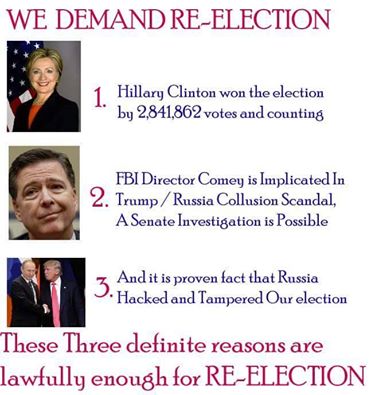
Now, our country is facing a man of superlative ignorance. A racist. An admitted sexual assaulter of women. A man poised to violate the Constitutionthe very instant he takes the oath of office. A man who openly encouraged Russia’s efforts to usher him into the White House. A man who owes his election to the underhanded efforts of deep state actors within our nation’s internal police agency. A man who lost the popular vote by nearly 3 million votes. And the Constitution has placed this man in the White House.

The Constitution gave Donald Trump command of the world’s most powerful military and an nuclear arsenal that can eradicate all life on Earth. It let him name a racist as our nation’s top enforcer of its laws. It let him use his office to sell hotel rooms to foreign diplomats. The Electoral College has voted. Trump will be our next president. This is what the Constitution hath wrought.

It did this because our Constitution remains the product of a compromise with moral monsters who believed that human beings could be owned as property. It did this because our Constitution offers no guarantee, or even much in the way of likelihood, that the men and women elected to lead the country will share the preferences of the nation as a whole. It did this because our Constitution fosters voter ignorance. It did this because our Constitution can be gamed — and was gamed quite successfully by the Republican Party.

The price of peace

There are competing theories for why America has an Electoral College. One, offered by Alexander Hamilton in an advocacy document written to persuade the nation to support its new Constitution, is that it would allow “men most capable of analyzing the qualities adapted to” the presidency to determine who should hold that crucial job.

Another theory, which Hamilton did not include in his sales pitch for the Constitution, is that the Electoral College was part of the price northerners had to pay in order to form a union with states whose entire economic model depended on slavery.

Regardless of which theory you prefer, it is undeniable that the Electoral College now serves the second goal of giving a leg up to racists far better than it serves the first. In 2016, the electors themselves are almost entirely obscurities — party activists who are typically selected more for their willingness to cast a vote for their party’s candidate than for their ability to analyse the qualities best adapted to the presidency. Even if they’d wanted to elect someone other than Donald Trump as the president, they lack the stature necessary to quell unrest that would likely ensue.
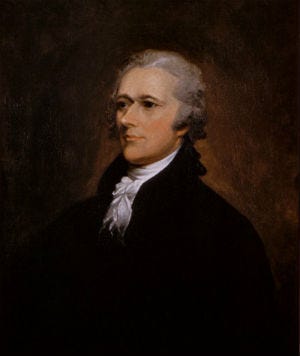
This guy is not coming to save you.

What the Electoral College has done is steal the presidency from the woman who won it, and given it to a man who openly campaigned on racism and nativism. It’s the sort of outcome that would make many of the Founding Fathers smile — the ones who demanded a terrible price as the cost of Union.

To be sure, there were good men at the Philadelphia convention that drafted the original Constitution. There were men who, as Gouverner Morris said in a speech to the convention, saw slavery as a “nefarious institution” and “the curse of heaven on the States where it prevailed.” There were also delegates from large states who stood for the very simple proposition that a vote from Virginia should count exactly the same amount as a vote from Delaware.

Yet these good men traded away their convictions. The new Constitution explicitly protected slavery. It allowed slave states to count each slave as three-fifths of a person for purposes of calculating representation in the House and the Electoral College, even though those slaves could not vote. And it created the Senate, an anti-democratic body which today counts each person in Wyoming as 67 times more important than each person in California.

The good men in Philadelphia agreed to these terms in service of a singular goal: peace through Union. As Yale’s Akhil Amar explains, the Articles of Confederation, the loose alliance of states that preceded the Constitution, conceived of the United States as “an alliance, a multilateral treaty of sovereign nation-states.” Pennsylvania was as much a separate a sovereign nation from Virginia as Russia is today separate from China. The Articles largely bound these nations into a pact of mutual commerce and defense.

Nevertheless, the framers were well-versed in European history. They knew of the frequent warfare which plagued that continent, and they came to see Union as the best defense against a similar fate. As Amar describes their concerns, “each nation-state might well raise an army, ostensibly to protect itself against Indians or Europeans, but also perhaps to awe its neighbors. America would then recreate continental Europe — borders, armies, dictators, chains, and all.”

The threat from such armies, moreover, was twofold. As Hamilton warned, these armies could themselves be turned against the people, becoming “engines of despotism” that would lead the states in a “progressive direction toward monarchy.” Standing armies were a threat, not just to rival states, but to the people of their home states.

More than two centuries later, the Founding Fathers’ belief that their Constitution would keep America from keeping a standing army is quaint. The United States has the most powerful military in the world, in addition to a network of federal police, intelligence agencies, and an entire cabinet department devoted to internal security. Perhaps these institutions will balk if Trump orders them to impose the kind of tyranny Hamilton feared, but the Constitution sure did not stop them from being built.

It also didn’t save us from war among the states. The early history of the United States was an uneasy peace broken by regional conflicts and near-misses — the Nullification Crisis, Bleeding Kansas, John Brown’s raid on Harper’s Ferry. And then the war came, a four year conflict that killed between 2 and 3 percent of the nation’s entire population.

Our Founding Fathers traded away democracy. They traded away the fundamental principle that every American’s vote is equal. They traded away every person’s inalienable right to freedom. And they’d traded it away for nothing.

Three generations of lost rights

If you go to the American South today, and you speak to a black person over the age of 50, you are most likely speaking to someone who was born into an apartheid state. If you speak to someone over the age of 70, that person probably had their voting rights stolen from them by a white supremacist regime.
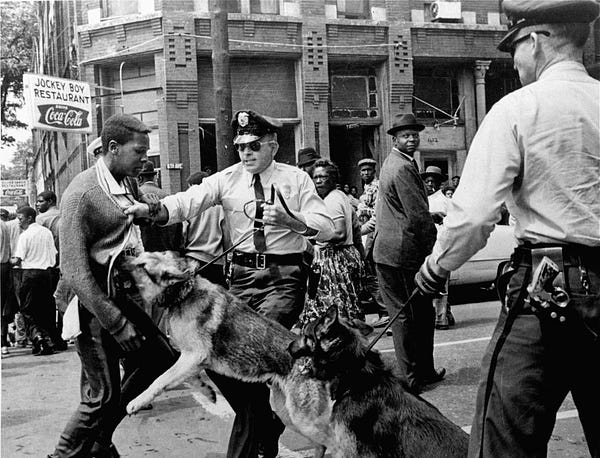
Alabama police sick attack dogs on a civil rights activist who is young enough to still be alive today. CREDIT: AP Photo/Bill Hudson

This is not ancient history. These are flesh and blood Americans who live and work among us. America became a liberal democracy in 1965, when President Lyndon Johnson signed the Voting Rights Act. Free and fair elections, at least at the nationwide level, are not something we have all that much experience with.

It wasn’t supposed to be this way. When the Civil War was won, the victors demanded a new covenant. They wrote slavery out of our Constitution. They wrote freedmen’s right to vote into the Constitution. And, in the most sweeping and radical change that has ever been written into the Constitution, they completely reworked the balance of power between the states and the people.

The Fourteenth Amendment declared, for the first time in American history, that everyone born in the United States is a citizen and that every citizen enjoys certain rights solely because they are an American (without this amendment, states were free to violate the Bill of Rights). It provided that no one can be stripped of their liberty without appropriate legal process, and it insisted on equal treatment along racial lines.

Yet, for much of the next century, the South gleefully ignored these guarantees. “Black codes” relegated freedmen to a status that was often difficult to distinguish from actual slavery. Black men were arrested for minor or even fabricated offenses, then rented out to whites as cheap labor. Jim Crow segregated African Americans and stripped them of their vote. And if anyone dared to question white supremacy, they were quieted by terrorist groups like the Ku Klux Klan, which often worked in close coordination with the state.

There are many villains in this saga. The resilience of white supremacist government in the South occurred because the Supreme Court largely sat on its hands, often explicitly embracing the South’s most odious practices. It happened because the rest of the nation lost its nerve, abandoning Reconstruction for a peace built from the bones of black Americans. It happened because of immoral men willing to use murder as a tool of political control. But white supremacy also thrived because of the Founding Fathers.

Remember that compromise? The one that gave Alabama exactly the same number of senators as New York? It also prevented Congress from enacting a single civil rights law from 1875 until 1957.

The Civil Rights Act of 1875 was one of Congress’ final serious attempts to reconstruct the South. Enacted just over a year before Rutherford B. Hayes sold out black America in order to secure his presidency, the Act banned racial discrimination by “inns, public conveyances on land or water, theaters, and other places of public amusement.” It survived eight years before it was struck by the Supreme Court.

Though new civil rights legislation sometimes passed the House — five such bills did so in the 12 years following World War II — none of this legislation survived contact with the Senate. The same Senate malapportionment that, for many years, gave slave states parity with free states in Congress’ upper house, despite the fact that the free population in the North significantly exceeded that of the South, now gave the Jim Crow states a far louder voice in the Senate than their population warranted.

That thumb on the scale, combined with the filibuster, was enough to keep civil rights bills from becoming law.

Nearly six decades after the Senate finally ended its blockade of all civil rights laws, malapportionment continues to advantage conservatives and stymie progressives. To give just one example, the 54 senators who make up the current Republican majority (and who effectively kept the Supreme Court in Republican hands by preventing Chief Judge Merrick Garland from being confirmed to fill its vacant seat) represent fewer than 150 million people. The 46 senators in the Democratic majority, meanwhile, represent more than 170 million.

What’s more, according to the group FairVote, “the 46 Democratic caucus members in the 114th Congress received a total of 67.8 million votes in winning their seats, while the 54 Republican caucus members received 47.1 million votes.”

The ungovernable nation

Even setting aside the undemocratic Senate, the United States is an outlier among our peer democracies because of the unusual number of roadblocks our Constitution places before any bill that seeks to become law.

America’s separation of powers, which typically requires consensus among the president, two houses of Congress, and the Supreme Court — not to mention the cooperation of congressional leaders and committee chairs who have outsized power to hold up legislation — is generally taught to schoolchildren as if it were divine wisdom delivered to the Founding Fathers at Mt. Sinai. But it is a highly unusual system, in no small part because so many democracies that adopted similar models failed.

In his seminal essay “The Perils of Presidentialism,” the late Yale political scientist Juan Linz warned about the danger inherent in a constitutional system, like the one in the United States, which elects the nation’s chief executive separately from its legislature. In such a system, it is easy for two irreconcilable factions to each gain control of at least one veto point that enables them to halt the legislative process. Moreover, because both sides “derive their power from the votes of the people in a free competition among well-defined alternatives,” there’s no “democratic principle” that can be cited to break such an impasse.

“In some such situations in the past, the armed forces were often tempted to intervene as a mediating power.”

As one Republican lawmaker defended his party’s actions in the lead up to the 2013 government shutdown, “I too won an election. You want me to just disregard all of my voters and all of the promises that I made and how I got elected?” The shutdown happened because both our Democratic president and our Republican House had an equal claim to democratic legitimacy.

The shutdown is an unhappy memory, but it is hardly the worse case scenario for what can happen if the president and the legislature face a unsolvable disagreement. It is “no accident,” Linz recalled of other nations that have faced such an impasse, “that in some such situations in the past, the armed forces were often tempted to intervene as a mediating power.”

The United States, fortunately, did not reach the point where Obama and former House Speaker John Boenher (R) needed to start counting their loyalists among the nation’s generals and admirals. But there’s still plenty of evidence of the issues that Linz is referencing in U.S. government.

Our stagnant, imperfect democracy leaves many problems — crumbling infrastructure, a job market that still has not fully recovered from the recession — unaddressed or underaddressed. It also denies voters much of the feedback that they need in order to cast their ballots wisely.

A likely reason why Republicans felt hornswoggled when President Obama signed the Affordable Care Act into law is that they had good reason to believe that such a thing wasn’t possible. After all, every Democratic president since Harry Truman (as well as Republican Richard Nixon) promised a universal health plan. Yet, for more than six decades, they failed. Failed health care reform plans were as American as baseball and capitalism. It’s hard to blame Obama’s opponents for thinking they were safe from the horrors of affordable health care for the less fortunate.

Meanwhile, the Republican Party’s fiscal proposals, which include deep cuts to Medicaid and food stamps, a plan to charge seniors up to 40 percent more for inferior health coverage, and big tax cuts for the highest earners, are unpopular with the general public, unpopular with Republicans, and unpopular even with most Republican donors. Pretty much the only people who like these proposals are rich Republican donors.

CREDIT: Center for American Progress

And yet, somehow, the American people just elected a Republican Congress that is poised to enact these unpopular proposals and a president (albeit not with anything close to a majority vote) who is likely to sign them into law. How can this be? Why did so many voters condemn themselves to policies that they hate?

Vox’s Sarah Kliff offers one explanation for this dichotomy. In a recent trip to a Kentucky town that voted overwhelmingly for Trump, despite the fact that many of its residents depend upon Obamacare for health coverage, she heard a frequent refrain. In Kliff’s words, these voters “just couldn’t fathom the idea that this new coverage would be taken away from them.”

In one of the most heartbreaking interviews in Kliff’s piece, a voter whose husband is waiting for a liver transplant was able to get health insurance for her family thanks to Obamacare. Yet she told Kliff that she backed Trump because “I guess I thought that, you know, he would not do this, he would not take health insurance away knowing it would affect so many people’s lives.”

In 2012, a Democratic super PAC convened a focus group to assess whether Republican candidate Mitt Romney’s support for the GOP’s fiscal proposals could be used against him. Yet the focus group’s reactions to these proposals resembled the conversations Kliff had with Trump voters in Kentucky. When the super PAC “informed a focus group that Romney supported the Ryan budget plan — and thus championed ‘ending Medicare as we know it’ — while also advocating tax cuts for the wealthiest Americans, the respondents simply refused to believe any politician would do such a thing.”

The Constitution of the United States, in other words, built a nation where elections frequently don’t have significant consequences. In doing so, it lulled many voters into a false sense of security. It taught them not to believe politicians’ promises because, chances are, those promises won’t be implemented anyway.

And then, when a party actually does bring about sweeping radical change, the same voters seem flabbergasted that the government they elected actually did what it said it would do.

The risk of permanence

One good thing that can be said about unified Republican control of Congress and the White House is that it is likely to break this cycle. If Republicans succeed in repealing Obamacare, replacing Medicare with a voucher program, slashing Medicaid, cutting Social Security benefits by 20–50 percent, and using the savings to put more money in the wealthiest Americans’ pockets, then it will be hard to pretend that elections don’t matter. Or that voters shouldn’t pay attention to a party’s ideas before they cast a ballot for its candidates.

But the biggest danger arising from unified Republican government isn’t that it will enact bad policies that might be repealed later. It is that the GOP will use its moment at the apex of power to ensure that it can never be displaced from this position.

In many ways, this process began long before Donald Trump even declared his candidacy. Over the last several years, voter suppression laws thrived in Republican-led states. Meanwhile, these laws — many of which are unconstitutional — have survived judicial review thanks to a GOP-dominated Supreme Court that even went so far as to gut a key provision of the Voting Rights Act.

There are many good things in our Constitution. But they don’t mean very much if the Supreme Court is unwilling to enforce them.

There are also strong arguments that partisan gerrymandering violates either the First Amendment’s protections against viewpoint discrimination, or the Fourteenth Amendment’s guarantee of equal protection under the law. Yet Republicans on the Supreme Court also thwarted efforts to combat such gerrymandering in court. These decisions, combined with geographic factors that advantage Republicans, prevent Democrats from enacting legislation even when they win. In 2012, for example, Democratic House candidates won nearly 1.4 million more votes than Republicans. Yet the GOP kept control of the House.

There are many good things in our Constitution. But they don’t mean very much if the Supreme Court is unwilling to enforce them.

Get used to having this guy in charge. CREDIT: AP Photo/Cliff Owen

Once Trump adds another Republican justice to replace the late Justice Antonin Scalia, one of the Court’s first orders of business will probably be a long-pending dispute that seeks to hobble public sector unions’ ability to fund themselves — it is highly likely that Trump’s nominee will provide the fifth vote to inflict this wound on unions. That not only means lower wages for government workers in the long run, but also means Democrats will lose much of the political infrastructure that these unions provide.

And enabling voter suppression while carving up unions is really only a small part of the damage a truly partisan Supreme Court could inflict upon democratic governance. In the worse case scenario, a Supreme Court stacked with Trump justices could recreate the early twentieth century, when minimum wage laws, child labor laws, and much of the New Deal were blocked by an ideological Court that did not feel especially constrained by the text of the Constitution.

Despite all the obstacles laid by voter suppression and similar tactics, Democrats could claw their way back into congressional majorities and the White House — only to discover that their efforts to roll back Trump era legislation will be struck down by Republicans on the Supreme Court.

Learning the wrong lessons

If America holds a free and fair election in 2020, and if that election places a Democrat back in the White House, there’s a danger that liberals will learn the wrong lessons from four years of Donald Trump.

To be sure, some of the right lessons are obvious and unlikely to be missed. The Electoral College, for example, is a pathology that will have few informed defenders outside of the party that has twice seen its losing candidate declared the winner.

But conservatives also spent much of the last century spinning a fairly consistent narrative about what’s wrong with the American system of government. In their mythology, the problem with the United States is that it is too democratic. That it is too easy for the federal government to enact new programs and regulations. And that the way to save America is to erect barriers that make it harder for elected officials in Washington to govern.

This narrative is likely to have some appeal to liberals reeling from four years of Trump. The idea that Obamacare, or Medicare, or Social Security, could have been saved if only there’d been more veto points in our system will be appealing. We are likely to see just how bad things can get if government is able to move quickly.

If Brexit does prove to be a calamity, British voters will at least know who to blame.

But liberals will shoot themselves in the foot if they succumb to the appeal of a left-libertarian alliance whose sole goal is to keep future Presidents Trump from doing too much, too quickly. In the short term, they are likely to freeze government in the weakened state that four years of Donald Trump will produce. In the long term, such a single-minded alliance would exacerbate the constitutional defects that brought America to the point we find ourselves in today.

Today, as President-elect Donald Trump waits to take the oath of office, the nation of Great Britain faces a similar crisis. The Brexit campaign, which appealed to much of the same racism and nationalism that drove Trump’s campaign, is victorious. A web of alliances that helped end centuries of warfare within Europe is now at risk. British workers are expected to “make £38 less a week than their E.U. counterparts by the year 2030 once the country leaves the E.U.”

The British parliamentary system, which typically places a single party in charge of the entire government, did not prevent these outcomes. But if Brexit does prove to be a calamity, British voters will at least know who to blame. It was a Tory prime minister who allowed the Brexit vote, and a Tory government will manage the nation’s transition out of the European Union.

There can be no doubt in London that elections have consequences. And no further doubt about who foisted these consequences upon the British people.

And, if Tory candidates campaign on a plan to dismantle their nation’s universal health care system, British voters will know damn well that they better believe that these candidates will actually do it.

They won’t vote, as so many Americans did, to dismantle our social safety net by accident.

bjwordpressdivider-1

 The United States Constitution was written over the summer of 1787 at a convention in Philadelphia. Fifty-five delegates from twelve states eventually signed the document that created the modern American government, but its main author was Virginia delegate James Madison. He later became the fourth president.

His plan included the basic institutions of our government—The Supreme Court, the U.S. Congress, and the presidency. These remain essentially unchanged today.

A national government had been created during the Revolutionary War. Most of the early Americans felt that the national government was dysfunctional. It had been accepted in 1777. The government lacked the authority to collect taxes. Each of the original thirteen colonies had an equal say in national policy. New York and Virginia, which had larger populations, were upset about the equal say. Small states were aware of this flaw in the Articles of Confederation. and they were wary of giving too much power to neighboring states. Rhode Island, for example, wouldn’t even participate in the Convention.

The new constitution formed the House of Representatives, whose seats would be allotted by population and the Senate, where each state had equal representation.

Slavery was still a huge problem for the Founding Fathers. Washington and others wanted to end slavery.  Their southern brothers knew that the economy of the south was dependent upon the free labor from slavery. This moral question went around and around. The southern states threatened to withdraw and become their own country. The Founding Fathers did not want that to happen to the great experiment—democracy.

They came up with a compromise. It was called the Connecticut compromise and it removed the greatest obstacle to the success of the convention and our country. In a nutshell, a non-free person would be counted as three-fifths of a person for tax reasons and in determining representation in Congress. The delegates locked themselves in until the could come to an unanimous decision,

I think they should have ended slavery but Washington is quoted as saying, that perhaps it should be left for later generations to decide as we would be able to handle it better and with less strife. We clearly were not better equipped to handle it. The black man and woman were the ones who suffered from all of our lack of ability.

The electoral college was set up at this time to prevent the people from electing someone to be president who was illiterate and totally unable to run the country. Many Americans were illiterate at the time and the founding fathers sought to protect our new nation. The population of a state would determine how many delegates in the electoral college each state would have. The delegates were to vote on the candidate the state determined they wanted to be President. Historically, it served its purpose. Now in the twenty-first century, it has elected a President twice that the people did not want nor did they elect. Gore was the first person and Bush ended up in the White House and now Clinton with Trump ending up in the White House. The college needs to be altered because it is outdated by around 240 years. We could also dismantle the college which is my favorite option. We no longer have a need for this outdated balancing remedy. Almost all of America is now educated enough to be able to cast their ballot with out worry.

Namaste,

Barbara
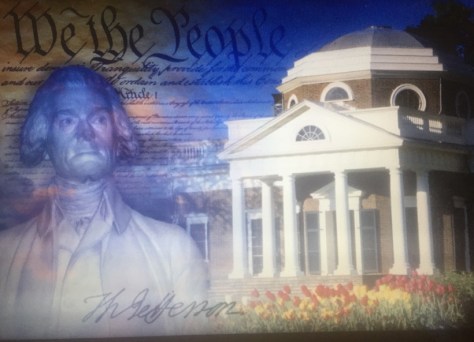
The Founding Fathers


Dear Students: Rap and Revere Hamilton, But Remember to Sing A Jeffersonian Melody

jefferson

bjwordpressdivider-1


Have you thought about America’s creed and what it means to you? Are you willing to fight for the creed to help make America great again.  America is made in the image of Hamilton’s image and it grew in that image. Jefferson, being a renaissance man, directed our new democracy down a path to greatness.  We are now at a tipping point and our democracy is hanging in limbo. Are we  strong enough to get on the path again; to get back on Jefferson’s path? Do we believe in equality, goodness and kindness? Are we willing to give up our comfort to stand with the marginalized people? Millions of us are. I hope many more will join us in taking the fear and suffering out of being an American.

Dakota Pipeline Updates


Massive 2013 Oil Spill in North Dakota Still Not Cleaned Up


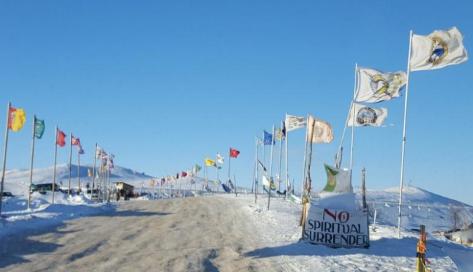
Only the hardiest remain at Dakota protest camp

The remaining activists are grappling with plunging temperatures that make conditions more difficult at the protest camp in Cannon Ball, North Dakota, December 14, 2016. Picture taken December 14, 2016. REUTERS/Valerie Volcovici

The remaining activists are grappling with plunging temperatures that make conditions more difficult at the protest camp in Cannon Ball, North Dakota, December 14, 2016. Picture taken December 14, 2016. REUTERS/Valerie Volcovici


A couple of the remaining activists that are left grappling with plunging temperatures that make conditions there more difficult at the protest camp in Cannon Ball, North Dakota, December 14, 2016. Picture taken December 14, 2016. REUTERS/Valerie Volcovici

A couple of the remaining activists that are left grappling with plunging temperatures that make conditions there more difficult at the protest camp in Cannon Ball, North Dakota, December 14, 2016. Picture taken December 14, 2016. REUTERS/Valerie Volcovici


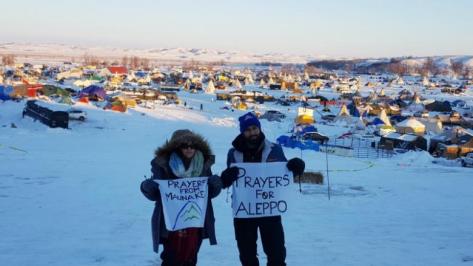
A couple of the remaining activists, hold up signs as they grapple with plunging temperatures that make conditions more difficult at the protest camp in Cannon Ball, North Dakota, December 14, 2016. Picture taken December 14, 2016. REUTERS/Valerie Volcovici

A couple of the remaining activists, hold up signs as they grapple with plunging temperatures that make conditions more difficult at the protest camp in Cannon Ball, North Dakota, December 14, 2016. Picture taken December 14, 2016. REUTERS/Valerie Volcovici


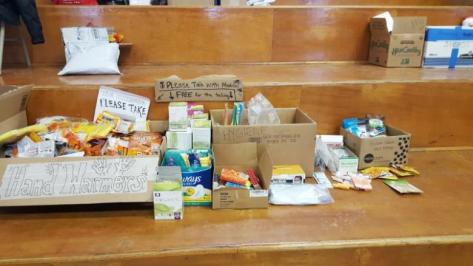
Supplies left for the remaining activists who are grappling with plunging temperatures that make conditions more difficult at the protest camp in Cannon Ball, North Dakota, December 14, 2016. Picture taken December 14, 2016. REUTERS/Valerie Volcovici

Supplies left for the remaining activists who are grappling with plunging temperatures that make conditions more difficult at the protest camp in Cannon Ball, North Dakota, December 14, 2016. Picture taken December 14, 2016. REUTERS/Valerie Volcovici


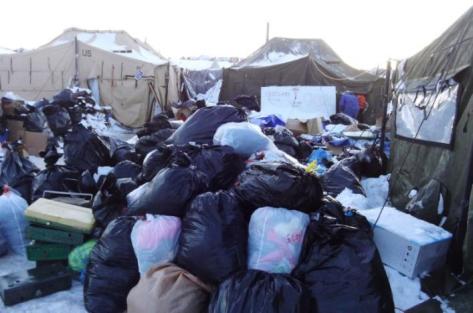
Supplies are piled up for the remaining activists that are left grappling with plunging temperatures that make conditions there more difficult at the protest camp in Cannon Ball, North Dakota, December 14, 2016. Picture taken December 14, 2016. REUTERS/Valerie Volcovici

Supplies are piled up for the remaining activists that are left grappling with plunging temperatures that make conditions there more difficult at the protest camp in Cannon Ball, North Dakota, December 14, 2016. Picture taken December 14, 2016. REUTERS/Valerie Volcovici


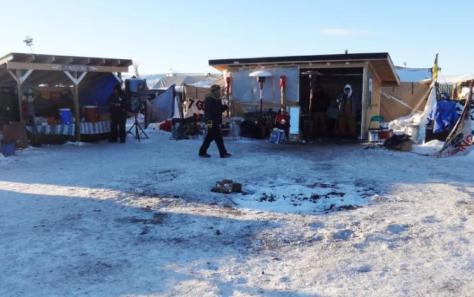
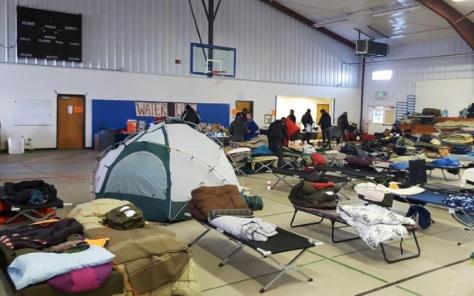
Remaining activists keep warm inside, at an emergency center, as they are grappling with plunging temperatures that make conditions more difficult at the protest camp in Cannon Ball, North Dakota, December 14, 2016. Picture taken December 14, 2016. REUTERS/Valerie Volcovici

Remaining activists keep warm inside, at an emergency center, as they are grappling with plunging temperatures that make conditions more difficult at the protest camp in Cannon Ball, North Dakota, December 14, 2016. Picture taken December 14, 2016. REUTERS/Valerie Volcovici


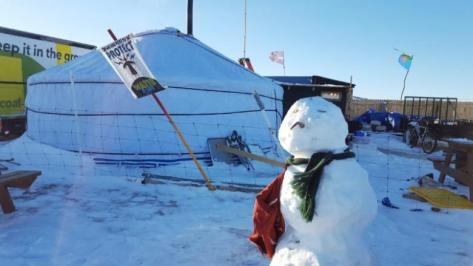
A snowman stands as the remaining activists are grappling with plunging temperatures that make conditions more difficult at the protest camp in Cannon Ball, North Dakota, December 14, 2016. Picture taken December 14, 2016. REUTERS/Valerie Volcovici

A snowman stands as the remaining activists are grappling with plunging temperatures that make conditions more difficult at the protest camp in Cannon Ball, North Dakota, December 14, 2016. Picture taken December 14, 2016. REUTERS/Valerie Volcovici


Two weeks after a victory in their fight against the Dakota Access Pipeline, most protesters have cleared out of the main protest camp in North Dakota – but about 1,000 are still there, and plan to remain through the winter.

These folks say they are dug in at the Oceti Sakowin Camp in Cannon Ball, North Dakota, despite the cold, for a few reasons. Most are Native Americans, and want to support the tribal sovereignty effort forcefully argued by the Standing Rock Sioux, whose land is adjacent to the pipeline being built.

Others say they worry that Energy Transfer Partners LP (ETP.N), the company building the $3.8 billion project, will resume construction without people on the ground, even though the tribes and the company are currently locked in a court battle.

Future decisions on the 1,172-mile (1,885-km) pipeline are likely to come through discussions with the incoming administration of Donald Trump, or in courtrooms.

“I’ve seen some of my friends leave but I will be here until the end and will stand up to Trump if he decides to approve the permit,” said Victor Herrald, of the Cheyenne River Sioux Tribe in South Dakota, who has been at the camp since August.

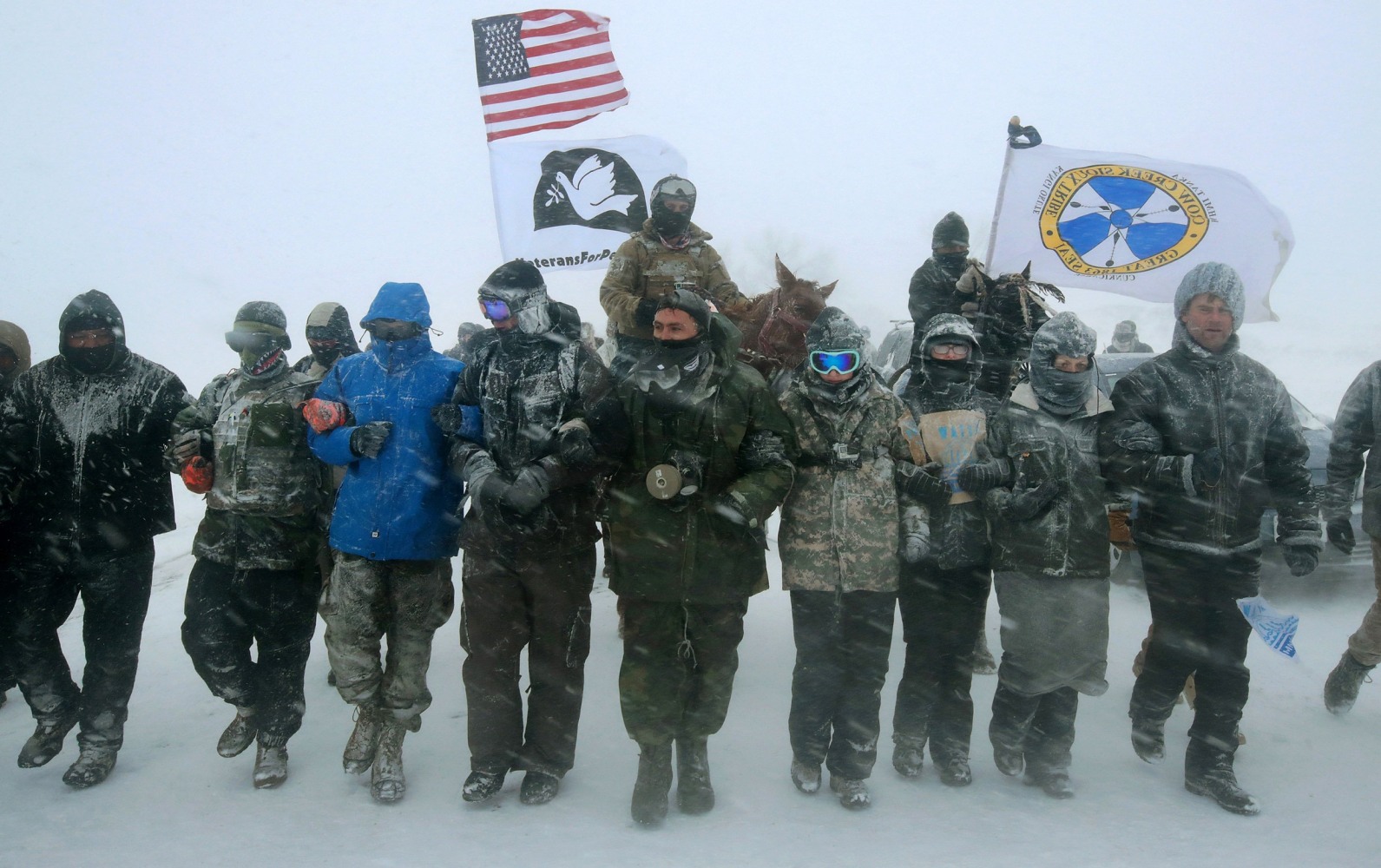
At one point the camp had about 10,000 people, including about 4,000 veterans who showed up in early December – just before the U.S. Army Corps of Engineers denied a key easement needed to allow the Dakota Access Pipeline to run under Lake Oahe, a reservoir formed by a dam on the Missouri River.

After the Corps decision, Standing Rock chairman Dave Archambault asked protesters to go home. The camp’s population now runs from 700 to 1,000, depending on the day, and many come from the nearby Standing Rock reservation where they live.

Those left say they are there to “show our strengths,” as Bucky Harjo, 63, of the Paiute tribe, from Reno, Nevada, put it, while the tribe deals with the legal battle.

Logistics are key for those still at the camp, located on federal land. Theron Begay, a Navajo journeyman who is a certified construction worker and heavy machine operator, has been put in charge of winterizing the camp. He is training volunteers to build structures that can withstand sub-zero temperatures and bitter winds, as well as compost toilets.

Some people at the camp have gotten pneumonia, and they and others went to an emergency shelter that was built three miles away to escape the cold.

Because the Oceti Sakowin camp is located on a flood plain, waste from the camp poses risks to the nearby Cannonball River. Tribal leaders have said the camp may need to move if it wants to remain active. Begay said the structures can be “disassembled like a puzzle in two hours” and re-established on drier ground.

North Dakota’s Governor Jack Dalrymple said in a Tuesday statement that he and Archambault recently met to discuss reducing tensions between the tribe and law enforcement. They are discussing reopening the nearby Backwater Bridge on state highway 1806, which has been blockaded since Oct. 27, when activists set vehicles on fire.

Harjo said he will leave “when I see the drill pad removed and DAPL out of here, and when they reopen 1806 and when we are free to go at our own will and not be targeted on the highway.”

Tom Goldtooth, executive director of the Indigenous Environmental Network, and a constant presence in the camp, said the protest is transitioning “to the next level of our campaign” to stop the pipeline.

Some still at the camp worry that if they leave, Energy Transfer Partners will restart construction. ETP asked a federal judge on Dec. 9 to overrule the government’s decision and grant the easement. The judge declined that request; the parties are due back in court in February. The Army Corps is considering alternatives, which could take months.

Trump, who owned ETP stock through at least mid-2016, according to financial disclosure forms, could order the Army Corps to grant the permit. His choice for U.S. Energy Secretary, former Texas Governor Rick Perry, is on ETP’s board. Standing Rock Sioux representatives met with members of Trump’s transition team this week to urge the incoming president to deny the easement.

Protesters who remain at the camp are still receiving donations of money and supplies from people across the United States. On a recent visit to the camp’s emergency shelter it was filled with boxes delivered via Amazon.com.

Goldtooth said tribal leaders are talking about an exit plan for the camp. “We will continue to provide infrastructure support to those who stay here,” he said. “We’ll make sure they’re safe and warm.”


bjwordpressdivider-1


Many believe that if there is a pipeline breach, it just gets cleaned up and life goes on. The truth is that it takes years to clean up and the land and the animals and the water are affected and we don’t know if it is ever completely cleaned up. The big oil and gas companies may not want to pollute the environment but they are not going to turn away from their huge profits to possibly save a piece of land.


Beginning on January 20th, the Federal government will have a conflict of interest between the native people and Trump’s owning a piece of the Energy Transfer Partners, the oil company installing the Dakota Pipeline. Those of us that care enough about America to love our environment and our beautiful land don’t care about profits. We the people care about keeping our land beautiful and pristine. That can’t be done if the land and the water is polluted and unsafe for people to use.


Some of the native people have gone home to their families and jobs. There are some 700-1000 protesters who plan on staying throughout the winter. I  think that we need to continue our prayers and continue to send donations as we have been doing since the beginning. I also think that letters of encouragement from us, the adults, or from our kids would be a wonderful way to let the native people know that we are with them and that they are not forgotten in their long dark winter.


Power to the People

Clean water and pristine land for the people


Namaste

Barbara


Feminist Highlights in 2016 Did Exist


18 Feminist Bright Spots In The Hellscape Of 2016

All is not lost.

GETTY IMAGES

Let us begin with the obvious. For many women, 2016 was a deflating nightmare of epic proportions.

It was singular in terms of shittiness, really. One of the top news stories was the unearthing of decade-old footage of Donald Trump boasting that he likes to grab women by the pussy ― and he went on to be elected as America’s 45th president. The glass ceiling stands. Reproductive rights are under attack. It’s… not great.

But! Last year was also filled with some pretty solid moments for women in the worlds of sports, entertainment and yes, politics and reproductive rights. We swear.

In the spirit of kicking off 2017 on a more positive note, we rounded up 18 of the brightest spots for women from the last year. Onwards and (hopefully?!) upwards.

  • 1 When Hillary Clinton won the Democratic nomination.

    Alex Wong via Getty Images

    Yes, we know how it ended. She lost. But in July, Clinton became the first woman in this country’s history to be nominated for president by a major political party. And it was historic.

    Clinton ultimately lost the electoral college, but she took the popular vote by more than 2 million votes — another first for women — and that margin continues to grow.

  • 2 When the Supreme Court served a huge victory for abortion rights.

    Pete Marovich via Getty Images

    In late June, the Supreme Court struck down a Texas abortion law that required abortion providers have admitting privileges at local hospitals, and that clinics meet the standards of ambulatory surgical centers — restrictions that led to the closure of roughly half of the state’s abortion clinics.

    But in a 5-3 decision, the Court concluded the law placed an “undue burden” on women and their ability to access care. In doing so, they offered up the most significant legal victory for abortion rights in the United States in decades. The ruling establishes legal precedent that will make it that much harder for anti-choice legislators to chip away at women’s reproductive rights (despite their constant efforts to do so).

  • 3 When Simone Biles was complete and utter perfection.

    TOSHIFUMI KITAMURA via Getty Images

    Simone Biles went into the 2016 Olympics with an enormous amount of pressure on her to be, basically, perfect — and she was. She won four gold medals (the first U.S. gymnast ever to do so) and one bronze.

    Biles also perfectly shut down any attempts to describe her remarkable achievements by likening her to male superstars. “I’m not the next Usain Bolt or Michael Phelps,” she told Sporting News. “I’m the first Simone Biles.”

  • 4 When Simone Manuel became the first African-American woman to win an individual gold in swimming.

    ODD ANDERSEN via Getty Images

    At 20 years old, Manuel made Olympic history when she became the first black woman to win an individual gold medal in swimming in the 100-meter freestyle. And she embraced the milestone.

    “The gold medal wasn’t just for me,” Manuel said during the games. “It was for people who came before me and inspired me to stay in this sport, and for people who believe that they can’t do it.”

    Manuel left the 2016 Olympics with a whopping four medals and has been hailed as the future of swimming.

  • 5 When the number of women of color in the Senate quadrupled.

    Barbara Davidson via Getty Images
    Election night was a blow to women in one rather obvious way, but there was at least one bright spot: The number of women of color in the United States Senate quadrupled, as Vox reports, from one to four. Mazie Hirono of Hawaii (who is Japanese-American) had been the Senate’s only woman of color, but she is now joined by Kamala Harris of California (who is African- and Indian-American), Catherine Cortez Masto of Nevada (who is Latina), and Tammy Duckworth of Illinois (who is Asian-American). Four women is by no means a lot, but it’s something.
  • 6 When a sexual assault survivor gave voice to millions.

    The Huffington Post

    In June, BuzzFeed first published the stunning impact statement of a 23-year-old who had been raped by former Stanford University student Brock Turner, and it instantly went viral.

    The 7,000 word letter — arguably one of the most powerful statements on sexual assault ever — offered an uncompromising look at the many ways in which sexual assault can upend a life, and how the legal system can fall terribly short.

    As Emily Doe wrote to other survivors of sexual assault: “I am with you. On nights when you feel alone, I am with you. When people doubt you or dismiss you, I am with you. I fought everyday for you. So never stop fighting, I believe you.”

  • 7 When women took back the word “nasty.”

    Rainmaker Photo/MediaPunch/MediaPunch/IPx

    In arguably the most memorable moment of the presidential debates, Trump interrupted Clinton — who was answering a question about social security — to call her “a nasty woman.”

    Almost immediately, #NastyWoman began trending on Twitter. Signs and swag sprung up everywhere, embraced by Clinton fans as the feminist rally cry they’d been waiting for.

  • 8 When thousands donated to Planned Parenthood — in Vice President-elect Mike Pence’s name.

    Pacific Press via Getty Images

    After the election, more than 315,000 of donations were made to Planned Parenthood, many in honor of Trump and Pence. (In November, New York Magazine reported that more than 80,000 donations has been made in honor of Pence, a known Planned Parenthood foe and anti-choice legislator.)

    The donations were part of an even broader post-election surge in donations to organizations promoting social justice policies that run counter a Trump/Pence agenda. For example, the ACLU received millions of dollars in donations, and immediately after the election, its website traffic increased by 7,000 percent.

  • 9 When Samantha Bee’s show premiered — and saved us all.

    John Sciulli via Getty Images
    In February, “Full Frontal” premiered, making Bee the only female to currently host a late-night show. Her sharp humor was essential during a brutal campaign season — and in October, she also became the first female late-night host to interview a U.S. president.
  • 10 When Ibtihaj Muhammad became the first U.S. Olympian to compete in a hijab.

    Patrick Smith via Getty Images
    In a year filled with anti-Muslim, anti-women rhetoric, watching a powerful Muslim-American woman compete in the Olympics wearing both her hijab and an American-flag on her fencing mask was meaningful and moving. And when the women’s fencing team won bronze, she became the first U.S. athlete to win a medal in a hijab.
  • 11 When swimmer Fu Yuanhui acknowledged that, yes, sometimes, women get their period.

    NurPhoto via Getty Images
    Period talk is still woefully taboo, but that didn’t stop Yuanhu — an Olympian from China — from being frank about what it’s like to be an elite athlete who also — gasp! — menstruates. “My period came last night and I’m really tired right now,” Fu told a reporter. “But this isn’t an excuse, I still did not swim as well as I should have.” The comment generated a lot of media headlines simply for being such a straightforward acknowledgment of one of the realities for many women who compete at high levels in sports.
  • 12 When Beyoncé released “Lemonade,” a powerful ode to black women.

    Larry Busacca/PW via Getty Images
    In April, Beyoncé released Lemonade, a 12-track visual album that put black feminism front and center. It included lines from Malcolm X (“The most disrespected woman in America is the black woman. The most unprotected person in America is the black woman”) and generated a whole lot of discussion (and debate) among feminist scholars and writers. It was, as The Hollywood Reporter put it, “a masterwork by a black woman for black women” — and in December, Beyoncé was nominated for nine Grammys.
  • 13 When Issa Rae’s “Insecure” premiered.

    Paul Archuleta via Getty Images

    In October, Rae’s HBO comedy “Inescure” premiered, putting the life of a modern black woman — with the highs and lows of navigating dating, friendship, work — front and center.

    In many ways, it was remarkable simply for being unremarkable. “I say that black people don’t really get a chance to just be regular and boring and go through everyday things and this is very much a slice of life show,” Rae said during a live conversation with The Huffington Post.

  • 14 When Jennifer Aniston stood up against the relentless scrutiny women face in (and out of) Hollywood.

    Matt Winkelmeyer via Getty Images

    Over the summer, Aniston wrote an open letter on The Huffington Post pushing back against the seemingly never-ending speculation that she is currently gestating (“For the record, I am not pregnant. What I am is fed up,“ she wrote) and calling out the media’s obsession with critiquing women’s appearances. Aniston wasn’t necessarily breaking new ground, but her stand was clear and assertive — and it struck a chord.

    “We are complete with or without a mate, with or without a child,” Aniston wrote. “We get to decide for ourselves what is beautiful when it comes to our bodies. That decision is ours and ours alone.”

  • 15 When emojis finally included hijabs, breastfeeding and women M.D.s.

    Over the summer, Apple upgraded its emoji library to include women in professions that were previously illustrated only male emojis (like, construction work and medicine). And in November, the Unicode Consortium approved 56 new emojis, including a person wearing a hijab and a breastfeeding woman.
  • 16 When Ilhan Omar became the Somali-American Muslim woman to hold public office.

    STEPHEN MATUREN via Getty Images

    The 33-year-old former refugee won a decisive victory in Minnesota where she was elected to the state’s House of Representatives. She was born in Somalia and lived for several years in a refugee camp in Kenya before immigrating to this country when she was 12.

    “Oftentimes, you are told to be everything but bold, but I think that was important for me in running as a young person and running as someone who is Muslim, a refugee, an immigrant,” told The Huffington Post in an interview last fall.

  • 17 When women in Poland demanded control over their own bodies — and won.

    NurPhoto via Getty Images
    In the fall, Polish legislators attempted to push on a total abortion ban within the country — but thousands of women took to the streets to push back. In sweeping protests, women from across 60 cities participated in a nationwide strike — and in early October the ruling government party rejected the abortion ban.
  • 18 When President Obama reminded us that all men should be feminists.

    Paul Morigi via Getty Images

    In an August essay for Glamour Magazine wrote about the reasons why he is a feminist and implored other men to join the cause.

    “It is absolutely men’s responsibility to fight sexism too,” he wrote. “And as spouses and partners and boyfriends, we need to work hard and be deliberate about creating truly equal relationships.” To which we say, hell yes.


bjwordpressdivider-1


To all my readers who are feminists, I acknowledge it has been a rough year. Now we face 4 years of Trump in the U.S., and all he hates including women. We will make it. Women down through history have survived one tragedy after another and we will survive this. We will remember to continue the work locally and on the state level. Volunteer at your local Domestic Violence Shelter, Rape Crisis, Food Bank, Big Brothers/Big Sisters or the local ACLU. You will be needed more than ever.

If you see a person in trouble being harassed by people, walk over to them like you know them and haven’t seen them in a long while. Take them by the arm and just chat with them until you are away from the troublemakers. They aren’t going to want witnesses. They will move along to easier victims.


We are not victims. We are women and we will have gender equality. We will get the ERA passed. We will have control over our own bodies. We will not live in fear and violence. Ladies, don’t let anyone make you feel that you are less than or not good enough. Don’t listen to the emotional abuse. Contact your local shelter and if there isn’t one, start one with other women in your community.

You are powerful.

Don’t give your power away.


Namaste

Barbara


This is Why We Stand With Standing Rock


Pipeline Spills 176,000 Gallons of Oil Into Creek 150 Miles From Dakota Access Protests

A pipeline leak has spilled tens of thousands of gallons of crude oil into a North Dakota creek roughly two and a half hours from Cannon Ball, where protesters are camped out in opposition to the Dakota Access pipeline.

Members of the Standing Rock Sioux and other tribes, as well as environmentalists from around the country, have fought the pipeline project on the grounds that it crosses beneath a lake that provides drinking water to native Americans. They say the route beneath Lake Oahe puts the water source in jeopardy and would destroy sacred land.

North Dakota officials estimate more than 176,000 gallons of crude oil leaked from the Belle Fourche Pipeline into the Ash Coulee Creek. State environmental scientist Bill Suess says a landowner discovered the spill on Dec. 5 near the city of Belfield, which is roughly 150 miles from the epicenter of the Dakota Access pipeline protest camps

The leak was contained within hours of the its discovery, Wendy Owen, a spokeswoman for Casper, Wyoming-based True Cos., which operates the Belle Fourche pipeline, told CNBC.

It’s not yet clear why electronic monitoring equipment didn’t detect the leak, Owen told the Asssociated Press.

Owen said the pipeline was shut down immediately after the leak was discovered. The pipeline is buried on a hill near Ash Coulee creek, and the “hillside sloughed,” which may have ruptured the line, she said.

“That is our number one theory, but nothing is definitive,” Owen said. “We have several working theories and the investigation is ongoing.”

Last week, the Army Corp of Engineers said it would deny Dallas-based Energy Transfer Partners the easement it needs to complete the final stretch of the $3.7 billion Dakota Access pipeline. United States Assistant Secretary of the Army Jo-Ellen Darcy said the best path forward was to explore alternative routes for the pipeline, something Energy Transfer Partners says it will not do.

Energy Transfer Partners says the Dakota Access pipeline would include safeguards such as leak detection equipment and that workers monitoring the pipeline remotely in Texas could close valves within three minutes if a breach is detected.

Republican President-elect Donald Trump has voiced support for the Dakota Access Pipeline. About 5,000 people are still occupying land near the planned construction site.

Image: Sioux From Standing Rock Reservation Claim Victory Over Dakota Pipeline Access Project

Military veterans march in support of the “water protectors” at Oceti Sakowin Camp on the edge of the Standing Rock Sioux Reservation on December 5 outside Cannon Ball, North Dakota. Scott Olson / Getty Images

The 6-inch steel Belle Fourche pipeline is mostly underground but was built above ground where it crosses Ash Coulee Creek, Suess said. Owen said the pipeline was built in the 1980s and is used to gather oil from nearby oil wells to a collection point.

Suess said the spill migrated almost 6 miles from the spill site along Ash Coulee Creek, and it fouled an unknown amount of private and U.S. Forest Service land along the waterway. The creek feeds into the Little Missouri River, but Seuss said it appears no oil got that far and that no drinking water sources were threatened. The creek was free-flowing when the spill occurred but has since frozen over.

About 60 workers were on site Monday, and crews have been averaging about 100 yards daily in their cleanup efforts, he said. Some of the oil remains trapped beneath the frozen creek.

Suess says about 37,000 gallons of oil have been recovered.

“It’s going to take some time,” Suess said of the cleanup. “Obviously there will be some component of the cleanup that will go toward spring.”

True Cos. has a history of oil field-related spills in North Dakota and Montana, including a January 2015 pipeline break into the Yellowstone River. The 32,000-gallon spill temporarily shut down water supplies in the downstream community of Glendive, Montana, after oil was detected in the city’s water treatment system.

True Cos. operates at least three pipeline companies with a combined 1,648 miles of line in Montana, North Dakota and Wyoming, according to information the companies submitted to federal regulators. Since 2006, the companies have reported 36 spills totaling 320,000 gallons of petroleum products, most of which was never recovered.

NEWS
DAKOTA PIPELINE PROTESTS
DEC 13 2016, 7:20 AM ET

Dakota Protesters Say Belle Fourche Oil Spill ‘Validates Struggle’

161213-dakota-access-protests-0027_def4e7ad4b1d77f1cc0a6aca50dd1a17-nbcnews-fp-1240-520

A man takes part in a march with veterans to Backwater Bridge just outside of the Oceti Sakowin camp during a snow fall near Cannon Ball, North Dakota, U.S., December 5, 2016.(C) Lucas Jackson / Reuters / REUTERS

A major oil spill just 150 miles from the Dakota Access Pipeline protests in North Dakota has validated the concerns of those who spoke out against the project for months, activists said.

State officials estimate that more than 176,000 gallons of crude oil has leakedfrom the Belle Fourche Pipeline over the past week into the Ash Coulee Creek in western North Dakota. A landowner discovered the spill near the town of Belfield on Dec. 5, according to Bill Suess, an environmental scientist with the North Dakota Health Department.

The leak was contained within hours of its discovery, Wendy Owen, a spokeswoman for Casper, Wyoming-based True Cos., which operates the Belle Fourche pipeline, told CNBC.

But when news of the spill reached the Oceti Sakowin Camp — where thousands have protested the controversial Dakota Access Pipeline for months — activists said they felt vindicated.

One of the protesters’ central arguments for months has been that, despite assurances from Energy Transfer Partners — the Dallas-based company funding the $3.7 billion project — an oil spill would be inevitable.

And the Standing Rock Sioux Tribe believes that a spill would devastate the Missouri River, which is the main water source for the tribe.

For Tara Houska, a Native American environmental activist who has resided at the camp since August, the oil spill was “yet another example of what happens when you have lax regulations written by oil companies and their patrons.”

“The spill gives further credence to our position that pipelines are not safe,” said Houska, National Campaigns Director for Honor the Earth, a nonprofit organization focused on raising awareness and financial support for indigenous environmental justice. “Oil companies’ interest is on their profit margins, not public safety.”

In an interview last month, Energy Transfer Partners CEO Kelcy Warren told NBC News that he could not assure the tribe that an oil spill could not potentially occur. Warren would only say that the Dakota Access Pipeline was prepared to withstand such an event.

Warren said the pipeline would cross 90-115 feet below Lake Oahe, a large Missouri River reservoir, with double walled and remote-controlled shutoff valves on each side of the crossing.

A spokesperson for Energy Transfer Partners declined to comment for this article.

“They can say they have all the latest technologies to safeguard against a leak,” Standing Rock Sioux Chairman Dave Archambault II told NBC News. “But when that leak happens, and it will, all those safeguards will go out the window.”

Archambault said he relayed his concerns to North Dakota Gov. Jack Dalrymple on Monday night, their first one-on-one meeting since the protests began last summer.

Dallas Goldtooth, a member of the Dakota Nation who has been at the camp off-and-on since August, told NBC News that the pipeline spill upstream “shows everyone the necessity to examine not only the Dakota Access Pipeline but all fossil-fuel energy infrastructure development.”

“This should spur us to act,” said Goldtooth. “This should encourage everyone who believes in protecting Mother Earth that we need to examine and critique every fossil fuel project that’s being put on the table.”

Allison Renville, an activist from the Lakota nation, was less circumspect. “We’re winning,” she told NBC News.

“The spill at Bel Fourche, again, is proof that we’re right,” said Renville. “It validates our struggle.”

The Army earlier this month denied ETP the easement needed to continue their path under Lake Oahe, but many activists fear that the decision could be reversed when President-elect Donald Trump enters the White House.


bjwordpressdivider-1

For all of the naysayers who have ridiculed the native people and their concern about the water, here is just what they have been trying to avoid. Another pipeline leak and one near their camp. A couple of months ago there was one in Alabama. After the initial announcement, we didn’t hear any more about it.

What about our water in both of these situations? Talking to the EPA and finding out about about your water may be something you want to do before the Inauguration. Trump will probably destroy the agency. We are at a serious impasse with our environment here on our planet and here in America. Here it is made more dangerous by Trump and his denying of science. Yet we have the entire city of Flint, Michigan that has not had clean drinking water for at least the last two years. Congress is just now appropriating money for Flint.


We need to continue to give the native people our support and prayers that this stand off at Standing Rock comes to an appropriate end for the people and the land. I stand with Standing Rock.


Namaste

Barbara

Thoughts for today, #444 …. “Collusion Scandal …. Trump & Putin …. “!!


Congress don’t wait until next year to begin the investigation. Start now. The American people want to know if Trump sold America out to Putin. This is important. Hugs, Barbara
Dr. Rex's avatarIt Is What It Is

reelct

~~December 13, 2016~~ 

COLLUSION

col·lu·sion
noun
Secret or illegal cooperation or conspiracy, especially in order to cheat or deceive others.

TRUMP/RUSSIA COLLUSION SCANDAL
Synonyms: conspiracy, connivance, complicity, intrigue, plotting, secret understanding, collaboration, scheming

~Wikipedia~

bline

~GRAPHIC SOURCE~~ 

Facebook Timeline

I do not own this image.

No intention of taking credit.

If anyone knows the owner of any, please advise and it will be corrected immediately.

HortyRex©

bline

#ThoughtsForToday #444 #AwesomeGraphic #AwesomeIllustration #DemandReElection #DonaldTrump #HillaryClinton #JamesComey #FBI #VladimirPutin #Russia #ElectionHacking #TamperedElection #SenateInvestigation #Collusion

#WeAllAreOne #ItIsWhatItIs #DrRex #HortyRex #hrexachwordpress

bline

We ALL are ONE!! 

itistru2

View original post

Dakota Access Pipeline Update


Courtesy Standing Rock Sioux Tribe
Standing Rock Sioux Tribal Chairman David Archambault II


Chairman Archambault’s Update on the Dakota Access Pipeline

12/11/16

Following last week’s decision by the Department of the Army to not grant the easement under Lake Oahe, we are all focused on important actions that must be undertaken in the coming weeks. The announcement cited need for further examination of key issues, including treaty rights. It was suggestive of a reroute, and indicated that there will be an Environmental Impact Statement initiated to review the crossing. We look forward to this process getting underway.

This past Friday, we had a status conference in federal district court to handle scheduling and procedural matters. The day after the decision was announced Dakota Access filed a motion for summary judgment, arguing that they already have all necessary permissions to cross under the Lake. This argument is legally flawed and we believe that the motion will be denied upon appropriate review. Judge Boasberg made it clear that the issue raised by Dakota Access will not be decided at least for many weeks. In the meantime, Dakota Access does not have permission to drill under Lake Oahe.

In addition, there was also a meeting with federal officials regarding the initiation of the EIS. When the process is initiated, it will be published in the Federal Register as a Notice of Intent to Prepare a Draft Environmental Impact Statement. We will then enter a period of determining both the scope of the EIS and who the cooperating agencies will be—federal, tribal, and state parties with an interest in the project. It is extremely important that the EIS process begin immediately and I ask that all of our supporters are attentive to the proceedings. We must have confidence but ensure that this time around, the process works for us instead of against us.

I continue to welcome a meeting with President-elect Trump and his Interior nominee, Rep. Cathy McMorris Rodgers. Nevertheless, it is imperative that we push through as much as we can under the current administration. We cannot afford to lose momentum and continue to be on edge due to the Dakota Access presence at the drill pad. We also urge you to contact the banks investing in this risky and unsafe project to make them aware of the terrible acts this company has committed and reconsider their financing. Also, I ask all water protectors to make plans to return safely home when the weather permits, avoid conflict, and pivot your advocacy to holding the government accountable with respect to the EIS and our court battles. This is far from over.

Thank you,
Chairman Archambault

Read more at http://indiancountrytodaymedianetwork.com/2016/12/11/chairman-archambaults-update-dakota-access-pipeline-166708

Farewell, America


Farewell, America

No matter how the rest of the world looked at us on Nov. 7, they will now look at us differently.

The sun sets behind the Jefferson Memorial in Washington.

America died on Nov. 8, 2016, not with a bang or a whimper, but at its own hand via electoral suicide. We the people chose a man who has shredded our values, our morals, our compassion, our tolerance, our decency, our sense of common purpose, our very identity — all the things that, however tenuously, made a nation out of a country.

Whatever place we now live in is not the same place it was on Nov. 7. No matter how the rest of the world looked at us on Nov. 7, they will now look at us differently. We are likely to be a pariah country. And we are lost for it. As I surveyed the ruin of that country this gray Wednesday morning, I found weary consolation in W.H. Auden’s poem, September 1, 1939, which concludes:


“Defenseless under the night
Our world in stupor lies;
Yet, dotted everywhere,
Ironic points of light
Flash out wherever the Just
Exchange their messages:
May I, composed like them
Of Eros and of dust,
Beleaguered by the same
Negation and despair,
Show an affirming flame.”
I hunt for that affirming flame.

This generally has been called the “hate election” because everyone professed to hate both candidates. It turned out to be the hate election because, and let’s not mince words, of the hatefulness of the electorate. In the years to come, we will brace for the violence, the anger, the racism, the misogyny, the xenophobia, the nativism, the white sense of grievance that will undoubtedly be unleashed now that we have destroyed the values that have bound us.

We all knew these hatreds lurked under the thinnest veneer of civility. That civility finally is gone. In its absence, we may realize just how imperative that politesse was. It is the way we managed to coexist.

If there is a single sentence that characterizes the election, it is this: “He says the things I’m thinking.” That may be what is so terrifying. Who knew that so many tens of millions of white Americans were thinking unconscionable things about their fellow Americans? Who knew that tens of millions of white men felt so emasculated by women and challenged by minorities? Who knew that after years of seeming progress on race and gender, tens of millions of white Americans lived in seething resentment, waiting for a demagogue to arrive who would legitimize their worst selves and channel them into political power? Perhaps we had been living in a fool’s paradise. Now we aren’t.

This country has survived a civil war, two world wars and a Great Depression. There are many who say we will survive this, too. Maybe we will, but we won’t survive unscathed. We know too much about each other to heal. No more can we pretend that we are exceptional or good or progressive or united. We are none of those things. Nor can we pretend that democracy works and that elections have more-or-less happy endings. Democracy only functions when its participants abide by certain conventions, certain codes of conduct and a respect for the process.

The virus that kills democracy is extremism because extremism disables those codes. Republicans have disrespected the process for decades. They have regarded any Democratic president as illegitimate. They have proudly boasted of preventing popularly elected Democrats from effecting policy and have asserted that only Republicans have the right to determine the nation’s course. They have worked tirelessly to make sure that the government cannot govern and to redefine the purpose of government as prevention rather than effectuation. In short, they haven’t believed in democracy for a long time, and the media never called them out on it.

Democracy can’t cope with extremism. Only violence and time can defeat it. The first is unacceptable, the second takes too long. Though Trump is an extremist, I have a feeling that he will be a very popular president and one likely to be re-elected by a substantial margin, no matter what he does or fails to do. That’s because ever since the days of Ronald Reagan, rhetoric has obviated action, speechifying has superseded governing.

Trump was absolutely correct when he bragged that he could shoot someone in the middle of Fifth Avenue and his supporters wouldn’t care. It was a dictator’s ugly vaunt, but one that recognized this election never was about policy or economics or the “right path/wrong path,” or even values. It was about venting. So long as Trump vented their grievances, his all-white supporters didn’t care about anything else. He is smart enough to know that won’t change in the presidency. In fact, it is only likely to intensify. White America, Trump’s America, just wants to hear its anger bellowed. This is one time when the Bully Pulpit will be literal.

The media can’t be let off the hook for enabling an authoritarian to get to the White House. Long before he considered a presidential run, he was a media creation — a regular in the gossip pages, a photo on magazine covers, the bankrupt (morally and otherwise) mogul who hired and fired on The Apprentice. When he ran, the media treated him not as a candidate, but as a celebrity, and so treated him differently from ordinary pols. The media gave him free publicity, trumpeted his shenanigans, blasted out his tweets, allowed him to phone in his interviews, fell into his traps and generally kowtowed until they suddenly discovered that this joke could actually become president.

Just as Trump has shredded our values, our nation and our democracy, he has shredded the media. In this, as in his politics, he is only the latest avatar of a process that began long before his candidacy. Just as the sainted Ronald Reagan created an unbridgeable chasm between rich and poor that the Republicans would later exploit against Democrats, conservatives delegitimized mainstream journalism so they could fill the vacuum.

Retiring conservative talk show host Charlie Sykes complained that after years of bashing from the right wing, the mainstream media no longer could perform their function as reporters, observers, fact dispensers, and even truth tellers, and he said we needed them. Like Goebbels before them, conservatives understood they had to create their own facts, their own truths, their own reality. They have done so, and in so doing effectively destroyed the very idea of objectivity. Trump can lie constantly only because white America has accepted an Orwellian sense of truth — the truth pulled inside out.

With Trump’s election, I think that the ideal of an objective, truthful journalism is dead, never to be revived. Like Nixon and Sarah Palin before him, Trump ran against the media, boomeranging off the public’s contempt for the press. He ran against what he regarded as media elitism and bias, and he ran on the idea that the press disdained working-class white America. Among the many now-widening divides in the country, this is a big one, the divide between the media and working-class whites, because it creates a Wild West of information — a media ecology in which nothing can be believed except what you already believe.

With the mainstream media so delegitimized — a delegitimization for which they bear a good deal of blame, not having had the courage to take on lies and expose false equivalencies — they have very little role to play going forward in our politics. I suspect most of them will surrender to Trumpism — if they were able to normalize Trump as a candidate, they will no doubt normalize him as president. Cable news may even welcome him as a continuous entertainment and ratings booster. And in any case, like Reagan, he is bulletproof. The media cannot touch him, even if they wanted to. Presumably, there will be some courageous guerillas in the mainstream press, a kind of Resistance, who will try to fact-check him. But there will be few of them, and they will be whistling in the wind. Trump, like all dictators, is his own truth.

What’s more, Trump already has promised to take his war on the press into courtrooms and the halls of Congress. He wants to loosen libel protections, and he has threatened Washington Post owner Jeff Bezos of Amazon with an antitrust suit. Individual journalists have reason to fear him as well. He has already singled out NBC’s Katy Tur, perhaps the best of the television reporters, so that she needed the Secret Service to escort her from one of his rallies. Jewish journalists who have criticized Trump have been subjected to vicious anti-Semitism and intimidation from the white nationalist “alt-right.” For the press, this is likely to be the new normal in an America in which white supremacists, neo-Nazi militias, racists, sexists, homophobes and anti-Semites have been legitimized by a new president who “says what I’m thinking.” It will be open season.

This converts the media from reporters to targets, and they have little recourse. Still, if anyone points the way forward, it may be New York Times columnist David Brooks. Brooks is no paragon. He always had seemed to willfully neglect modern Republicanism’s incipient fascism (now no longer incipient), and he was an apologist for conservative self-enrichment and bigotry. But this campaign season, Brooks pretty much dispensed with politics. He seemed to have arrived at the conclusion that no good could possibly come of any of this and retreated into spirituality. What Brooks promoted were values of mutual respect, a bolder sense of civic engagement, an emphasis on community and neighborhood, and overall a belief in trickle-up decency rather than trickle-down economics. He is not hopeful, but he hasn’t lost all hope.

For those of us now languishing in despair, this may be a prescription for rejuvenation. We have lost the country, but by refocusing, we may have gained our own little patch of the world and, more granularly, our own family. For journalists, Brooks may show how political reporting, which, as I said, is likely to be irrelevant in the Trump age, might yield to a broader moral context in which one considers the effect that policy, strategy and governance have not only on our physical and economic well-being but also on our spiritual well-being. In a society that is likely to be fractious and odious, we need a national conversation on values. The media could help start it.

But the disempowered media may have one more role to fill: They must bear witness. Many years from now, future generations will need to know what happened to us and how it happened. They will need to know how disgruntled white Americans, full of self-righteous indignation, found a way to take back a country they felt they were entitled to and which they believed had been lost. They will need to know about the ugliness and evil that destroyed us as a nation after great men like Lincoln and Roosevelt guided us through previous crises and kept our values intact. They will need to know, and they will need a vigorous, engaged, moral media to tell them. They will also need us.

We are not living for ourselves anymore in this country. Now we are living for history.


bjwordpressdivider-1


vintagebjcorrected


                                                           Me, in Washington D. C. for art exhibit circa 1980’s.

                                                                 I often went to Washington for art and protests.


I believe that Progressives and Liberals all had independent wakes for our country beginning the morning after the election. I remember my mind all a-swirl with thoughts about what had just happened to the country I loved so much. I flashed back to 1976 and my dad grilling in the backyard with his red, white and blue apron on, that said 1776-1976. Hot dogs and hamburgers were coming off of the grill. America was not a perfect country then but we let our voices, me and the rest of the young people, be heard and the government was beginning to listen about Vietnam and Civil Rights for black people. We were doing new things like reading Betty Friedan’s The Feminine Mystique. It changed my life as it did the lives of millions of other women, young and old.


I helped to start a Domestic Violence shelter in Pennsylvania. It was a journey in faith, but it is still there and helping women and children. There are still women who are in violent relationships today; but more about that another day.


I became a feminist and devoted myself to helping women and children to lead better lives. It was important to me that they would be able to access the justice they needed and would not suffer because someone looked at them and decided they should have acted different or been different.


Over the years, I watched as racism raised its ugly head when a Mom had kids who were several different shades. That didn’t bother me. Once I fought Children’s Services when they tried to take the aforementioned children away from the Mother. I won and this good mother whose only “crime” was to have been beaten by a man kept her kids. They were beautiful and smart and sweet.


When I counseled for Rape Crisis, I often had to protect the victims from the misogyny of the police and even their fathers and brothers. It was no easy task but we educated people and they learned that the important thing was that the woman who was their baby girl or sister or wife had been hurt in a brutal way and we could stop it happening to other women.


We were able to stop back alley abortions and I lobbied in Harrisburg to convince legislators of the importance of keeping teen girls and young women out of the hands of questionable doctors who would perform these abortions for a lot of money with no guarantees that the woman would survive. Women were still having to cross state lines at that point.


I remember a 10 year old girl who came to an abortion clinic with her Mom. Counseling was required before all abortions and this case was no exception. The girl was seen by a  counselor first and then her Mother joined them. Her Father had molested her and gotten her pregnant with his child. He was in jail, which was where he belonged. This 10 year old had been through enough. It was cruel to ask her to now ask her to remain pregnant for the entire nine months and go through labor and delivery. She carried her Mickey Mouse doll into surgery and held a nurse’s hand. She came through very well and was up and around quickly. There are so many stories where abortion is a blessing and not a convenience.


I have friends everywhere. They don’t look like me. We don’t all have the same religious beliefs. We are from both genders. Some are musicians, some are retired business people, some are artists and activists like I am. We all look different although now that some of us are aging, we do have that similarity in our looks.


What I am trying to say is that the America I am grieving is lost. It is lost as if a conquering army came and destroyed it and all we can do is look around and shake our heads. Well, I have been shaking my head for over a month now and I have begun to strengthen my resolve. The election was a disaster. The History books will discuss how this all happened. Your great-grandchildren and mine will study it in school and will feel wise because they understand.


What Progressives and Liberals must do now, whether we understand or not, is to give ourselves a good shake. We need to tell ourselves that American life isn’t over. It is different now. It includes mega racism, misogyny, anti-Muslim feelings, anti-Semitism, a distaste for both the poor and for higher education, and blatant bigotry. We have to promise ourselves, our friends, the people we go to school with, the people in our churches and synagogues and mosques that we will stand with them. We will find a lot of hassle and bigotry at work, so prepare yourselves. The people who feel they were voiceless will now want to spew their hatred over everyone frequently and in the direction of the rest of us. Don’t take the bait. Try the rubber band on your wrist if necessary; snap it when you are angry or need to stop yourself from speaking. Live your lives in the caring, helpful ways you have always done. Read what will fill you up and prepare you for the future. Keep your spiritual life healthy and filled with positive energy. Remember we are all children of the Universe. We have a responsibility to be there for each other until the nightmare is over.


Namaste

Barbara
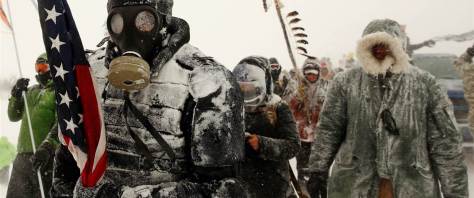


Dakota Pipeline – Not Over Yet


Judge to consider completion of Dakota pipeline in February

WASHINGTON — A federal judge Friday set a tentative court hearing for February in the Dakota Access pipeline’s bid to force the government to approve finishing the contested project.

Citing losses of $20 million a week, David Debold, an attorney for pipeline company Energy Transfer Partners, said that without a expedited decision the matter could “drag out forever” after construction was halted Sunday by the Obama administration.

U.S. District Judge James Boasberg acknowledged that the company’s challenge could be rendered moot following next month’s inauguration of President-elect Donald Trump, whose incoming administration has expressed support for the fraught project, which for months has been shadowed by protests involving the Standing Rock Sioux reservation.

Last weekend, the Army Corps of Engineers said it would not approve an easement for the pipeline to cross a reservoir on the Missouri River in North Dakota at the Standing Rock reservation, where protesters have been camped. The contested portion represents the final section of the 1,172-mile line.

“None of us have any idea of whether the incoming administration will make this matter moot,” Boasberg told a packed courtroom, which included a number of protesters who traveled to D.C. for the hearing and a demonstration scheduled for Saturday.

“They are desperate to get this pipeline under the river,” said DiDi Banerji, 51, who serves as a nurse at the protest camp. “We are worried about what a change in administration could do. If Trump approves this, the (protest) actions are going to start again.”


Demonstrators greet each other near the entrance of the Oceti Sakowin camp as "water protectors" continue demonstrations against plans to pass the Dakota Access pipeline continue near the Standing Rock Indian Reservation, near Cannon Ball, North Dakota, U.S., December 2, 2016. REUTERS/Lucas Jackson

Demonstrators greet each other near the entrance of the Oceti Sakowin camp as “water protectors” continue demonstrations against plans to pass the Dakota Access pipeline continue near the Standing Rock Indian Reservation, near Cannon Ball, North Dakota, U.S., December 2, 2016. REUTERS/Lucas Jackson


bjwordpressdivider-1


While our native people decide whether to stay or leave the Standing Rock, the courts are looking at what they will decide after the New Year and Trump is inaugurated. Can and will the court be and/or remain neutral after Trump is in office, we can only guess. It is my hope that the insanity that surrounds Trump will not reach into the judicial branch.


My heart goes out to the native people because they have all worked so hard and have endured so much from weather, to water canons, to rubber bullets and law enforcement making rude comments. They have had to leave their homes and comforts. I am sure in a moment of complete honesty they would miss their beds, showers and kitchens. Would they conduct the protests again? I am sure they would and I am sure that if they leave, they will return to protest.


They are America’s water protectors and their sacred land is of utmost important to them. I think that the rest of America needs to really think about this and the importance of water to the life and health of all Americans. Think about what has happened to the city of Flint, Michigan and its residents. For two years, children and adults have become ill and were hospitalized and have suffered unnecessarily. Suffered because they didn’t have access to safe clean water. Here in America.


The native people are Americas’ water protectors and they are mine and I hope your heroes. They took a stand and they put their actions where their words were. There was no hypocrisy. These descendents of the original people, that we murdered and put on reservations have shown us how to be authentic Americans. I will always stand with them in pride.


Namaste

Barbara


Mensensamenleving.me

Mensen maken de samenleving en nemen daarin een positie in. Deze website geeft toegang tot een diversiteit aan artikelen die gaan over 'samenleven', belicht vanuit verschillende perspectieven. De artikelen hebben gemeen dat er gezocht wordt naar wat 'mensen bindt, in plaats van wat hen scheidt'.

Best Photo Editing Service Provider

Enhance your photos with professional precision using our top-notch photo editing services

John Oliver Mason

Observations about my life and the world around me.

Opalescence

The Middle Miocene Play of Color

Elicafrank's Blog

We didn’t end when we said goodbye maybe because the promise was ETERNITY

Ranjith's shortreads

Wanderers in the world

The Wallager

The news. The dog. Dialectics.

The Lewis Mix

Husband from Utah, Wife from Hong Kong, Two Mix Babies

Walter Singleton

Walter Singleton's blog, dedicated to Aiden Singleton and Seth Singleton living near Chattanooga, TN.

Gentle Joss / Wisdom of the Crone

Mentor and Writing assistance for women

Pax Et Dolor Magazine

Peace and Pain

SurveyStud, LLC

SurveyStud: https://appsto.re/us/Ddj18.i

Levi House

Speak out, judge righteously, defend the rights of the poor and the needy

Present Minded

A MODERN PERSPECTIVE ON COGNITIVE SCIENCE AND MENTAL HEALTH

oats

welcome!